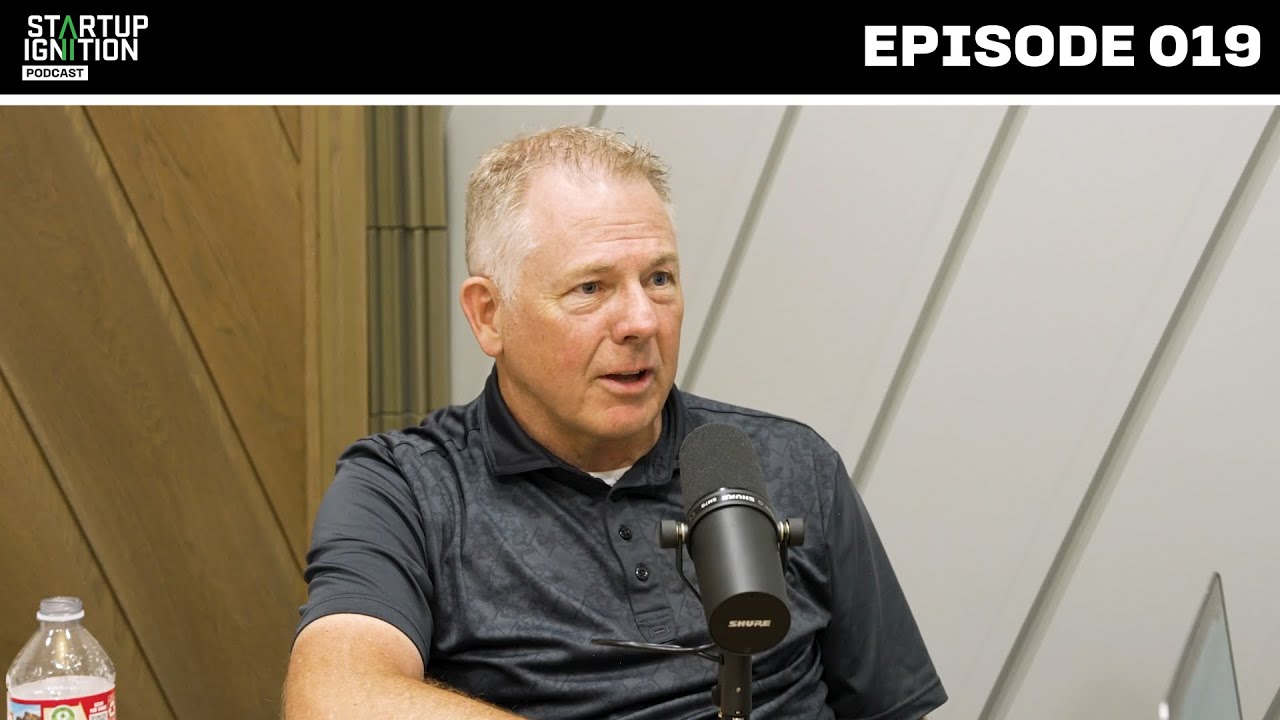
Scott Johnson tells the story of founding Workfront (originally AtTask) in 2001 and bootstrapping it into the leading enterprise work management platform, culminating in Adobe's $1.5B acquisition in 2020. He also discusses founding Motivosity and the principles of product-market fit.
Scott Johnson founded Workfront (originally AtTask) in 2001, serving as CEO for 10 years and Chairman through its $1.5B acquisition by Adobe in December 2020. He is currently Founder and CEO of Motivosity, an employee recognition platform. Forbes Business Council member and prolific angel investor in Utah's tech ecosystem.
Show full transcript
people have an idea and they start to see a little bit of success and your immediate temptation is I'm going to go sell it to as many people as I possibly can. And I'd say hold on until you have product market fit. What product market fit looks like is that your customers are actually echoing back to you the promise that you made when you made the sale. And when you say, "Would you buy this again?" They you hear words like love, amazing, can't live without it. You hear these magic emotional words, guard your equity, like be generous with cash, don't be generous with equity. Yeah. Equity doesn't motivate people to do a better job. You're not going to get better results out of somebody by giving them more equity. Yep. Equity only dilutes. You can't add to equity, right? So, but you can always get more cash through investors or selling more, right? Yeah. Interesting. Otherwise, you could be a founder exiting your company and owning like half a percent or something your own company. listeners and viewers what he just said because how many times this week have I said it t in the teaching it's so there's like two ways to go the way you win is the way we believe things should be done conserve your equity be careful with it going down this path where you raise tons of money you get a preed investment then a seed investment then another seed investment then a series A series B a series C those entrepreneurs and then when there's this huge exit who makes all the money investors yeah people don't understand it's very common for those founders to of in the single percentiles. Yeah. Of their company. Welcome to the Startup Ignition podcast where we are helping you on your startup journey from literally everything from idea to exit. I am Tyler Richards. This is John Richards. We are your we are your co-hosts. You know us by now. We are very very very very old news. That's not a jab at John, but just we are old news together. Yeah. You keep calling me OG and then I found out you mean old guy, not original gangster. OJ. OJ. Old John. Yeah. But today we have a super exciting guest who we're I'm very excited to talk to because I don't feel like I've talked to you for I know you're way closer to Scott than I am. But we have Scott Johnson and I have a bio. I don't know if you saw it. Hopefully you approved the bio. Was it okay? It's great. It's great. We're thumbsing up live in real time. But today we're honored to have Scott Johnson, founder of Workfront and now Motivosity. He is a seasoned angel investor, entrepreneur, mentor, visionary, and professor. We can you claim that yet? Yeah. Yeah. Maybe. Yeah, maybe. And Scott obviously is most well known for your founding of Workfront, which has been a huge success here in the Utah ecosystem and startup landscape. bonafideed unicorn that started back in 2001. I did some research. Is that about right? And it was formerly known as at task when I was going to school and around the startup scene and getting into it. That's what I knew you as. And um but in November, just recently in November of 2020 was it acquired? Is that the date of the acquisition? Yeah, finalized in mid December 2020. December of 2020 is the official date. So Workfront was acquired by Adobe and I think it was reported right. It was a $1.5 billion acquisition. Yeah. Yeah. So, that was a huge success and congrats to Scott. That's so awesome. Marking one of the largest Utah tech acquisitions I feel like in Utah's history. Got to be a top 10 something like that. Yeah, for sure. Right. And since then, you have launched Motivosi, which I'm excited to launch into and and learn more about, which I've actually talked to you a few times about. But so, you also are an entrepreneurship professor at BYU. you actively are investing in the Utah landscape and early stage founders. Um, and maybe pending investment into our fun wink wink wink wink, right? I knew that was coming. But no, we're so excited to have Scott. So, everybody, let's welcome Scott to the podcast and just a nice guy. Yeah. All around great dude. He's been super supportive of what we've been doing. I feel like my whole career you've been super supportive of me. I've been around you since my college days and obviously just from your friendship with my dad. We've been around each other forever. So I don't know how long you guys have known each other for but it's kind of goes back to his going 2002ish I think when he was pitching at task. Oh yeah. Yeah. That's right. John didn't invest in my company. I didn't invest in it. What the heck? A sore subject. Yes. Oh my gosh. And I I I know. I clearly remember down at a meeting of Utah Valley Economic Forum, UVF, okay, that you were there with some other co-founders and you pitched me right there after one of the meetings and all that and I should have invested. No, the the story I heard hundreds of times was Microsoft will ruin you guys. So, yeah. Oh my gosh, that that is probably a sore and very bad blip on John's past, but it's okay. But but it's also interesting just because you know that was you were one of the entrepreneurs coming out with an incredible SAS company that at the dawn of Utah's 20-year run of being one of the SAS capitals of the world, right? And you were right part and parcel making that happen for Utah, which was incredible. Yeah. Well, okay. Before we get into the story, because I want to take it back before Workfront, I'm gonna take it back to you on Scott. But before we do that, and Scott, we were just chatting right before we started filming for that episode that he's watched a few. And he's like, "What are we doing for the rapid fire question? What are we doing for the icebreaker today?" So, I'm going to break it on Scott right now live. We're going to do an icebreaker and I have five questions that I want actually both of you guys to answer. So, John's going to participate. So, it's not just you, but today we're going to do just a real quick rapid fire. What do you think? And here goes. First one, I have five questions. What's one daily habit you have that maybe would surprise people? Like journaling? Are you cold plunging these days? I don't know. Uh stretching. What What do you What do you do every day? That's someone wouldn't really know. So, it can't be like I brush my teeth. Yeah. Yeah. Yeah. I don't think exercise counts either. So, I'll I'll I'll make a small portion of what I do. I hang for 2 minutes. Oh, like a bar hang. Yeah. Oh, yeah. I've heard about that. Yeah. What's What's What's the reason behind behind that? Oh, man. It helps my lower back feel better. I like to play golf and uh Yeah. It just stretches me out. Like, I can't live without it. Really? What? How is it in a doorway? A bar or something? Just a bar? Yeah. You just like And it's in the doorway up top. It's really boring. You just grab it and hang it. What kind of bar is it that holds the weight and does that and all that? Uh I' I've got one on my like all-in-one gym systems and Okay. You know. Oh yeah. It's just like we just in our other house it was a it was something I mounted on the door. 120 seconds. And what does it do? Just just stretches you out. You know, my knuckles were hurting. They don't hurt anymore. Like it like it helps a lot of joints. I mean you're building up strength if you do that consistently. For sure. Yeah. I think so. Interesting. Okay. I'm doing it. Let's start doing funny. Wait, wait, wait. You want to hear mine? Well, funny story before we go to yours. Just this weekend or last weekend, we were at a park and so we were waiting for my son to get over with his baseball practice on the weekend and I challenged my daughters to do the monkey bars. I'm like, "Oh, do all the way across and if you do it all the way across, we'll go get shaved ice." One of my daughters is a gymnast. She flew through it. My other daughter is kind of taller and like a little bit and older and so but she couldn't even do two bars. And so I'm like okay for you to get shaved ice just hang on the bar for 10 seconds. And it was a crying moment and it was like 2 seconds, 4 seconds. I'm like you can do more 7 seconds and finally she hit the 10 seconds but like 2 minutes that's that's a long time. So that I I actually love that idea cuz um for the first time ever recently a little bit of lower back pain while I'm playing pickle ball. So I think I need my lumbar section to stretch out a little and I'm going to do that. Okay. So what's your habit? Mine is I play chess every day at least one game. Yeah. So I'm chess.com and I love chess. I've always loved chess and I can't go to bed without at least playing one game so I can keep my because they'll send you a message say don't ruin your 200 day streak. What's your what's your rank? Um well, it depends in blitz or full games. I've I've been as high as 1400, but um you know, I fall down to 1100 sometimes if I'm weak. So, yeah. Do you like to play chess, too? I'm not I don't I'm not not a huge chess guy. Yeah. Okay. Next question. What is your favorite Do you have a laptop sticker or a water bottle sticker or any kind of sticker from anywhere that you put anywhere? What's your favorite sticker? Favorite stick? Um, all my favorite stickers are from Glacier National Park. Glacier National Park. My wife is a huge National Park sticker collector. Every time we go to national park, she's grabbing one. How about you? Do you have any stickers? I startup Ignition. Startup Ignition. Oh, yeah. What am I thinking? I have a Modivosity sticker, too. Motivosity. Yeah. Okay. What's your first investorbacked dollar spent on when you're raising a round? What is the first dollar going out being spent on? Uh legal fees. Legal fees. Yes. To close the financing docs. Yeah, that's that's what it is. Okay. Well, should I ask you the same thing or you going to say the same answer? Um Yeah. In raising money, you got to pay for the formation and the and the closing, the financing, and the lawyers like you got me on that. The lawyers like to get their money, don't they? Oh, yeah. It might even be the first uh before the first dollars. Exactly. Okay. Next. Here we go. Fourth question. What is your startup founder spirit animal? If you had to pick one. Start founder spirit animal. That is good. What are you? You can be anything. Like tiger. Tiger. Like tiger. Tiger. Tiger. Tiger. Not quite a tiger. More like tiger. Bouncing around. Tiger. Okay. How about you, Dad? I was thinking I I kind of I just Leopard comes to mind because I just uh like they tend to operate, you know, not in packs and groups and I don't know. I just think when I've been an entrepreneur, my own deals, it's kind of like I'm the one pushing it through and making a lot of it happen. And it just seems like, you know what I'm saying? That's what comes to my mind. Yep. Okay, last one. Here we go. What is the last Netflix show or movie that you binged or watched during like a break or time off or downtime? This is not startup ccentric at all. Yeah. No, you know, if it has to be Netflix. Well, okay. Any show cuz I love Apple TV. I'm a huge Apple TV fan. Yeah, me too. Um, we have Okay. I I binged American Prime Evil recently. Oh, yeah. Yeah. Yeah. I saw that, too. That was good. How about you? I'm trying. I can't remember the name of it. It has three seasons to it and I just saw it and I couldn't stop watching it. It's not the cleanest show in the world either. Um gosh, it was had the one where they were in Thailand at a resort. Oh uh Oh my gosh. Yeah. What is that called? It was I couldn't stop watching it. What is that called? I I know exactly. It has the guy from Mike White. Oh my gosh. What is that? Okay, I'm looking it up right now. You're looking it up right now. We can edit this. I I it's it was just a compelling story and the way they the white lotus the white lotus and the way I've never even heard of that. Yeah. The way they told it out of time sequence a little is so intriguing because you want to know they start with a calamity event and then they go back and show the week before everything that happened leading up to it kind of thing. Yeah. And it's always at a resort. Mine has been the Severance series. I just kind of binge severance season two. So if you So fun fact, they were just filming an episode of Severance in our building in Lehi. What? Yeah. For like Severance season 3. Yeah. The main guy The main guy was walking in our front door. Our cameras were rolling in Adobe. No, over in Innovation Point in Innovation for Motivosity where our building is, you know. That's crazy. I don't know. I don't know what it's what that's about. I have no idea. I mean, you could have that office space anywhere. That guy was there. He was in our parking lot. That is crazy. His hammers were rolling. Utah's on film. Oh my word, that's crazy. I gotta watch out for that. Season three, guys. You heard it first. Utah severance. Um, okay. Here we go. Now, we're going to go all the way back. Let's dive into Scott's history and past because I don't know. You can take it back as far as you want, but like where did obviously Workfront in 2001, but what happened before that? Like what brought you to Workfront and where were you? What? Yeah. What's your career like when you went into college and where where did you grow up in college and all that? Yeah. Short uh career synopsis. So I graduated from BYU with a degree in Neareastern studies. Wow. Which has just uh you know launched my tech career. Yeah. With Near Eastern studies. We did projects like a senior project. We were translating Dead Sea Scrolls and so who's that kind of Did you have to learn languages? Is that Yeah. Hebrew. Yeah. Yeah. Biblical Hebrew. Do you know that still or keep up with that? I can read it. You know that's not something I speak. Was it Ernie? I can read it. Was it was it using technology to do it? Any technology? No. Okay. Just you had to know Hebrew and you went through the text. Very tedious. Very tedious work. Wow. Yeah. So, my plan was I wanted to be a seminary teacher and uh graduated and didn't get hired to be a seminary teacher. And I had no plan B. I always had a couple of jobs, I think two or three jobs at any given time while I was going through college. And so I was a little bit of a a creative. I was a graphic designer and I was also a computer salesman and kind of a techy guy. And so I started a video production company and digital video was new thing back then. And you were a videographer actually or process the post-process the videos. What we wanted to do is make mountain biking videos in Park City. This was way before Red Bull and we're like, "Hey, digital video. It's perfect match for outdoor outdoor extreme sports." Yeah. Yeah. And getting into that, I kind of got this vision of myself as a uh weekend's wedding videographer to get by and and make ends meet. And I'm like, this is no, I don't want to do that. And the company offered to buy all my equipment and and hired me to set up a studio for him. I did that. I ended up becoming a marketing guy for them and this was internet was brand new, right? So, as a marketer, I I'm thinking, hey, the marketers might use the internet someday. Like, this seems like it has potential. Nobody had a website. And anyway, I just kind of dug in and figured it out. And I loved the technology and it made sense and I just, you know, kind of buried myself in it and learned how to do a lot of stuff and and that company failed not because of my marketing um other business reasons. But uh from there we started a a digital it was an interactive agency is what we called. It was a it was like a marketing agency that was very web focused and like basically creating web landing pages and sites and web solutions for companies, for corporations. Uh we were the agency that they would outsource to and built that and there were I think we got to about 25 employees and and you were one of the co-founders. Yeah. Okay. And we're, you know, people are calling us, can you do this? Can you do that? And I'm like, yeah, let me, you know, we got to figure out who's doing what. Where was that? What city was that? It was up in um our little office was in Springville. Springville. Okay. Mhm. All right. So, we we were doing that and um it just like to me it seemed a shame that we didn't have our clients in the loop and had you know the accountability on approvals and just visibility on work that was going on just like seemed like there should be a solution. So, we uh I started working on writing software like nights and weekends and that was really my first real programming. Yeah. Was that what what's the timeline here? What years are these? This we're talking 1995 to96. Well, 96 to97, right? As Netscape was about to go public in the internet era was born. Yeah. This was like really really early still and these are I mean we're doing web things for companies that this is their first web ever. Yeah. Yeah. Effort. And uh Yeah. So, and what languages were you coding in? Well, the very first the very first version wasn't like you'll laugh. Um remember um remember the old database app called Fox? Yes. Yeah. Fox database. Yes. Fox. Um I don't. Yeah. It was a it was one of the leading datab if you had to build a database. Fox was super prominent back in the day. So it was it was Fox and uh then it it was just like dying under the load. So learned how to program in Java and did a Java backend interfacing with that and uh then migrated off of that to my SQL and then then it was kind of a legit platform. But anyway um working on that uh some of our customers were like hey this you know this software you guys are using is cool like where can I buy it? And that was where the entrepreneurial light went off in my mind. You can either bill for services over and over, you know, for service business or product. Yeah. Or you can like write this the software and sell it over and over again. And that was what I wanted to do. And so I actually left and started. It was that task at the time. Really? Uhhuh. And uh yeah. Um you went from basically a web development company for hire, contracted web development company, and said I want to be I want to productize this software, not be a service company. I had a couple of co-founders. They stayed with the agency. Yeah. And uh you know went off and so who who founded out at task with you? Was it just you at the beginning? Yeah. Just you. And what was the very first problem solution of at task? It was a common sense way to understand work. So at the time there was Microsoft project which everybody hated. Mhm. And then there was nothing. So, uh, what what we solved was a system that creatives could understand you, you know, if you've managed creatives, they're not going to they're not going to use something that's super structured and rigorous and rigid. Microsoft Project like a Gant chart almost. Oh, yeah. I mean, it was Yeah. And the whole the whole problem with project management at the time is it says you're going to work on this from 1 to 3:00 and then you're going to seamlessly pick it up at 3:00 and do your part. And then that's not how work gets done. Nobody likes to work that way. So ours was almost the antithesis of the whole project management industry even though we were selling in the project management category. But you were trying to change the paradigm. Yeah. Exactly. Yeah. It was very different. So anyway, um I had three little kids. What month and year did you start that? Well, the the the coding on that it was probably 1999. Okay. Yeah. So the the the split and the like the official founding of the company was 2001. Okay. And then you were saying about your family. I cut you off there. Sorry. Yeah. I had three little kids at the time. My wife was stay-at-home mom. Uh didn't have a lot of money. Took out a second mortgage on the house. Used that to pay for the first employees. Yeah. Maxed out credit cards. And u you didn't fund raise anything at that time. It was bootstrapped for about six and a half years. Yeah. Yeah. So didn't nobody would give us any money. I mean it's people like John, you know. Yeah. Well, no. Circa 2020 from the dot crash started in earnest in March of 2000. So, um I like to explain this for our listeners, viewers that are newer entrepreneurs, don't have the, you know, um hindsight of living through this stuff, but so from March of 2000 to about May of 2003, it was extremely hard to raise money. Yeah, there was a lot of carnage out there, too. The.com bust was I mean, everything went to a dizzying height, but it fell just as fast or faster and harder than it rose. So, literally like my company, I've talked about it. My company went, you know, from, you know, pennies a share to $7,000 a share. No joke. But with thing, and then back down to the bottom in a year. That's crazy. And so you, you know, it was a dot, you know, and even if we were a legit company with good revenue, no debt, but you got punished if you were.com during that period of March of, uh, 2000 till May of 2003. And I think that's when I would have met you and you would have pitched me at task a little bit and talked to me about it and and we didn't invest in anything because it I and matter of fact the Utah angel meetings were gloomy. Yeah. Because did you pitch all your existing investments probably had gone from like 100 employees to three employees and it was it was a very tough time. It wasn't until ' 05 and '06 which was mostly led by a real estate boom that the economy came back. Yeah. Yeah. And it was a tough time. It really was. And then it crashed again in '08. And then in 08. Yeah. So, okay. Keep telling your story. So, three kids and now this. I I have a question then. So, if you bootstrapped it for six years and you were like taking out the mortgage, a second mortgage, and really bootstrapping and, you know, get getting it going on your own, what what did you do to find first revenues? Like, were you literally just cold calling businesses and saying, "Hey, we have this product. Here's this thing." like kind of what's still done today, but like what what were your tactics in fueling that thing when you made that leap like I'm going to leave the agency. I'm going to go all in on this product. Like what were you doing? Well, we were kind of good at marketing. So you so you went out and marketed cuz you were a marketing agency. Had a good website. So I had a lot of had inbound. We were good at SEO. So ranked fairly well with that. But yeah, it was direct sales and it was uh just our competitors at the time were Hula Packard, Microsoft and Computer Associates were the three big ones. If you went six and a half years, you must have been cash flow positive. Yeah. U more or less. More or less, right? Breaking. It was, you know, it's an environment where if you don't make a sale, you don't get a paycheck. You don't eat, right? And I went, you eat what you kill. I went 18 months with not a not a penny to me for the first, you know, family. And I I mean, I tell young entrepreneurs all the time, you haven't lived till you've done that or you're got it's Thursday night at 6:00 and payroll is due tomorrow morning on Friday and you don't have the money. Yeah. Yeah. Exactly. Then you're then you're an entrepreneur. We uh you know, don't tell. Um we did this like early on because like early employees we knew like we're barely scraping by. We sometimes we could afford payroll but we couldn't afford taxes. So, we did pre-imbursements. Oh, wow. It was like, here's for some future travel that you might do. And then we got it all caught up later, but it was like, you know, we just did what we had to do. You do what you have to do. And so, what uh you But six and a half years with no external financing. So, is that right? So, why why did you finally fund raise and go and take venture capital or outside dollars? Yeah. What was the first investor? And it was an angel or Yeah. First investor was Open View. What year was it? They're out of Boston. That was in 200 late was it 2007 or Yeah. So you attracted a very notable east coast 2007 a notable east coast venture firm. In other words, this is a great strategy though and a lot of entrepreneurs think the sign of success is real quickly and early raising money but maybe that's not so much. Six and a half years you made a stable company and then open view recognizes the potential and invests in you. Yeah. And that that is the challenge like that is the question because the longer you can build a stable business the you know the less equity that you're going to give up and yes the better health you're going to be in as a founder. The the the temptation is wow I could raise money and get a nice office and look like I'm successful. Yes. And and that's the key. Look like I'm successful. Then hand over all my success to my investors, you know, while I go get another job after an exit. Yeah. Because a little fast forward here is the day that you sold Workfront to Adobe, you still had a significant equity, John. Yeah. I was still the largest individual shareholder. Yes. And that doesn't happen to most people that go the other path. Yeah. And so, so coming back back down to this, can I just you you don't have to answer any questions you don't want to answer, but like when Open View Invested, I'm curious like what terms and what was it done on it so long ago? What what was No, I'll tell you cuz they they made a ton of money. Okay. And and the and the revenue you were doing and like what were the stats of to give our listeners and viewers a perspective on what happened? Yeah. Yeah. So, we started that year uh we had finished the previous year at like 2.2 million of revenue. This was before there were crazy multiples on SAS. You know, everything was pretty uh you know pretty conservative. Um the year that we brought in the funding, we finished the year at 7 and a half million. So you know it was a good growth year bec because you got the money. It helped you grow faster. We were on our way. We were we were starting to close some bigger contracts and so we were on our way but um you know it was still the model was like trailing 12, you know, show me your trailing 12. Yeah. And what really pushed me in that direction was there there comes a time like our nearest competitor was 200 employees. Our nearest competitor and we were 22 at the beginning of that year. And you just see you were 22 people. Yeah. Yeah. And they were 200 people. Yeah. Yeah. Wow. That's our nearest competitor. Yeah. You know, a company called E Project at the time. Um, and you know, then you got like the Microsoft and the Hula Packard and computers. So they're they're they're huge. So you just see the evolution of the market and if your competitors could take 10 steps for every one step that you take at some point. Yeah. You like it just gets tiring. You want you want to level the playing field a little. Yeah. Exactly. And so that was really what pushed me in the direction of we got a partner. So what what did Open View give you? How to add? Uh, Open View was $6.5 million and the post money valuation was 22 and a2. That's pretty good. Yeah, that's a 10x. No, it wasn't. I don't think so. I think that's like a Well, the 22 post he's saying on the pre saying your revenue. Sorry, I'm saying the revenue was like a five and a half, 6x, something like that. On pre Yeah, but no. Yeah. So, you know, we were thr like it was 2007. 07. Yeah. Okay. 07 right before the fun part. Yeah. Exactly. Well, yeah. Um, even though tech, as I'm a tech guy, you're a tech guy, we didn't get impacted quite the same in ' 08 to '012 as the real estate friends we have, right? Yeah, we were we were growing really fast at the time. And I remember in '08, it was like midepptember of '08. Um, there was another VC that came in and gave us really favorable terms. I mean it was a big it was a big step up what they wanted to do it was like 80 million of you know valuation and I'm their CEO I'm like you know I we don't really need it but my gut says this would be a good thing for us to do the board was like what's your plan and I'm like I don't have a plan I just you know it's just like what was the round size that 80 million value how much money were they going to give you I don't it was maybe maybe 18 20 millionish something like that. So did you not end up taking? Well, so here's what happened. That's another 20 25% of the company though, right? Exactly. So what happened is um the board finally said, "Okay, yeah, you should probably do this." So I had docs in hand. I was on a I got on a plane to New York. Plane landed. I was going to, you know, it's like time to sign the docks and say, "Let's go." Landed. There's like people crowded around the every screen in the airport. Like crowds of people just staring at the screen. Like what's going on? That was the day Lehman Brothers just shut down. Really? Yeah. And so like Lehman Brothers like the whole world collapses and you were in New York and this VC that was at Bay Area VC goes completely dead silent. Like I'm all, "Hey, let's get the deal done." Yeah. And uh next thing we heard from him, they're like, "Yeah, your valuation's now 15 million." And I go, "No, you know, we're not going to do that." So, yeah. Oh my gosh. Wow. That you know, our friend didn't raise money. Our friend Scott Peterson that we have a friend Scott Peterson together and going back that I would It's like a 911 event. He he had a $8 million round about to close and it was going to close the morning of September 11th and that hits and or the day of September and the 8 million never comes and a month earlier they had taken a million dollar bridge loan from that venture capitalist. Mhm. And then now was coming down to the close day on September 11th, 2001. And the VC tells him after that hits, he goes, "Yeah, we're not going to fund that. you owe us a million dollars. Yeah. You know, if you've lived through the a few of these, and now we've lived through three of them. Yeah. Yeah. You realize everything's relative. Yeah. That like matter of fact, in our venture fund, just to let you know, one of the things that sets us apart as a precinct investor from like a normal is just the experience and knowledge of the cycles. We like in 2021, we didn't deploy a single dollar of capital. We harvested seven companies. Yeah. And then in 22, 23, 24 when it started crashing, we said now's the time to be investing, right? And it's just this good companies come out of when Tyler when Tyler faced the 2022 crash, just like anybody around 35 and under, they go, "What's going on?" Cuz we had been through a 10 plus year runup. And they didn't understand that these cycles are going to come just as sure as the sun's going to come up and go down, right? These cycles are going to happen. Like, and you and I have lived through multiple cycles, so we know this happens. And the first time when you're a young guy in business and it happens, you go, I I thought this good times were going to last forever. Right. Never get too far over your skis. Seriously. Exactly. Seriously. So, very very interesting. Okay. So, so that deal crashed. It didn't happen. You didn't take it. But at task at the time was doing fine and great. You didn't really need the money anyways. We just did a kind of a linear growth for the next We didn't raise any more money until were you kind of happy that it didn't happen or was it feel like a sock in the gut? Well, it was like 3 years to get back to the valuation that you had already received. So, in some way feels like a wow, you know. Yeah. But that's not your fault. That's a macroeconomic thing completely out of your control. Your true value and inherent value was all still there. Yeah. Uhhuh. Okay. So, so you were t you were definitely enterprise SAS, right? Were you selling for sure? We sold to Fortune 100. Yeah. Pro task management, project management software. Yeah. We called it enterprise work management software. Yeah. Yeah. To to handle any kind of task at any kind of company. What so after that happened and it took three years to get the back. But how was it in ' 0809 2010 2011 during the great recession? How did the company do it? Um, it was rough like people, you know, people companies tighten their belts. They pull that off. If you're selling enterprise, they're the ones who hurt it most, right? Yeah. I remember our Q3 in in that year. Um, our VP of sales had a forecast and I think it was for the quarter it was like 5 a.5 million. End of the quarter is three weeks away. He's like, "Yeah, it's looking like it's going to be 5.5 million." And we finished the quarter at like 2.8. Oh wow. Was he Was he puffing smoke? Was he puffing smoke at you? Everything. Everybody was just Wow. Well, look at what people did with tariffs. Like people love a reason to say no. No. Or like we're going to wait and see. You know, every election cycle if you're selling software to businesses, they're going to be like we're going to wait and see what the election result is. You're like so if it's one winner, what are you going to do? Plan A. If it's the other winner, what are you gonna do? Plan A. Yeah. Yeah. Okay. Why don't we just do plan A? No, we're gonna wait and see. You know, that's what I'm saying. If if they want the software, don't they want the software? There's always a reason Yeah. to wait. So, you know, tariffs did that. 2008 did that big time. So, when we come So, then the timing here just for perspective and it's just fascinating to hear because such a great long-term story you have is in 2012 2013 we start coming out of the recession. Is that when at task really took off? We were uh at the end of so I stepped out of day-to-day at workfront in at the end of 2012. Okay. Really brought in a CEO. Hired gun. Hired gun manager. Yeah. Yeah. I've been there. Done that guy. Were you CEO up until that point though? Yes. Yes. So in other words to take it from 20 million to some bigger number. Yeah. Well, yeah. So let's say the the investors got sick of me and the recession. Okay. Yeah, it's time to grow faster, time to time to do things, you know, differently. And what we were kind of thinking is prep for an IPO. Yeah. And uh so yeah, that was the that was the end of 2012 and we were about I think we were about 350 employees at the time, something like that. And then end of 2020 is 1500 employees. Wow. Yeah, Scott, that's still a I I got to say such a compliment. very very few entrepreneurs can take it to 350 employees and 20 plus million. That's a skill set that's completely different than the startup skill set. So you obviously have some great management skills. Well, what what were the signs that told you or the board, whoever implemented that new replacement that new leadership was needed? Like what what were the signs there? Yeah. Do we have to go there? Was it a knock on you? Um, I Yeah, I'm going to tell a story that I haven't really told publicly too much. I'm going to keep a very short version. Okay, got it. And you don't have to do this. I was not proud of I'm going to do it. Let's do it. Viewers and listeners, you're getting some unique here. Here we go. My close friends know this story. Um, imagine your founder night before the board meeting, board member calls you up and says, "Tomorrow you're going to resign." And you're like, "What?" Yeah. And that's like the first warning you got. And he's like, "We just think we need a been there, done that CEO." And I'm like, "Well, have you heard of coaching?" Like, yeah. Yeah. I'm a coachable guy. What am I doing? You know, is it me? Yeah. You know, like what's wrong? Anyway, it's kind of how it went down. And logically, I'm like, look, there there are people out there that are more experienced than me. there. This is my future. Yeah. Like maybe this is good. Yeah. And I'm still chairman of the board. Like I'm still gonna have a front row seat at this. Yeah. And so you accept But you know, it kind of upset my world. But so did it take a long time to accept that or It was It shock it like destroyed my confidence. Yeah. That's horrible. I was I was in board meetings with the people that fired me. Well, let's boost that confidence. I'm like, do these people even care about my ideas or not? like you know well let's boost let's boost that confidence a little bit what were the metrics of at task at that time like you were doing really well we were grow I we were kind of I would say slow and steady we were growing like 30 35% per year cash flow neutral um but but there were things that uh we definitely could have like I look back now there are decisions that I would totally make now that I wouldn't have made that I didn't make back then you know things about just go to market strategy and you know one of the one of the problems was we want to recruit a new sales leader and I wanted like a rockstar sales leader and all the rockstar sales leaders that we interviewed reported back to the uh um talent agency that was hired by some members on our board because they had a prior relationship. Uh the report back was, "Uh, this person is really good, but they wouldn't work for Scott. They would be CEO, but they wouldn't be his sales leader." Oh, wow. Yeah. So, you know, there's a little bit of like, hey, if you want to get Yeah. great talent, you got to be able to attract great talent. Scott's a nobody, so um let's fix that problem. Yeah. Yeah. So, we've all been this. I've been through this. I've had, you know, don't need to drag it out now, but I've had similar experiences. We also know others, the founders of Weave and the founders of other companies around here in the great Utah ecosystem have been through the same thing. At some point, you reach a point where the founder goes through that process and it's it's it's I and I had to grasp it and everybody is. It's not personal. It's actually they think they're making the right business decision, but being on the receiving end of it at first is it literally is like somebody punching you in the stomach. You can't catch your breath for a while. Oh yeah. It's like um you know your your first grandkid, they probably think the whole world revolves around them. Yeah. If you're a founder, you get accustomed to people. Yeah. Like just people want to be around you. They invite you to king of the world. King of the world. Right. On the other side, you realize nobody cares. It doesn't matter at all. Yeah. Yeah. So interesting. So, okay. So you were you were involved then in in the company and that was what 2012 you said 2012. So you stayed chairman of the board for how long? The whole time all the way till 2012. So you were heavily involved in like the acquisition and the exit strategy. It was basically the daytoday. Yeah. There was no dayto-day. No day-to-day operations which honestly is a pretty good gig. Yeah. I was going to say that doesn't seem too bad, Scott. It's not too It say where can I get that job? Right. Exactly. So, what did you move on to in your day-to-day then in 2012? Is that when you took up teaching and a lot of other things? Uh, I I did take up teaching at BYU. Also, what what happened and I would, you know, if you exit your company or get kicked out or whatever, I would say uh like don't be in a rush to get busy. I did notice that I had no idea how much I identified myself by what I did. Yeah. You know, the first thing that happens when when you meet someone is they're like, "What do you do?" Yeah. Yeah. And if you don't have a good answer, you feel like a failure. You know, as a guy, you're like, "I don't know what I do." There's the way men's brains are wired. I've My wife and I have purposely studied this, and it's just interesting. And this is not a sexist remark at all. It's just men get their personal sense of selfworth from what they do. Women generally, and there's exceptions to this, but generally get it from their relationships and interpersonal communication. Yeah. And it's it's it totally different. There's a lot of ramifications to that, by the way, in marriages that we won't talk about here. But with that said, if you it's it is it's by what you do. And I'm sure you went through a little bit of a tough time. Yeah. And that leads directly to the founding of Motivosity. I was going to say enter Motivosity, right? So for our viewers and listeners, tell them what Modivosity is. If you're and and what absolutely how long did you wait from the end of 2012 to start Modivosity? Uh felt like forever. It was probably about eight months. Eight months. Okay. So So here's what happened. So give an overview. Oh yeah. Tell you what happened and then that will help you understand what we do as a company. So, um, at Workfront, we did everything any tech company would ever do to take care of their people from a perks and benefits and recognition and, you know, events and parties and break rooms and all the stuff that you do to attract and retain great talent and be a best place to work. Yeah, we did all of it and we were a best place to work. And when I stepped out of the day-to-day work front, there were people that I had worked with for a long time and they started coming to me saying, "Yeah, I don't think anybody really cares about what I'm doing and it kind of, you know, just feels like a job. I think I'm going to look for another opportunity." And I'm like, well, I don't know how a company could care more about what you're doing. So, that just was a problem that started bugging me. And I was thinking if this is a problem at workfront, like this is a problem everywhere. Mhm. You know, you can't have great talent feeling like they don't matter. Underappreciated. Yeah. Yeah. Exactly. So, combine that with, you know, my new found um understanding that people need to be appreciated and recognized and and u um connected. Like I started kind of a psychology nerd. There's a lot of there's a lot of positive psychology in those questions. And uh uh my conclusion was you're not going to replace all the managers in the world. Like we have a problem which is managers become managers because they're good at their job. So we promote them to a completely different job. And these aren't people that like went to school to learn how to be good with people. It's like taking the best salesman, make them a sales manager. Yeah. Exactly. Great. Now you're supposed to motivate people. And then your sales go down cuz you took your best sales rep and made them a manager. And guess what? Executives are even worse. And the whole chain is paid on productivity. They're not paid on being good with people. Yeah. And so you have this inherent problem in companies of just like how do the employees have a consistent positive experience? And the only way to do that is democratize and empower the front line and have this problem get solved in reverse. Everybody thinks it's a management problem to solve and but if you empower people, they do good things. So that's what motivosity is. It's the software platform that gives you the technology and tools to empower your people to be more gratitude centric, more connected with each other and have a greater sense of community and and and tie and connection to company values and it enhances culture. And the cool thing about it is the more that happens, the more it happens. It's a virtuous cycle. And so, um, the trick is you have to create a software platform that 95% of all of your people will use on their own with no prompting whatsoever and use it on a regular basis. And so, who's that goal? So, and are you selling these to larger companies? What what like SMBs? Yeah. So, uh, we've got, uh, we've got companies that are 40 and 50 employees that use it and we've got companies that are 50,000 employees. Okay. And everything in between and so what's uh like who at the company are you selling this to the HR department? Is it a seauite? What is it? Yeah. Who's the who's the champion? It typically goes through the uh people organization. So, HR, chief people officer, uh, total rewards, culture. Okay. those groups and companies. Uh seauite will typically defer to them on any kind of a people initiative. Was this a immediate success, a slow burn? What was it? And and cuz you're now you're now more than 10 years into it. Yeah. Yeah. Thanks for reminding me. Thanks for reminding me. Old John. Hey, I'm feeling old, too. Hey, Workfront was 19 apparently. So, there you go. Or more. 20 years. Yeah. Exactly. So, um, this space that we're in is interesting because really every other competitor started with a mission of let's make it easy for companies to give people stuff. And so for us, it this w this was a a slow burn and a hard sale because we're out there saying you we want to help you change people for the better. And they're like, I want to send a jacket once every three years to my employees. And we're like, why do you, you know, that's great. You know, nothing says I love what you do every day more than a free jacket every three years. Yeah. With the company logo on it. With a company logo on it. But you can, you know, that has an impact. If you get it on a Friday, Monday still happens, right? Like it's still the daily work is what impacts your life. And if you can have a positive interaction 52 times a year or more, that's like that's so much more powerful. And so that was the sale that we're that we're making. It's like let's take the high road together. And uh but we you know we've had we're growing where we've been in the um Inc. 5000 I think the last four or five years in a row. Awesome. So So how many employees is it now? Uh we're we're just over 100. Really? Are you you're operational on that one? Yeah, we're, you know, cash neutral. You're the CEO and you're so uh what what a track record to get a company up to 100 employee status and with whatever millions of dollars of revenue that is that do it twice right in succession. That's also super rare. Yeah, I have a great gift to be able to bang my head against a wall so money comes out. But no, but you know, one of the four I there's a list of traits that are super important in entrepreneurship and one of the most important is tenacity. Yeah. And and would you say you're tenacious? Yeah. It's this was it's been a very stubborn like I'm a patient guy. Yeah. But patience is one thing, but you can be patient in a passive way. But you combine patience with tenacity. Yeah. Because it stuff doesn't happen overnight. Like a lot of people around Utah, the biggest deal in Utah history is which company? Qualric, right? 8 billion sale, right? Okay. And a lot of the younger entrepreneurs go cuz they they waited like 12, 14 years before taking any money. I mean, they people don't realize they were in Scott's basement for eight plus years. Then they were, you know, Scott Smith, right? Yeah. And then they were in a dingy office on Canyon Road in Provo, which I visited with dirty doors and all that for like four years more. And and that's just people think, "Oh, it's an overnight success." No way. First of all, every overnight success you see has years of toil behind it, right? And you know, that's tough when you're eight years into it and you're like, why don't we meet at Starbucks cuz our office is so embarrassing. I know. And so, but the point is is that it's just when you you take a look at these things, it just it's just crazy how it's takes longer than you think. Honestly, when I was doing the research for this podcast and looking into your background a little bit, I was a little bit shocked that task was 2001 officially, but really 1999 all the way up to 20. You thought it was more of an overnight success. Well, not overnight, but I thought that it was like a more of a like a 2012 business to 2020 business. Oh, yeah. Yeah. But it was not that way. So let's go when the rebrand happened. Yeah. Why did you rebrand by the way? Yeah. Like you task was great. Let's take a two minute segue into the rebrand. Then I want to ask a couple more things on Modivasi but rebrand. Yeah. So naming uh you know we were kitschy when we started with the little at sign and task was our name and uh you know so many years of people like what's the task company? you know, they don't even get the name right and you're on the phone saying at at sign, you know, or and then they try and type that in the URL and you're like, "No, the URL is at T." I think you rebranded to at task the word. Yeah, we rebranded to the word was the first one, but then as we went upstream and you start to have, you know, two and three million dollar contracts and a CEO in a company is like, why are we spending $2 million on task management? Yeah. Yeah. And we like you got to figure that out. And we weren't task management. We were like this whole it's the investment portfolio and risk management and visibility into work top to bottom and you know like resources and all these things that we work for work task management workfront work for you. Right. Workfront was awesome name. Yeah. Yeah. That's awesome. What did you do? Who who came up with that? How did you figure that out? Hired an agency. Mhm. I remember um they they did their whole big study. They came back with uh three names. Two of them were just the worst. Yeah. Like one of them I remember was Ventress. Ventress. Like and then Workfront. Like it's a clear winner, right? But Workfront domain was already taken. I'm like this is going to stink because we have to have it. It has to be Workfront. Did you go buy it? So, we hired somebody to go and um bid on like go and inquire about it and uh the person responded and said, you know, some ridiculous number and they said, "We'll buy it for 1,500 bucks." And they said, "Yes." Oh my god. You got it for 15. You got it for a two words. 1,500 bucks. Yeah. What the crap? That's a great buy. That is That is okay. So on motivosity um I just want to ask a question. So exactly exactly though if I have a 200 person company or 100% company what am I getting with motivosity? What is it exactly doing for me? Like like what's the product? And I'm going to couch it with this statement. I was at Google for two years. I think you know that. I don't know if you know that. And they had an internal program and I might have even talked about this in the past but called Kudos. Have you heard of Kudos? Yeah. And it was a peer-to-peer way for one employee to tell another employee, "Thanks for the good work you did to help me on something." Yeah. And so that was and I that was kind of an interesting thing that I got introduced to in a large organization of how they're trying to do a peer-to-peer solution or something like that. But what does motivosity do to motivate employees and keep them? It is very very similar to what we do. So at the core of our product is a think of it as like a Facebook internally in your company like a social but what's in the social feed is highlights wins people appreciating each other uh an employee in a company will get it's typically like $5 at the beginning of every month. Use it or lose it. You appreciate people around you $1 at a time. Really interesting. So that's you know the peerto-peer is a big part of it. That's what gets 95% of employees in there. That's what I say. Four times a month, every month. And so in other instead of a company going to all the trouble of building their own system to make this happen and do it, you have a SAS solution, put it right into your company and you get it going. Yep. And people are surrounded with positivity. They become better. It's not and it it makes them better people not just at work but in their life because they people become more gratitude centric. trying to look for the good. And by the way, when you observe what's good in people, it has a bigger impact on their performance than actual performance management does. Okay, last question. How about metrics around that? Have you done studies or post um analytics or something where you can say when you're going out and pitching saying here's the impact it's had in these companies? Oh yeah, absolutely. Uh in fact recency bias since we just published this video yesterday. We did a a customer case study and uh CEO of the company is up there saying hey before moivosity we were you know our industry we were kind of struggling. Our ENPS which is employee net promoter score was negative one which isn't terrible but it's not world class either. It's just kind of like typical blog. It's a job. It's a job. It's a job. It's a job. Yeah. Exactly. um all they did was implement modosity and their numbers were uh within I can't remember if it was seven months or eight months EMPS was 60. So massive improvement on EMPS the um um customer referrals from employees went up threefold uh employee referrals from employees went up by double. you know, uh, turnover went way down and it's all because people feel like they're part of something now. So, this really ties them to company values. It gets the, you know, it gets the eyeballs and engagement and then all the other top down things that you do as a company like giving out jackets or swag or having spot bonuses or other kinds of really formal, you know, wellness challenges, awards, LSAs. Now that all the eyeballs are in there, you put all those in the platform, too. and that you like all of your programs have more impact. Awesome. So, hey, we're short on time and I got to ask the moder. I have two things I'd like to cover with Scott before that are really good, I think. But because we're kind of low on time, but I want to ask two things from you. I want to ask um quick list of tips for the budding entrepreneur. Somebody that was where you were at when you had your services business and were thinking of doing something productized in that realm. What would you tell yourself back then? What would you tell the that kind of person that's in that situation now? That's the first question. Then I want to segue over because I know your wife and we are friends and we've as couples, we've traveled together and done things, right? I want to know like how did you keep your family and marriage and everything together while being such a tenacious entrepreneur? I'd like to hear your thoughts on both of those. Okay, good. I like both of those questions. Okay. Uh so the first one advice would be stay scrappy. And what I mean by that is um people have an idea and they start to see a little bit of success and your immediate temptation is I'm going to go sell it to as many people as I possibly can. And I'd say hold on until you have product market fit. Yeah. And you know, seems obvious, but what product market fit looks like is that your customers are actually echoing back to you the promise that you made when you made the sale. And when you say, "Would you buy this again?" They you hear words like, "Love, amazing, can't live without it." You hear these magic emotional words that let you know you've really struck a cord. When did when did that moment happen with at task? Like how how long in to you felt like okay we have product market fit like we are hitting this. So product or project management task management is a really weird industry. Nobody's ever happy. Yeah. So um like we didn't get that in spades at workfront. We got we had decent renewal rates. So we had you know high 80% uh logo retention. Yeah. which is it's okay. It's decent. But we didn't just get the love with Movasi. It's been night and day. Like we get massive love. Yeah. And so, you know, if because you're moving the needle. Yeah. And people are just you walk into a company and they're like, "Oh, you're with this company. This is the best thing we've ever done. Like, we're so happy you're here." And Yeah. Um So, so to summarize that advice though, what was the advice like stay scrappy until you have product market? advice is pay close attention to your product market fit before you go out and try and hire a bunch of salespeople and you know let me quote I'm going to quote you Tyler just was with me as we taught a multi-billion dollar public company how to bring lean startup into their company we just did that and went we're out of town for a few days training that company and it's it's the the saying is grow up before you grow fast in other words grow up as a company meaning that you have achieved that where your churn is low and your customers are raving about you. That's that's say get that before you step on the accelerator. Yeah. Is that what you're saying? Exactly. I mean if you're a Yeah. And we that's what we teach in our we teach that in our boot camp religiously. You know if if you're not getting past like if you're in the 70% logo retention annually. Um and uh you're you might not have a company in five years regardless of the to our listeners and viewers the mathematics behind it is this you kind of want to keep your churn less than 2% a month and if you even start approaching near 7%. The the math when you plot it out you can't grow fast enough to make up for that right and it's easier to solve that problem when you're you know with four employees. I mean it's easier to pivot a two person company than it is a 200 person company. Yeah, exactly. That's great. I like that advice. Do you have any other advice? What would you tell yourself, your 20 yearear-old, your 25, your 30-year-old self? Anything else? I'll noodle on that for a minute. Okay. Yeah, noodle that. Okay. Back to the back in the life. Yeah. So, really wanted to have uh you know, family super important to me. Life was crazy. Here was a typical day. And no lie, this was at least four days a week. if not more. I'd be in the office by 7:30 in the morning, come home, have dinner, and then I'd read to the kids for an hour. I'd lay on the floor, they'd lay all over me. I'd read a story. Sometimes I'd fall asleep while I was reading. Um, put them to bed around 7:30, then go back to the office. We used to bring dinner into the office at midnight. Wow. Three, four times a week. We'd take a break, watch an episode of The Office, work till 3:00 a.m., and then go home. And that was when there was 20 people. So, it was like just an unhuman effort to keep up with. I I tell that exact same story. And so, I think what I'm reading there is one of the tips is that if you're married, if you have a family, be home for dinner, spend time with the kids, get them to bed, be a good dad, be a good mom. Yep. And then you can go back to work. Yep. Yeah. And I never worked on Sunday. So there, you know, it was Sunday and then Yeah. those precious few hours. Yeah. Who who was that core team around you with those late nights putting in that kind of work, those 20 people? Like that must have been good times. Yeah. Great times. One of them is my chief product officer at Motivosity. Oh, he's still around. Yeah. He wasn't traumatized. That's great. Yeah. That's great. Well, okay. That's amazing. Any other questions that I just wanted this sage wisdom is so valuable for our listeners and viewers. So, we thank you for being here today. Anything else you want to leave? Any parting words? Anything you didn't get to sneak in there? No, I think I'm I I think I'm good. Yeah, but I think a lot of listeners would like are really will be interested in hearing your story because I mean you've achieved a lot of success that I think every single person listening to this podcast would like to achieve, right? So it's like all the stories to get there, every milestone, every bad, every good is like really important. Yeah. Let me remind our listener viewers in case they don't get this math. If you're the founder of a company that bootstraps for six and a half years until you're at millions in revenue and then you exit someday in the future for $ 1.5 billion, you're going to come out okay. Yeah. I guess that you know I guess you know your your other question about other advice it would just be guard your equity like be generous with cash don't be generous with equity. Yeah. Uh equity doesn't motivate people to do a better job. You're not going to get better results out of somebody by giving them more equity. Y does cash do that? Have you experienced that? Well, cash is very short term, right? So plus cash is like you can structure it in a way that it's you know a little more performance based but yeah you you can't always get more equity equity only dilutes you can't add to equity right so but you can always get more cash through investors or selling more right yeah interesting otherwise you could be a founder exiting your company and owning like half a percent or something your own company people listeners and viewers what he just said because how many times this week have I said it t in the teaching It's so there's like two ways to go. The way you win is the way we believe things should be done. Conserve your equity. Be careful with it. Going down this path where you raise tons of money, you get a preede investment, then a seed investment, then another seed investment, then a series A, a series B, a series C, those entrepreneurs. And then when there's this huge exit, who makes all the money? Investors. Yeah. And what happens is it people don't understand it's very common for those founders to have in the single percentiles of their company. I mean Carter continuously releases the venture the venture data that they pull from all of the companies and startups and private companies that they service and have information macro view at it. Yeah. Macro view. And they always are releasing the average round and equity size that venture investors at each stage are wanting to take. Man, if you stop at every one of those stages and each of them on average are wanting 15 to 20% on each of those stages, man, you're you're you're diluted to oblivion. So, it's like if you're raising one time and want to build a billion dollar company, we're here for you. That's that's the kind of that's the kind of startups we want to invest in. So, okay, let's wrap it up. Thank you, Scott. Absolutely. Thank you guys. I I hope you had fun. Yeah. Yeah, I did. This was great. And thank you for tuning in today. Scott's journey from bootstrapping to $ 1.5 billion acquisition is probably as inspiring as it gets. So listen to this man's words. If you find it valuable, you know, like, subscribe, share it with your founder friends, share it with your startup friends, and we're here for you. Um, and we're excited. So, thank you so much for tuning in, and we're going to wrap up the episode. Rock bike next to Rock.
New episodes drop weekly. Subscribe so you don't miss the next conversation.