About This Episode
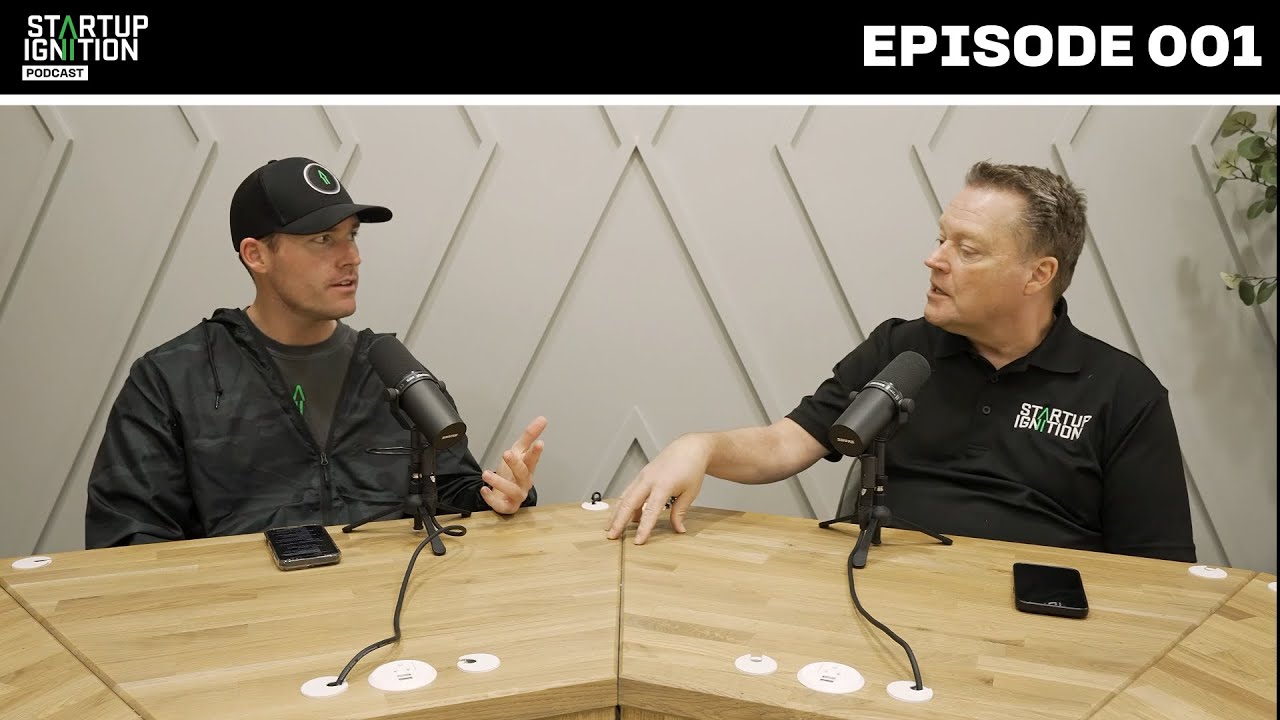
The inaugural episode where John and Tyler Richards share their entrepreneurial journeys, break down lean startup methodology, discuss how economic cycles affect startups, and explore AI’s growing role in modern entrepreneurship.
Key Takeaways
- A startup is a completely different organism from a corporation.
- Lean startup is the scientific method applied to business: hypothesize, experiment, validate or pivot.
- Vertical B2B SaaS is ideal for pre-seed: low costs, high exit multiples.
- Scalability is when revenue growth dramatically outpaces expense growth.
- Economic cycles govern venture: start in the trough, ride up, sell at the peak.
Notable Quotes
"A startup is not just a miniature version of a corporation. It's a completely different business organism, and if you try to act like a much more evolved company in miniature form, that leads to failure."
— John Richards
Frequently Asked Questions
What is the difference between a small business and a scalable venture?
A small business provides founders a living. A scalable venture creates enterprise value designed to be sold.
What is lean startup?
The scientific method applied to business — hypothesize, test with real customers, validate or pivot.
Why do VCs prefer vertical B2B SaaS?
Single-actor business model, inexpensive to start, recurring revenue, high gross margins, 8-10x exit multiples.
How do economic cycles affect startups?
Companies started in troughs benefit from low valuations and rising tailwinds as the economy recovers.
Full Transcript
Show full transcript
a startup is a completely different business organism from a corporate or more evolved business most people that come up with ideas for new startups but they don't realize that all of the disciplines that you learn at a larger more evolved company whether it be supply chain organizational behavior accounting leadership all these different issues are completely different in a startup so a startup is not just a miniature version of a corporation many entrepreneurs will think that it's just a miniature Corporation and they'll go in and try to act like a much more evolved company but in miniature form and that leads to failure and that's that's that's that's something that they need to learn right away so they don't if you do not validate your business model you're going to build your business on Foundation that will collapse if you're going to work 60 80 hours a week why are you going to do it on a non-scalable v we're going to get going here and this is the very first episode of the startup ignition podcast yes and I am Tyler Richards and this is John Richards yes and uh we're trying to do a little bit more content and so we think we're just going to talk about uh practical advice fun funny circumstances startup insights uh we're a father-son Duo so we think we can bring a unique experience to the startup scene and ecosystem and with Decades of entrepreneurial knowhow and curriculum building and experience this guy has been in this for decades now we're trying out a podcast so welcome to episode one of the startup ignition podcast um I'm Tyler Richards I am the general partner of startup ignition V ures co-founder of startup ignition boot camp uh I live eat and breathe startup since the day I basically was born because this is my father and he was teaching me lessons in his household uh from when I was very young about entrepreneurship so I grew up always thinking that I was going to be an entrepreneur uh right out of college I started my entrepreneurial Journey even in college I started my entrepreneurial Journey building startups focusing on startups idea creation thinking of what I was going to do I remember being in college and all of my friends and that were graduating around me were going off and getting jobs at Goldman Sack or you know within Industries or within Healthcare and I'm just sitting there thinking like am I making the right choice going and doing my own thing it turned out to be good and uh so that's me and this is John my dad so I'm John Richards and uh I'm the old guy in the room so we're super proud of Tyler uh let me tell you about my background so I'm an entrepreneur angel investor Venture investor uh and also a mentor and educator in the field of Entrepreneurship so I go back a long time 40 years as an entrepreneur 30 years as an investor and my background is I had a couple companies that were very successful one went public in the dotom era in the late 90s uh after I quote unquote retired at an early age around 40 I segwayed into the education world because my alma moer uh offered me to be a professor of Entrepreneurship and run programs in entrepreneurship and that was briam Young University in Utah so I moved from Seattle to Utah I got very involved in the Utah ecosystem I've done over a hundred Angel Investments uh uh super into the Venture ecosystem and just all the flourishing times that we've seen Utah is a really unique place and so the last 20 years it's really popped up into be on the world stage in terms of Entrepreneurship and I've been at the Nexus of that at the earliest preed and Seed stages so that's that's my background if you want to go past with the 12 years I spent at Bram University building up the the entrepreneurial students there and the ecosystem in Utah I also kind of took a weird Segway into Google so I'm two years as a executive with Google in the Google Fiber product that came to Utah and I became head of operations to help Google Fiber come to Utah that was an interesting departure for my uh entrepreneurial uh history but but it was kind of fun I Lear one of your first n9o FES yeah I I I learned a lot at Google it was a very interesting cool place they treated me really well it's a it was a great experience but also I was a little bit Fish Out of Water being in such a large organization uh after that experience instead of going back to a university climate uh while Tyler was doing his startup which was uh boot camp for software Engineers uh I the idea came up where I should take take my knowledge and curriculum and put into a boot camp for entrepreneurs and Tyler and I co-founded that and we started uh the birth of startup ignition birth of startup ignition and startup ignition was immediately successful we've been going for almost 10 years now we're every three months we have about 20 to 30 Ventures come through our boot camp uh many people from other countries or other states come to Utah for this live boot camp experience a lot of great companies have emerged from that it's been super fun and as Tyler said along the way we also decide to start a venture fund and uh we've got lots of cool and exciting things happening in the startup ignition world so we're going to talk about that a little today that's my my introduction yeah I built the agenda so I'm GNA kind of spring some things on John today but uh yeah that's about it we're just excited to share our stories with you our advice with you our insights with you recent news with you and just any early stage entrepreneur we're hoping that this is the podcast for you that's what we're aiming for so let's just jump right into it and let's ask John with one of my one of my questions that I'm going to spring on him and that is what's one thing that people don't really realize about the startup world if there's somebody that's working a 9-to-5 or in college or even in in high school very budding entrepreneur what's one thing that you would say that they probably don't know about being in the startup world that you can give insight into or something would you know be a tidbit of information for them uh I would say that they probably are not aware that a startup is a completely different business organism from a corporate or more evolved business most people that come up with ideas for new startups are working for their employer and they come up with an idea and say I want to start my own company but they don't realize that all of the disciplines that you learn at a larger more evolved company whether it supply chain organizational behavior accounting uh you know leadership all these different issues are completely different in a startup so a startup is not just a miniature version of a corporation it's actually a different type of entity and a different type of uh atmosphere that needs to be treated differently and so many entrepreneurs will think that it's just a miniature Corporation and they'll go in and try to act like a much more evolved company but in miniature form and that leads to failure and that's that's that's that's something that they need to learn right away so they don't have failure yeah and that kind of stems from like traditional education paths and traditional way of thinking built all the way back in like the 1910s 20s 30s and 40s and what people are used to of what traditional business is and that's why Lean Startup has been so impactful here at startup ignition we really hyperfocus on Lean Startup principles which is basically validating things before going and executing or building things where a lot of the traditional business bu is you know go out and build and then test no we put the testing before the building so that we can save time effort money resources in that Journey right so yeah one of the Hallmarks of startup ignition is that it is a kind of Lean Startup on steroids in other words Lean Startup Done Right startup ignition is a is a boot camp a curriculum where the focus is to do and exercise Lean Startup principles but to do it right and completely and get to to the Finish Line yep yeah and U you know we've been building this boot camp since 2015 so we've been doing this for now 10 years it's 2025 I can't believe it's 2025 but uh you know we've had a ton of successes come out of the out of the out of the ecosystem that we built here that yes we're based here in Utah but you know with startup ignition Academy we're bringing that to anybody and everybody anybody that wants to participate but going back a handful of years maybe we can talk about a little bit of the success stories that have come through our even go back before start mition I mean I have mentored thousands of entrepreneurs literally thousands thousands not not just I always say John's value is the pattern recognition that he has because he's just Ted and mentored to so many different Founders situations uh you know um business ideas business models categories markets that he has impeccable pattern recognition like oh I've seen this before I know exactly what to do because this has actually happened to me four times before in my career career or someone that I've been mentoring so literally thousands Yeah so basically startup ignition started again back in the 2015 year I believe and uh at that time I at any one time I'm mentoring hundreds of entrepreneurs it's just what I've done for 20 plus years but one of the companies I was mentoring right as I was starting or we were initiating with startup ignition it was a two students at a local University uh we're we live in Utah at a local univers University had this idea to completely disrupt the fragrance industry um and uh I met them and they didn't know how to do a lot of things we spent a lot of time meeting at and hopefully they would admit that right so hey if you're listening you know who you are and they and they that's no that's no jab we met at the food court at the University we just talked and they just learned and garnered a lot of understanding of what to do in the early stages of a company and then when we launched startup ignition they came into the first cohort we've now done what 55 cohorts or so but they were in the very first cohort and that company later went on to have a billion dollar valuation and very successful it's super exciting their revenues in the hundreds of millions and we just thought a lot of successes like that that have been disruptive um you know in startup ignition uh I'd say about 50 to 60% of the companies are software-based companies and then about 30 to 40% are uh consumer product goods or tangible product companies and then five or 10% of other types of businesses definitely scalable Ventures is what we focus on yeah I was going to say that's because we we in startup ignition we teach about scalability and so there there's a reason why a lot of scalable Ventures are attracted to what we're doing because that's literally the models that we say are the best to execute on but that's because they truly are yeah you want another success story was um success story of uh two participants one was more Technical and had a great idea one had come into startup ignition was on his second or third time going through the curriculum because unfortunately he had some really bad startup co-founders through a couple different Ventures and then through the second or third time that he attended he met this other student with a technical background and a great idea to build a B2B SAS company and and they met and that was magic they got together and got that company going and that company just did a massive round of investment from Goldman Sachs and yeah I just I actually looked it up in preparation it's in my notes here super successful Milli crazy success um they're very wealthy they very success I mean another one a story is a fellow came in with two ideas thinking one idea was better than the other and uh one was more of a service business and that's the one he loved cuz he loved to do those Services he had this other business that was kind of on the side that was highly scalable but he didn't think that was the business to pursue after the first day in the boot camp he realized that the actual non-service but scalable Venture was better to pursue and fast forward to today and that company's doing about 30 million in Revenue the founders take out about a million a year each that's a nice situation it's it's just seeing this happen is really and I mean we we could talk about success stories all day but maybe just for the sake of the podcast let's move on from the success stories but at the same time you know maybe teaching about that let's take a second here and teach about the different type of startups that an entrepreneur can focus on right because we've been talking about scalability and scalable Ventures over services or prod or even product companies or other types of businesses so maybe diving into that for people who are listening that maybe don't understand the difference of those business models what could you say and talk about real quick about scalability versus non-scalable let's even back up what are the kind of three major Apex categories of businesses where there's businesses that are based on problem solution or need solution there's a problem or a need in the marketplace and the entrepreneurs devise a solution that's what we're most familiar with and what we mostly deal with and most of you out there will have that kind of situation but there's also ones that are entertainment based what's that mean there's no problem or solution it's just that humans want to be entertained and so there's businesses of All Sorts being social on social networks isn't a problem per se it's well that's a third genre the entertainment one is that is entertainment the other one you're saying is uh one that's emerged because of the internet called social plays and that means what we used to do in a very small way before the days of being connected through the internet is now there is the ability to have massive interconnectedness because of the internet so now there's companies that become very huge and Powerful Facebook Instagram you name it and Linkedin that because yeah because you can have social plays these ones don't have a problem that they're actually solving what they're doing is they're taking a previously offline activity and moderating it online right where it can be gargantuan matter of fact social play ideas are huge and have huge potential they're just hard to be merge as the winner but they are massive as we've seen with Facebook LinkedIn Instagram going so going over those three again right so we have a problem solution problem solution or a need Solution that's one of the three right entertaining humans is another one and an example of that would be uh movies movies um I don't suggest doing a movie but any you know arts and things like that or um let's say up in Park City Utah they in the summer on the ski slopes they have a plastic ball you can get in and roll down the uh the people make a lot of money doing that having you get into a plastic ball and roll down the snow slope in the summer and that just entertains would entertainment be Services then no it's not it's kind of but it's just to have fun and entertain humans is a source of a lot of ideas and business as well and you can't put it into a problem solution or need solution but then within even okay and then the last one was the social play or moderating an usually offline AC let's give you an example previous to the internet and the interconnectedness that brought we had photos in our life and when did we share them we would whip out our wallet or a photo album when friends came over the house and we'd share photos and show photos Grandma's photo album yes with the Advent of the internet and people started sharing photos on the internet Facebook its early massive growth was photo sharing Y and the reason they bought Instagram is because Instagram made it even more simple than Facebook for photo sharing put up a photo a little caption and that's all it did at first and in one year Instagram grew so fast the only company in history to grow faster than Facebook and so Facebook had to pay a bunch of money to buy it yeah and so these are very powerful uh startups when they hit on the right vein and those are one thing but what we spend most most of our time in is definitely problem solution and need solution and but now we need to dive into problem solution and I hate to take even more time on this cuz I have a full agenda of stuff for you guys but here we go in problem solution there's even more because Services can be problem solution software can be problem solution so there's scalability within each of those categories right so the difference between a scalable and non-scalable within each of those three major categories are well let let's just give an example running an advertising or marketing agency or is a problem solution no well it's but yes it is but that is a service so I can I could run a marketing or advertising agency and make it a service business and why would I do that because it's faster to cash flow I go get clients I perform services for them and they pay me for my time and what I put into it but if I create a piece of software to make that agency business more efficient and run better I could keep that as a proprietary differentiator in my for my agency or I might think let's do this I am going to put that software out and sell it to other agencies as a way to run their agency business more efficiently and better because it's a great piece of software and now I'm transforming from a service non-scalable business where I was trading my time for money to a highly productized business selling software on a subscription basis other agencies you're making money while you sleep yes yes and so what we focus on a lot is obviously productized businesses where they're highly scalable because that's where wealth is created a business where you're just trading your time for money or you're just making it living does just that makes a living for the founders a scalable Venture creates wealth for stakeholders mowing lawns as a service you're not making money unless you literally are working at it's cheap to get into and you can quickly make cash or you could create a software platform to manage the business of mowing lawns for those who are literally mowing lawns right do you understand the difference the scalability versus the services or every hour you put in you make money versus the platform or the software you're building it and then they're using it paying you on a subscription SAS software right yeah okay so let's move on from that I just wanted to underline that principle because we were talking about scalability so much and for those who don't maybe necessarily understand okay that there are different types of should I give the one math explanation to summarize scalability yes okay scalability I like to say it this way scalability is when the slope of growth of Revenue in a company grows much higher and faster than the slope of growth of the expense structure usually using the proxy of the number of people or the employees so if you have a slower growth in your expense structure the number of employees in a company and your revenu is growing faster so there's a big difference in the slope mathematically in those lines that's a scalable Venture a non-scalable venture would be something like in a law firm an accounting firm a consulting firm where they're just trading their time for money if I have a $5 million Law Firm and I want to double the revenues next year to 10 million I have to hire twice as many attorneys to charge for their time right in a software business I can create a piece of software and get exponential growth in revenue and cash flow from productizing this uh and while I'm sleeping people are using and buying and paying for the use of that software yeah that's yeah that's a good way to summarize it up um K let's move on to a few more questions maybe about our personal um you know experiences of of being Founders ourselves cuz I just want to establish that we're not just two guys that came together and you know have put together this curriculum or this methodology or these strategies without actually experience them and having war stories and experience all of this ourselves you know as entrepreneurs we've had successes ourselves we've also had failures we have a story where we tried to start a startup one time together where we put you know $100,000 of our own money into it and lost that pretty quickly probably about 200,000 200,000 so that's the story for another day but a huge Mark but at the same time um we both experienced successes in getting to a Finish Line John my dad has been all the way to an IPO I've never experienced an IPO where I was a founder of a company going all the way to the public markets but you know getting to an m&a or an acquisition or selling a company I have I have experienced and so I want to turn the tables on to me and you of talking about you know our experiences experiencing Lean Startup experiencing the methodologies that we preach every day actually in the trenches doing it ourselves and how we've formulated the content and curriculum and the startup ignition methodologies from real life experience from knowhow ourselves well let me talk then about the Advent of lean starup and how it impacted yeah or yeah how you came across it at the very so um many of you out there can go find this information in other places this is everywhere I'll just cover very quickly um in about the mid 2000s Steve blank who's world famous now we call him the father of Lean Startup introduced to the world the concept of basically taking the principles of Agile development in software development and saying let's apply it to the whole Enterprise the whole startup the whole company and have a Lean Startup and have it be lean and agile and so he uh was very successful sold his company made a lot of money went to Berkeley and Stanford started teaching and realized that entrepreneurship was being taught incorrectly and he had a better way and he introduced Lean Startup to the world uh I got introduced to that and I back tested my entire career and it explained exactly all of my failures and all of my successes and why so did people practice Lean Startup before the mid 2000s yes they did it by stumbling into it and doing the right things but now we've codified it for instance I was successful prior to the Advent of Lean Startup in a business because I had incredible founder market fit I started a business in an industry that I was super knowledgeable on had an incredible Network in and so when I thought about starting the business in that market I was able to go contact 40 to 60 of my Target customers find out from them what they needed and wanted it would pay for and how they thought it should come toet market doing be doing Lean Startup by happen stand yeah just because I had that and so and that's why I was wildly successful in that Venture now other Ventures where I failed is because I didn't have that that ability to do Lean Startup naturally or organically and so I failed so that's why Lean Startup was interesting explained my successes and failures and and uh most people will find that that's true so the Advent of lean start was very interesting Lean Startup uh I I quickly realized how powerful this was I actually got the University where I was teaching at Bram University to throughout their old curriculum and adopt Lean Startup as the main Central focus of our teachings and uh it was a great experience everything at BYU went on overdrive more success more great Ventures from students more BYU became the number two rank School in the country and Entrepreneurship lots of great things and uh lean startups is very very powerful one other byproduct is That Lean Startup is not only great for entrepreneurs it's also good for investors as an active angel investor it's really interesting My Angel Investing career prean startup being codified was okay and I had some great successes that gave me a great return on investment an internal rate of return that was very acceptable but after Lean Startup I became much better at choosing winners I did less investing less deals with greater success you could identify what the startup was doing to be successful or not be successful choose winers and losers right you kind of had a rubric so lean startup's very powerful so um basically I became very good at teaching and helping others Implement and do Lean Startup and that's where the curriculum comes from and that's why we're able to sit up here and say we do this and know what we're talking and I would say my introduction into lean starp was a little bit different because I kind of grew up with the tactics not grew up but when you are were at the University kind of formulating the first startup ignition my classes yeah I literally took your classes right I went to the same University where he was teaching uh that was because I got the a great student discount or employee discount from him teaching at the school and um I I got accepted into the business school and eventually took his classes going through that program and so I kind of my whole career was started with Lean Startup methodologies in mind like when I was formulating ideas or when I was talking business or you know hypothesizing about what I wanted to do or an idea that I had it was almost eded in me that I was like okay I have to go talk to the market I have to go talk to potential clients or customers or people who are within the industry so I can pull the problem solution out of their heads right and so mine was a little bit different and that's I think why I got lucky in getting money and and success pretty quickly here's what I discovered Lean Startup is not that hard to understand but some people get befuddled by it because it's actually very non-sexy and a grind what I mean by that is that it's not fun to go out and talk to prospective customers and have them tell you your idea sucks and that you need to Pivot or change it and it's and and a lot of people don't like that kind of negative feedback right uh even though that's the magic that's happening and so what uh star ignition is and what I did in my classes before I moved from the University into star ignition is I became very good at teaching people how to more fully and completely do Lean Startup and because Lean Startup can be done very superficially and with one iteration and completely failure and unfortunately I think that's what most people do yeah that if you just do one iteration or superficially you are going to fail with it but if you do it completely and get to the finish line on the process you will either abandon what you're working on quickly yeah or make major pivots and my best investment of all time was two students I found at the University with an idea and they pivoted seven times in five months and nine years later had a massive exit y uh and or so you'll abandon pivot or you're on the right track and persevere and keep going yeah or validate right yeah yeah so yeah so Lean Startup for me was you know not taught in our household as I was growing up but it was taught all around me as I started entering into entrepreneurship especially at my University because of that curriculum and throughout the old and in with the new so I was around it when I was when I was building helping other startups joining other startups team prior to doing my own it was just always there so what I like to say is the startup ignition curriculum and way of doing startups is Lean Startup on steroids Lean Startup done right you learn what to do and what not to do and it's it's it's to do it more completely thoroughly and get to the finish line and so you were trying to make the point where did this all come from and that's where it came from now startup ignition also adds to Lean Startup I say That Lean Startup is a skeleton on which startup ignition hangs we have lots of other teachings like one of the major problems in entrepreneurship is when you found the company and how you set up things with your co-founders and all of the founding issues that happen the first 30 to 90 days if you don't do those things right it can mess up an otherwise great venture we make sure that people don't make those mistakes yeah there's a lot of things that go into it cuz like like he was saying John was saying was oh man a lot of people come across Lean Startup can read books on Lean Startup read blogs or follow gurus or people who are implementing Lean Startup but then do it incorrectly or just halfhazard or just not to the full fruition or the full Gambit of what Lean Startup is and so they think they validated they think they've done Lean Startup but they actually haven't and so what startup ignition does is we built tools we built curriculum and content and and everything around okay are we sure with 100% confidence that what we're doing I don't think you can ever be 100% confident but with the very high confidence that what we're doing is actually truly validated because I've seen a lot of entrepreneurs like you were saying that they don't want to hear no they don't want to think they're wrong they don't want to see the market turning them down so they'll actually Force thems into validation or or think that they validated or that they've come across a business model that's truly going to work when in reality they haven't gone even 10% into validation mode so I'm going to get a little scientific for a second so you were saying you can't know for 100% but it's the scientific method so what Lean Startup is is the scientific method you learn in sixth grade biology class applied to startups and business in other words we hypothesize a business model just like we hypothesize something in science we design experiments to test that hypothesis we go out and conduct those experiments the results of experiments tell us if our hypothesis is correct or incorrect If it's incorrect we pivot and go back and reh hypothesize and then test again if our hypothesis is correct we move on from that point or topic and then test the next part of our business model it's not rocket science but it is the scientific method and that process over time is iterative and you can actually get to a super high confidence that you could almost call 100% just like in all of Science and not to get too nerdy here but I'm just going to say it this way uh you know we thought that the theory of relativity relativity by Einstein was right for you know a half a century and then of course physicists proved that at very small Quantum or very large universe galaxy sizes that the theory relativity is not perfect but in the Isaac Newtonian World Einstein's theory relatively completely fits but that's the kind of thing we never know in science if we're 100% sure and absolute truth but we can be super highly confident it's our best knowledge the same thing we can get to a point with a startup where we say this is validated and it's now ready to build infrastructure and scale the business and that was the point I was going to make is even though Lean Startup can get you to a validated business model to where you have a very high confidence or validation that this will work if you actually build a thing but there's a lot that comes after that and we've even seen people with validated business models that have flopped on execution or they've quarreled as co-founders and ruined the company or their entity structure or whatever they're done their cap table they've messed up along the way and they haven't gotten to the Finish Line that's such a good point Tyler because a lot of entrepreneurs think oh when I raise my money I've arrived and I'm all set oh I validated my business model I'm arrived and I'm all set that's the beginning of the problems it's the beginning of the hard climb up the Steep Hill but the funny thing is if you do not validate your business model you're going to build your business on a foundation that will collapse if you don't get the necessary capital resources whether you're bootstrapping or actually need external Capital then you're also going to collapse these are all important steps but they're not the end all Beall and they're not the finish line of Entrepreneurship and that's where people make a mistake they think that oh I validated my business model I got an investor to give me money it's going to be easy easy but it's not it's going to take a lot of hard work and you got to execute and manage and do things right but what we do at starup ignition is make sure that the foundation upon which you're building the house is not going to collapse when the weight of the house gets built on top of it and that's a super important Point yeah and I mean one of the pillars of startup ignition is a venture fund yes so maybe we can take this opportunity right now like what you know we're a preed venture fund where we write first checks into companies so these are pretty early stage companies where you know they range from anywhere from literally just idea to pre-product to pre-revenue obviously the more traction the more Revenue the more product that's been built that that helps the entrepreneurs and Founders case but at the same time what is it that you and I and our fund looks for for in an investable fundable project so what like ultimately because a lot of entrepreneurs say okay that is the goal I want to validate my business model so that I can go and raise funding so is that simply the answer right there that what is an investable startup is a validated business model a startup and founder team a founding team that has found a validated business model well every Venture fund is going to be different so do you want to talk just about ours and what we look for I say I say let's keep it here let's keep it what we do what we do and what we look for okay so a validated business model is definitely the starting point we want to see that uh the what but we're very picky um we are focused on software business business because software is highly scalable the business models and we're also in hyper focused on a tight vertical where we just really love vertical B2B SAS businesses yeah and so those are and why do we like those and then come back down to the science of Entrepreneurship which is what which can relate back to an entrepreneur why should an entrepreneur like this business model too right yes the science same reason investor likes a business model which is yeah well when we talk about business models there can be what we call one actor two actor three actor multiactor business models vertical B2B SAS which by the way I do not think it's going to be as impacted as some people think by AI but that's another discussion for later yeah um is a hot space because it's a one actor business model a software SAS company selling to a business client and they only have to deal with that one customer and they one actor business model is much easier to execute and manage you're not dealing with two or three actors in the business model two or three actor business models will be like Facebook has to have advertisers and users um has the two actors in its business model yep and so so the more actors in a business model the more comp complicated the business model becomes excuse me yeah more complex it is the more validation you have to do so we like the simpler business models also vertical B2B SAS gets highly compensated in exits in other words the revenue multiples upon exit are very high so a lowcost company to start and a high exit and a high exit multiple and an easier management proposition for the entrepreneur so we like those businesses very much um and they've been very very good to us so we can say that's why we look that doesn't mean we won't stray off every once in a while into some things but that's very rare and we know what we like and we like what we know yeah I mean there obviously revenues or traction can Trump a lot of things right if there a business that's really showing an amazing historical Financial past and you know their trajectory their Pro what type of Revenue right because we also talk about you want it to be monthly recurring repeatable Revenue right yeah well we all we we've invested not just onetime Revenue yes yeah but what I'm saying is is that backing up is a little bit in general though what our not maybe just our fund and our thesis and what we look for and B2B verticalized SAS plays and software startups but in general what startup ignition looks for is that validated business model which is what the startup ignition curriculum and methodologies ultimately get an entrepreneur too or a Founder too and the steps and the way to achieve that is very intricate and and can be complex but our curriculum helps achieve that as easily and quickly as possible so that the entrepreneur can get to building and actually scaling and carrying out the entrepreneur dream that's what the boot camp does and what the Venture fund looks for then is the lowest management execution requirements for the highest exit multiple right that's just because we're trying to do the best job for our limited partner investors and get them the highest returns yeah and I I I there are Venture funds that are category or Market specific or Niche specific or industry specific or even initiative specific so I I would say yes that is kind of our initiative our thesis at startup ignition Ventures but that can range within the VC world we certainly know in the boot camp Arena how to train and help people doing all sorts of businesses yeah but what we like to invest in you asked specifically and so we answered it yeah the the boot camp and the startup ignition Academy all the startup ignition methodologies and curriculum can be implemented to any kind of business like you can be doing a lawn mowing business and really validate and take it through the startup ignition way and methodology but what we're saying is you will probably learn within that learning experience that a lawnmowing business probably isn't what you should be spending all your time and effort and resources on if you're going to work 60 80 hours a week why are you going to do it on a non-scalable venture like that exactly I've got a lot of say that but you just mentioned something that we have to clear up now cuz you said the word startup ignition Academy instead of boot camp so now we've got explain what that is so the Third Leg of the startup ignition family again startup ignition boot camp which has been going for 10 years startup ignition Ventures which been going for two to three years we're on the verge of launching something called startup ignition Academy and we'll save that for a future episode to talk more about I think I think we've already said it and I've already said it startup ignition Academy is bringing it on in an online arena in an online ecosystem so it's available to many more people yeah so it's not just conf the boot camp you have to come out live to Utah for three days and and get trained in an in-class experience Academy is going to get you this curriculum and knowledge where you don't have to be to a live boot camp right right right and with powerful software AI enhanced tools yes to to help assist in that process even more okay okay that was probably just a huge shill of startup ignition and a huge push in marketing uh uh messaging for startup ignition we don't want this this podcast to just be that this is episode one so we're trying to kind of set set the foundation set the table maybe let's move into more general advice or even news Uh current news and get our reactions and thoughts around things what would you like to move into um I Bas basic principes how about we talk about ai ai ai is such hot I mean well just today we went to a local event today startup alley yeah and well here in Utah we C the startup ecosystem calls itself the Silicon slopes like silic Valley but here we are in Utah the snowy mountains of Utah so we call ourselves the Silicon slopes it's caught on and I I think a lot of people across the country are are identifying Utah as a hot bed as a startup and specifically software scalable beab be SAS software startups we are doing really well over the last 10 15 even maybe 20ish years because we're now in 2025 Utah has become a spot you where Tech compan and scalable companies huge Brands across the country and world are having presence here because we have talent we have the a more mature ecosystem here now and so cost of living is less than the coast yes and housing yep and therefore employees nature you can be out nature in 20 minutes yeah well I I think we're literally an an hour and a half away from Six National Parks we are more than a dozen ski resorts a dozen ski resorts literally right here from where we're sitting and we're 20 minutes and we're on the mountain um it's just a great place we have our Four Seasons really well defined it's hot in the Summers it's cold in the winters it's just a a really awesome place to be hence why we're here but at the same time the the entrepreneurial scene and the startup scene here is really really so I think you were going to talk about silicon slope Summit yeah so this whole was the whole thing was we went to the Silicon slope Summit which is once a year it happens to be right now we were just there earlier this morning and we a part of it um is is called the startup alley Where early stage startups are kind of presenting and in booths and you can walk around if you've ever been to other large um you know Gatherings or conferences like South by Southwest or CES or any of these big on it's kind of like that where they're just booths and presenting their technology The Innovation or whatever they're doing and now that was setting the table because you brought up AI the reason I was bringing all of that up and introducing silicone slopes and everything was because I would say 80% % of the 50% okay 50% I would say even more than that had some form of AI touting let's look at the we've we've we we've met with over well over 2,000 businesses in since the Venture fund started well I have those exact numbers yeah yeah whichever the number is great but in the last year probably half of what we get pitched is AI yeah yeah and that that's just the trend we're seeing in the marketplace right now but so let's comment on what we think of AI should I start yeah go for it okay so uh we get asked all the time but here's our attitude as Venture investors in AI we are decidedly in a wait and see attitude most of the time we it moves so fast and things change from week to week that we don't know how to bet on winners because we can't necessarily identify the winners we don't know who's going to get dis intermediated next week so we're very cautious with AI as in terms of an actual AI company and there's a lot of AI companies that are actually faux AI in other words they really are not anything special they're just applying Ai and trying to make a company that maybe is just a feature we see that a lot so well that's that's what I'd say at the the summit today there was a a lot of a lot of awesome companies and a lot of great things happening there but a lot of them using that AI even just those two initials to Garner attention so here here's what we're excited about AI is unbelievable as we all know it's incredible and it's it's changed our lives but in terms of Entrepreneurship and startups the most immediate impact in what's we're seeing and we've seen over the last year or two is that AI has driven down the cost of starting and operating a venture it is changing maybe to an order of magnitude what it's going to take to to get a company off of the ground in terms of capital resources it's lowering that much I live through the period from let's call it from the year 2000 or the late 90s through 2020 let's take that 20-year period and start a startup in 2000 that was software-based a SAS company would spend Millions just building their own server Farms right with and now you just spend up AWS Google Cloud servers whatever right and it's it's infantes expensive compared to what it used to be in a huge proposition though and there a thousand other things we could say like that so definitely in order of magnitude less expensive in 2020 to do a startup from 2000 I think in very short order from what I consider the Advent of AI that really hit the mainstream was around April May of 2023 that we're seeing before us happening where it we're going down another order of magnitude and what it's going to take all of the companies we talked to say they're going to need less people less Capital to get to where they need to be and and everybody's saying people are going to lose their jobs or this or that but innovation has always happened like this like we've seen this a hundred times before not me specifically I'm only 37 years old so I'm saying over the course of the last 100 years there has been technologies that has come and made the ability to do things faster better stronger and you know as humans we find a way to if it's displacing a job whether that be the car with Henry Ford or you know the internet or whatever the technology may be we're humans are finding a way to to still be employed and that impacts our work weak we're working less and we're concentrating on other things like the Arts or whatever how that's impacting startups is where I'm going with this is that that there it is making the ability to be an entrepreneur to be a startup founder to create a startup and to you know create wealth for yourself in that asset class easier right now it's more important that you learn how to take advantage master and leverage AI in your entire life personal and business than is to be worried about being displaced by AI yeah that's the message so back to this we are cautious on investing in AI companies right now but massively bullish in getting our portfolio companies and our Mente companies to apply AI um I was just texting about six of uh um our Venture funds portfolio CTO so the founders who are specifically over the development side of of the startup CTO I don't know how how how uh base level we should go here but Chief technology offers what that stands for so they're usually the one over the development or the product building in a in a software company and so I was texting this six CTO six of them or so maybe even eight of them just about the newest things that they're seeing within Ai and how it's affecting their job and what it's doing so that I can then take that those insights and effectively communicate that over to the rest of our portfolio companies and an overwhelming amount of them are saying like AI is impactful and I I I I am able to maybe build a specific feature that will be enhanced in AI but they're not saying that it's actually where a lot of people think it is where it's like oh here's my code base or my repository of here's my my SAS software and all the files that are with it you know get you know become familiar with it Mr Ai and then I want to query against it and or tell you what I want to happen that's not happening yet they're saying not to the full extent there's a spectrum it's happening a little bit but it's not happening like here's my files here's what I want to do go and execute on it but they are saying that that's becoming more and more almost every month a possibility to to honestly displace Junior developers or additional team members right you know how I like to teach principles and make sure people understand principles if you haven't heard of it before there's a large consulting company called Gartner group so the Gartner hype cycle which has been around for decades now explains how technology disruptions come and that Society reacts with a massive inflated expectations on it it's happened with the internet with smartphones you name it where the expectations are so inflated that nothing could ever fulfill those expectations every technology disruption is like that AI is perhaps one of the biggest ever and uh there's been massive inflated expectations and predictions but like everything we are going to learn that it's not going to take over Dominate and change everything right it's going to then go through a trough of disillusionment where we realize this is not as sweeping and all in companies as we thought or it's going to take decades instead of months to get somewhere and so those type of things happen just look up Gartner hype cycle and so the bottom line is is what smart entrepreneurs do is recognize that early and say how can we apply this to make our companies more efficient where do you think AI is in that okay maybe we'll have Jordan chop this up right here Jordan put you know the Gardner hype cycle and put an image or something where do you think we are in that that cycle right now with AI uh I think that it is at the top peak of inflated expectations I don't know if it's completely reached the peak yet or if it's hit the peak and a down but it's at the top of the inflated expectations especially as the Mainstreet people learn more about it and use chat GPT and others and Gemini and all that every day in their life and they start replacing Google searches with AI searches that their people are going to think oh this is going to change everything we're going to find out that no it's not going to change everything like as an example very important example is that what I I brought up earlier at first people thought this is going to wipe out software development it's going to wipe out the need for software companies or SAS companies but it doesn't make sense you've got to stop back and think okay let's take any kind of SAS software that is the management workflow for a vertical industry whether it be whatever let's take something like veterinarian clinics or take golf courses or take lighting showrooms three Industries we have experience in there's SAS software that we've been involved with for those industries does it make sense that you know a 100,000 companies like vet clinics yeah like they that they're going to have a person able to have tell Ai and manage AI to create their software to run their business and so there's going to be 100,000 technically oriented people interfacing with AI just to make a custom piece of software for that location no it makes sense that there's a 50 person SAS company that makes the best of breed for veterinarians or golf courses or lighting showroom comp yeah yeah best read and that's really important Society is not going to change in that way it's way more efficient for a group of people to form a SAS company and make the software that's needed for that industry I think we're very far away from where I'm going to speak to an AI and say make me the software to run my business I'm tell I'm telling you right now that that's literally what I was doing yesterday I was texting those CTO to see is it there and these are bright Minds these are really really bright on top of Trends currently building in the middle of building their own software systems and they're telling me we haven't hit that yet and so what's what what our attitude is is this is that we're in for a whole another complete economic cycle where we're going to not have ai wipe out all these things people think it's going to wipe out we're going to still build great SAS companies we're going to build great software companies Great technology companies that humans are going to have to develop with the taking the maybe the drud y out of development or AI helps and enhances humans in developing those but it's not going to completely displace and replace the need for building those companies maybe long after we're dead that's going to happen right but it's not going to happen in the next economic cycle or two or three and we have a lot of money to make by being the leaders and bringing those companies to the market so you that you actually just said something pretty interesting there you said maybe two or three more economic Cycles right and that's really important and for the listeners economic cyle Cycles are what drive a lot of business activity and so he's saying you know when the economy es and flows right when we're in the peak or the higher times in economies versus the lower trophy times or The Valleys of those Peaks he's saying two or three more of those and usually I don't know we need to do some research on what the the standard length of time of an economic Cycles I I'm pretty aware of what they are it yeah I mean the trough can last as little as two quarters or four years so but then that also the cycle also includes the peak and and the Peaks can last you know 6 months two years no longer than that no not not the cycle the peak when you're at the peak the top of the peak and the trough at the bottom I'm saying oh you're saying from Peak to trough as far as from the trough lowo to the next Peak but that's also a cycle the longest runup was the last one we just went through almost a decade to 12 years no that was literally 2009 or 10 to no 2012 to 2014 up to 2021 so it was just under a decade okay so it's still going down 2018 recession was a good four-year one from 28 to 2 okay but I'm just saying on average let's say the average time is at least 5 years maybe four years if want short a little bit so what you're saying is just the Cycles by the way we're bringing this up because this is very important to understanding as an entrepreneur as an investor all asset classes are affected by the ma macroeconomic cycles and many companies that are wildly successful if they would been have been started a half a cycle later they would have failed vice versa ones that fail had they been one half a cycle different they might have been wildly successful I can say that about myself yeah I I was literally building on a trendy wavy type industry executing the whole time riding the wave up selling the greatest economic cycle in history you started at the trough yeah I mean I came out of college in 20 and you started in the trough and caught the wave and rode the cycle up if you had done it four years later you wouldn't have hit it yep yep so that that's the thing I'm I'll be the first one to admit it a lot of success in entrepreneurship has to be timed within those economic Cycles if you miss those economic Cycles a really good business model a really good Venture a really good execution a really good founding team doesn't matter can be ruined because you're just off on timing yes we're almost at time here so let's close on that note fundamental to Star ignition Ventures is our belief in economic cycles and it guides us in our uh investing uh we'd love to talk more in future episodes about that so that's very exciting that we've brought that up at the end here so today we've talked about startup ignition boot camp and our history with that our personal histories our startup ignition Ventures and the excitement of our new startup inition Academy so for first episode I think we kind of did a good overview yeah yeah so not every episode's going to be like this I had a whole list of Trends and topics and news articles and things are we going to have guests and and yes we're going to bring guests so expect amazing p uh people here who have done exciting and amazing things from founding to failures to exits to public markets to IPOs to whatever we're going to bring them here we're going to talk shop with them we're going to bring them into the startup ignition house and just you know talk shop so this can be a learning experience and an advice ship and just overall news updates so we're excited thank you for joining us this is episode one we're laying the groundwork right now and we're excited to keep this going and so hope to see you on the next one all right thank you for having me on your show Tyler yeah if you do not validate your business model you're going to build your business on a foundation that will collapse if you're going to work 60 80 hours a week why are you going to do it on a non-scalable b Rock
Listen & Subscribe
New episodes drop weekly. Subscribe so you don't miss the next conversation.