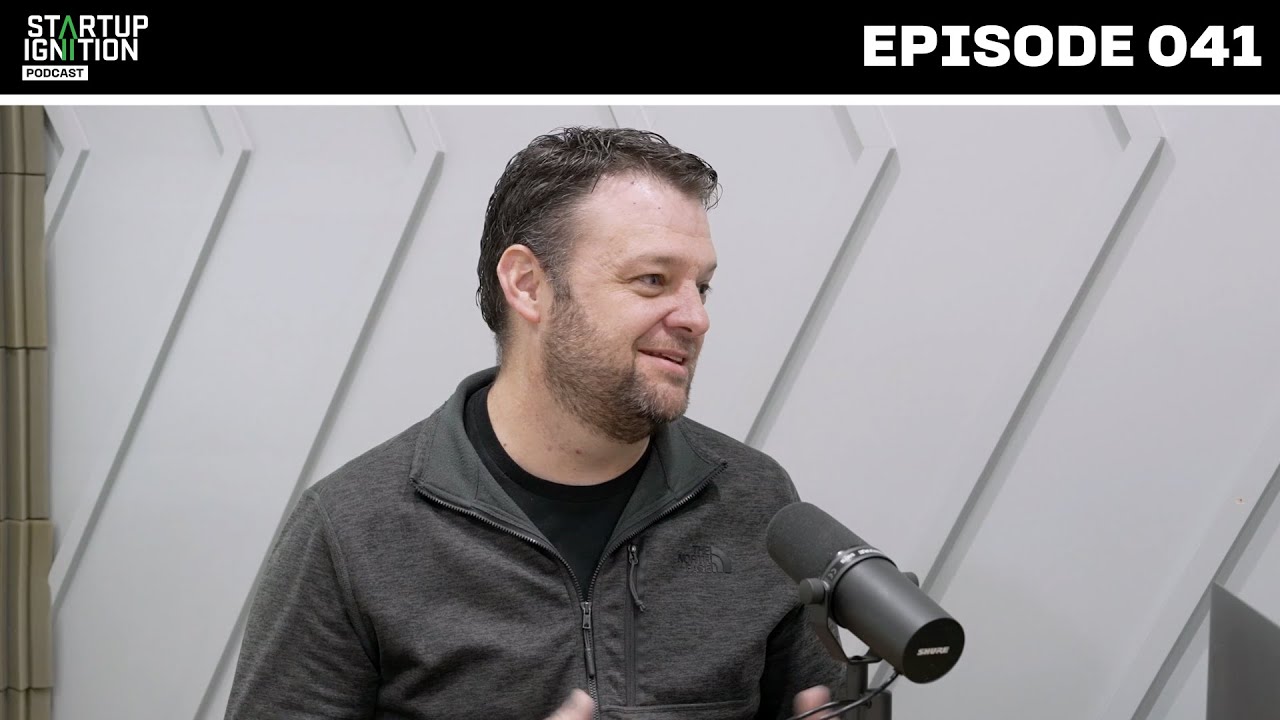
Matt Stapleton shares how he turned spreadsheet-based problems into two successful SaaS companies — Capshare (acquired by Solium/Morgan Stanley) and Spiff (acquired by Salesforce for $419M). He covers how to spot SaaS ideas hiding in Excel workflows, co-founder dynamics, and what it's like to build and sell multiple companies.
Matt Stapleton is a 3x founder who co-founded Capshare in 2011 (cap table management, acquired by Solium Capital in 2017, later acquired by Morgan Stanley) and co-founded Spiff in 2017 (sales commission automation, acquired by Salesforce for $419M in February 2024). He served as VP at Salesforce post-acquisition before departing in early 2025.
Show full transcript
He's a multi-time founder, multi-exited founder. You co-founded Capshare that was acquired by Morgan Stanley. Later, you co-founded Spiff. >> I loved I was the weird kid that kind of loved business as like a 14year-old or 10year-old. >> I'd love to pick your brain on that cuz that's interesting as well. Like getting, you know, you know, an investor to actually be a a potential inquir acquirer, right? >> [snorts] >> beginning with the end in mind of like knowing that this was a possibility and something that we should be encouraging along the way. So often there's a like no don't talk to me I'm building this business and you can engage and talk and say no but we'd love to stay friends and build those relationships over time that goes a long ways. If I sell privately, I still get a good value. But if I could go public and wait a few years and have it become a successful public company, my shares would go higher and I could get liquid. >> I don't know what investor even allowed that to happen. That was crazy. [music] [music] Rock. [music] >> Everybody, welcome back to the Startup Ignition podcast. I was confused on what camera I'm looking at [laughter] cuz we just switched up the cameras in the room. But I am Tyler Richards, your host, and John Richards, your other host. Hello. >> We are the Startup Ignition team and we are very excited today to welcome our guest Matt Stapleton to the room. He is here live and in person. >> Thank you for coming on, Matt. I have a bio for you and I I want to read it real quick so everybody off the bat knows how cool this guy is. But today's guest is Matt Stapleton. He's a multi-time founder, multi-exited founder. Um, you co-founded Capshare, which was a cap table management platform that was acquired by Morgan Stanley. Later, you co-founded Spiff, the sales commission platform. And honestly, the whole desire of this of you coming on the podcast sprung from Jiren being on the podcast. And John was like, we have to have Matt on the podcast. >> Yes, we have to have Matt. [laughter] >> So, you were co-founders with Jiren on Spiff and co-founders with Jiren on Capshare. You guys share very similar work history together. Obviously, probably point. >> Yeah, brothers by this point, right? I know how it is with co-founders. Um, but uh, Spiff was acquired in 2024 by Salesforce, where is which is where you're currently at, correct? >> Yeah. So, I was there for a year. >> Oh, okay. >> And it was by design. The way that we set it up is I was there for a year. My job was integrating SPIFF. >> Uhhuh. >> Getting everyone settled in, team settled, systems cut over. So, I was kind of in charge of that on the SPIFF side >> for a year and then I cut out. So I've been gone for a year now. >> Okay. So you you've left Salesforce. It's been a year. >> We'll hear what you're working on. >> I know we can talk about it. >> Okay. So from building fintech to navigating exits to scaling SAS, Matt has been in the trenches. He is a co-founder again, multiple found multiple time founder, multiple time exited founder. Um you've held roles in VP, co-founder, CEO, and most recently obviously you were a VP at Salesforce. that you just an early stage founder and you probably have written the book on lessons on what to do to get from idea to exit. So we're excited to have that. >> He forgot one important thing out of his history. His most prestigious thing he's ever done which guest teacher in the startup ignition boot camp. >> Oh yes. That's true. >> Yes. He would come in and teach cap tables and how to use the cap share software and how to >> huge supporter back in the day when you were doing cap cap. >> Then he got too successful and busy and he didn't teach. [laughter] >> Sorry. Happy to come back sometime. >> Thank you for coming on the podcast. We appreciate it, Matt. Okay. So, I do an icebreaker. We do an icebreaker with every single guest >> and we're going to do a fill in the blank icebreaker today. Okay. So, I'm [clears throat] going to read you something and I want both of you to tell me what that blank should be. Okay? Can be one word. It can be a paragraph. It can hopefully not take three minutes of explanation, but you can fill it in with whatever you want. Okay. >> All right. Let's go. >> Okay. Here we go. The first one is the real reason founders love AI so much is because blank. >> Because it can take tedious tasks and make them faster. >> So, efficiency then. Yeah. How about you, Matt? The real reason founders love AI, >> uh, [sighs] it's at what it does, it's so good. >> Yeah. >> And I'd say it's magical. >> Yeah. >> Yeah. >> Because as a founder, >> you're solving these like hard problems. >> Yeah. >> And so having those moments where AI comes in and assists is awesome. >> Yeah. And what like yesterday I had to do something and I wanted to run simulations and I don't like it giving all the fluff explanations. So I said I don't want any fluff. I just want you to give me results. I want you to run like a hundred simulations in the background and then analyze the results and tell me the outcome and it did it and it does it. I could if I had an assistant have to go do that in a spreadsheet. Oh my gosh. My [laughter] my wife is working with her father on improving some things on his business. He's got a small business um selling grain and she's helping with his website and she hasn't built a website before or anything like that. But with like tiny bit of guidance from me and then just talking to the AI all day type of thing, she's made more progress than I would have made after like a couple years of college. Yeah. Yeah. >> So are you are you technical? Are you like a a technical co-founder or not? No. So you're you are uh the business side and the marketing side, sales side or or what what what do you focus on? >> So and Jiren and I'm sure we'll talk about Jiren more later. He's awesome. Yeah. Um like you say, brother, it >> work marriage is probably the the best, you know, kind of compare comparison there. Um, but we're odd compared to a lot of founders because I think we kind of split up this the CEO side. Jiren's always been the CEO and rightly so. Um, but we would always have a technical co-founder >> that we would bring in for what we were doing. But I tended to be the more grounded and more boring of the two co-founders on on the business side. >> Yeah. Doing the doing the nitty-gritty stuff behind the scenes where Jiren's probably up on stage raw. Hey, let's fund raise. Hey, let's push this sales thing. Let's do this. And you're back there like, uh, here's the analytics. Here's the analysis. Here's what we need to be doing. I think the most like generic comparison that people would kind of gravitate to well is it's kind of a Steve Jobs to Tim Cook >> Yeah. Yeah. Yeah. >> type relationship as far as like the team internally tends to know me a little better than Jiren as far as like interactions >> on that side. But it's it's finance and BI and legal and HR and you know >> postclo stuff that. Back to AI though, I think it's that efficiency and just what you can do with it. It's I mean it there's so many things you >> Yeah, 100%. Okay, another fill in the blank. You ready? >> The worst cap table you've ever seen was blank. >> So, I won't name the company. >> Yeah. Do not name names. Do not name founders. >> I won't name the company. >> There's some horrific cap tables out there. >> Um but it it was a local company. Um, and I worked I worked with them personally cuz no one else could kind of like wrangle it. >> Yeah. >> Um, >> we've seen that before. >> It had it had 16 classes of preferred >> 16 classes. I've never heard of 16 classes >> and and they interacted. So like I've always been an advocate that it's possible to like waterfall distribute out like a hey if a company exits like you can go through like a waterfall and people would push back on me and say like no because if someone makes a choice it's like well if everyone is logical and optimizes their choice type of thing then it really can like float. Not on this one. >> Yeah it was >> it was very circular as far as the logic on that. I'm going to be an acronym police here by just saying it's not an acronym but it's a term waterfall. So to our viewers and listeners and you are you know mostly you know budding entrepreneurs and those interested in entrepreneurship in the early stages waterfall is actually something that happens at the very end of your entrepreneurial journey sometimes on the very last day before you turn the keys over to somebody else where they say okay somebody's buying my company and you have to calculate how the money is all going to be distributed to the ownership and that's called the waterfall and that waterfall can be quite complex And this one you just said sounds nightmarish for me. >> It was it was a nightmare. And and the biggest thing that made it a nightmare was um kind of everyone at the table wasn't professional. So it's like it's attorneys who aren't corporate startups aren't venture attorneys and a founding team that's never been a founding team before. And so every and investors that weren't typically startup investors and so everything was custom >> negotiated just hodge podge. Yeah. >> So so just another lesson uh we talk about this all the time but you're bringing it up. Uh when you're a startup and a founding team >> all attorneys can spin up an entity a corp an LLC whatever but you need a venture attorney to do the latest things in the venture world and get it done right and make sure thing things are clean. And that's what you're saying. It it it's attorneys that don't know the venture world can mess things up big time. It's just like we say it's like a doctor. You don't have a neurosurgeon fix your knee. You don't have a orthopedic surgeon fix your brain tumor. And >> I do want to give you a chance to answer the question. >> I can't compete with 16 classes of preferred stock. But we tip our hat to But there's nightmarish ones. I do it in the boot camp. You've seen one. There's a company here also in Utah that uh one time faced such a cradown uh that the founders and employees stock options and the founders stock went to nothing and they all had to be optioned back up after a big massive cradown and those kind of things. So you look at the captive and go, "How come the founders only have options and no actual stock, >> you know, and and you, you know, you see things like that, but 16 classes of preferred stock?" My gosh. [laughter] >> Yeah. >> I don't know what investor even allowed that to happen. That was crazy. Like why would you invest after seeing the 15 classes and you're like, "Oh, I'll be the 16th class." >> It's kind of related to cap table, though. Also, when you see, okay, this person's bought common stock and they've it says on the cap table there just common stock, but there's no footnotes. Well, they have anti-dilution rights that they've been granted. You need to put that on the cap table, right? That there's anti-dilution rights. But that kind of messed up stuff is you go in and you're People don't understand, you founders need to understand you're selling securities as a founder. You're and there's securities laws when you put a cap table in which you founded cap share a cap table company a cap table to an investor or to somebody saying this is my ownership structure and it's missing information that is material to the actual ownership of the company that is securities fraud. Yeah. >> And you have to be very careful. Right. And that and that's why your software was like one source of truth for a founding team so they didn't mess themselves up. >> Yeah. And and I know we're going deep on this one. You're good. This is good stuff. I'll get off it on a second, but what I'd say cuz I hear us talk here >> and I know the founders that are saying, "Yeah, but guys, like I can't afford that." >> Like I I just, you know, took all my savings and, you know, afford the legal work, the like I can't afford to do it right. >> And boy, I can sympathize with that. um and have gotten trouble myself for not affording to, you know, but what I will say is there are awesome libraries online of >> template startup docs that you can follow that do a good job of like look, it'd be better to have an attorney do something, but those template docs are going to be a lot better than getting your brother in. >> Can't you say this though? If there's one, if there's one place not to skimp, it would be with the founding and making sure the cap table's right. Right. >> Yeah. Generally, yes. And and the other thing that I would say is um with a good team, there are amazing law firms, really prestigious law firms who will wave fees until your first round >> or delay fees at a at a minimum and things like that. Um that can also go a long way. >> Yeah. Yeah. >> Okay. Next fill in the blank. You ready? This one's non business, so maybe we don't go as deep into this one. [laughter] >> When you turn on your TV tonight, you all should be watching blank. >> What are you guys watching? The truth comes out. I watch YouTube and catch up on the day news through YouTube now more than anything because long form news programs on whatever news channel you watch for me. So, I go to YouTube and catch up. Like the last few nights, one of my first things to do, I turn on the TV and I'm watching the updates on what's happening in Iran because it's historical. >> Wow. >> Yeah. >> How about you, Matt? >> John's got a better answer than me. >> When you [laughter] when you turn on your TV tonight, you should be watching Blank. By the way, I was thinking like a binge of show or something. But [laughter] >> no, but I you got to understand I I saw what happened in 1979. I was actually just coming into adulthood in 1979. And you know our embassy was taken over and they held kidnap they kidnapped 400 people for a year you know and stuff like that and now that whole regime that did that is in the process of being overturned and it's crazy what's happening and >> it's so for me I it's I it's but what the point there is YouTube I YouTube I'm paying now not to have the ads which makes YouTube >> enjoyable instead of annoying and that's how I catch up on stuff. It really Yeah. >> Yeah. >> It's awesome. >> How about you, Matt? >> I'll be lighterarted. I >> was like, let's turn the mood around in here for [laughter] a second. >> Um, but >> Avatar the Last Air Bender. >> Yeah, >> I I love cartoons. I like anime. >> I Yeah, a little bit, but >> that's cool. No, >> I like I like easy. I like soft. The the world is hard enough for me. So, >> honestly, I've never watched any of those shows, but they're highly rated on like IMDb and Rotten Tomatoes. are like the highest ranked shows. Great. Yeah. So, all right. I might have to give it a try on Matt's recommendation. >> So, now that you said binge, what are your two best binges lately? >> Um, I I'm really liking the Taylor Sheridan shows. Have you like Yellowstone? >> Oh, those. Okay. >> And um what's >> 1863 and all that? Well, and there but he there's one I looked up on IMDv and Rotten Tomatoes and his highest ranked one is called Llmen Bass Reeves and it's about the first black US marshal in the territories. Oh, really? >> And it's a really good show and I was like why is this so highly rated higher than Yellowstone and these really prominent shows? I'm like wow let's watch this one. So me and my wife have been watching that and it's really good. >> How about you? What's the binge? >> It's awesome. I mean, I go back to things like Big Bang Theory, Parks and Red. >> Yeah. Okay. The classics. Yeah. >> Um, okay. Here we go. I'm going to do another one, maybe two more. The key for a founder to get his startup acquired is blank. >> The key to acquisition or getting acquired is blank. >> Revenue. Revenue. Revenue. >> Revenue. So revenue cures a lot of a lot of woes. >> Yeah. And just that you have um you become an acquisition candidate in my opinion when you hit certain revenue levels because that's what the >> there's you know believe it or not there's a massive ecosystem of scouts that help large companies find acquisition candidates. Yeah. No. >> And and until you hit those metrics, >> you don't rise onto the radar. I I don't know about you guys, Matt, but my company when we sold, we were first head-hunted by some random firm, >> some random accounting firm was like, "Hey, we want to talk to you." And they were asking for access to financial documents and stuff. We're like, "Why would we give you random Joe Schmo?" Then later we finally engaged and a month later, they had a multi-billion dollar company be behind them. I'm like, "Oh, this makes sense." So, yeah, but I'm okay. How about you, Matt? I'm interested cuz Spiff sold for what the Salesforce is public. It was 400 million was it? >> Yeah. So it was like 420 million. That didn't include the cash on our books that we distributed to investors. So it was almost 480 million with that. >> Wow. Wow. >> Um so yeah it was >> So what's the key? What's the blank? >> I mean I agree with John revenue 100%. That real progress. >> The world runs on money. You have to make money to get money. But for something a little bit more I guess non nonobvious something that you know founders may not think about um for in both with spiff and capshare I would say that building beginning with the end in mind of like knowing that this was a possibility and something that we should be encouraging along the way. So often there's a like, "No, don't talk to me. I'm building this business." And you can engage and talk and say, "No, but we'd love to stay friends and build those relationships over time." That goes a long ways. >> The other part of that is I think often founders will say no prematurely where they're like, "Well, we're not going to sell, so no." where the right answer is often a hey we're excited about what we're doing right now I'm not sure that now is the right time but we'd love to talk >> and spending you got you can't let it balloon and take you away from like building a business which is most critical >> but spending 5 to 10% of your time at any given time on some of that >> um will pay off over time >> so it to summarize your answer is it is it to prepare keeping the future in mind and prepare for the future and keep an open mind. And I love that answer because it also it correlates with your answer on on cap tables is hey >> build this thing like you're going to be successful like you're going to have a future of success and then you will have a future of success. It's the same thing with entity structure cap table management or or acquisition possibilities and frameworks. So I love it. Okay. >> And we had every intention to take Spiff public. >> Yeah. That was kind of the goal, the chip on our shoulder that we want, you know, but we still kind of cultivated I Salesforce invested in our series B, led our series C before eventually acquiring us. >> And so there was relationship building going on there for like three or four years >> for an option that ended up materializing. So like, >> yeah, >> which is another talking point for later in the podcast, too. I'd love to pick your brain on that because that's interesting as well. like getting, you know, you know, an investor to actually be a a potential inquir acquirer, right? Um, >> okay, one more. >> Yeah, one more and then we're done. If I weren't a tech entrepreneur, I'd probably be doing blank. If I was not a tech entrepreneur, I'd probably be doing blank. What do you guys What What What are you filling in the blank with? >> I mean, well, I might be another kind of entrepreneur. >> Okay. So, okay. [laughter] If you weren't an entrepreneur, I would be doing blank. >> Um, well, uh, either medicine, I actually want to be a doctor. I was accepted to medical school, but ended up not going and becoming an entrepreneur instead. Or a teacher because I love teaching. >> Teacher. Okay. How about you, Matt? >> I mean, I left Salesforce a year ago. >> Um, I'm full-time dad 80% of the time right now. >> Oh, wow. >> So, I am for all intents and purposes right now, I'm a stay-at-home parent. Yeah. >> But um the other 20% I am coaching >> on a few boards and teaching. >> Yeah. >> So the the teacher thing I debated >> that's why you like doing it with us. And >> I did I I debated leaving college if I wanted to just do the like master's and PhD and go very very academic. I like the teaching thing. >> Yeah. Yeah. >> Um so teacher. >> Yeah. Teacher as well. Wow. That's interesting. Well great. That was my fill-in-thelank game. I don't know. I think it took like 20 minutes, but hey, it's okay. I loved it. A lot of teaching principles in there. A lot of awesome frameworks. Okay. Now, I want to get into Did you want to say something? >> No. >> Oh, I thought you were about to say something. I wanted to get into your background, Matt. Like where it all began. >> You have these awesome acquisitions under your belt. Again, we just talked about it. You just expressed that it was around 420 on paper, but really 480 behind the scenes. $480 million acquisition to Salesforce. Where does it begin? Like where did you grow up? Where did you go to school? I know that you guys have you talked before the podcast that you were >> a lot of people wonder how we know our guests and stuff like that. Okay. So, >> um Matt took my creating new ventures class at the university level >> and it's was kind of a class that was hard to get into. You had to metriculate into a hard to get into a university. You had to then be in the business school and then and then accepted into the business program and then you had to wait till your senior year >> and that's when you took it your senior year. >> So it was a 400 level class in the business school. >> In the business school and um it's similar you're now teaching a similar class science department of school. Yeah. >> And he's kind of following my footsteps in some ways and so it's kind of fun. But yeah, that's when Matt and I met and took that class and then um he started his entrepreneurial career and we stayed in touch and then when he started Capshare, he came in and helped us in startup ignition. That's how we got to know each other even better and that's kind of that history there a little bit. But before that Yeah. Where did you grow up and how did you find your what was your major at BYU? >> It was entrepreneurship. >> Yeah. So ma business management entrepreneurship >> business management it's now it own major entrepreneurship emphasis. Yeah, that's okay. So that's what I did too. >> So before you how did you choose that and what made you choose that? What's your pre declaring that major history? >> So I mean go >> how old are you? Are you my age or you >> I don't know. Third I'm 38. >> I'm 38. [laughter] >> What year did you graduate high school? >> 2005. >> Okay. I was 06. Okay. Wow. Yeah. >> Is Jiren our age or Jiren's older? >> Jiren's 13 years older. >> Yeah. I was going to say I knew so I just associated you at Jiren's age. >> Well, we I feel like I >> we play a fun game where we'd ask people on our team who they thought was older. [laughter] >> Yeah. >> And 70% of the time they got it wrong, >> man. I think we were in a few classes together and I think we had to have been. There's no way we weren't. Okay. Wow. That's funny. >> Cuz that's your major. >> Yeah. Exact major. >> Uhhuh. >> And I took his class, you know, like three times. But Yeah. [laughter] >> Yeah. >> That's awesome. >> Yeah. Okay. Go on. Sorry. So, I mean, going rewinding backwards, um, so I did have the example that my dad had his own business. >> Yeah. >> Um, that he was running with a brother in it was construction software. >> Where was this at? Where did you grow up? >> Here locally, Utah Valley. >> Okay, got it. >> So, I went to Pleasant Grove High School. >> Oh. >> Grew up in Y. >> Okay. >> Um, so I had that that example. Um, I loved I was the weird kid that kind of loved business as like a 14-year-old or 10year-old. I, you know, wanted to create like a scooter park as, you know, like 10-year-old Matt type of thing. And so in high school, I took the business classes they had. There wasn't much of it and, you know, it was questionable as far as the quality of some of the stuff, but >> I started a company. I owned teentutors.com and started a company that was teenagers tutoring other teenagers. And so I'd go to parent teacher conference with like stacks of flyers [laughter] that I printed out and I'd just put them on teachers desks so that like when they're meeting with parents for parent teacher conference, it's like oh if you're help type of thing like [laughter] here's a number that you could call. These guys are great. >> I love that. Yeah. Um, and I I made no money at it. Not not really type of thing, but went through the process of like setting up a bank account and setting up like a And a lot of that helped me later because there's certain walls that people have a hard time with like, well, how do you do that? Where do you start type of things that people get stuck on and that was a great experience for kind of learning some of that. So, >> yeah. Yeah. I so I had that um was very like into the entrepreneurship path and >> so that when you went went to so when you went to college you were very much I set on I'm going to be an entrepreneur. I'm going to be a business owner. >> Yeah. When did you how long before you declared the major of entrepreneurship? What uh >> I I mean I I took I was accepted into the business school while I was at the MTC. >> Oh, really? as I so I did one year and then was accepted into >> you went to serve a mission for the church >> and went to serve a mission for the church. >> So you did your freshman year and you did that and then you found out when you got back you were going to be in the business school. >> Yeah. Yeah. So I I deferred at that point and then I was at school for two more years after my mission. >> But I'd kind of declared that that was my intended the entrepreneurship thing. >> And which was your favorite class? [laughter] >> That's a good question. >> That's a loaded that's a loaded question. But that's okay. I can dodge a little bit. There's a communications class that's an kind of an entry levelvel communication like business communications class that I happened to get the guy who wrote the textbook. >> Yeah. >> Um that was um phenomenal for me. >> That's awesome. That's >> because he he focused on things like like I hated writing >> but he focused on things like no we're not doing long papers like if you can do this in like two paragraphs do cuz the entire point was like business communication being concise and that was ended up being a super super helpful >> and now AI does it all. >> Yeah. [laughter] >> Do you remember do you remember how you had to take those weird three classes to get into the business school though like economics and >> something you just >> I loved that economics class. >> Yeah. the one, but there were two others. Calculus, you had to have calculus, I remember. Right. Some kind of math thing because now they've made the pre prerequisite classes more businessoriented. >> Really? Oh, that would have been glorious [laughter] for me. Oh my goodness. >> Math has always been my thing. I was going to say the other class was probably financing new ventures. >> Yeah. >> And I always I mean I'm kind of the like I was CFO for SPIFF and you know, so the number side has always been kind of >> Yeah. >> interesting for me as well. Yep. Y and so that financing understand I mean that's where I first heard what a cap table was and as you know some of those things was kind of >> so how do you jump to that what was your very first thing was capture your first thing no cuz that was much later did you start anything in college >> um I tried a couple times weekly nothing notable really >> what was your first real like okay I can make a living from this thing venture >> well and I will say that like I struggled cuz I graduated quickly I got married my senior year and so everything all of a sudden kind of hits the fan as far as a like what am I going to do with my life >> and so I I iterated through a few things that senior year trying to figure it out. Um, and one thing, and the school may be better now, but one thing that I kind of struggled with is I asked a couple of my teachers like, "Hey, so if I'm interviewing for this job, like, do you have any advice for me?" And I got the feedback like, "You shouldn't be interviewing. You should be hiring." It's like, "Well, yeah, but I'm 22." >> Yeah. >> And like, I don't know, you know, and so like one of the things that was so I didn't know what I was going to do. I ended up, it was also right after the economic slump. >> Yeah. >> Where, you know, 2010 and so things were starting to come back, but hiring out of colleges was really, really low when I graduated. >> Yes. Yes. >> Um, and so I graduated with two internships, 20 hour a week internships. Um, one was paid, one wasn't. Uh, I ended up turning one of those, the one that was probably more in my interest was a company called Funding Universe. >> Oh yeah. >> That converted to Lendio, >> which is now >> Lendio. Uh-huh. And so that was one of the internships and I was on they had an equity team that would matchmake entrepreneurs with angel investors. And so I was on that team as an intern. Eventually it turned into a full-time job. um really lowpaying for full-time. I think I was making like 30 35 grand a year type of thing and was just excited that it was a salary and like real. >> Um >> hey, back in those days that that was entry level pay like people are really shocked 30,000 but that's >> I know >> um >> shows our age I guess. >> And then they converted to Lendio which was all focused on the bank side. I wasn't on the bank side team. Um, and so I got laid off and so then I kind of scrambled trying to figure out what I was going to do next. >> What What What's the timeline here? How like what >> This was 2011. >> 2011. >> Uh-huh. So 2011 got laid off, start of the year, scrambling trying to figure out what to do next. I'd been introducing entrepreneurs to some of these like angel investors and seed funds. And so I reached out to them cuz I one of the things I was interested in in college was like maybe I'd go into VC. And I remember saying that in one of my classes and an MBA student, he was like, "Well, cool, but what's your real plan?" >> And I [snorts] didn't understand what he meant until he explained like saying that you want to go into VC is like saying, "I want to get into the NBA, you know, like as a basketball player." He's like, "That's great, >> but like what's the real plan?" >> Yeah. Yeah. >> And uh so I was like, "Well, maybe I'll go talk to these guys." And I had one fund say, "Matt, we'd hire you if you had any finance experience, particularly um any valuation experience." So I was like, "Okay, I'll go get valuation experience." So I looked up like valuation company in Google and I think I got a list of like 13 in the country. I was like, "Okay, well there there's my calling list." And so I reached out to those and one of them happened to be based in Utah and they took a meeting with me and the answer I got was, "Matt, we're not hiring, but you're smart. Um, if you want to dial for dollars for us, we'll pay you commissions on anything you close. So no salary or anything, but we'll pay >> what were they selling? >> Commissions. Valuation services." So this is like 409A valuations and you know >> and other types of things but it's places where for tax and accounting reasons you needed a valuation of your company. >> Y >> um Scaler analytics. >> Oh yeah we know who was scalar. Yeah. >> So um so I met with them. They're like if you want to dial we'll pay you commissions on anything that you close. And at that time, everything about sales seemed sleazy to me. >> See, you know, like all I knew from it was a very like sales culture in college of the doortodoor sales and I'm this more financey guy that like so everything about it I was like I don't want to do that but I wanted into the company. So I said yes >> and the next three years were the best for my career. really >> that sales experience was absolutely life-changing. >> So, you forced yourself to do it. >> So, I forced myself to do it. The plan was to only do it for like two months to kind of keep my keep something on my resume so I didn't have >> Were you good at it? Is that why you stayed so long? So, you were making money. >> I mean, it took I enjoyed the culture. There were a few things about the culture there that I loved. Um, and then it but it took me I got my first paycheck there five and a half months in which we're young, you know, we're living on ramen at the time of thing. But I got my first paycheck. My first year there I think I made 25 to 30 grand type of thing. So I, you know, started to pick up the second half of the year. But the next year I made 70 and the year after that I made 120. >> Wow. And um the year after that I was on track for about 220 which was really good back then. >> Oh my gosh. >> Um 100% commissions. >> Yeah. Wow. >> And you know so it was all just kind of pay for what you kill. But the founder was a guy named Jiren >> Paul. >> And Jiren he'd started it. He then left for seven years to actually work in VC and then came back. But immediately he started looking for software that he could build. Um, >> didn't Jiren work side by side with Jeff Croll at VSpring? >> He did. >> Yeah, that's that's where he went and did Yeah, he told us that story. >> And so so he started Capture as an internal kind of project at Scalar. I loved the startup thing. I loved software, the math of the cap table. Like all of that I loved. And so eventually he sold and I helped him kind of on that sale process, but he sold >> he sold scaler analytics analytics to focus on capture full-time and that's kind of where we >> took off with capture. But that experience selling like the amount that changed me from a relatively bookish like accountant >> and kind of turning your nose up at sales that's beneath me. Yeah. >> Yeah. to like understanding and appreciating just how hard sales is >> and how and how it's the lifeblood. >> Yeah. >> And is would you recommend that that you know early stage founders or you know budding founders who are thinking about starting a company or even in the process of founding their company that should they take like almost a sbatical like you did and go force themselves to learn sales somewhere? >> I I mean you tend to have two types of founders. You have sales founders and you have product founders. The general rule of like a simplification that's generally true >> of the co-founding team. Yeah. >> Um and I what I would say is whether regardless of who you are or where you are on kind of any spectrum as a founder. Um, I have a few companies that I work with right now that I recommend that they play SDR, BDR, meaning that they dial unknown, you know, type of thing. >> Just cold call. >> Cold call. Yeah. Do a 100 calls a week for the next month or two because there's so much you learn about your own business. there. So, so even if they're not going to go take a sbatical type of thing, learning to get out and talk to people is super >> a crucial skill. Yeah. >> Yeah. We always say that especially in the companies that we're funding because we now run startup ignition ventures, which is a preede fund. Anybody that we invest in, we're like the CEO founder needs to be owning the sales process. Do not pass that baton too early because we just see train wrecks happening. So, a huge requirement for our funding is you got to sell. You have to sell. >> Founder led sales. Listen, >> founder sales. Yeah. So, okay, cool. So, now I know how you met Jiren and he's 13 years older than you. I'm like, how did you and become buddies? >> Yeah. I'm a little question there on that. So, he's 13 years older. He's the founder of Scalar Analytics and he's selling the company and you had become a top sales rep, I'm guessing. Okay. and he noticed that obviously along the way and that you were probably a good thinker, good math, whatever. And then so when he says, "Let's take Capshare and do something with because the acquirers of Scalar didn't want Capshare." So, right. So, you took Capshare and created a new company and he did he invite anybody else from Scalar or just you along? >> I was going to say who who's the co-founding team of Capshare then? >> Yeah. So, um so he started as an internal project. The guys that bought Scalar were a couple of the guys that were working there. So it was it was kind of a management management buyout. It was a management buyout situation there. They're awesome. Yeah. They were running the dayto-day on the scalar side at the time. So it was pretty natural for them to you know be able to take over the ownership there and kind of own their destiny there and they've done an amazing job. Um, but we were building out this cap share internally and so I there was a while there that I was just selling both depending on kind of the situation where it's like hey this is an opportunity to sell cap share and scaler wasn't built with like a marketing team. I mean, this is a this is kind of a financial services business. Like, it's not the >> the on the tech side, you end up having like very like functionally focused people as you start to scale up. >> Um, but there was no concept of like marketing at Scalar. So, like I would I'd find leads by watching TechCrunch for companies that had raised money. I'd reach out to them. I'd close, you know, so it was kind of all of the steps in the process. And one of the things that I did there was automate myself out of a job. >> Mhm. >> Where I I would create email lists that were just I was just using like canned responses in Gmail type of thing. Like I didn't have like a HubSpot or more advanced than that that was like automating any of this. >> But it made it so that like that last year when I was on track to do really really well at Scaler, I was also only spending like 5 to 10 hours a week working on Scalar. >> Mh. um for for that because I'd automated my job a bunch. So most of my time then I could focus on selling cap share >> and kind of helping with like product vision and stuff like that on that side because it was what interested me. >> Yeah. >> And so that that's kind of what got me into that spot. >> Maybe for the audience, why don't you tell them what capture was and it or even is and you know the basic product behind capture. >> Yeah. And and at this point it doesn't exist. >> Oh, it doesn't exist. >> So I'm not really like um hawking a product. >> Yeah. Yeah. >> Unfortunately. Um but so cap cap share we got the idea because we were doing these valuations. >> The class of product exists though. It's very important. >> Very important. >> Capture went from a leadership position was acquired and the acquirer eventually just mothballled the product. Right. >> It did it. Yeah. Effectively. >> Okay. But what tell everybody what the product is. >> So a lot of people were keeping track of their cap table, who owns what in the company um via Excel. >> Mhm. >> And that was something that we needed to value the company because we were figuring out what a share in the company was worth. And so we needed their cap table and there were some details there. And all of the time there was data missing. You talk about the horror stories of selling a company and you know securities fraud type of thing. There's always data missing. So, we saw an opportunity to create a product where it would help with that data fidelity. It would help with version control because everyone was just using the same SAS cap table that they're logging in and kind of looking at all of the same details. And then there was some compliance things that you had to perform on your cap table that were like annual requirements and hairy and >> and they would they would start very easy. founding cap tables, three guys, >> they split up a percentage, they have so many shares, easy. But after a year or two of taking an investment, having an option plan, you know, and nowadays with safes >> and then there's convertible debt, all the footnotes you need to explain things that are contingent, right? All that that overwhelms the average founding team to do it in Excel, >> especially because it's not their expertise. It was cap table management software. But at the time, was there any other software like that out there? When did Carta enter the scene? >> Within months of us, we started within months of each other. >> Wow. >> Um, so we were very competitive through that kind of that process. >> Yeah. Yeah. >> And then and then the other ones came in much later, but you were one of the first ones to do it. >> There were they were for larger companies and for public companies. Yeah. There were products that that existed, but kind of startup cap table earlier stage type of thing, nothing existed. >> And the rule of thumb was a startup could get that kind of software for free, that's how you did the loss leader to get them using the product and as they grew, you got subscription revenue. >> We had a very effective premium strategy where they could get in and once they got up to like 20 shareholders >> and they had to start. >> And so how long did how long from the po the month and year you started Capshare? How long before you sold Capshare? >> Um, it was probably six years total. >> Six years >> from Capshare. >> And then, um, and then who bought it? >> Um, so it was a company called Solium. >> Yeah. >> Their main product was called Shareworks. >> Okay. Oh, yeah. >> They got bought about >> Shareworks was pretty prominent in their field, wasn't it? >> And very good at what they did. Um, they got bought about 9 months, a year after they bought us by Morgan Stanley. >> Okay. Um, and Morgan Stanley Share Works is now Morgan Stanley's flagship product in the space >> and they kind of just eventually petered out and mothballled cap share >> because they were so focused on the public markets. Yes. >> And we were very much like the earlier stage. The acquisition the premise on the acquisition was that it would be a feeder as companies grew they would grow into share works which made sense but once you had the bank behind it that could bring it in with >> Yeah. with big clients >> with big clients. >> What did shareworks exactly do? >> Same thing. >> And it's >> just later stage. You just >> if you're a public company and you give options to your employee, >> you still have to track the vesting. You still all of that stuff still needs to be done. >> Yeah. >> Shareworks does that. >> Yeah. >> So they have clients like SpaceX and Amazon and you know >> massive companies that are doing a ton of issuing. Yeah. And so was it sad to see eventually after a time and I it seemed like it took a year or two or three before they moth balled >> like four years. It took a long time. >> Was it sad when you saw it mothball? >> Yeah, >> of course. I mean it was it could have been the brand name that Carta is right. Um >> you could Yeah. and Carta. I mean, we started at the same time when we sold um Spiff was about 17th of their revenue, which I was proud of given the fact or sorry, Capshare. Capture was about 17th of a couple [laughter] years there, Matt. I know. >> Okay. Capshare was about 17 >> 17th their revenue, which I was proud of because we had raised shareworks. You're saying >> of Carta. Oh, 177th of Carta, which I was proud of cuz we'd raised 2 million during the same period they'd raised 176 million. >> Yeah. Yeah. >> And so we were competing in an environment where they were throwing 2.5 million a month at SEM. >> Wow. >> And we'd raised 2 million total in our existence and we were direct competitors and they would love to have squashed us out. We actually started into the acquisition process >> from an offer from Carta. >> Yeah. M >> so it was them that were like okay let's get rid of these guys >> um that kind of prompted >> $170 million went into Carta in the same time >> in that in that period and so yeah they outf fundraised us they saw a bigger market opportunity than we did we thought we were going after a relatively niche market size >> and they're like no this is every startup in something larger to be fair to get to the size that they've kind of gotten to they had to tack together like 20 different markets. So they got into like fund management and they got like there's a lot of auxiliary things >> there. They're our fund manager actually. We use them for fund management. >> They do good. >> Yeah. So okay. So you then sell the company that acquires you. >> What month and year was that that you sold? >> That was we sold in October 2017. >> Okay. Got it. >> Was that a big Was that a nice win? Was that Yeah. Huge. Yeah, cuz that had to have been a great exit for everybody. >> So we I mean we we sold for just shy of 20 million. >> Yeah. >> Um we hadn't ra you know we' raised 2 million at the time. >> Yeah. >> And so relatively small but it was life-changing for me. >> Yeah. Of course. So, and I remember uh going to lunch with you and Jiren at Tsunami in Lehi restaurant and you told me you were working on this thing called Spiff >> and I had a lot of commission planning history in my career and all that. Should have invested. >> I don't know if you let me or offered it to me. Maybe you did. I don't know. But that's cool. >> Yeah. So, how did you transition over to Spiff? You and Jiren were like right away were like, "Okay, we're done with capture. Let's get you must have had a vision before cuz you were right on that right away, right? >> We so and we were very explicit with Solium who acquired us. We were we were very open with them. We hadn't been developing SPIF >> but we had the idea for it. >> Um and we incorporated SPI a day before we sold >> and we told them we were we were explicit but we did it that way because of like language in our employment agreements with them and stuff. And how long did you have employment? Did you have to stay on? >> We did. >> Yeah. So, literally, just so our viewers and listeners know, when you sell a company, >> it's very common that the founders get an employment agreement for one or more years, but usually the founders don't stay there very long. In my experience, actually, sometimes a few months, they're gone. But the acquirer wants the continuity for at least a few months, right? >> And you want to do right by them. >> And you want to do right. you want to do, right? Because they're buying and giving you money for their company. But so, um, what was your agreement in selling cap share for? How long were you going to stay? >> Jiren was going to stick around for a year and I was going to stick around for two years. >> Two years. Okay. >> And that was >> that was by agreement. >> That was by agreement. And I committed to the two years in order to help Jiren roll out. >> So, the buying company allowed you to work on the side on Spiff? >> Yep. and upfront and by the way and that's very important to do this to our viewers and listeners if you try to do that in stealth without telling them >> there's risk there's all sorts of >> moral and legal and financial risk so people don't understand that but if you get approval everything's fine >> yeah well and beyond that like there's always the concern of like well what if they own your IP you know type of things and And my experience, I haven't had the experience of like an acquirer going after random IP. What was really important because we were so upfront with it when our series A for Spiff came around. Um the investors were nervous about the overlap there and the like do we own the IP cuz we're not going to put a bunch of money into this company where there's this risk around the IP and we'd been upfront and clean enough about it that the CEO of Solium wrote a letter >> saying they're good >> saying we have no claim on the IP. >> By the way, as venture capitalist and as an angel investor, we have to do that a lot. >> Yeah. >> Yep. >> Yeah. And so, yeah, that's cool. So, you did that and then SPIFF, tell tell us about Spiff. What was the genesis of the idea and what problem were you trying to solve? >> So, I mean, we saw we saw we had our sales reps at Capshare who we noticed that Salesforce was our CRM. Um, and we noticed that it was really common that they'd have Salesforce up and then a spreadsheet up on we they'd have a couple screens sitting there at their computer and they'd have Salesforce and a spreadsheet. And when we dug in to understand what that spreadsheet was, um, the explanation they'd been sharing around one that someone had made a template and then they'd kind of like copied it to other reps, but >> to calculate their commissions. >> Yeah. Yeah. because we pay them their commissions, but we'd pay a month later after finance had had a time to collect like all the info and close the books on the month. And so then we'd send them a commission statement and they'd argue about like, well, where's ABC Co. and like I was supposed to get half a cup for so and so because they were out and you know I took type of thing and so >> chargebacks all these issues >> and so they track it themselves so that they could argue with us but also because like I said I did three years in sales sales is hard >> and so it was motivation that other screen it was it had the deals they' closed but it also had a like if I can close this company, that's $1,200 for me. >> And [clears throat] and so they'd have that sitting staring them in the face to keep them >> dialing and working and keep the smile on and you know, a lot of things that were hard there. And so we saw an opportunity to um >> create software that would >> satisfy sassify that issue. We also liked the fact that we were still selling into the finance team >> which we knew and we were replacing something that finance was currently doing in Excel >> which was a little bit of a thing for us. cap share. We were replacing cap tables that had previously been >> I was saying I'm I'm recognizing a pattern here like you are you're kind of missions or your your I don't know your attack on the business world is sassifying financial things that are usually done in Excel spreadsheets and you just went and created a a cloud SAS product for it. Yep. Like do you feel like there's opportunities around that that even exist today for like the entrepreneurs listening that are in earshot of this podcast that there's opportunities to still go and tackle that kind of potentially? I think if you take that narrow of a lens on it then >> you get into just a couple narrow things because at this point a lot of that has been sassified. >> Yeah, it's been sassified. Um and beyond that I do think in a lot of industries we're moving beyond SAS >> and you know to more and more AI solutions that fundamentally behave a little bit different >> right >> but I do think this concept of taking something that in a business setting is being done in a very manual way whether it's Excel or whether it's a multi-step slack chain that you know >> and figuring out a tidier solution Um there's places that that'll pay off. >> Let me comment one thing though. We still see though to this day almost every week pitches from entrepreneurs or just being out in the venture world where there are still amazingly complex or important very vital to an industry processes done in Excel. It's unbelievable. Still still here we are in 2026 and literally recently tit and I are very aware right now of and I'm talking in massive industries massive sectors of the economy where huge issues are done in Excel and and it's crazy to this day to think that. So my answer and what you're saying a little bit I there's still a lot of opportunity and obviously every SAS company is going to employ AI. Yeah. Okay. Yeah. So, but the whole concept, this is where I don't think SAS is going to be dead is because there's just a lot of opportunity like that. And also this whole idea like I I I have to look into this more, but Elon Musk and saying I'm going to that we're, you know, agents are going to just replace all SAS companies or something. I'm not sure if I fully buy that because it it's it doesn't make a lot of sense to have every, you know, let's say there's 50,000 companies in an industry. Are they all going to have their own custom software? So how does a person move in that industry and know how to run a company? >> Mhm. >> Because if it's done completely differently in each company there the industry itself is damaged by that. Do you see what I'm saying? >> 100%. >> Yeah. And so that I think there's still a lot to go on here. So what I want to say to our viewers and listeners though if by the way come talk to Tyler and I if you find a very important process done in Excel [laughter] >> okay >> because we want to know about it. >> That that's for sure. I I can tell I opened up a can of worms with this question because I I do agree that there is a still a lot of spreadsheet conversions that you can you know pivot over into a SAS and great business models and great startups can be created from that. >> One of our favorite newest investments >> is doing just this in one of the largest industries in the world. >> Yes. And to your point, John, we fully expected to start SPIFF and start with very early stage companies again and you know where they hadn't like because we figured like well once you're mature you've got to have a great solution. Yeah. >> And we were shocked by the scale of companies >> where their process was a nightmare. >> And and it's and it it is fascinating. What would you see? Tell tell me one story of like a company that was mature, big, a lot of employees, huge sales force, and you're just like you're doing it that way. Like what what's a crazy story? >> Um, >> well, I mean, I guess what this is probably not as good as my 16. No, you're good. you know, but what I would say is one thing that we were shocked by, we went into a space where there are competitors. Um, SAP had acquired a company like 5 years before we did Oracle Netswuite do any of this? >> Um, Oracle Netswuite has a company that does commission commission calculations >> that does that does commission calculations. There's a few that have like there's one in the space that's gone public and then been taken private and gone public [clears throat] >> software even for a homegrown industry here in Utah which is the MLM industry networky there >> right they have to do their distribution commissions like crazy >> insurance also has some specialty software type of >> the big companies must have this figured out >> they must have it figured out we were shocked and pleased at the number of situations we ran into where it was a public company who'd gone to one of these compet competitors that were 500 million in revenue or whatever and gone back to Excel >> and we were once again we were so >> their software purchase became a white elephant >> by the way I have history on that I can't I you know one of my companies that went public in the dot era we're there and we bought for $400,000 it was via CRM this is before the salesforce right and that they were the SAP peopleoft remember that we b we literally paid this was a lot back back then. Think about $400,000 for a piece of software that we had to load up on our own servers. Wasn't cloud. It was in, you know, and $400,000 >> and we had tons of salespeople, >> nobody ever used it. >> Yeah. >> 400,000. >> Yeah. So, if you find if if [laughter] the entrepreneurs out there find a situation like that where a a large company or you in your daily job or in your daily workflows, you have been tasked with using a software and you don't like using it, you don't want to use it, and you go back to Excel. That's an awesome opportunity. >> Come talk to Tyler next. >> Yeah, come talk to me. [laughter] But my experience is especially with these kind of boring business software type because like commission I love commissions. Yes. >> Um it's easy to classify this as boring financial software type of thing. My experience in these industries is that whatever exists ages >> and about every 10 to 15 years there's room for a new startup. >> Yep. Yep. Yep. And and that's just the innovation of these larger mature companies. They they they bloat themselves so big that their their managers and the decision makers get so far away from the customer that they don't know what the customer wants anymore or what the usage should look like or what the experience should be and so they go. It all even can come down to let's take a vertical where 15% are using a piece of software and 65% are using Excel. Okay. And then another 10 to 15% are using paper and pencil literally that still exists today >> all over the place. And there's ripe for opportunity. And imagine right now with vibe coding and AI how you can quickly validate >> there's a business. So you do lean startup to validate it. You validate the problem. then hypothesize a business model and validate it and how quickly you can build a product and get in there and take those paper and pencil people and Excel people to your product. You don't even have to go try to win away the top 15% using an existing software. You'll eventually get there maybe, but there's so much conversion from paper and pencil and Excel. Is that what you spent a lot of time doing? Paper and pencil and Excel conversions. >> Yep. A lot a lot of time on those conversions. Most of our closes were some version of that conversion. Yeah. And I will say for the entrepreneurs that are out here right now, I'll admit that like I mentioned that we would have loved to take Spiff public and we're making good progress towards that type of um environment where we could. >> One of the things that made us nervous was a realization that as fast as AI was progressing, we got Spiff to the exit that we got it to in the situation we did, we raised $118 million. Um, and we had a team of at its biggest maybe 320 people. >> Wow. >> And we weren't sure we we thought it fairly possible for a company to raise 10 million and a team of 30 with AI's help >> to disintermediate you >> to do everything we had done to get to that. >> Yeah. So, can I ask you since you said because I think it'd be a good question for our viewers and listeners to hear. [gasps] Why you said we would have loved to gone public. Explain that statement. >> I I mean I know there's so many headaches there and you know the extra like logistical and the problems there. I think we saw something that we did think could be sta a stable business on its own. Um, and >> I'd just seen cap share be mothballled to use your term a little bit earlier. And so we were very interested in finding a place where spiff could exist more permanently. And one of the things that was attractive to us with Salesforce is they still use Spiff, the brand name, and Spiff product. And >> so that's that. But you were kind of saying we would have loved to have gone public, but you're saying your private sale was still very attractive. >> Very, very attractive. It was great >> financially everything >> and we found a home where we feel like Spiff couldn't last for a long time. But but one one thing that is true all other things being equal when you go public my life history is about this you will the valuations will be about two and a half times higher eventually that you get liquid on your shares as a founder. So in other words if I sell privately I still get a good value but if I could go public and wait a few years and have it become a successful public company my shares would go higher and I could get liquid. are forced to not sell them for 18 months and when you go public >> um or excuse me 6 months at 180 days and so it's just interesting but at the same time going public has its own headaches. Yeah. And by the way, we have a history here in the last decade of these spa companies, right? Where you go back a public backwards in a reverse merger and with the spa or special purpose uh acquisition corporation or company >> that if you go look at the track record here in Utah, several companies in the 2021ish era when things were zany >> went public through spaxs and you can go look at their stock records and it's not a pretty picture. >> Yeah. Yeah, >> I I also think in general I mean valuation >> is ultimately a price at which a willing seller and a willing buyer can agree >> and there's a lot you can do to influence and that's probably you know a whole separate conversation but there's >> either going public or in a private acquisition you can get a great valuation and you can you find something that works >> and a bird and hands were two in the bush. >> Yeah. So I mean you've gone through two acquisitions now. Obviously SPIFF was much larger than Capshare, but do you think your confidence of going through that first acquisition kind of gave you and Jiren the ability to capture that much larger of an exit the second time around. You're like, look, we've been in this industry. We know this spreadsheet conversion thesis that we did with capture. We're going to do the same thing with commissions. We've talked to these customers. We've been through an acquisition. We know what it takes. We know the revenues we need to achieve. Was that was it like I felt like it was like almost cut in stone that the the the future of SPIFF? You know what I mean? >> The leverage there is huge. >> Yeah. I mean, we made so many mistakes on cap. Yeah. Yeah. >> And we made so many mistakes on SIF, too. Like, you don't be a >> But I bet I bet you a lot of learnings from Capshare from those mistakes fuel repeat. We did. Yeah. Spiff got bigger, so you were in new territory. So you made more new mistakes. But as far as getting spiff to where capture was when you sold it, I bet you avoided a lot of mistakes. >> We could we could avoid like six months at a time hop forward by just like knowing where to step in some of these things. >> Here's this landmine. Let's go this way. Yeah. Yeah. Yeah. >> One thing I did want to bring up too that you brought up at the beginning of the podcast was about how Salesforce invested in you before they acquired you. Mhm. >> You know, that's that's unique and I think it actually happens a lot more than a lot of entrepreneurs understand that a lot of these companies have these venture arms that they're investing in acquirable or likeminded products or ancillary products to their main product. Was that Salesforce's goal from the whole time? >> And let's make this your last question because we are getting a little bit low on time and then because we want to ask them our golden question at the end, right? Yeah. Um, yeah. So they I mean I would say someone like Salesforce Force incredibly smart company obviously um [clears throat] they're putting down a lot of um bets earlier on. Some of which are going to pay pay off, some aren't. Um but building that relationship for them is valuable as well. And so understanding that and figuring out like can I set up a situation that I can make this a good bet is always smart. Um if you're we only had one corporate venture partner in SPIFF at Salesforce, >> right? >> And I usually advise against that. >> Meaning that you don't want to get in a situation where a Salesforce has put feelers in you and made it very costly for SAP to buy you. Yeah. >> Or someone, you know, any variety of >> You mean their print was just all over you. Like >> Well, and they they'll put language in refusal around for things like first right of refusal and for information rights that can be costly in a situation where we easily could have competed with Salesforce. >> Mhm. >> You know, like we we needed a situation where we could argue on price when it came to that acquisition. And if we argued too much and they went out and acquired another company, then all of a sudden we've got this investor with, you know, so we didn't give them board observer rights. So we invited them. They were at every board meeting, but they didn't have the formal rights. And so there's things like that that I do think that you want to be careful about. >> Yeah. Yeah. >> To be aware of the fact that like Yeah. They will use this information. >> Be careful who you invite. Your message is be careful who you invite inside your tent. Yeah. Yeah. And and that can have a consequence. In this case, it was a good consequence for you, but it could have been not been that way. >> And they were awesome. >> Yeah. >> It's cool. So, >> y Okay, we're going to wrap up the podcast. Thank you, Matt, for coming on. >> Incredible discussion and you're all of us. You know, it's fun to discuss these things with us. But before we close, we always like to ask our guests, you know, having this track record, having this experience, now all of us now knowing your story and your history, what's the tip? Like what is the one thing you can shake this all down to that's like if I can tell and look these entrepreneurs square in the eyes, this is what needs to happen, this is what you need to do, what would it be? Um, here's something that I've given before, but I'll I'll give it here because I do feel it like pretty passionately. Yeah. Um, >> so when I sold I was looking back a year after we sold Capshare, um, when I'd kind of moved on to Spiff and I had I had my to-do list app and I had a handful of to-do lists in there that were cap in a cap share like bucket. So, they're my Capshare to-do list. And I went through and I had, I don't know, 5,000 7,000 to-dos from the course of like when I was at Capshare. And they're they're random things. Talk to Tim at, you know, at 10. Talk about >> um but I kind of spent some time scrolling through my to-dos and kind of looking at them before I deleted that out and, you know, cuz I was doing other things. And what I found was that of those to-dos, it's probably about 2% of them that really mattered. And the 2% kind of had a common theme of like one of two things. They were either painful things I didn't want to do or they involved really digging in and caring about a person, someone on the team. uh you know it's a like it's a hard interpersonal conversation or you know either helping someone further along things or having a hard like let a person go type conversation or something like that but the 2% was always hard but they there's situations where you when you look at those I probably was more productive in the like what we accomplished as a business I was probably more productive in one hour when I got that to-do done than the rest of the week. >> Yeah. So, there's a bumper sticker. I can do hard things. So, bottom line is you're saying the hard things that are sometimes uncomfortable are the ones that were the most productive. >> Yep. Identify those things that are the productive that are going to be kind of 20x >> which literally shakes back to how we began this podcast of you telling us that you forced yourself into sales that led to a very fruitful career for you. >> Imagine if you had kept your nose up and said, "I'm sales." Where would you be now? Where would you be now? >> Think if you did not take that job and you walked away from that analytics company and never took that sales opportunity. That's crazy to think about. >> Yeah. Well, Matt, thank you so much for joining us. This has been an awesome episode. I'm I'm I I I think we knew each other at BYU, but I don't know. So, [laughter] um our our path may have crossed more time. >> You could have been sitting in the same class. >> No, legitimately. >> Probably. >> Um but thank you, Matt, for coming on. Your story is incredible. Like a lot of lessons learned here. So, like, share, subscribe, follow us, hit Matt up. Sounds like he's got 80% of free time on his hands right now. I'm not going to over state Matt and his availability, but he's a really nice guy [laughter] and he's a he's a great he's a great um mentor and knowledgeable in a lot of different facets. But thank you so much, Matt. >> Thanks, guys. We are going to wrap this episode of the Startup Ignition Podcast and we are out. Next to rock it next rock.
New episodes drop weekly. Subscribe so you don't miss the next conversation.