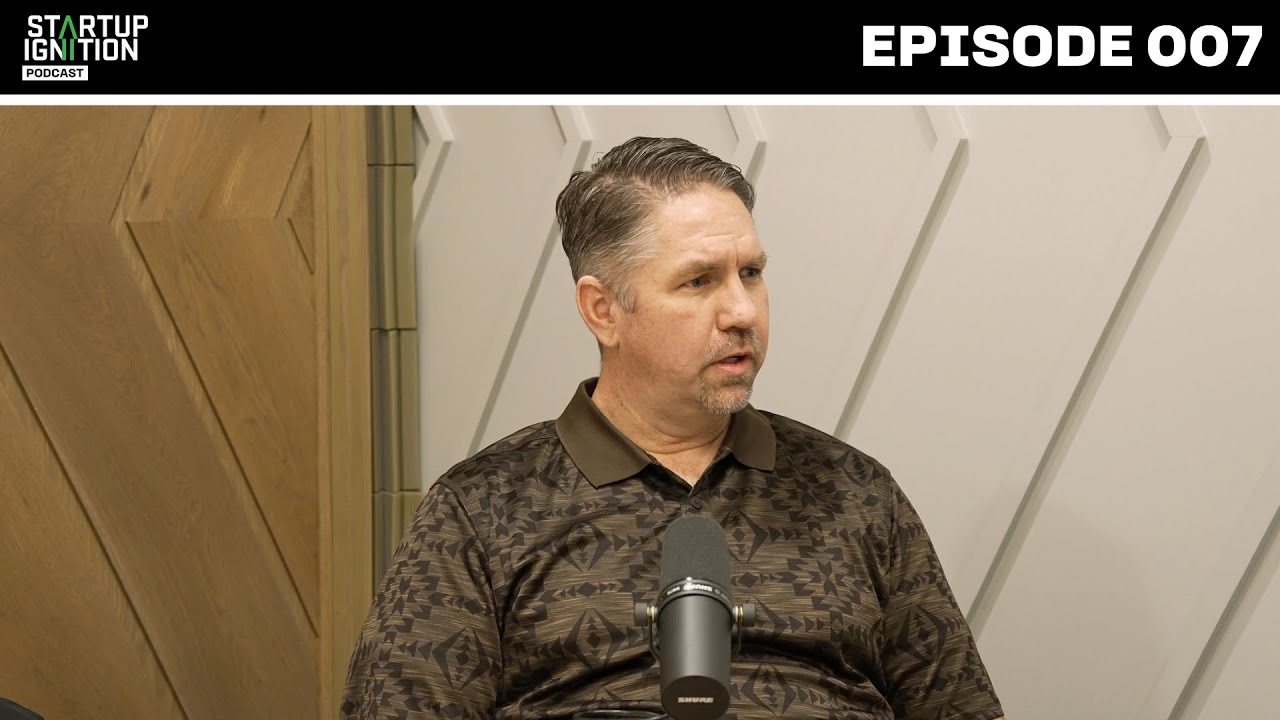
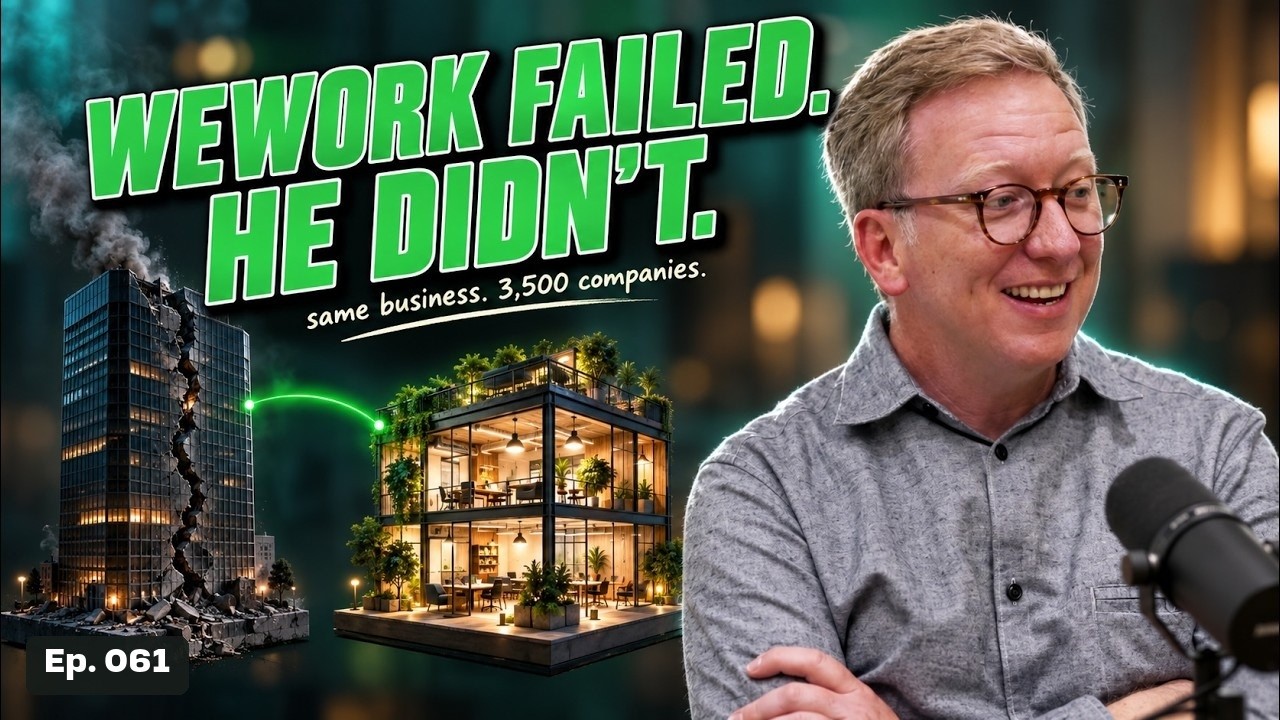
Jason Peterson explains how he validated demand by selling software before building it, turning his own lighting showroom pain points into XOLogic, the number one management software for the lighting showroom industry.
Jason Peterson is the Founder and Chairman of XOLogic, a cloud-based SaaS platform that became the #1 provider of management software for lighting showrooms across the US, Canada, and Puerto Rico. Before XOLogic, he was the owner of Hansen Lighting, which he turned around from near bankruptcy into a chain of multi-million dollar showrooms. Founded XOLogic in 2008.
Show full transcript
There was this thing that just terrified me that John recommended this pre-sell idea. And I was like, "This is crazy." Then John was like, "Well, before that's done, go get a contract and walk and go out to people and try to sell it and then leave some lines blank that say, 'I'll be ready to pay when these features exist.'" And so I did. I I was like, "Oh." I was super terrified at first. And I was thinking I was going to come back with a list of maybe hundreds of features or whatever else. And what I found is is that it was super clarifying. They came back and said, "If you can get images and help me put this stuff up onto my website because I'm getting scalped by online competitors, then I'm ready to sign right now and even pay an upfront fee before it's ready." And so I came back and I was like, "Wow." 80% of them said, "You've got the pricing, you've got the back order information. If you can put images and allow me to use that for my website, then I'll sign now." All right. We would have focused on other things by going out and saying You asked them the features they wanted. fill this in right here. I will agree to pay when this feature is ready. Welcome back to the Startup Ignition Podcast. You know who we are. We are old news at this point. But today we have some new news sitting right here next to us, which is awesome. But I'm Tyler. John. And we are the co-hosts of Startup Ignition Podcast. But today we have an awesome guest and I have a little bio on you, a little intro that we went over before to make sure it was all right and correct because I didn't want to get anything wrong cuz he's so awesome. So today we have Jason Peterson and he is a seasoned entrepreneur and tech and technologist innovator. Not I got it wrong. You are not a computer science graduate. You are an ISIS graduate. Is that right? Yep. Information systems. Information system and communications you told me too, which is awesome too, which is a cool combo. Um but you have an awesome and impressive track record and probably best known for your exit with XOLOGIC, right? And XOLOGIC was a leading software provider for the lighting, electrical, HVAC, plumbing industries, which we'll get into your story a little bit later, that you actually sold in 2021, which was an awesome exit and an awesome story we want to hear about. Um, but now you are uh moving on. You are no longer with XOLOGIC. You are with a company called NOGGIN, which we want to jump into, too, which you briefly told me that focuses on uh process automation for small businesses, so we can jump dive into that, too. But beyond entrepreneurship, you also told me about some humanitarian things that you're doing, and I actually know about the humanitarian experience because it's so popular with kind of this up-and-coming generation, and you know, I have children, and I've been looking at those projects as maybe something for my kids to do. My oldest is only 11, turning 12, so maybe in a few more years where she gets a little bit more responsible. But what a cool project, and now you are involved with that. That that charity um helps build schools, dig wells, and support refugee efforts, but specifically with youth, right? Abroad. Yeah, which is really really cool. So, I want to dive into that, too. But okay, so everybody welcome to add to his introduction because um a lot of our watchers uh viewers and listeners um might especially if you've been to our live boot camp, which we've had hundreds and hundreds of people attend our boot camps and trainings and all that, a ton of my teachings and stories emanate from Jason All right. because of his history of uh where he came from, and he's going to tell us about that. But all along the way, there were little things and principles, things that he validated and found that I work into my teachings. I'm not sure if you're fully aware of that. I don't always say your name or what the company was, but what I learned from that and what it you you would follow advice and you'd go do it and it'd work, and things like that. And so, I I think it's exciting to have somebody who literally embedded, you know, our boot camps like 30 plus hours of content. And content teaching. And there is a lot of lessons in that content that come from you, Jason. That's awesome. Well, and all that came from you. But I want to dive into and obviously get into the history, how you guys know each other, the history of XOLogic, your entrepreneurial past and everything. But before we do that, we always do a fun kickoff, an icebreaker we like to call for our podcast guests, just to get into the mood and just to get into the mode and being comfortable and have a fun interaction. So today, I I I got this game I had AI help me out a a little bit here. But we're going to play two truths and a lie. Okay. So I'm going to tell you and Jason, John and Jason both, I want you both to participate, two truths and a lie. And these are recent headlines, startup news, political news, economic news, all news, okay? Okay. And I want you to tell me which one's the truth and which one's the lie, okay? And I'm going So two truths Which are the two truths? which So which one's the lie, basically? Yeah. You identify the lie, okay? Are you ready? Okay. An Here we go, first one. So first round, here we go. Here's the three items, the headlines, okay? An energy company technology company has technology to vaporize rock aiming to drill the deepest geothermal wells ever. Okay, that's one. Okay. Two, a new app developed by a startup that claims to predict stock market movements with 99% accuracy using AI. And number three, a biotech startup announces a pill that extends human lifespan by 35 years pending FDA approval. Which one's true and which one is false? Identify the lie. Okay, again. I'll let Jason go first. Vaporizing rock, stock market AI, or the pill that extends human lifespan by 35 years? I would say probably the stock market AI. That'd be my lie. And I'll say the 35 years. It is the 35 years. There's no pill that will extend your human life by 35 years. That is the lie. There's a lot of big claims. I know. That's that pill that was claiming I don't buy that one. Yeah, okay. But vaporizing looks amazing and I want to know about this AI. Yeah, me too. I want to invest. I'll tell you that right now. 99%? Yes. That's pretty good. That can predict stock market movements. Okay, so I do have some questions around your background and maybe even before Excelogic because the thing that I found the most interesting and what I've heard about the history of you and John and you know, him being your professor and your whole entrepreneurial career is kind of the unique part of where you have a cool track record of launching um SAS or software in mostly traditional ecosystems or traditional business landscapes, right? Which I think is really unique because that's kind of the thesis around almost our investment strategy, which is man, if you can modernize or SaaS-ify or, you know, software-tize a vertical or an industry, we want to be a part of that because usually that goes over very, very well and you kind of have that track record. So, I don't know where you want to begin because I don't want to dive into that, but maybe that's a little bit too early. going to school and him taking the class and meeting how did how did you guys meet? Well, go ahead. I mean, from a class, but and then and then afterwards, we started mentoring, right? Yeah. Yeah. Go ahead. So, so I I was doing my undergrad at BYU-Hawaii over in Laie. Oh, you you went to Hawaii, yeah. Yeah, so I actually did all three BYUs. Started at went back when it was Ricks and then got offered the McKay EC scholarship to do BYU-Hawaii. Oh, cool. And um I was just doing information systems and then right before I graduated, my dad lost his job. He he ran a was a printing was a printer, right? In in Idaho. Like a like a He ran a printing press. A printing press, yeah. Just managed a a printing company and we were talking one day and he says, "Son, you got to figure out how to get into business. Like don't do what I did. This is not a good idea." Cuz he'd spent his whole career, you know, and then just kind of got you know, spit out. And so I said, "Okay, well, I better figure it out." And so I went and started looking for businesses that I could afford. My my wife and I had saved I think $30,000. We were going to put it a down payment on a house. So we were looking around for businesses and you can't afford much for $30,000. So I I I ended up finding this bankrupt cabinetry business in Lindon, Utah. Yeah. And bought it for it was it was a dumpster fire. It had more debt than Just like wood cabinets, cabinet shop. Yeah. Presidential cabinets. And I still don't know anything. I I don't know how to make a cabinet to save my life. Mhm. But I so I went in and I um I I paid $17,000 for that. And and and so that and I I wish it was more sexy than or sound it was just that it was what I could afford. And um ended up getting it turned around and and sold it about 15 months later for just under $900,000 and Oh, wow. And I again, it sounds more impressive than it really was. It was just I walked into this and the only thing I knew was systems. I didn't even know how to run like QuickBooks or whatever. I still don't know anything about wood, but information systems. I just went in and said, "Okay, well, why are we doing it this way? And why are we doing it that way?" And and insert a systems and just took off. Yeah, you just systematized the whole cabinet shop and made it more efficient and grew it and Yeah, and and part of the reason is because I sucked at everything else. Like one day they took me out and they're like, "How about you install these knobs and handles on this job?" I was like, "Okay." And I spent the whole day trying to like get the knobs and handles on the kitchen. Like manual labor, just tedious work, yeah. I still got it wrong. And they came in in like 20 minutes and they had the rest of it done. Yeah. So so like, "Well, let's not ask him to do anything tactical." So But what what you were doing was Michael Gerber's book The E-Myth Revisited, which is a legendary book and people should read. For that type of business it says what you want to do is systematize things and bring in discipline and and systems even if you don't know how to make widgets. It's more important that you know how to work on your company than in your company. Yeah. Does that make sense? And that's what you did and you turned 17,000 into 900,000. That's pretty amazing. Yeah, that's a great multiple there. And and and it was I I got really lucky cuz it was out of necessity. That's the only thing I had to offer like I did. And so then uh another company so I've actually done 12 bankruptcy turnarounds or you know, troubled business turnarounds and one of them was this lighting store over in Orem. It was called Hansen Lighting. They'd been around since the 1950s and they knew everything there was about lighting. didn't start it. You walked in on that business, too. They They They're a store they actually gave it to me. I didn't pay anything for it. They were They just didn't want to do it anymore. That's cheaper for them to give it to you than shut it down. Than to go bankrupt. Yeah. So one of the contractors that that saw what happened with the cabinet shop uh came in and said, "Listen, if you'll agree to take this uh and pay off the debt that's in there like not with capital just over time." Then Yeah. So you just assumed all the liability, all the bad, all the ugly. I They didn't even require me to assume the liability, which was beneficial cuz I went in and just Okay, I went and talked to the manufacturers and I said, "I'll I'll I'll Whoever comes first with the best deal, I'll let you have the first pick of the receivables." They didn't They had no systems for receivables, they had no systems for payables, they had no system. They knew lighting better than anything else, but they had no system for anything. And so I just manufacturers hadn't hadn't been called for years, written all this debt off, and here I'm on the phone saying, "Okay, I'm I'm the new owner of this, but And so we had it out of debt in about 4 months and then bought it bought our own building and Oh, that's away we went. So so all of this is obviously post your undergrad and your education. Right. And so, how long was it for the cabinet shop? What's that timeline? You assumed that cabinet shop and exited that cabinet shop from when to when? Yeah, so um I I actually finished the acquisition in April of 2002. So, right after 9/11 to So, the economy was just in the tank. a tough time, yeah. So, went in and bought that and sold that 15 months later. Um Wow. And then uh I had acquired Hansen Lighting about 2 months after. So, 2004, acquired Hansen Lighting. After you exited the cabinet shop. Yeah. Okay. So, it was like back to back. When did you take my class in this? So, I that was actually the executive I I did the executive Executive MBA, right? Oh, you did the MBA? I was Reed Quinn in that class, too? Yes. Yeah. So, I taught the executive MBA twice. And this is a little secret that the uh regular daytime MBA, they actually don't go start their businesses. Yeah. The executive MBAs do and the undergraduates do. And so, yeah, and so, Reed Quinn was in that class when the Olympics was on. I remember he started the He started the KD tape from that class. Exactly. Yeah. That's so fun. Yep. If it hadn't been for that class, I almost certainly wouldn't have actually taken EXO you know, anywhere. Yeah, it'd be so That's awesome. And I only did that twice. Yeah, you got one of the two times. That's That's awesome. So, when I got into Hansen Lighting, I was I was just, you know, looking at I was like, "Okay, the biggest problem they have in here is there's a lot of problems, but one of the biggest ones is margins. They think that they're selling at like 32% when they're pricing their orders out. They think they're selling at 32%, but when I pay all the bills, it's it's back it's around 27%. Mhm. Like, what's the problem here? And so, I went in and started looking around and what it was is all information in the lighting industry, price changes and everything were being passed around through paper. It was like these little mailed catalogs and they had this big biddle book on there. You know like when you go to the old NAPA Auto Parts and they had this big book with this stuff. That's how they were pricing everything. Yeah. And so, I Wait, from a catalog? Big huge catalogs. Yeah, big old catalogs and they'd go to it think think of all the lighting fixture sconces, lights, everything that exists worldwide. Massive numbers of them. Yeah. You can't put all of those in your showroom. So, how in the world are you going to But people do. You did this when you went to build a house, you had you went online because it was later. No, I actually went into Hansen Lighting. You did go to Hansen Lighting? Yeah, one time. I didn't buy anything. Sorry about that. So, whoever my salesman were were was, I apologize, but Don't make me turn this car around. I just I went in there to just cuz you had a showroom. It was easy to go and see and actually see it physically in space. the whole industry had to work on catalogs because if catalogs stacking them all up probably were this high right here with thousands and thousands of SKUs. SKUs and products. And you could hold one fraction of a thousandth percent in your showroom, right? So, explain that explain that error in your your margin from the 32 to 27. 37 to 27, yeah. So, so yeah, 20 So, the we what was causing it? What was causing it? So, if you think you're pricing off of one price and they've sent an update, but it's in your mailbox or the mailman, you know, fed it to his dog or whatever. And so, I okay, I think I'm pricing off of 100, but the price has been updated by the manufacturer, then I just lost margin. I can't go back to the customer and be like, "Oh, I'm sorry. We screwed up. The manufacturer's charging more. I'm going to charge you more now." Yeah. And so, the whole industry was doing everything off of catalogs. consistently? Well, well, how how how often did they publish the catalogs? Once a year? they would That's what was crazy is that they would publish these little supplements. So, the average manufacturer has like 5,000 SKUs. And Hansen Lighting could sell over 5 million, you know, total product. So, basically, you'd get this catalog and then you'd have if you wanted to keep on prices insert into the catalog a new price on top of it. Yeah. And so, I I did the math once. I was like, "Wait a minute. We would have to keep 17,000 SKUs up to date every day. Every day, 365 days a year, that's including the weekend. Well, why were the why were the manufacturers changing prices like it was like candy? And that's crazy. Yeah. So, they're just it was that flexible. It was that they were so tied to their margins that they had to constantly update their prices. electronics. Yeah. All sorts of Well, and also like quote prices. So, you'd come in and they'd say, "Okay, these 45 we're going to put on special." Cuz they're just trying to manage their inventory. Yeah. Yeah. Like, "Okay, I want to get rid of this stuff." So, they would price it down. Now, if you didn't know that it was cheaper, then they would always just charge you what you know, like, you forgot to put the promo in or whatever. Yeah. And so, I thought, "Well, surely somebody in this industry has fixed this. Like, this is really dumb. This is just got to be a handsome lighting problem." So, we went around and I started looking, "Is there any service out there that like there's these things called computers that like talk?" Hold on, what year was this? So, this was 2004. Okay, hey, you're pretty early. Yeah, you're still early. Very, very quickly, you know, once once that I could see this is part of the problem. At this time, everybody is still on MySpace, not even Facebook yet. So, you're pretty early. yeah. So. So, it really wasn't it was just out of necessity. I said, "Okay, we're this is really crazy. We we Yeah. I we've got to stop this." And so, I went and just started talking to manufacturers and said, "Would you mind if we just and create an some kind of an electronic catalog?" catalog for that. And that's all that gave us such a huge competitive advantage. Like, Hansen Lighting just took off. Yeah. We started you know, grabbing customers because But, why? Why why Why did that affect the customers coming to you just because you could have up-to-date prices? It well, it was what I found is that when we started getting into the computers, there was other information that was there that was super valuable. And one of the biggest ones was back order information. I'm like, "Well, it's sitting right there. We're already talking to your computer. Like, why don't you send us back orders?" So, in the lighting industry, when I first started, only 27% of orders were delivered on time and accurate. And so, I was like, "And it's usually back orders." Something was on back order. So, I said, "Well, I'm here. Why don't we just start feeding that in?" retailer would think it was available. They do an order with the customer and then put the order into the manufacturer and then they would be notified sometime later, days or weeks, "Oh, it's on back order. Wow. We we don't have the inventory right now. It'll be ready in 2 months." Yeah. And it's worse than that because a lot of times it would be you go pick a family, right? So, you get like seven fixtures or whatever and one of them would be on back order. Yeah. So, the manufacturer would send everything else and be like, "Hey, pick something else for this." No homeowner wants that. So, it doesn't match. Yeah, it doesn't match. And so, the And so, contractors were just fed up. They were sick of it. And we we did a little bit of research to figure out that the average daily cost for a back order, cuz lighting comes at the end of the process, a lot of And so, the costs were huge to contractors. And so, when we started feeding back order information, we went got to where we were doing all of our order 92% of them were on time and accurate. And the contractors just paid attention. Yeah, they loved you. They were like, "Wow." Their their clients were satisfied and happy, so they just kept coming back to you. Right. Yeah. And And what's further, and I think this is a There's a principle in SaaS is my sales reps were spending so much of their time doing this and then getting a calculator, they it freed up a bunch of time to actually work with the customer. Like, spend time with the customer. Go out to their home and measure and figure out the lumens and all that stuff. And strengthen the relationship with the customer relationship, yeah. And so, just So, you built that internally. At what point did you actually start expanding and externally offering that to you like your showroom or lighting competitors? Like, so, you start I'm assuming you started internally and said, "Hey, we got to figure out some kind of way to control this price and the back ordering and all this catalog inventory, whatever, all these SKUs or whatever." And it was running really well. At what point did you say, "Wow, okay. Like, we can go take this to other people"? Were people asking you for it? Did you just have that idea or No, it's when John told me that I was stupid not to. That's absolutely the truth. It was 2009. So, John's been involved the whole time. My dad was involved the whole time. This This is goes back to the genesis of me understanding the internet as well from a public I publish books, too. Yellow Pages. My history is publish Yellow Pages massive databases of people and business content, right? And we There is a lot of your history that this is going to come up with and we as we get into when you started really doing it, right? But just the whole concept is this. You publish a book. The next day it's obsolete. Yeah. Because of in your industry, for my industry it was the next day a business opens up on, you know, University Avenue and it's not in the book that was printed yesterday. Yeah. So now we have to wait a year for that to be in a book, right? That's a problem. And that's the same with these catalogs and your price updates for manufacturers. And so what when he started doing this with Hansen and doing it just for his company, then I taught him the principle and the key principle for viewers and listeners is this is he ate, slept, and drank his industry, lighting showroom industry, and then made a software to run that company better and then even on top of it aggregated the database for the industry and that when I heard that he was doing this to turn I go, "Do you know that you got a much more massive opportunity than this lighting showroom business?" was doing that Who was doing that data entry? Who Who was taking those catalogs and digitizing them? So like that that was the beauty of it is is that most of the manufacturers had accessible databases. Like they had APIs that we could plug into. Or give you a CSV file on Excel. and then we would just push it in. So it was generated in He literally went around. Tyler, this is what's amazing. He went around and asked all the manufacturers, "Hey, I'm trying to aggregate a database and I'd love to have your data on file so I can sell more of it." And they go, "Yeah, here's all my data." And they just give it to you cuz they wanted to be listed. Yeah. We didn't We didn't turn it This was the pitch that I made. aggregated concentrated database in the lighting showroom fixture industry existed. There were like little pockets of stuff, but but this was the first one that had come in and and said and used almost exactly I said, "Guys, I manufacturers, I want to sell more of your stuff and all it takes is for your catalog not to be on the counter for me to not sell your stuff. We can work out all the programs and I can have promos and I can pay my people extra and all it takes is for your catalog not to be there. If you digitize this, I can guarantee guarantee that your catalog is at the top." And they were like, "Why wouldn't I do that?" And so and so at first it was purely a handsome lighting thing. I didn't even think to turn it into a SaaS application until 2009. We're in doing a you know, some kind of a group project in 2009. This the housing you know, bubble was just everything crashed. Yeah, yeah. And I'm talking to John and he said, "You Wait, have you thought about like going and talking to other showrooms about paying for this?" And I was like, "For for like" And he "Yeah." "For the digital catalog. For this digital catalog." And I was like, "Sure I have, John. Sure I have." So then Thanks to your dad. I went and I did the lean startup thing. I just I went and bought plane tickets and started flying out to other lighting showrooms and walking in on them and saying, "What do you think? Is this a thing?" And they they got livid with me. They're like, "How dare you show this to me and not" "Give it to you?" Like, "When when is it going to be ready?" Yeah, they wanted to buy right then and there. "How dare you" actually I actually had one lady that was like, "Don't ever come back in here until you're ready to come in here and let me use this." That was some good validation right there. Okay, maybe we And then I was really dumb. Like I started out with like, "Okay, how about $99 a month?" And everybody Well, I was actually even dumber to begin with. I hired a salesperson. Like I didn't do the you know, the founder go out and do it. I hired a salesperson. He kept going out and all nobody's willing to buy it. Uh but then I then I went and bought a bunch of plane tickets again and just went in and I started at like 99 bucks a month and had everybody was signing up. I was like, "Okay, that's too cheap." So I kept raising it up until I got to like $600 a month and still 72% of them were saying, "Yeah, sure. We'll do this." Yeah, that's great. But so yeah, it wasn't until it was 2010 when we actually So how what was the peak or as far as you know? Well even before the peak though, I want to go back on a question you had Tyler, it's very important cuz this now he had the job of getting all this data aggregated into one database though. And he went in and wasn't just selling access to the catalog so to speak then take take the company more I I I had you were getting to then you had on said, "Hey, they have no e-commerce presence. Maybe they want e-commerce." Tell them all that everything you went through. So first was you were building this database that made Hansen Lighting better. Yeah. And then you said, "Hey, Mr. Showroom in Kentucky, how would you like this database to make yours better?" Oh, what else can we do? Go on that path cuz it it adds on top of it more. Yeah. But essentially it was just building out and digitizing the process that had manually existed for years and you just brought them into the SaaS model. Well that he gets to that but first it was getting the data once physical data that's just printed in catalogs is into a database. Now you can do a lot of things. What was the next thing that you offered the Kentucky Showroom owner? Yeah, so they believe it or not there actually there was one in Kentucky. Yeah, I I I know. You went all over. Yeah, go ahead. So again this is another there was this thing that just terrified me that John recommended. And this is the true this is the real background like if he said, "I want you to go take a contract." Okay, you're going to get a this pre-sell idea and I was like this is crazy. It's What the idea of pre-selling? Pre-selling it before because we just had it was a Hansen Lighting thing. Like that's all it was. And I knew I was going to have to have a tech person come in and actually turn it into a not just Hansen Lighting. We're going to have accounts and not all of them are open with all of them and right. And John was like, "Well before that's done go get a contract and walk and go out to people and try to sell it and then leave some lines blank that say, "I'll be ready to pay when these features exist here or there." And so I did. I I was like, I was super terrified at first. I was like, "Oh, they're going to they're going to laugh at me cuz it's not going to work." But when I walked in and I was thinking I was going to come back with a list of maybe hundreds of features or whatever else and what I found is is that it was super clarifying. They were they came back and said, "If you can get images and help me put this stuff up onto my website because I'm getting scalped by online competitors, then I'm ready to sign right now and even pay an upfront fee before it's ready. And so I came back and I was like, "Wow." Like 80% of them said, "If you've got the pricing, you've got the back order information, if you can put images and allow me to use that for my website, then I'll sign now." Yeah, right. So we would have focused on other things Yeah. but by going out and saying You asked them the features they wanted. fill this in right here. I will agree to pay when this feature is ready. Okay. So what happened, Tyler? That's great. What happened is he started then becoming literally the presence of these showrooms. He was running the technology for all of these showrooms and their front front front-facing showroom online to all their customers. Yeah. Right? Powered by EXO Logic. Yeah. Were Were their customers ever interfacing with EXO Logic like going on and like picking out lights or putting in it a card or like having some kind of shopping experience or was it all internalized showroom software? No, so it did there there it actually into that. You know, we were we got to where we were doing 1,500 searches every second. Yeah. Like people The matter of fact, if you go you you'll go to Amazon for example and try to find most of the lighting manufacturers, it they're not there because people there's showrooms so quickly got this much more powerful database uh than anybody else had, right? And so it we we did eventually build it into a point of sale where you could put orders together and it would calculate all of the margins and tax for you and and all of that. So Hansen Lighting in Arm, this guy in Kentucky, Joe's Lighting Showroom, is powered by XOLogic for their entire online e-commerce and presence. Yeah. Yeah. Yeah. And that's what it grew And and so okay, so now back to my peak question. Well, like how many lighting showrooms do you eventually sign up on this product suite that you eventually built out? Like and maybe give us an updated timeline. What year is this and where you at with the XOLogic timeline? Within a year, we were the largest technology in lighting and by the end of the second year, we were larger than all of the lighting specific software combined. Yes. what was so exciting One I get so excited to tell the story, too. He came to me one day and goes, "John, we have one competitor bigger than us." And then like a few months later, he comes back and says, "We're now bigger than that competitor." Then a few months later, he comes back, "We just acquired that competitor." sold to us. For nothing down. They sold to us for a percentage of profit. was doing so well. Cuz he was doing so good. Yeah. And they spent So the competitor was spending millions on marketing and we were just doing the in the trenches lean startup stuff. Yeah. But just to get out there and win it, So the better product won. Yeah. Yeah, so we There's about 2,500 lighting showrooms in the United States and at one point, we about 800 of them were just running almost everything off of our system. And I got to assume as you were adding features and more product suite and more capabilities, that that average revenue per year per customer per month was going up. You know, that was one of the one of the mistakes that I made is is that we just sold the whole thing as a a big package. Yeah. So features became liabilities. I learned that EXO taught me a powerful lesson and that is the the innovator's dilemma. Yeah, this is the Um we were we were adding things and making it more complicated and and that actually started to slow the growth. Uh cuz cuz it was it was it was super simple in the beginning. Yeah. You have a data problem, this fixes the data problem and it does it for your website and and when we made it more complicated and started adding more complexity, it actually reduced the value. The unsophisticated lighting showroom owners didn't know what to do with it kind of. Yeah. Yeah. And and and it's true. Two or it's you you know, people think, oh, we got to make it so feature-packed with 12, 14, 16 major features. It's usually one, two, or three features that drive the the the hair-on-fire use case of your customer was your top one or two, three features. That's And they would buy even if you had no other features. And we we and we come across so many entrepreneurs that think they need to build this massive product suite on day one that's like, oh, my customers need 20 different things that are going on. No. Let me let me do this. MVP, right? Yeah, let me do this with you. Okay, pause for a second for all of our viewers and listeners. Okay, we run a pre-seed venture fund, Startup Ignition Ventures, as well as a Startup Ignition Bootcamp and Startup Ignition Academy. But imagine, Tyler, if go back in time or just had somebody like him walk and say, "Hey, I have this lighting showroom. I found some weaknesses in the lighting showroom industry, and I did this and this and made my lighting showroom better, and then it became something that other lighting showrooms wanted, and they would buy it, too. And it's a SaaS solution for workflow management for running a lighting showroom." How excited would we be? Oh, yeah. That's like literally would be That's what we look for. Yeah, that That's why I said at the very beginning of the podcast, I said, "I want to go from that traditional business that you acquired or adopted essentially, you didn't pay anything for, and SaaSified or digitized, and and brought and the founder market the founder market fit. Yeah, your founder market fit on that alone of like understanding or running a lighting showroom, and then creating lighting showroom software is like one of, I think, your biggest factors of success cuz you you were your own customer. You built that internally, and you said, "This is exactly what owners like me need and want. I'm going to go and exactly build that." Here's one of our most exciting companies that we're investing in right now. Two brothers, you know, could be any of our viewers or watchers watching could do this, you know, whatever they're into like you did in lighting showroom. They their family had two very small assisted living centers with only a few beds in each center. And this software in the industry sucked. And so they came to us, came through our boot camp, got some training, spent a year and a half doing what you did, and they made started making the best of breed software for assisted living, and they sold off the two assisted living centers, and their company's called Alchemy, a l c o m y, and they have become titans now in the assisted living software industry uh, because now and like they even before we invest in them, they got into like a hundred assisted living centers with their software. Now they're in hundreds and hundreds, and we they came to us and they said, "Oh, we need a little money. We might need some." So we gave them some money, and it's just been incredible. That's the exact same thing. That's that is so powerful to take somebody that knows an industry and then makes the workflow management software. of your What you did was amazing. Yeah, think of your experience of just in scalability. Like what you did for yourself of you have a lighting showroom. Think of getting that kind of revenue line in lighting showrooms. Like little traditional lighting showroom locations and selling throughout the country, right? How many locations you'd have to have? 20, 30, 40, 50 different lighting showroom and be this massive conglomerate, huge operation versus the scalability of the SaaS management software that you created, right? It's so cool. So there's more now Okay, so in other words, the bottom line is Jason, you became the kingpin of the lighting showroom software industry. There's no doubt about that. But then you realized the TAM or the total address market of that was small, and then what did you do? So well, And you tell any other story in between there, but the next level, but keep going. Well, there yeah, there is. So, there's another there's another you know, leg to it that is useful. But but going back to what you were saying that you can't emphasize that enough. Somebody be able being able to walk in and say, "My showroom went from this margin to this one." And then to give another showroom owner an an aha, "Here's why your margin is where it's at." Yeah. And then and they're like, "I guess I never thought of that." It's because of your price books. Those books over there, that's the devil. That's what's Yeah. And it was it was the easiest sell. It was the easiest sell. Yeah. And and Hansen was very aspirational because it's today it's one of the top manufacturer distributors of lighting in North America. And so, there's this aspirational story that is like, "I went from where you are to where I am now." Yeah. And here's this aha as to why. And by the way, and this is the thing is people don't buy the ability to do stuff. This is the problem with a lot of SaaS companies is they sell this feature, and you can do this, and you can do this, and you can do this. People buy not doing stuff. Yeah. Because of this, you won't have to do this. You won't have This little calculator thing and all that, you won't have to do that. Yeah. Yeah. And small business owners, they buy not not the feature. Yeah. Yeah, it's what they don't have to do. So, I walk in, you can get your margin up by not doing something. Yeah. It was the easiest sell ever. Really, in 2009 when the housing bubble, 30% of lighting showrooms went bankrupt Yeah. in the United States. And we were just climbing like crazy Yeah. because And and the the bankruptcy percentage among our customers was like a fraction of what the rest of the industry. And we started pointing that out. Because because of margin. It's It's people that are getting more efficient. That's a lesson for our viewers and watchers. One of the most important things in entrepreneurship is understanding your gross and net margins and really understanding what that means. Yeah. Well, that's actually how the birth of XoLogic apparently happened. You were looking at your margins and not understanding, "Why am I losing so much? Or why is this so off?" Right? Yeah. Yeah. It's great. one other thing that we did that was that was kind of cool and surprising is we we launched this whole thing called expert edit where we said, okay, well, we got all this manufacturer data that's coming in, but occasionally my sales reps, I was just responding to my sales reps, they see a an item that's in the database and they feel like that the information isn't robust enough. Yeah. And so we create we put this little e2 like an e squared. Hey, if you click on this you can go in and edit, you know, edit it and update it or whatever else. And I thought every once in a while somebody would go and these lighting showroom owners that knew lighting better than anybody else would go in and they were fixing thousands and thousands of SKUs every day. With people that know this stuff better than anybody. Yeah. like six months we had the most robust and rich database of lighting information. That's something even if somebody came in with unlimited funds said, hey manufacturers give me your data I want to build database, that would be very hard to replicate what you had going. We started selling data back to manufacturers. You did? started Cuz you corrected it. Because they they the people that actually understood the lighting would go in and and one company like they went in and they fixed an entire catalog overnight. So retailers would fix manufacturers own data. Yeah. And they weren't doing it because they were in love with the manufacturer, they wanted to put it on orders. Yes. Yeah, they wanted to have it right. I know the lumens on here, why isn't this in here? So they'd go in there and they'd put all this stuff in or whatever. And they'd clean it up. Yeah. I won't say who but we had a gargantuan retailer come and say, well, would you charge us to buy into this data? And we and I had to turn them down because I felt like that wouldn't be fair to all of these mom and pop lighting stores. So we told them no. There was a gargantuan amount they were willing to pay because they're like, nobody on our side could ever get this kind of data. How are you doing that? It was like, we just spread we spread it out and when a whole bunch of experts do a little bit this is why even today when you're talking about SaaS companies, um, at the end of the day you have to keep in mind, when I accumulate the data I'm going to accumulate, it's going to be worth something and it's going to be a it's at very least a competitive differentiator that will keep you at the top. And it could actually have a monetary value. Yeah. Yeah. So, one of the things So, we then started expanding. We We had a lot of lighting showrooms also owned like electrical wholesaler and they would do flooring or whatever else. And so, we didn't have to go in and force our way into stuff. We had to resist our way into stuff. Like cuz we had a lot of like lighting showrooms would come and say, "We need you to do this for what We We have another division over here. We also do flooring. We need you to do this." And we would resist it until we couldn't anymore. You were You were getting constantly pulled to look at other verticals. And so, once you had enough mass or enough movement towards flooring or electrical components or whatever, you would start cataloging cataloging all of that as well. You moved into those industries. bottom line is I look at it this way, you kind of cornered the market in the lighting showroom industry. Is that right? You were the dominant number one. You bought your previously number one competitor. And you like you said, you were bigger than all the others combined. That's like AWS is today in its business. And so, that's a very powerful position. And then you said, then finally, everybody's asking you to go into other verticals. Then you finally said, "Maybe we should go into other verticals." And you did. And they were also much bigger. Yeah. That does highlight like there was a couple of mistakes that I think will be good for like especially you you know, newer sales. We like to hear the good and bad. One of the big mistakes that that I made and this was all on me because I had some people within the organization that were a little bit hesitant is I said, "Well, let's go into electrical wholesale." Right? I mean, it's like 11 times the size of lighting. Think about how many electrical wholesalers you have. Codale and you like all kinds of them around here. And so, I purely looked at the market size, the TAM. I only looked at the TAM. The total market though was 11X. 11 times lighting, right? Um The elect- What is specifically electrical contractor? your wire and the like box and the actual boxes and wire. Junction box. Whatever, yeah. The components electric electrical work. yeah. And so think about like when you build your house, your lighting package was probably somewhere around you know, 0.7 to 1% of your total build, whereas your electrical gear probably cost 4 or 5%. Yeah, yeah. Yeah, much bigger. All of the wire and all of that stuff. Yeah. And so before I didn't do like I didn't own an electrical wholesaling company and I didn't go do the market research to figure Oh, you didn't do lean startup on that one. like I I got arrogant. Like honestly, like don't get arrogant. Assume that if you don't if you don't know, assume you don't know. Yeah. And so we went in and we got big I got to point out when you give a great teaching. One of the huge mistakes entrepreneurs make is they think everybody else will think just like them. Yeah. Yeah. So we we picked that because we were getting a lot of pressure from clients that owned you know, electrical wholesale or more most of them and I should have seen this, they owned big electrical wholesale and then lighting was like their little baby baby. Yeah. Yeah, right. So it the the smallest little thing can make the biggest difference. Most of the gear in electrical is quoted. Like so it's not like a standardized price. Mhm. It's this manufacturer will give this distributor a certain price and that one. So there wasn't like this one standardized price like it was in lighting. There's not catalogs. There is, yeah. And they weren't running it through catalogs already. So we went in and kept trying to chase and figure out out and spent a lot of time and and made some good money in it, but we did not become the dominant player in electrical. And it was because of a little piece of that that I didn't have the humility to go explore and find, right? Now Yeah. That being said, the lighting industry was so valuable to us that we had a strength a stronghold that we could stand on. Yeah, yeah. So you were able to make those errors, but it wasn't a good error to make. But but if you do that too early, I always like to say it's like a tree with root systems. You were able to withstand that mistake because your roots had been sunk so deep in your core Lighting showroom. your core vertical. If you had been weak in that core vertical and try to do that, it could have killed you overall. So, you you you're kind of going really general with the mistake like that you just assumed that you knew a lot about the electrical component industry, but then it just flopped. Can you give like specific reasons why or like what you assumed and then what turned out not to be true? Do you have that kind of information? So, so in lighting they'll the the manufacturer will set a catalog and twice a year all of the lighting showrooms go down to Dallas and they they see all the new stuff. So, there's kind of this standardization that existed in the industry that I didn't create. I just got to benefit from. Right. But in electrical components, the the localized reps will go into a big The players are bigger. So, you have an EWS that most lighting showrooms are independent. They might have one or two branches where you'll have big chains that are negotiating deals and there's no pricing catalog that the whole industry adheres to Yeah. for the most part, right? It's it's mostly like independent deals because somebody might be doing a gargantuan you know, commercial project and they're going to negotiate a price that's totally different than what the next person could sell it to you for. So, that teeny little piece that okay, we we have the data, we have the the images, we have all the other stuff, but the fact that the pricing is variable, we kept trying to figure out how to integrate and pull it out of their computer system and all of that and Is it was it geographical pricing then? It was just like subsets of the country or areas or territories that had different pricing all over? It could even be like it could even be in the same city. So, you could go to Orem and walk into one electrical distributor and they have one price and then you could go into another one and they have another price. Wow. Right? Has that been standardized today or is it still the same way today? No, like it's a Wow. And they're just big players that exist. And so, it was nowhere near the kind of So, you rule of thumb was or I guess to summarize, you took a lot of the concepts that you thought were the same in lighting showroom to the electrical component industry and it was not the same. And those little little differences made the difference in the outcome. Yeah. Yeah, that's I didn't What's the word that you taught us all those years you know, validate? I didn't go validate. I popped our cork and then went in to see if it like it was So the the arrogance like you start to think success can be uh one of your your biggest hurdles to overcome. Oh yeah, you can hang your hat on it. Yeah. And and and it boils down to this, you assumed. Yeah. We don't in entrepreneurship, we do not act on assumptions, we act on facts. Yeah. So your job, validation is the process of taking a hypothesis or an assumption to a fact. You know, That's it. My dad and I, we teach this stuff all day, every day, right? The podcast is for new budding entrepreneurs who want to learn these principles, right? We talk to entrepreneurs all day just like you and hear these war stories. Uh he was a professor at at the university level teaching these principles for 12 years. I've grew up around them and we still make horrible mistakes in entrepreneurship. And and a lot of it comes from that mindset and I just recognize this because, you know, I've had exits, I've I've been able to build up companies and have great liquidate liquidating events and, you know, generation of wealth events, right? And when you have those or at least in your case, you know, having so much success in the lighting showroom industry, you kind of do ride a high horse a little bit and you think you have this kind of gold Midas touch for a little bit of time until you're humbled again and you're shot back down and you fall off the horse and you're like, okay. I can't I cannot assume things anymore and I've done that so many times while building, after building, moving on from project to project, venture to venture and it's just a hard thing as humans, we just have a ton of greed and we just think we are the coolest thing since AI LLM's or sliced bread as the old people say it, right? As old people like you say. Yeah, but I'm just saying everybody goes through that. Every entrepreneur. So, that's a very relatable error. So, after after the electric contracting, what happened? So, so okay, learn from our mistake and that's a lot of times that's one of the keys to it. I believe my my own opinion is a good entrepreneur they not only own their mistakes, but they talk about it. They get up and they say, "Here's where I screwed up." Yeah. And especially if you're the leader of a company, it's you can take a lot of pressure off a lot of people. Here's where me I'm the guy. I screwed this up. So, here's what we're going to do. Yep. We're going to shift over and first we're going to check to see the pricing models. Yeah, we're going to validate this. being told that we wanted these these other industries and so we for example went in and looked at plumbing components and said, "Okay, that's a little bit better fit." And so started moving our way into plumbing and that was growing really rapidly. Start you know and and then we got acquired as they could see, "Wow, there's this whole new Was it plumbing plumbing contracting and plumbing fixtures and all that was better. Was that bigger than lighting showrooms by a a Similar, similar. It was similar industry. are you talking just the fixtures now? Yeah, so like your your faucets and your stuff. none of the not what's inside the walls. Yeah, yeah. You're talking the fixtures. That is a good analogy. Yeah, it's a good fit. And so went in and and And that's when you got acquired because you that was bigger, too. Yeah, there's this wow, here's this this whole new uncharted, you know, area. areas. And so so the acquirer came and said, "We're going to ride that up. Here's your money. Thank you. See you So, who who acquired who eventually acquired Xoologic and what year was that? So, it was acquired in 2021 by a company by the name of Fullsteam, which is actually a payments processing company. Mhm. And so great company to work with and they What was what was their strategy behind that acquisition? They just wanted to make the money off of the actual transactions? So, that they they had two things that they are they are really good at. One of them is they were acquiring SaaS companies and putting them together. So, they had this portfolio. And then second, they were moving payments in. Like if we can be the ones that are processing payments through these guys, Yep. then so they had this dual benefit and we we got a tremendous amount that's one of the biggest changes over the last decade in SAS that I've seen is it used to be that SAS companies were really late to the party in terms of saying, "Hey, we can make money from payments." Now, we're seeing pitches where that is the revenue line. That's part of their plan from the start. We're going to have a revenue center of payments. Yeah, yeah. It's one of the channels. And we we hadn't done anything with that. Yeah. And I looked at it and I thought we were like what they were seeing and they said take advantage of that. That's really cool. So, ExoLites was the product name for that. ExoLogic was the company. ExoLites was what handled lighting showroom. What what did you call the plumbing one? What's Exo by the way? So, honestly, it was just one that I thought, you know, X's and O's on a chalkboard. I was like strategy. It was It wasn't love, hugs, kisses. My wife later was like, "That was a really dumb name." And I I I was thinking like experience operations. But did you have a vertical name? I'm just curious. A vertical name for the plumbing when you went into plumbing? Originally, but we ended up finding that that was a liability and so we ended we ended up doing ExoLites. It was just going to be Exo Plumbing. Oh, really? Yeah, we were really creative. But but did you use ExoLogic or Lights more? ExoLogic ended up becoming just the the default everything. You didn't even use ExoLites that much. Yeah, we we actually sunsetted that and just Oh, you did. So, ExoLogic. That makes sense. I like that. I I yeah, I like that move. Well, speaking of of naming, here's a little quirky story for you. So, so back to one of the lessons that we learned is I I said, "Okay, we we understand this industry really well." And I had I had kind of retired from Exo and turned it over to the another person, my CTO, to run it. And he was running it before the acquisition, which Yeah. Uh and so then I started another company that was in lighting. I thought, "What's what's another problem that Hanson Lighting faces?" Yeah. And that is like marketing. We don't There's no good way to keep yourself out there on like social media or whatever else. And so, we started a little you know, company called Lit Living which I'll come back to the name in that for a minute. But, um all we did we and I thought, "Okay, let's learn from what we did last time. We're going to make it super simple and we're going to stay focused on what we do and that is you don't have time to go post three to four times every week onto all of these places that designers and homeowner the women and I would walk into a show and I say, "How many times do you have a woman walk in with a binder?" Yeah. Of stuff she's printed off. Almost every one of them. Okay, where are they getting that? Off of all these places on social media and you ain't there. Mhm. Right? We'll get you there. And here's what's happening is these manufacturers have all of these promos and stuff that they want you to go use, but you don't have the time to like take it and put it into your website or onto your social media. Oh, we'll just go do that. We'll just take them and And create custom content specific to the showroom. Yeah. Yeah. And it'll be just from the manufacturers you're open with. Um and the second largest agency in lighting had 17 clients paying them like three or four hundred dollars. But, by the end of the first year we had like 200 People who were paying you us six hundred dollars a month. And again, it was be it was to not have to think. It was like, "You're going to have between three and five posts on all of the social media when without you thinking about it." Now, if you have time you want to go produce a custom one or a sale or whatever, you can go do that, but you'll know that this machine is running for you. I I think you're a pretty good problem hunter. I I I think you're really good at going in and dissecting a system or a vertical or an industry and saying, "What problems exist here?" Because that's what you've been touting in almost this whole podcast, which is like your approach to business is like letting the owners or the your customer do less. Like, take responsibility away, take stress away, the hair on fire principle. without adding to their workload. Yeah. Yeah. And it's like you're really truly what it is is you're finding a problem and you're just solving that problem for them. Yeah. So, what was the name thing you wanted to tell us? So, like I didn't know that with you youth like lit is a thing. Oh, yeah. The URL was available. So, I bought Lit Living. And we had hats made and everything and I'm walking around and all these kids are coming up like, "Hey, cool hat. Where'd you get that?" I'm like, "It's a lighting showroom software." Like, Lit Living was this brand thing and I had no idea that lit is like lit, bro. Yeah. And I had like tons of them and I'm like, "Why did I sell that brand?" I got Anyways, that's how out of touch I was with that. Lit Living was it litliving.com? Yeah, litliving.com and we had could have been like a Snapchat competitor or something. it. Should have done it. That's hilarious. Can I share one story? Yeah. Okay, so um I I remember you and I going to um near your office, we went to lunch. Sizzler. At Sizzler. We had some of our advisory meetings there several times. But about. we had our advisory meetings there several times. But there was one time and and literally I have a lot of experience in this, so getting this data in from the manufacturers, putting it to database, cleaning it up, making sure it's consistent and good and clean data. That's a hard job. So, you actually had a team doing that in your office there. And I it was like a team of four to seven people, if I remember something around that size. Is that about right? In the early going. And then and then you were building technology and having to build this, you know, SaaS-ified system to provide the e-commerce storefronts for hundreds and hundreds of lighting showroom customers and clients. All this going on and you had one CTO that had been with you and you realized that you need to maybe go with somebody else or some person with more skill or just that it had risen to the level of needing a and you had always we'd always been so frugal and you and I talking about being frugal and lean startup one all And one time I just remember when you came to me and said you found somebody who's good but he wants too much money. And I remember at that Sizzler that it shocked you cuz I said I said you've got to pay that. You've got to pay what he wants. And I go that's your needing cuz you told me where your revenue was and I go you can't have this much revenue and not have your CTO up to snuff with what you're doing. You've got to make that happen. And this is where the market's at. And it was for back then it was a lot of money. He was asking for a lot of money. And you were so you go John you've always told me to be frugal and now you're telling me to be spendthrift on spending this money on a person. I said and then what did I say to you? I don't I don't I don't know if you remember I said you can you can't afford not to do this. you went even further. You said look I'll tell you what if let's say it doesn't work out. You go and hire this is the right guy and it doesn't work out. Then you get to blame me. Like you were calling me you you can blame me. I'm not going to like pay you back or anything but you can blame me. I was like okay well I guess I'll do it. That's what And I also told you the risk is what? Your increase of a few months if it doesn't work out of extra pay or something. But I remember what happened. 30 days later you called me up after you did hire him and got him in there and what happened? You were So at the end of the day again it I I because what was happening is we were getting hit by like we were big enough target now we were getting hit by denial of service attacks. Yeah yeah. Oh yeah. We had a whole lot of stuff going on and I didn't know how to handle it. And what it was doing is taking me away from promoting and selling and And that's what you were saying is is that your biggest cost is not solving this. Yeah. You've got this opportunity cost and you're just not even adding that up. You need to start thinking about opportunity cost. But I remember you kind of telling me within like 30 days or something the whole tech arena was whipped into shape. Yeah yeah. And that's just what you had to do. That's by the way happened. My one of my greatest investment of all time was a Gulf software company same thing. They had a founder who was a CTO who actually came to the other business co-founders and said uh this has outgrown me. I can't handle this myself now. It's bigger than me. We need to get a stronger CTO. And imagine that. That's pretty amazing, right? Yeah. Yeah. And we and I actually helped them get that CTO. And they got that CTO and same thing, 30 days later they go turned our company around and we now can go to the next level cuz you were at the same thing. You had amazing revenue and what you had achieved, but you were not going to go to the next level unless you did that. Yeah. Does that make sense? Joel you're referring to the uh four up? Yeah, Evan Evan and Joel over there when they hired Brendan. Yeah. Yeah. Yeah. I I I don't know if you remember this, but you sent Joel over to talk with me and we met at the at the Ruby River Steakhouse. We sat there so and and he came in and he was like well Joel was telling me that like before they had started stuff he's like the pre-sale and the and I said do it. Absolutely do it. And Joel I could just see he was like okay. He went and that that team went and did it. Yeah, I know. Exactly. Yeah. boom they they There's there's principles at work, right? Yeah. So, but anyway, this is a this is an important principle. There is a point where even with the software company there's a tipping point where you have to say okay, what are we doing here? And there's a point where you can need to transition from being the frugal entrepreneur to one that knows that talent comes with a price and you also have to understand that it you know, just every person we hire is a little bit of a risk, right? And there's times you have to take that risk to go to the next level because what you don't want to do is be so frugal you choke yourself. So, at the beginning you don't want to you want to be frugal to survive. To lengthen runway but there's a point where your frugality can go too much and it curtails your growth and I think and then you it's just a fun history. And if you do it right, those people will be around all the way through acquisition. They're great team members and they and if you get the right ones, man, and you know, team has a lot to do with building success. at on time on this? We're a little bit we're a little bit close, but I I do want to end with Jason. I mean, you had an exit, and you're a successful dude. What's What's up next? Where are you at? What Like what Yeah, what are you currently doing? Yeah, what are you doing? Well, so what I did help you? Like what does an exited entrepreneur do right now? What are you doing? I'll tell you what not to do, and that is retire like in your early 40s. That's a terrible idea. Yes, it is. a menace. Yes, yes, yes. through my menace years, so and that was like, this is terrible. Yeah, yeah. And so I did end up getting involved with HXP. I ended it just pro bono a little bit, went in and helped We completely changed out all of their systems. And it's just a It's a reward. Like it's a rewarding thing to be able to say, I'm in the position now to make a difference. Yeah, right. But at the end of the day, I I had to start something else. Like it's I I You start to realize there's stuff that I'm good at. Everything else I'm not good at, but there's a There's this personality type that's good at taking something from nothing into something, and then turning it over to people, right? Mhm. And so I started in actually April of this year we went formal with it, and we started a company named Noggin, NOGGN. Mhm. And similar story, my my brother owns a restaurant in Florida that he took bought out of bankruptcy or he acquired out of uh struggle. Runs in the family. yeah, to today um he he's We don't even look at all like like he's like 5'5. He's short. I can Hulk over But he can beat me up. He's way tougher. But anyways, he um he he took that, and he was super successful with it. Like it's He turned it into Yeah, he turned it into a you know, producing almost a million dollars of profit, but he turned around a restaurant. Got Yeah. Uh but it cost him a lot of things personally. Like he um he ended up going through a painful divorce and stuff like that because he was working constantly. Like it was It was the way that he was solving that the goal of entrepreneurship, to become that way. Yeah. Yeah. As a matter of fact, at one point he he was working on a slicer and he chopped the top half of his thumb off. I joke with him about it. I'm like, "You can't even tap on a phone properly cuz you don't have the top half of your thumb." And he went down to the hospital and they said, "Well, if we repair it properly, it is going to take you out for 2 weeks." He can't do that. The restaurant won't survive it. And so he just he doesn't have a top of a thumb. Wow. Really? He had them sewed up and he went back to work. So he just went so far in all in on it that it just took over his life. They're demanding. Restaurants are demanding. Yeah. So what's NOGGIN do? So NOGGIN basically I I went out there and I started I said, "Curtis, you got to get processes in here. Like you you you have processes. The problem is is that it's all in your brain. And it's I'll give you the same speech I've given you. Your problem isn't in your people. Your problem is your proficiency. You are the pro in the proficiency. And as long as that's the case, you're never going to be able to get away from here. And if you cut another finger off, you're going to have to come back. Like this We got to figure this out." And so I was working on like helping him do processes. And and he's super non-technical. The hardest working person I've ever met, but not very technical. And I started to see somebody's got to come along and invent something that allows somebody like my brother to create processes where they don't have to learn anything. And they can do it while they're doing what they do. And so NOGGIN was born out of this pain of Okay. Is it a software platform? It is. Yeah. It's a That takes So you can have a person running a business that where it's so dependent on the founder and they're working working working and then it figures out how to systematize it so other people can do things. Is that Is that about right? Is it I want to know about that. Is it AI? So yes and no. I'm a I'm an AI user, but somewhat of a skeptic, right? So the the the quick version is that we wanted to make it so that he could walk along and see like, "Okay, here's a box of potatoes that's not put away." And take a photo and speak into his phone and create a task for somebody and then AI would start to accumulate those and turn it into a process. Yeah. Cuz every Tuesday you seem to assign this. Yes. So we wanted it to be set up so that it was like as easy as an Instagram. Like you go along and all you're doing is right now just instead of walking over and saying, "Hey Bill, put those potatoes away and remember to rotate the stock and you've got to write the expiration date." Yeah. Speak it into your phone, right? And then send it over to Bill. He's going to have a task. Send it over to him. And if you want to, you can have him take a photo for verification. like it could potentially have way far implicated. For instance, like one of the things we teach again in our boot camps is that it's super important for founders to systematize even in a software company, okay? Not just a restaurant, right? Systematize processes so non-founders can do them. A big As a matter of fact, one more story from you and I don't know how how much time we have, but one more story from you was also I remember one time you told me that your sales rep sucked and you went out on a road show with them, took them along, and you sold a bunch of stuff right in front of them and they couldn't sell a thing. Do you remember that? Yeah. Okay. And I kind of said, "Well, actually, that's because you haven't systematized your sales process. In other words, you as a founder have the charisma and the power of a founder to say and do anything in a sales call and you have everything at your disposal and you get sales done, but these people you don't want them to be like that. You want them to be able on Tuesday, Wednesday, and Friday to use a system to sell, right? Yeah. And then afterwards, I think you started systematizing your sales, right? And that's a big thing. Sounds like Noggin could be something that could help in that, too. It It seems like it's almost kind of automating the creation of processes and tasks within What's the website? What's the website? Just just noggin.com. nogg.in.com nogg.in.com I'm going to go check it out. Yeah. And so I mean at the end of the day we decided that we want to do one thing better than anybody else and that is take small businesses that are profitable. So you know, if you're not profitable that are profitable but the business runs the owner. Yeah. Hey, I you know what? Jason Peterson over a dozen turnarounds in your career, taking companies and doing this I would never bet against you because you are one of the most tenacious entrepreneurs I've ever met. So Well, I'm honored. And I say that with a big compliment. Ah, thank you John. Appreciate that. No, yeah. I think your journey really highlights some of the best aspects of an entrepreneur that we could see, right? Like the highlights of attributes what a good entrepreneur looks at, systematizes processes, all the good stuff. So you're just a highlight reel of entrepreneurship which is really cool. And also even on the mistakes he's made he owns his mistakes. That's a really good you know, a lot of people don't like to admit that. And we always say like one of the biggest things cuz you know, we've run a venture fund we were talking about right before we were started filming this podcast and one of the biggest things we almost look for in in a founder specifically is the teachability and the adaptability of a founder. Like how hard-headed is this founder that he knows everything and what he thinks is right is right versus how much will this founder listen to mentorship and how coachable are they and how much are they willing to learn from mistakes, right? That's a huge attribute that's necessary. Absolutely agree. Yeah. And and a good a good founder or will also understand that they're good at what they do, right? And so another one of the things that I learned is I I went and tried to like hire people in the early startup phase and then mentor them to do it. Realizing that mentorship is a different skill set than entrepreneurship. Yeah. Yeah. Yeah. Yeah. So it was really hard and frustrating finally it was like, you know what? This is what I'm built for. This first leg of the race, that's what I'm built for. Teaching people how to run races. I need to go find people who are good at that and be and stay with them forever because Michael Jordan had a coach. And and that's why that's is Steve Blank, the father of Lean Startup, likes to say for instance that, you know, there's a different skill set to take a company from 1 to 2 million, then 2 million to 10 million, then 10 million to 100 million. And that's why MBAs do exist. MBAs are the guys that take something from 10 million to 100 million cuz it's a certain management style. That same management style does not work taking it from zero to a million. I would say entrepreneurs are definitely in the trenches rolling up their sleeves type personalities and then yeah, the later stage guys that come in and scale them And and recently like the All-In podcast and other ones have talked about this for a year or two is that is it a founder or a manager? It the founder versus manager is a different skill set and you are quintessentially founder. founder Well, great. Thank you. Yes. Thank you so much for coming on. It was awesome to finally hear the story, hear your history, hear everything that this guy touts for the last 10 years, meet the guy in person. So it's been fun. Okay, we're going to sign off. So thank you for joining us on Startup Ignition podcast. Like, subscribe, comment, check us out, hit us up with any kind of questions or comments about the podcast. What could we be doing better? Who should we have next? Let us know, but thank you for joining us and thank you Jason for coming on and we are signing off.
New episodes drop weekly. Subscribe so you don't miss the next conversation.