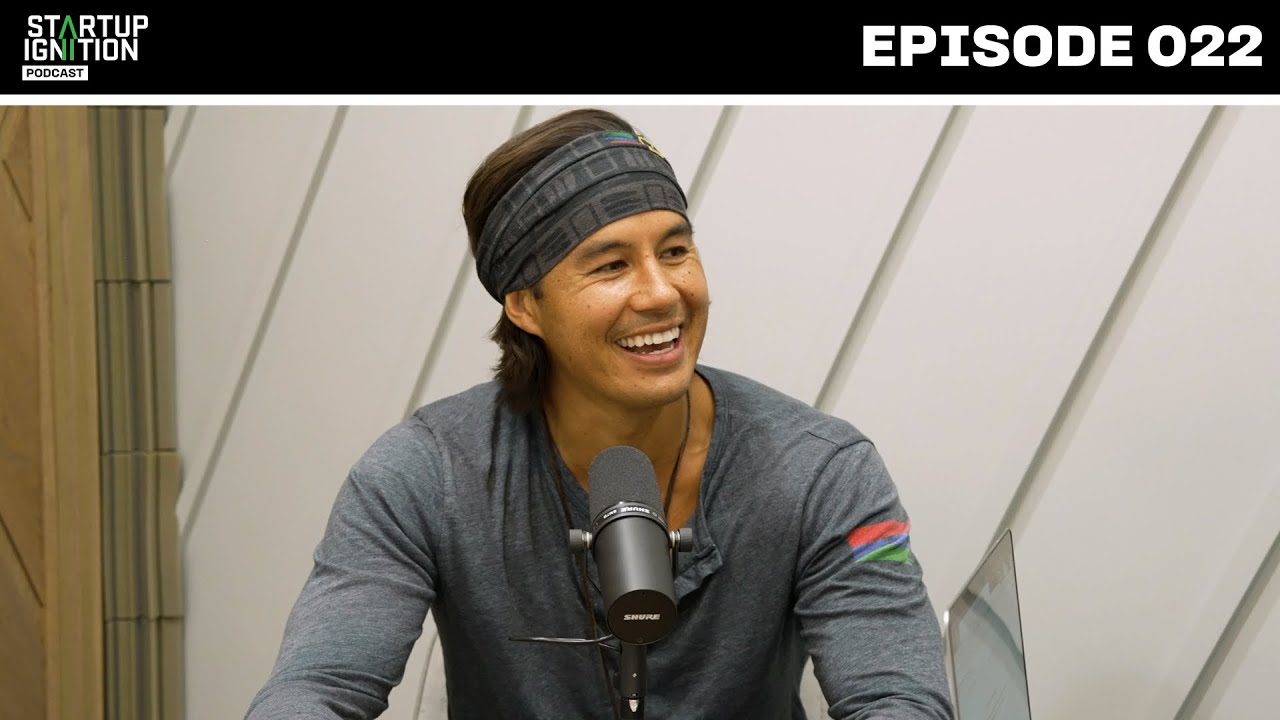
Garrett Gee tells the full story behind selling Scan to Snapchat for $54 million while still a BYU student. He shares the real story behind his Shark Tank appearance, the lightning-fast negotiation with Evan Spiegel, a pivotal moment with Jack Dorsey, and how the Gee family sold everything to travel the world as The Bucket List Family.
Garrett Gee co-founded Scan, a QR code scanning app, at BYU. In 2014, Snapchat acquired Scan for $54 million — $30M in cash plus equity. Before the sale, Gee raised $8M+ from Google Ventures, Jim Pallotta, and Troy Carter. He also pitched on Shark Tank (Season 5) asking $1M for 5%. After the exit, the Gee family launched The Bucket List Family, traveling to 100+ countries with 5M+ followers.
Show full transcript
Today, we are joined by Garrett G. He's a co-founder of Scan, the father of the Bucket List Family. The Bucket List Family? The Bucket List Family, you've probably heard of them. >> One of my favorite students and mentees of all time. First day afterwards, he comes up to me and walks out of class with me and he goes, "What does entrepreneur mean?" Yeah. >> I was pretty distracted in class those days. Our downloads just went from 15,000 a day to I I remember the point when it was about 80,000 a day. We were getting a download every second of the day. Professor would start to be talking and I'd be like, "One download. One download." He said, "Have you ever considered selling your business?" And I, again, lied to him cuz the honest truth was yes, like every day of this hard journey. Um but what I said to him, I was like, "You know what? I haven't. I've always had the mindset that I'm going to build this for the rest of my life. But if I were to ever to sell to someone, I'd want it to be to someone like you and a cool company like Snapchat." So then he is like, "Well, come into my office." We open the door and literally the lawyer is like already there in his office and he stands up, comes and shakes my hand and he literally tells me congratulations and I was like, "What? Congratulations?" And so then Evan, right then and there, says, "How about 40 million?" And I just tried to keep the best poker face possible and I said, "That sounds good. Um I'm going to have to talk to my team." And then I said, "I'm new to this. How how long would something like this usually take?" And he says, "For Facebook and other companies, it would take them months. I want to have this done by the weekend." I get this phone call and he says, "Hey, as of now, the deal's 44 million and you're going to finish your soccer season in Hawaii and join me in 3 months. I don't want to wait that long. I want you to quit soccer and come join me next week and if you do, I'll give you 10 million cash." Making the acquisition price 54 million. >> Up the price to 54. I said, Yes. >> "No, thank you." Okay, I think I think our guest should be here soon. But we'll wait for them. What? He's here? What did you do? I TOLD YOU. WHAT HAPPENED? >> I COME HERE. YEAH, what happened? Hey, good to see you. Did you have any idea? No, who were we scheduled with? >> With Brian and Dustin, but we're actually with Garrett. Oh, yeah, I GOT TOTALLY THROWN OFF. OH, MAN. YEAH, YEAH, YEAH. Good to see you, too. Well, how you doing? What's going on? >> him. We got him. Surprise. >> what you did? >> Yeah, and we're just going to go straight into the podcast, but I had to film this from my point of view. Oh my gosh. We got him. >> Garrett, how are you doing now? Okay, well, I'm totally in different mode. So Garrett, so just to set the table, Yeah. Garrett said, "I'm going to be 40 minutes late." And then he calls me, he goes, "I've actually miscalculated. I'm actually here now." So I pushed it back and then he was here early. He was going to walk in late, but then since he was here early, I'm like, "Just go hide in that room over there and then surprise you." >> Yeah, that's a surprise. I've got to thrown a off base here just a little bit. That was great. That was wonderful. >> prepared for you. It's been a while since I've seen you. >> There's no mentally preparing for this. So okay, we're going to go straight into the podcast. So welcome to the Startup Ignition Podcast. >> This is great. Glad to be with you guys today. Yeah, thank you. This is awesome. And today, we already know everybody already knows Garrett is here as our podcast guest. We are super excited. I can't wait. I don't want to waste a minute cuz I literally want to get into Garrett's story, his background, how you guys have your history, everything that's happened over what? The 10 to 15 years of knowing each other. >> Probably 15 years. It's 15 at least, probably late 2000s. We left home for the Bucket List Family 10 years ago, so that it's got to be >> to guess it's over 15 years. >> Yeah, I think 2010 is when I took your class. Yeah, 2009 or 10. >> Dude, we're getting pretty old, by the way. >> Who Who thought of this? I don't know. Did you tell the viewers and listeners that >> what it was? Honestly, no, the moment the moment I saw the first episode, I've I've watched, I think, every episode of you guys' podcast. And when I saw episode one, I think I text him and he either had an old number or whatever, I couldn't get a response out of him. >> No, it was but you you sent me texts like, "Hey, how's it going?" or something like that. I'm like, "Oh, this is definitely a scam text or something like that." I had I didn't have your number. >> Yeah, yeah, yeah. >> And then someone connected me to you and I'm like, "No, that's Garrett." I'm like, "Oh, that's Garrett. My bad." >> I invited him. No, you had reached out. Somewhere along the lines, you had reached out and I was already scheming with him. We This is This has been like two or three months in the works. >> know if they know that I completely expected a different guest and people today. So I'm thrown off. Your face said it all. Garrett, Garrett, one of my favorite students and mentees of all time. >> Yeah, so okay, let me give let me set the table real quick here before we get into Garrett and his background, his story. Let Let me cuz I have a bio. I sent it to Garrett cuz he has so much in his background. But today, we are joined by Garrett G, like the letter, not G, like a lot of people said. I think when I first met you, I thought it was G for about 3 months. >> Yeah, common mistake. It's G. >> mistake, but it is G. He's a co-founder of Scan, the father of the Bucket List Family. And Scan, for those who don't remember, I knew it as QR Code City. >> Once upon a time. >> Once upon a time, that's how far back it goes. Hit 100 million downloads or so or it was reaching the number one app in the app store back when you were at BYU and at your university. You were captain of the men's soccer team. You even pitched on Shark Tank and walked away without a deal, but you made them all very sorry for it because you sold to Snapchat for 54 million. This is all public knowledge, by the way, viewers and listeners. Since then, you then sold everything. Instead of upping the luxurious lifestyle of an exited founder would, you said, "I'm actually going to do the inverse. I'm going to sell my house. I'm going to sell my car. I'm going to sell my belongings and I'm going to take me and my wife and my children and travel the world." And you became known as the Bucket List Family. He has built a global storytelling brand. You visited over what? 100 countries and cultures. You're inspiring 3 million people on Instagram, 1.5 million people on YouTube. Garrett literally exemplifies like the entrepreneurial spirit. He is literally turning every pivot and post and publicity opportunity into something amazing, you know, from freedom first lifestyle to purpose to profit even. You're savvy businessman and and today >> Today, I'm super eager to unpack everything that's going on with Garrett. >> And he personifies the reason why I got into entrepreneur education and mentoring. And let me close with this. I'm not done with this bio yet, Garrett. You're going to have to sit there for another 30 seconds, but you are just an all around good dude. You have been super supportive of what we've been doing here at Startup Ignition, so we thank you for that. You've been around my dad for 15 years, me probably 10, 12, around the same amount of time. And also, you're one of the smartest branders, marketers, I think I've I've met I remember a story and we'll go into this about you and how you raised for Scan and the things that you did and the tactics that you used, very guerrilla-esque. >> So many great stories. >> And just to let Garrett know, even though you've watched every episode of this podcast, which is amazing, but at the same time, the viewers and listeners here are very early stage entrepreneurs, right? The budding entrepreneur. How do I get into startups? What do I do in the first 1 month, 6 months, you know? >> What Garrett once was. Yeah. And so and I think I think what you can do is making something out of nothing is something that every single viewer is interested in here watching. And so that's why I'm so excited. So Garrett G, everybody. >> Okay, so let me get this straight. He's our guest today. He's the He's the He's the boss. He's the boss. When he shows up, Tyler, DID YOU DOUBLE BOOK? HIS FIRST THOUGHT IS LIKE, "OH, CRAP." He double booked. No, no. So thank you for Brian and Dustin to being in on the caboose cuz I had to actually invite them on a calendar invite to to do this guy. Nothing gets past him. So I duped him pretty good. >> Well done. Yeah. >> I was just about to take off half hour ago to get here and then he says, "No, you don't need to come for half hour." Yeah, and you're like, "What?" Yeah, it worked out. It was very irregular scheduling, but it was great. It worked out. So Garrett, >> really schedule with this studio for the half hour? Yeah, yeah, yeah. So here we go. Yes. Before we get into Garrett's too, I also do an icebreaker on every podcast. I'm going to spring something on you here, okay? We're going to do it's simple, but I still I I still want both of your opinions, so you're going to participate, too. Okay? This is going to take 3 minutes. We're going to do a really quick entrepreneurial this or that, okay? And what we're going to do is I have 10 things and I just want you to tell me what you prefer out of these out of these each of these things, okay? So this or that, just 10 prompts, you tell me which one you prefer over the other, okay? A revenue focused startup or a user growth focused startup? User. User. I knew you'd say that. How about you? You can participate. His skill set, I agree, would be that way. I'd probably be more revenue cuz I don't have his skills. Nobody that I've known, very few, know how to pursue a user growth startup and come out on the winning end like Like Garrett can. And for me, I I don't have his dynamic guerrilla marketing. What was X factor? So revenue, revenue, revenue for me. Yeah. Okay. >> But that's that's why we're yin and yang and good team. Exactly. Number two, building a startup in Utah or building a startup in Silicon Valley? Utah. Ooh, Utah. Well, you got We got a good story about you. Yeah, we That's a great story for Utah. >> three, hiring or firing? Hiring is better. Oh, way better. Firing is probably one of the worst things you can do as a as a leader. Oh, it's horrible. Here we go. Going in the bucket list family side of of things. Asia or Europe? Um I would Oh, jeez. Yeah, I My first impression was Asia, but in my head I'm going back and forth. That's a tough one. Really? What about you? You've traveled a lot of places. >> They're both good, but I have to admit I probably like Asia a little bit better because it's more interesting. It's different than, you know, Europe is more like the United States. So, Asia brings a lot of difference and variety. Okay. Okay. Bootstrapped or VC-backed, Garrett? >> VC. VC? >> Yeah, all day. VC-backed. I I probably Bootstrap as long as you can until you need to grow faster. >> Yeah, if if if your startup is being choked in growth because you don't have capital, VC-backed. But, bootstrap to preserve equity, right? Yeah, that's my vote. But, I like your VC-backed answer, Garrett. Hey, no judgments here. This is a safe place. Uh coding or product building or content creation and editing? Uh the first one. Coding and product building better than content creation. >> Yeah, builders. Yeah, how about you? You do both now? For sure. Yeah. We're creating content right here, right? Content's okay, but yeah, building a product building and growth is just what inherently that's what the common thread between all three of us would be we got to be building and growing something. Content's just literally telling the story. You're not building something you've got to destroy. You're telling a story, man. There's no result or outcome from the content anyways, right? Yep. Um okay, great. Number seven here, customer feedback or investor feedback? Oh, neither. Neither? >> Yeah, just build what's in your heart. >> Okay, so following your own passion. Following >> Yeah, if I had to choose between those two, for sure it's customer. Yeah, investors um Investors are one data point, might not know what they're talking about. However, I do feel like investor feedback is a critical feedback loop for the entrepreneur, right? If you're going and and you're pitching to VCs and they're constantly telling you no, like there needs to be some kind of change. >> It just depends on the investor. Like the money's not a credential, and a lot of times their experience is valuable, but often it's outdated. And so, it it just depends on the person. >> going to be if they're an older been there done a person more in the operations or process side compared to product and customer side. So, you got to listen to the customer for the best product. >> Yep. When I I quick story, when I was raising money in Silicon Valley, I remember like at first everyone was saying like this is how Google did it. And like that's how it's got to be done. And then Facebook came along and they're like, "Oh, this is how Zuckerberg did it." This and I'm like, "Can you guys hear yourself talk?" The only consistency is that it's always done differently. So, stop looking for the same recipe. It's always going to be different. And the most recent and the into play because it's more recent, it seems to have more credibility. >> Yeah. Okay. Number eight, TikTok or Instagram? Uh Instagram. Instagram. Instagram or TikTok? Yeah, I I Instagram is better. Yeah, TikTok can be entertaining, but afterwards you feel like you need a shower sometimes. Well said. I actually like Instagram as a user, but TikTok as a business or profile trying to push and get a message out cuz I feel like Startup Ignition has a little bit more reach on TikTok. Like same videos whatever we're doing, and it just gets to a wider broader audience on TikTok for whatever reason it is. >> be my argument is if you're trying to build reach or have a one post go viral, TikTok all day. But, if you're trying to build community Instagram? I know I'd even say like old school Instagram. Instagram got spineless and followed the ways of TikTok. And so, now it's algorithm works more similar to TikTok where it's it's just more difficult to build a community when the algorithm is showing you what you think you want to see rather than who you follow. And so, but the most important thing on social media in my opinion is building an everlasting community that's going to be your customers, that's going to be your shoppers. And it's become more and more difficult the way that social media has evolved. >> of active followers, not not not shark finned followers, which is, you know, they come in once and don't come back. Yeah, exactly. And so, the better you can cuz you might have one post go viral and it'll bring in some sales and customers. >> is that shark finned follower almost a little bit? Yeah, I mean cuz if when you go, so much of your time is spent watching consuming content from people who you don't loyally follow. Yeah. More so on TikTok than than other platforms. Hey Zuck, are you going to sponsor the Bucket List Family here or something here? He's He's pushing you guys hard and over TikTok. That's great. So, the people like the the creators, influencers, whatever you want to call them, that have been able to create like a consistent community that will check in with them on a daily basis, that's the true value. Yeah, so I get you know, you two know way more about this than me, but to me Instagram you can literally build a true lasting brand. Well, on TikTok it's more flash in the pan. >> You know what's proof of this is we did like a creator conference of sorts where people could sign up and come and attendees would go and be able to meet their favorite creators, YouTubers, Instagram, TikTok, whatever. If you took a YouTuber, an Instagrammer, and a TikToker that all had a million followers, it was really interesting the difference in their demographics, literally how long the line was. I would say the most loyal, the biggest, most um intense fans were actually YouTube cuz they're watching long form content. So, they really get to know that >> Yeah, I They say YouTube follow subscribers are the most valuable subscriber. I'm I'm learning that, too. So, YouTube They develop like a real relationship long form with these people. Instagram is a step behind that. And then TikTok is like, "Oh, yeah, I think that person's on TikTok. Like I'm excited about them." But, like yeah, things are constantly changing, but at least few years ago when we did this conference it was >> for you then then like like if I were to swap out TikTok with YouTube and I said YouTube or Instagram? Then it'd be two very different answers. Instagram is where we've made a bunch more money. That's where brands like to do their deals. Whereas YouTube is where we've like again, I think Instagram's like 3 million, YouTube is 1.5 million. But, if you ask like where we've like really shaped and changed people's lives around the world, that's where they find us. >> It just goes back What a great purchase Google made of buying YouTube when you think about it with the What they bought with the YouTube. >> yeah. And then the same thing with Facebook buying Instagram. Like holy cow, both of them. Both of those purchases Crazy. And they were both looked at as so crazy. Do you remember when Instagram was bought and it was like the first billion dollar like 10 person team? It was just One year old, 13 employees, $1 billion. We we were definitely in school when that went down and we were all just like, "That's insane." But and then the YouTube, they go, "Why is Google paying you I think it was six or 800 million?" I don't know if it went over a billion. It was but now this, you know, after Google's network, YouTube's number two. So, they own the number one and number two. And YouTube, the amount of data that they control by owning YouTube is out of And it's got more watch hours than Disney Plus and Netflix and Amazon and all of that. It's crazy. And and these big brands honestly know what they're doing. They're not idiots, right? Like they're sitting around spreadsheets and calculating things all day every day. It's teams, scores of people that are that can predict the future. Like they knew content was going to be the future and they purchased it right away. >> a mes- here's a message on that whole thing. I just canceled Netflix over the weekend. I was a member since 2009, and Netflix now is not doing it. It's just not hitting the I have the last year I will turn on YouTube and watch YouTube before I'll watch Netflix. That's crazy. That's crazy. You turn on YouTube over like Yeah, cuz I I can get content I want better. I can watch 15 minutes, a half hour, an hour of something way more than >> that goes back to my answer of what was the question? Like would you rather have customers or dollars? The revenue versus the users. Because what I've learned in my last few years, 10 years I guess, in social media is there's a new currency over money and it is followers. Well, look at that. Your sale to Snapchat that's a testament to that because you you what you did with users and we'll tell that story with for a Utah a student at a Utah university and what you launched and built with the amazing >> be 3 minutes. It's now like 15. I want to get into Garrett's background. Okay, I still have two more though. That's why I'm just going to push it along here. I'm guiding. I'm I'm I'm the host here, okay? Business grind or parenting grind? Which is harder and which do you like more? I like parenting better. Uh I think business is harder because I mean I don't know. I've done a pretty good job of like having a business that I love so much that it doesn't feel like work. And so, that's why if someone's like parenting is hard, if you like stop and think about it, like yeah, for sure. But, it doesn't feel hard because it's like that's your life's >> It's your life and you love them. And you love them. But but to my credit I'd say I did the similar thing in business. I always worked on something that I cared about and was passionate about. So, in a similar way to parenting, it was like the business was my baby and I I didn't feel like I was working. Yeah. So, okay, so summarize it again. Which one's harder which one do you like more? Parenting I like more. Business is harder. Okay, how about you? Um Be careful what you say here. I am your son. I am your son. Yeah, they're they're the two biggest parts of my life that I over the last few decades and I'd say they're both they are both challenging and hard and difficult at the same time and I like them both. I I would say the majority of my time are spent on those two things. So, right? Like that is life, right? So, One of the things I'm most proud about I can be honest with you my son here, but I can say I have a lot of young entrepreneurs who go say, "How did you keep your family together and loving each other?" >> hard. And all four of children and their spouses and we get together and love each other and go on vacations and and you know, it's not perfect, but we have that plus also got some success in business. So, doing both of those having a successful family outcome and business outcome, it is challenging hard, but I they were they're like I couldn't without the right spouse I couldn't have done it in business. >> Right. >> You know what I'm saying? And without some of the success in business you it would have been harder to parent, right? So it's like it kind of goes catch-22. Yeah. All right, last one. This is number 10. When traveling or on vacay, whenever you're abroad doing something, are you offline disconnect or always connected? I'll say this, my favorite way to travel is to do like a liveaboard where your like vacation is on a boat that you know you where there's a sailboat, catamaran, whatever it is and you're out to sea and you're forced not to connect cuz in today's world any business person, entrepreneur, whatever, if they have connection they're going to like check, right? >> And then you're going to be distracted. >> And so that's why these liveaboards are my favorite way of travel is because I'm disconnected and my family and our friends, like whoever we're with, it's the best form of bonding because the lack of internet. I I'm not even going to ask my dad, but I know his answer. You're disconnect when you're away. Yeah? You are disconnect. You think so? I don't think so. I do. I I I don't >> vacation you're on vacation you're on you're disconnect. >> I am less the last few years as you get older like I'm getting I'm an old guy now. So when I you get older, yeah, I have less a little bit less demands and stuff like that. So I manage it, but I it feels funny to not have the option to go get connected. >> Yeah. Oh, it's so funny for when we do these like liveaboard trips we're doing one next week and the week after that. Um and it will do at least one a year. I'm telling you it's some of the most like meaningful like you your brain, soul, everything resets. And it's funny because our friends for the first 24 hours you'll see them like check their phone and like oh yeah, no internet. So it's just habit. And then you'll see like their internals reset and then they come back and yeah. 100% connecting come back. And then it's always this sad day when we get back to port and it's not as much fun. It's terrible, but I watched the third season of White Lotus where they go to the White Lotus Resort. I don't know if you've know about that show. I saw the first one. I didn't see season two. The third episode the one they go to White Lotus Resort and they when you go into the resort you have to put everybody puts their cell phones in a bag and for the entire week they're kept in the office in a bag and nobody can have a cell phone. >> kind of cool actually. It's fantastic. Yeah, someone should do that actually. Yeah. But that that was kind of our Lake Powell trip. My family my my wife's side of the family does a huge Lake Powell trip every year and we go down to Lake Powell in Utah or Arizona and uh we used to have no connectivity, right? Cuz there was just no service. Starlink came on. Yeah. >> And now guess what? People bring their laptops, their cell phones, the whole family, everybody's arguing about who's taking down the bandwidth, you know, it's like it's like over the last 3 years it's kind of ruined it a little bit. So it used to be such a connected trip. >> It'll come to the time where you just need to make the conscious decision of like when your connectivity is and isn't. >> you answer the question? So do you connect or you do you disconnect when you're traveling on vacation abroad? >> I'm But this is what you do in this kind of traveling. Yeah. So you're connected, but if you have the ability to disconnect you like to disconnect. That's the answer. >> I always appreciate the time when I'm disconnected. Thank you for playing my this or that. That took 20 minutes of the podcast, but it was great. So thank you. Okay, now let's move into it because I had to secretly ask this guy cuz when we were prepping for podcast guests we like to like cuz we have history. Yeah, we know each other though. I know. And so I'm we're kind of springing it on him a little bit here, but >> me do this then. Let me I wanted to say a couple of things to start, okay? Cuz if we go back to the very beginning, if you were to ask me in high school or my first years at BYU I could not define the word entrepreneurship. That's what he That was my first story. That's what he That's what he told me. That's what he told me. He came up to me after the first day in the first class he took from me Hold on, set the table. So I'm an industrial design major and fresh back from mission I served in Russia and I'm telling you did not know like the word entrepreneurship. And part of the industrial design major they required you to take at least one or two business classes and so I chose intro to entrepreneurship >> I I team taught with one of the leading engineering professors, Brent Strong. And I was the entrepreneurship guy coming and we taught entrepreneurship in the engineering school and so that's why he's in that >> and followers John taught at BYU for 12 years. So he was a professor at BYU. Garrett attended BYU. >> the first day afterwards he comes up to me and walks out of class with me and he goes what does entrepreneur mean? What does that word mean? And then and then I told And then I told him it came from the French language and I explained what the entrepreneur means. And he literally that's a true statement. >> But on day one or day two you gave the class a quiz like are you meant to be an entrepreneur or not? And it was this like 25 question quiz and you literally just answer yes or no and then you went through and scored them and he kind of said like if you're below a 10 like entrepreneurship's probably not for you. If you're like a 13 for a 15 entrepreneurship probably is for you. Yeah. And then he had everyone raise their hands like the second highest in the class was maybe a 15 and I didn't raise my hand because I was like embarrassed I'm like did I cheat on this? I got 23 out of 25 and I even one of them was like are you a second generation immigrant? I was like yeah. The whole thing was just like about me and they described me to a T. And so I didn't raise my hand or admit to him and then I went home and I was like I think I'm supposed to be an entrepreneur. That's crazy. Yeah, cuz we still actually give out that entrepreneurial test with our boot camp as part of the boot camp side of thing when you apply and you You're trying to get into the the admission process. We know where they're coming from. Cuz yeah, we want to see how entrepreneur what like what's their risk tolerance? Like who where are they what's their background? Where are they coming from? And so we still use that today. >> remember that. You did you were one of the last person stand cuz I have everybody stand up and then sit down as the score gets higher. Yeah, and I think I lied and I just sat down and I'm like this is embarrassing. People are going to think I cheated. That's hilarious. Okay, so you were in his class and you hung around the entrepreneurship program cuz I remember when you were going to school I was going to school and you know take take me from there. Well, for the first thing in that class though he did um he did two things that semester. He was an incredible design. I mean this his design skills are everybody knows that he's super well known for that. And then he wanted to make a business around that cuz that's what you knew. And your first business was an idea around that, right? >> I did. I created well, I created Capital G Design which is basically a freelance business. During that class, right? Yeah, and then also you did a good job of you you forced us to come up with like many many business ideas. I came with an idea called Bronzeberry, an idea called Oxyguard. Yeah, I love that. Yeah. And at the end of this year I probably had like 20 ideas all of which I thought were good enough to like work on. So I was kind of juggling 20 different business ideas until one of them started to rise to the top and then I shut down the others to focus on the one. And then he was so talented he kept testing his pricing and it kept going up and up I remember cuz you were doing first also a consulting design company. I was thinking about this is like a weird blast from the past cuz I'm like having flashbacks to like specific lessons that you taught me. And I kid you not you would like teach a lesson on like how to set your prices and then I would go home and like do exactly that. Like I was like in real time like implementing everything you taught because at first I was just trying to like design logos for people for free. Yes. And then I would charge them $10 and it was always a funny thing because when I when they would ask me like how much you charge and I would tell them $10 they would literally like oh so you must not be good. I was like what are you talking about? Like look at my design and look at my price tag. People value value your price, right? So then I go home and I start charging $300 an hour and they're like wow you must be really good. I was like well I charge $300 an hour. I mean I'm telling you you would your words were gospel to me and it worked. And then also one of the things that you and a few others like one of your co-founders did this. Which is Garrett said hey I want to hang around you more. Is there and he got his way to come assist and what we called the Utah Valley Entrepreneur Forum which I was on the board of and running and he came and volunteered and said I'll work for free and just help the entrepreneurship program. Yeah. And that exposed you to a lot of mentors and help, right? >> say I'd say there were two things that like really worked in my favor during that year with you is one just being a yes man. And if there was an opportunity you could say like who wants to grade everyone's test I'm like I'm in I'll do it and it's just like you know it's trying to give an impression on you. And then the other thing is I remember I had one of the first like smartphones. That's how long ago this was. So I had my Blackberry Pearl and he would be like okay, so there's an opportunity uh the angel investors are going to be taking pitches and I'm going to have two students from my class go and sit on on this pitch. It's going to be the first two to email me. And people would be like running out the door to go to like the local computer and I just like on my phone and I email you. How often it was like quick responses and saying yes to things. Yeah. And he got you to opportunities, yeah. Let me ask this question. So did you observe in Utah Angels by sitting like a wallflower in the back and just watching them? >> I could, yeah. I did that multiple times. How educational was that? >> Majorly. Both for the good and the for bad. Like I this is not working clearly. And there was more of those. Well, you just saw some train wrecks or something. Oh, one after another. Bad pitches. So of the 50 that I saw 49 of them What I try to what I've said for now for 20 years I said and to the viewers and listeners, the most minute-by-minute educational experience you'll ever have is sitting silently in the back watching another entrepreneur pitch to investors. Because when you see that when you're the pitcher, the one pitching, you're kind of nervous and all this is going on. When you can sit back and watch and go oh, why did you say that? That was a mistake. Or he shouldn't have said it that way. He should have framed it this way. You actually learn by watching and you did that a lot. And and that's I think how you honed a lot of your skills and figure out how you can put your best forward the way you are as an entrepreneur. And that to the viewers and listeners, anytime you do that actually Tyler and I are thinking of having a feature on our Startup Ignition platform where we're going to have pitches happen and people could watch in the background. >> you know like a like a Zoom or just like a broadcast you could attend for free. >> it fly-on-the-wall. >> Yeah, fly-on-the-wall Did you know this? So, um flash forward, right? So, I create one of the businesses is QR Code City. Created the iPhone app, called it Scan. Uh took second, not first in the BYU business plan competition. >> Why did I think you took first? Who took first? >> Cuz we eventually rose to the top. Not bitter, just kidding. Uh very bitter. No, there was uh I won't even say their business name, but a different business won first. And I remember sitting there and being like as they pitched being like, "These are good guys. It's a very clever idea, but if you know Facebook and their API like it's not allowed. Like this business idea is not viable." And the judges didn't know that. Like the judges didn't know Facebook and social media well enough to know like this is not a viable idea. And so when they won, I was like really upset. So, how did So, what with with those 20 ideas you're taking through class through your college career, how did QR Code City start rising to the top and be the one you wanted to focus on? >> when we we like kind of went live or like prototype live with many of them. And right away out the gate Scan in the iPhone App Store started just like pouring in the >> Let's come back before and So, you did that your first businesses and they were kind of lifestyle exchanging time for money businesses at first. And you got that you took the class in the engineering school, but then you came back to the business school classes that are similar. So, I taught in the engineering school a class creating new ventures it's called. Which you might not know this because uh I I was in the industrial design program, right? And when you finish your first year, you have to reapply to continue onward in the program. And um they pulled me aside and said, "Look, your design skills are good enough. Like we want you in the program, but you're very distracted. We know you have these entrepreneurial side projects. If you quit those, you can continue onward in the program." >> do it. I said no. Yeah. So, then he signed up for my class and I can't believe they did that. signed up for my class in the business school. And that's in that's you actually took my class three times. I have a thought like four or five. Yeah. If you taught it, I'd tell you that. And so but the three high level where you create a venture in it. And the second one is when you came up with QR Code City and then you honed it on the third time. And then the story of when QR Code City and you got a lot of buzz business plan competition you were doing really well in school. But then when you really launched it for earnest on the platform, tell what happened that first night. The I remember cuz we went to a party on campus. And I no joke like got up in front of everyone was like, "Download my new app." And I was pretty proud because I think 12 people at this party downloaded my app. And I was like, "That's off to a good start." So, the next morning I went to our co-founders Ben Trott and Kirk Weiler. And I was like, "Guys, guess what? Like I got us 12 downloads last night." And Kirk looks at Ben like, "Oh, he hasn't checked the analytics yet." And we had received I was something like 15,000 downloads. Oh my gosh. It did really well. And then it just exploded. And that was a good lesson for me. >> uh and Kirk who's a great tech guy, Amazing. Both him and Ben, yeah. and he taught and now running his own fund and doing all sorts of stuff. But he um Kirk Weiler and he but he I think he told you like you were the server was having problems. You had to do some reconfiguring. >> happened. There was so much activity on Majorly. And that's when I learned the power of like if you're marketing the old-fashioned style, it's literally one at a time. But if you can get in a platform at the right time and like benefit off the big wave that is that platform. >> yeah, leverage, right? That's a huge principle and tactic that I talk a lot about is about just using utilizing product, services, tools, mentors, advisors to leverage a situation to get the most out of So, what happened here? So, literally Garrett had a Zuckerberg experience cuz if you watch The Social Network the first night they launched Facebook, they had the exact same thing. 2,000, 10,000, whatever it was the number that sunk their servers a little bit. And you guys had the similar problem. So, what do you what do you attribute that like really early success to? Um for the entrepreneurs listening and watching like they're busting their butts creating a product trying to figure out some kind of niched out thing or some market. Like what do you attribute the early success of Scan to? It would be this. You got to understand like where the customers are looking or coming from. So, somebody went to the App Store and they wanted to scan a barcode or a QR code. And at the time QR codes were like majorly on the rise. People were learning about them. And they'd see them everywhere and it would say download an app to you know scan this code. And so people would go to the App Store and they would type in either scan or QR code. And the name of our app was Scan and the name of the business was QR Code City. So, no matter what you typed in, we showed up first. And we had five-star reviews, a quality design, and it just worked well. >> Yeah, here's here's we analyzed this and talked about a lot back in the swim. Here's my memory of it. Is this he you have to understand he had scores if not two to 300 competitors on the App Store. >> Yeah, I remember that being And then Garrett came to me said, "John, he calls me professor. He never called me John. He said, "Professor, that's And he still calls me professor today." He goes, "Professor, I think you've graduated to John Even when I texted you, it was professor And he goes he goes, "Professor, they all suck. They're ugly. It's they're terrible design." And what Garrett did was he's an incredible designer and he in that red ocean of getting that download to scan a QR code, he made the best looking nicest UX UI app. >> Is that it? Is that a true story? That's really what won the day. >> And simplicity, simplicity. Yeah. So, I mean I'll skip forward a bit and then we can come back, but if a lot of people thought when we got acquired by Snapchat that it was it was pretty soon after the whole Shark Tank TV episode went out. So, a lot of people thought, "Oh, Evan Spiegel of Snapchat must have seen the Shark Tank episode and that's why you guys got acquired." That was not it. I even I didn't know until like months into working with Evan that I was like, "Hey, by the way like how did you ever find me and my app?" And he said that once a year he would literally go on this like getaway trip, disconnect from everything. This time he was on a boat in Italy. And it's just his time to like rethink of like, "Where's the business going?" and just have that like brainstorm session. And he realized to himself, "I have the second most used camera in the entire world. The first, the default iOS. The second was Snapchat at the time." Meaning like taking photos When someone takes a photo, it was going on Snapchat. The number one was iPhone's default. Number two was Snapchat. So, he's like, "If I have the most or second most powerful camera in the world, I need to beef it up. What else is this camera capable of?" And so he went and he typed in scanning. We showed up first. He sent one email. And he said like when he told the story he's like, "You you came up first. I click into it. Love the design. You know, clicked into the engineer whatever and sent you an email. That was it." Yeah. Wow. That's crazy. Yeah, that's how it all came about. That is amazing. And it and it was you were winning the day. But then it got super exciting cuz what happened the next few days and next few weeks? I mean that's when, right? We our downloads just went from 15,000 a day to I I remember the point when it was about 80,000 a day. 80,000 downloads a day. We were getting a download every second of the day. And I was pretty distracted in class those days because professors would be talking and I'd be like, "One download. One download." You'd just be like refreshing the analytics, yeah. These are amazing numbers. People don't know like here's my memory I may be off like three months into it I think you hit a million. Something like that. I can't remember or two months. Maybe it was a month. But and then like at five months you were like seven or eight million. And then like at eight to nine months I think you hit 20 million or something. >> was it was almost like when we passed maybe it was like the 10 million mark. All of a sudden it was like it set off alarm for a lot of different companies and that's when we heard from Google and Facebook and all that. >> that, did they reach out to you? Cuz I thought you did a whole Sand Hill Road like >> was it was a first door knock. >> Marc Andreessen contacted you. We did. They were one of the first ones. >> and say. But but let's talk about these numbers cuz the other thing that was happening in the numbers and this is important cuz you and I use this ratio all the time. Taking your daily active users divided by your downloads or daily actives divided by your monthly active users, those ratios important. You had like 20 to 20 to 25% of those that were daily actives. That's what I remember. That was the incredible number. That it's one thing to get 80 million downloads and .2% are daily actives. Okay? But if you're at 20, 15, 20, 25%, you're going you're building. That's where the users are more valuable than the revenue. >> Yeah. Yeah. For sure. Yeah. And so that's really cool. So, go So, going with that user growth and taking it over to Sand Hill and Yeah, but let's talk about Marc Andreessen was the one that contacted you. >> So, wait, he he reached out to you? Cuz I I I swear I remember a story of you going out to Sand Hill Road. That's later. No, he I know the story if you want me to tell it cuz I know. Is it is it Like Garrett tells his own story. Uh I I believe his name is Ron Conway Jr. And he used to be at Andreessen Horowitz and he no longer is. And um I went >> Ron Conway is a very famous angel investor. Yeah, so but the son was the one who I pitched first at Andreessen Horowitz offices. And I was all excited and I followed his advice, which was some bad advice. Oh, what did he say? I'm going to I'm going to give you your flowers all day, but I'll share the negative advice as well. He he he told me about some bad advice. He wrote it up in TechCrunch one time, but anyway. So, he had said cuz I think I would probably went into your class I was like, "Uh so I landed a VC meeting. I don't know what I'm doing. What should I do?" And the two things that would be good advice for another person, but were just not working for me. One was he told me like the different financials and numbers and projections to pump into the deck that he's like he looked through my deck and he's like, "This is what you're missing." I was like, "Okay, I'll put those in." And then the second was he told me to wear dress nice. Yeah. Yeah, that also was not So, so this is this is a learning process. So, for me to like why those were two terrible advice just for me personally was the importance of authenticity when you're pitching someone or really just in life in general. So important. So, when those numbers and financials and projections came up and I didn't like and you could tell and you didn't know, you know. He could tell like this guy's not a numbers guy and he's faking it and then and he got uncomfortable, I got uncomfortable, it ended poorly. And then the other one is like you could tell I was like not comfortable in my own skin or whatever. >> What did you wear? >> and tie. You wore a shirt and tie. Yeah. But the next time you went out Right. So, I left that meeting and I called Kirk and I was like VCs are terrible. He he wasn't the most kind to me in that situation. We since then like reconnected and he's a great guy and I understand like why I was a terrible pitch, but he made me feel really bad and like I had no hope. So, I called Kirk and I was like I'm done, I'm leaving this, I'm out of here and Kirk said wait, before you leave, there's one other person who's been messaging us also from San Francisco. Just take that one meeting and then come home and I was like I didn't want to do it, but all right, I'll be a team player. So, I went and pitched Ariel Poller just a angel VC based in SF and that meeting was way more casual and I told myself take out the financial projections out of my deck. I'm going to dress way more casual. I show up to this cafe and meet with this guy for like an hour or so and we really just connected on like a human level. We talked very little about the business and he could just like see me for who I am and he said to me he goes I want to invest, I want to be an advisor in your company and I want to raise the rest of the round for you. And by that he meant just make the intros. Yeah. I was the pony going and doing the show, but he just made the intros and he was such a reputation in the area that when I came in as a Ariel Poller like invite, I already had like the green stamp on me. So, in my defense a little bit, definitely at the advent of social right now what we say is there's a fork in the road. Are you going to go for a million dollars revenue first or million users first? That's kind of an interesting question. The way you approach the entire venture ecosystem is completely different depending on which of those two you're choosing. >> that's a learning that came after kind of like the 2010 era. >> Kind of, but at the same time and that's why you take advice, you take it in and you make it your own. But turn it into your own. As far as the dress, I don't know why you told them to wear a shirt and tie. But but the keyword there like you said, make it your own. Whatever is your own, like be you and own it so hard. >> I would have said shirt and tie, but he might have interpreted that. Yeah, yeah, yeah. The exact words were you got to dress nicer than the investor and they're usually dressed nice. I was like I don't have a tuxedo, so I'll wear my suit. I'm like I'm a usually very casual dressed guy, but I actually feel like overdressed next to Garrett here. He's got an awesome bucket list apparently. So, here I'll just I'll do this. I'll turn my hat backwards. >> so now I also remember a little bit of the story. Did you get into see Marc Andreessen personally? Yeah. Okay. But they they ended up not investing. >> I know, but I heard when you went out there to Marc Andreessen, you arrived early. Mhm. Is this part of the story? >> Yeah. Like two couple hours early maybe even or hour and a half or something and then you looked on your phone on Sand Hill Road and said, oh look at all these other famous names and then you went and knocked on those doors, none of the receptionists let you in and when you went back for your meeting at Andreessen Horowitz, this is what I remember. You tell me if I'm wrong. That's correct. >> Okay, that then you had a good meeting there and he goes, oh you want to meet some of them? And he took you and met and introduced you to some of them. Is that true or not true? >> 100% true. It's because back in the day I landed, so I Ubered over to Andreessen and I was there like two hours early. So, I just pulled up on Google Maps like is there a restaurant nearby? And it was Kleiner Perkins and Redpoint and Sequoia and all of them and I was like they're like all in the same block and I was like oh perfect. So, when I went into the secretary I was like hey, I'm here doing another pitch, but I'm here early like can I pitch someone here? And they were just like you can't do that. So, it was fun when I came back into the secretary like hey, remember me? Like and I got a pointment. Yeah, those were those were good times. So, when when did Lady Gaga enter the picture then? >> No, that was still it was still the seed round. And so, there's a guy named Troy Carter and he's just a baller of a baller and he was really awesome. Like my opportunity to pitch him was at the Beverly Hills Hotel. My dad we were in town for I think my sister's like engagement party. So, my dad dropped me off and I mean just a funny story cuz my dad had like driven to Utah, so it was like not a nice car that he drove up to the Beverly Hills Hotel and I remember being like hey, can you like stop like a block away and I'll walk over? So, I was like no, no, it's good. And then he pulls up and even the bellman was like came and opened my door for me. He's like can I help you? So, I get out and I like see you dad and he like kicks back his chair and opens his book and I was like dad, what are you doing? He's like I'll just read my book while you're in them your meeting and I was like dad, get out of here. Leave. So, he did. He sat there and read his book the whole time. It was kind of embarrassing. And so, then I go in and I meet with Troy Carter at the Beverly Hills Hotel. He ends up investing and then as part of his investment he he his main business is managing musicians, Lady Gaga being one of them and part of it is like he would help some of his musicians invest in these other companies and ventures. So, when that meeting ended it was great and then he's like here, let me walk you out and I was like please be gone dad, please be gone. Anyways, my dad was still there. So, Troy Carter literally saw me like get in your dad's car like a kindergarten that's hilarious. It was yeah, it was a situation. >> But you got invited to So, then we went to the MTV Music Awards pre-party and that's where we got to like meet Lady Gaga. >> From that that connection with Troy or what? I mean again, being a yes man, quick to respond, all of this. The the entrepreneurial journey is just really cool for someone like me that has just opened so many doors and opportunities and experience like help me live life to the fullest cuz these are all just random opportunities that I've said yes to. So, I'm trying to remember. Was it is that you that got to go like you were invited to a party I thought that started like middle of the night or something. Was that not you? That was the Lady Gaga party. Yeah, like personal party. The invitation started like after midnight. It was a 1:00 It was a 1:00 a.m. start time, random address and we pulled up and my wife is like I'm not going to this party and I was like well, Troy said I like I got to be >> No, you went in by yourself without your wife, right? I convinced her last second to come with me. So, she and I walk in not knowing what the party was and you could tell like even when we pulled up to the party the bouncer with like the list was like are you lost kids? And they look at the list and he's like oh, welcome. And then as soon as we walked in it was not a big room. >> she was coming in and it went crazy. >> Then everyone went crazy, but it was funny just cuz you're bumping into people and you're like oh my gosh, that was Mary J. Blige and then it's buzzing like that. I was like it was it was a cool situation for a small Yeah, small town Utah boy. >> couple to be But now with all this Silicon Valley stuff, the lead investor in your first round, which was 1.7 million and you had a hard time raising money in Utah. You were welcomed in Silicon Valley and I think it was 1.7, 1.8 million something like that, but what's now known as GSV at the time Google Ventures, did they lead your round? They didn't. They they participated. Who led the round? They might have put in as low as 300,000. I always think of them as a lead because they were so valuable. The the main investor over there David Crane, he's on the board. He's phenomenal. I love him. It was Menlo Ventures and Shervin Pishevar and he's a really interesting one. He and I get along really well. I think he understands like a certain level of showmanship that I appreciate because it was it was an interesting thing the fact that every Utah fund that I pitched said no or at least wasn't willing to like step in first. And then finally when I went to Menlo, not only did he like came to the meeting with a term sheet and it was already in this manila envelope and he like slid it across the table and said we want to lead this round and at the time we might have been asking for like 900,000. He's like I think you should raise 1.3, we're going to lead it, we're going to put in 700,000, we'll like line everything up for you and then he told me it happened is like you're going to be the next Jack Dorsey, this is what I see for you and I was like all right, I was ready to sign my life away at that moment. So, they ended up leading the round. Okay. And and you know, you got to remember Utah got exceptionally hurt in the 2008-2012 great recession cuz real estate got pummeled and most of the wealth in Utah at the time was real estate. So, some tech, mostly real estate. So, it was hard to raise money and when you were doing this early, it was what your was it Utah wasn't ready to it 2010 I think. >> Yeah, that's right in the middle I mean 2009-2010 it wasn't till about 12 where Utah came out of the great recession. >> only that, this was kind of pre-Silicon Slopes like movement and like the whole tech movement. So, I'm just what I'm saying is a lot of investors did not get you or what you were doing. Do you agree with that statement? Yeah. >> And so, but Silicon Valley did and that's to Utah's detriment cuz they didn't get invest, but also it all worked out cuz you got great investors, great connections, but you got the money and they required you to what? Move to California and live, right? >> It wasn't a requirement to their credit. They like they they invited us saying we think you should move to Silicon Valley and we said no, we're going to stay in Utah and they would like everyone once in a while bring it up and after about a year or so we decided like it was it was our own decision. It was kind of like hey, if we're going to go through this experience like let's go for it. Let's say whatever you're doing in life like Yeah, no kids. So, you and your wife were able to move out there first, right? >> we yeah, we did move out. It was while we were out there is when we started >> having kids there and but then what happened? Tell the story of how you left Silicon Valley, yeah. It was if I'm going to be truthful about it, there was like literally just one event where I was at my office there in San Francisco and I got a invite an email saying you would Jack Dorsey would like to invite you to join him in his box suite at a Giants game. And so, I got on my bicycle, rode to Giants Stadium and was in this box suite and Jack Dorsey wasn't there, there was a bunch of other founders, and I was like, "Oh, it's kind of this like networking event, whatever." And so, I wanted to watch the baseball game. I'm a sports guy. So, I sit outside while everyone else was inside networking. And like 30 minutes later, someone sits next to me, and he says, "I'm glad to see someone's enjoying the game." And I look over, and it's Jack Dorsey. So, he's sitting next to me, and we you know, baseball games are long. So, we're like for the next 2 hours, me and I are just chatting. And then before that game, I would have said that he was my hero cuz he's a stellar designer, incredible entrepreneur, like everything that I wanted to become, I thought until I started to ask him questions about his life beyond business. So, like marriage or family, relationships, hobbies, health, like all the other stuff that I'm very passionate about. And um I don't I I like I don't want to talk negative about him, but basically my takeaway from him, the way that he put it, was if you want to find true success, like the biggest success possible in business, then like say goodbye to all that stuff. >> Yeah, yeah. >> And I I called my wife after, and I was I think I was crying on the phone to my wife being like I was heartbroken because who I thought was my hero and like that was my path wasn't my path. So, it was like a hard mental reset of like I got to remember what is truly important to me and where that's the best. And so, we packed up, and we moved back to Utah where we could be our best selves. >> I remember a couple other pressures, if this is right cuz it's good discussion for our views and listeners, is also you went out to San Francisco, you're very lean and mean operation, and they kind of made you not made you, but encouraged you cuz that's what venture does out there, rent expensive office space. >> Majorly. Hire people you really didn't need some of them. Kind of like look on the surface like you're a big growing tech company. >> They're hoping you can grow into that and >> the most fancy entrepreneurs and or sorry, engineers. >> So, we hired I think 14 people that year. Yeah, I know. 14 people at San Francisco salaries and with I think 6,000 square feet or something at San Francisco prices or something like that. >> And and and what happened was the 1.7 million didn't last very long. >> No. And so, then you needed more capital. And I don't And then also you realized if you took more capital from This is what I remember you telling me. Um if you took more capital from Silicon Valley, then you're stuck in 5-plus years rooted down there, and that's where your kids are going to be born, your family, and all that stuff. And now I never heard the Jack Dorsey part of the story. >> Dorsey thing must have really really changed your perspective. >> more sense why you were thinking that when you said, "Dude, I don't know if I want my life to be here like that." So, then you went way outside of Silicon Valley, Utah, and everywhere, went to Europe and got your money. >> That's all credit to my partner Kirk WeMet because when I told him, "Hey, I think I'm done with San Francisco. We want to go back to Utah." He said, "Look, if you do that, it's going to look like you're retreating or that the company's failing." And because also a part of that meant like getting rid of the office, and it was clear at that time like we needed to run our business different. So, we were going to let go of At the time we were 14, we were going to scale all the way down to five. Yeah. And that was the worst day ever. Um but but the business needed it. I knew what the business needed, but yeah, it was just a hard decision. So, I tell Kirk like, "I'm going to go out and raise more." Or Kirk was the one who said, "If we go back to Utah, you got to raise money before you move to Utah so people don't think you're like failing and retreating." So, I went out and did the whole Silicon Valley thing again. And at that time, um Naval Ravikant was one of our investors, and he created the platform AngelList. So, we listed our business on AngelList and got tons of inbound traffic. So, while I'm pitching investors in Silicon Valley, we're got it getting a lot of inbound from just around the world, one of which was called Andre Capital, guy named Avi, and he Out of London? Out of London? He's He's in He He's from Israel, but Andre Capital had an office in London. So, he said, "Let's meet in London." And I kid you not, it was like one message and one invite. I think I imagine they like offered to fly us out. And so, me, Kirk, and Ben are going to go to London. Kirk doesn't have a passport. >> Oh, god. So, he was not included. So, me and Ben go out there, and I'm telling you, it could have been spam. Like we did not have much information on these people, and we just took a chance. >> out through AngelList? >> Yeah. So, off of like a couple of emails, we decided to like take a chance. But again, I'll give Kirk so much credit because this might be the most valuable lesson for me personally of this entire story in general is Kirk said, "You have some of the best investors in Silicon Valley offering you money, but that comes with a lot of responsibility and a babysitting of investors. They're going to be very involved, and over the past year, we've learned we don't love that. We want to run our business. We want to make our business the success our way. If you take money from overseas, they can't be as involved. And so, it was in that moment that he was like, 'What's more important to you? Like the success of the business, raising how much money, or freedom?' And the way he spelled it out, I was like, 'You're right. Freedom's the most important. That's why we're doing all of this. Let's take the chance on Europe.' And we returned from Europe having raised over $7 million. Oh, so you The deal locked when you guys were over there. >> Yeah, in 24 hours. >> Oh my gosh. You two actually got started. Both of you are good designers and kind of love that smart and stuff and all that, and you got down at a place in Provo, Utah called the Startup Building. >> Yeah, when you moved back, I remember being right next to you. You moved right back to the old neighborhood. >> started that neighborhood. That was nothing. That was a consignment furniture store. And they we went with a real estate commercial agent, and he showed us during like all these different cubicles and this, and and I was like, "This is just looks damning to me. Like give me something with any sort of" And he was like, "Well, there's this one random place that you're not going to like." And it was just dusty, cobwebs, and full of old furniture. >> had character. This is the place. And now look at it. >> I think because of you guys, that's where we put our headquarters with Dev Mountain. I was like, "Dude, dude, these brick walls, these like wood floors are amazing, right?" Cuz you had that vision. I saw the vision with the other So, you Yeah, so you basically I think you raised like $7 million and came back to Provo, reduced your team, had tons of capital, long runway, and then >> We could have survived 20 years off of that. >> Really? Yeah, yeah. Yeah. And then then what happened? So, we went on Shark Tank. Yeah. And I remember at the time we didn't we didn't need the money from Shark Tank. Shark Tank as a TV show was trying to up their reputation because before us, it was like quirky little like toilet tools, whatever, like weird stuff. And um so, they had invited us on the show. I did Usually it's like a 20-step application process. >> they loved Utah, too. They came to Utah looking for stuff with their cameras. >> Yeah, yeah. Mhm. And so, um I I had to go and do like the pitch in person. Uh I had like the practice one. And that went terribly wrong because I didn't realize like everyone had have their pitches like really recited. And I'm terrible at faking things or reciting things, but so, I was just have to like speak from my heart. And so, I did a pitch, and they're like, "That was fantastic. The first one went great." And they're like, "Okay, we're going to change some things. Okay, run it back." And then they're like, "Your pitch changed." And I was like, "Well, yeah." And they're like, "No, do the same one you did the first time." I was like, "I don't remember what I said." And they at that moment they "Hey, we're going to invite you back tomorrow to be on TV, but like you got to script this out. Like it's got to be recited." So, that was really tough for me. So, basically the balance I did I like scripted out the first like 30 seconds of it, and then just went >> Yeah. my way. And they thought it was scripted, probably, yeah. Yeah. >> But And that didn't go well. We didn't get a deal. >> Can you Can you or can you not talk about what you did with the QR code on the show? Oh, yeah, for sure. Okay. So, you went So, tell those stories. So, you got invited. Did you have to go audition somewhere? Did you do an audition thing? >> there were multiple rules. They said you cannot have a link anywhere in your like set and >> Yeah, yeah. No hyperlink. Like a URL. >> Yeah. And no um cameras or anything. And I came with a giant QR code that's a link. On an On an easel. Yeah. And then I also wore Google Glass that they'd never seen before. And so, Wait, you wore Google Glass on the actual day? If you watch it, you'll see me like halfway through I'm like, "And uh we've we've partnered with Google. We've already had Google invest with us, and we're partnering them to empower our scanning through their new Google Glass, which was like brand new." And uh put it on, and when I put it on, I like pushed the button, recorded the rest of my pitch while I was wearing that. And so, I had camera and links going during Shark >> all said no. I'll say this, even though we didn't need a deal, I'm just a competitive guy, and in the moment I felt like super heartbroken that they all said no and passed. >> Did you really want a deal? You really did? In the moment. >> Because you had just raised money, right? Yeah, we I'm telling you, we did not need money. The plan It was just a checkbox, probably. Just You didn't You wanted to go in and win, right? >> Yeah, had they offered money, we would have said no, but in the moment I got caught up, and I was like, "I'm going to win over all of you." So, when they all passed, I was like really heartbroken. So, behind the scenes, when you get off set, they take you back to your like movie star trailer, and there's literally a therapist there to like talk you off a ledge and be like, "Your business is okay. Life goes on. You're going to be fine." And in the moment I was like, "No, I failed. Like everything's horrible." I I was really sad until I saw what eventually when the episode aired like the numbers. Yeah. So, what what happened was there was no URLs allowed, but you had to show off what your product is, which is QR code scanning, and you had an easel with that big QR code, and people on the TV You could scan it. scanned it, and where did it take them? I think Yeah, what did they link to? >> one, I took them to download the app. Day two, I think I switched it updated the QR code so it would send people to my Instagram. My understanding is within a few days of when the episode aired, you got like 500,000 downloads. Something like >> went it went insane. But also with that, cuz I remember I was in class and I get a phone call, and I answer it, and it says, "Hi, this is so-and-so's secretary ABC Studios. I have here on the the phone pres- the president." I can't remember his name, but the president of ABC Network. And she's like, "I'm linking you now." This guy I get on the phone because right before that that same day a TechCrunch article went out about how I had like hijacked Shark Tank and like hack the system with the QR code and the all of that. Because but that was the plan all along. I knew that 10 million at the time 10 million people view each Shark Tank episode. How do we get more than 10 million views? Well, let's do something absurd on the show so that, you know, if it gets 10 million on Shark Tank it'll get 100 million on YouTube if we do something crazy. So, the plan was I was going to do a deal with the female shark and then when she said like great to work with you, I was going to pull her in for a kiss. That was the plan. Didn't happen because we never got that far. We never got the deal. And so, then plan B was this like hijacking it and putting that as a story on TechCrunch. So, when I reached out to TechCrunch and I was like, "Hey, I hacked Shark Tank. You want to know how?" They ran that story. They were super excited about it. Same damn within hours I get this phone call from the president of ABC Network. And he's like, "Is this Garrett?" Yeah. And he goes, "You know I'm calling you?" And I was like, "I think so." And he goes, "Can you fix it?" And I was like, "Yes, sir." And he goes, "I don't want to call back." Hangs up. I fixed it and yeah. So, you just made it go to your website. He intimidated and it worked. So, he was fine with it linking to somewhere just not to your download. >> No, I had disabled it. No, you took it the whole thing down. Yeah. Everybody that I I've mentored a lot of people that have gone on Shark Tank, they say their contracts are ironclad, they're heavy-handed, and that their lawyers are mean. Is that right? >> Yeah, cuz you'll do a deal on the show and then you do the deal after the show. They're like really iron out the times and then it's done. >> literally the penalty if you reveal what happens if you're going to air and you tell anybody what happens to the result of it, there was a stiff penalty I heard. If anyone asked me cuz I'll get messages quite often of like, "Hey, I have the opportunity to go on Shark Tank. Would you advise yes or no?" It's always a yes for me because >> publicity alone. >> Yeah. Yeah. Yeah. And then and then just the experience of life. It's fun. Yeah, it is exactly. But that's yeah, that is really cool. So, from from that Shark Tank episode, how do we get to the Snapchat whole thing where you actually sell the company? >> said earlier, like those two were not connected at all. But I was I'm now back living in Utah playing BYU soccer and I woke up on a Sunday morning to an email that said from Evan, a Snapchat, that says it was as simple as uh I really love your app Scan. Like well done. Like that was it. And I was smart enough to know like CEOs of his stature don't just send emails like that. Either it's fake or there's something like behind it. So, I checked to the best of my ability and that was his actual email. So, then I responded, "Thank you so much. That means a lot coming from you. I would I would love to connect someday." And he responded that saying, "Well, let me know the next time you're in LA." And that's when I lied and said, "Oh, I'm going to be in LA this week. We should get lunch." He's like, "Oh, perfect. What day?" And so, I that was a Sunday. I flew out on Monday and we had lunch that same day. Really? >> Yeah. So, that was the most important lie I've told in my life. Yeah. What happened there? How did that go? >> I arrived to the office and I I like I come in and as I'm coming in he was like ready to go and he's like, "Let's go for a walk." And they were right on Venice Beach at the time. And so, me and Evan Spiegel go for this hour-long walk along the beach and he's asking me every question. Like whatever like insider info I had on my business, I let all my guards down and I told him anything and everything. Like any insider secrets. Like, you know, I just gave him everything he wanted to know. And I think that definitely like played in my favor and earned over his trust. Totally. And then at the end of that walk he said, "Have you ever considered selling your business?" And I again lied to him cuz the honest truth was yes, like every day of this hard journey. Um but what I said to him I was like, "You know what? I haven't. I've always had the mindset that I'm going to build this for the rest of my life. But if I were to ever to sell it to someone, I'd want it to be to someone like you and a cool company like Snapchat." >> Yeah. Like that. So, then he's like, "Well, come into my office." We open the door and literally the lawyer's like already there in his office. And he stands up, comes and shakes my hand. His name's Steve. And he literally tells me congratulations. And I was like, "What congratulations?" And Evan's like, "Oh, no, no. We haven't like got that far yet." And so, then Evan right then and there says um how he asked me two questions. He goes, "How long have you been running your business?" 3 years. "And how much money have you raised?" And I was like, "It's just over 7 million." And then he's like, "Mhm. How about 40 million?" Like that's how quickly he came up with that number off the top of his head. >> or Evan? >> Evan. Evan says, "How about 40 million?" And I just tried to keep the best poker face possible and I said, "That sounds good. Um I'm going to have to talk to my team." And then I said, "I'm new to this. How how long would something like this usually take?" And he says, "For Facebook and other companies like that, it would take them months. I want to have this done by the weekend." Again, this is like Monday or Tuesday and he's like, "I want to have this done by the weekend." Okay. And so, he goes, "Go ahead. Take your time. Go talk with your team. Just call me back later today." I was like, "Oh, thanks for giving me all the time, right?" >> He literally wanted you to call them on a phone call and then get back to him and tell him the answer. >> So, I I leave. My sister comes and picks me up and is driving me back to the airport. Like I was in LA for like less than 3 hours. So, she's driving me to the airport and I call Kirk and I was like, "Kirk, $40 million what?" And every time I say a number, my sister's like, "What's he talking about? Like did he just say 40 million?" >> Yeah. And I was like, "He said 40 million." Kirk's like, "Let's do it. Let's go for it." And I was like, "Okay, what's the next step?" So, our lawyer at the time was Cooley. Called Cooley and said, "Sorry, we represent Snapchat so we can't represent you. So, I'm going to introduce you to a guy. This is what he does. His name is Larry Chew from Goodwin. He did the Quadric deal. He he did Though Larry Chew, I know him. We've used him. That's who did my deal. Yeah, that's who did that's who did my deal. Dude, he is my favorite lawyer of all time. He is the best of the best. He he has mentored me and guided me through a lot of like >> Really? He he's gone from like guiding me through like legal stuff to just a lot of different situations. Like he's a great great person. >> Are you the one that told me about him? >> think so. But cuz he before >> so amazing. How did we get with him? >> just sold Oculus to Facebook. And again, I'm grateful that he did my small deal because 54 million in his world is like not a big deal. >> Jam was small, too. >> And I was super super grateful for him. So, I get on the phone with him and he is like, "Hey, first of all, congratulations." And I'm like, "Oh, the deal's not done yet." And he's like, "I've done enough of these. Like congratulations. But it's just getting started. The first thing you need to do is how much did Evan offer you?" I said 40 million. And he's like, "I need you to call him back and tell him you can't do less than 50." And I was like, "Oh, no. We're good with 40. Like we're stoked." I don't know if I've ever admitted this, but at the time if you would have asked me like my number, I would have said like it would be really awesome to do 12 or more because that's what like gets me to pocket a million dollars. I want to be a millionaire someday. So, like 12 million would have done that for me. 20 million would have been like my huge like dreamy number. So, the fact that he led with 40 was like mind-boggling. Yeah. So, Larry says, "I want you to like come back and say you're 50." And even when I was like, "No, we're good at 40." He's like, "You haven't done this. This is all I do. Believe me. He didn't lead with his biggest offer. Call him back." So, and I was like, "Could you call him back?" And they're like, "Hey, this is going to be a tough process and you're going to have many difficult conversations. Like you need to do this." And I was like, "All right." So, I'm now at LAX airport about to take off, go back home to Jessica. And uh I call Evan and said exactly like word for word, "Hey, I talked to my team. I looked at my cap table and unfortunately we can't do less than 50." And Evan says, "That's unfortunate. Well, thanks for your time anyways." And he hangs up. I called back. Are you kidding? That was the worst. >> I called back Larry and I was like, "You greedy fool." I was like, "I was we had 40 and I was good with 40." And he goes, "Wait a minute. He'll call back. And if he doesn't call back, we'll come up with a new plan. But he'll call back." And I was like, "My plane's about to take off, man." And then he's like, "Calm it down. Go on your flight. Hit me up when you land." Anyways, That was a horrible flight, probably. >> called me back. 5 minutes later he called me back and he's like, "Look, I don't know if we can do 50, but like let's let's have a conversation. Call me tomorrow." So, Yeah. And that began the How long did it take to go from there to the to closing that deal? Yeah, like by the weekend. It really was. It That That That takes guts or cojones, as they say, to do that. That's why you need a guy like him. >> I know. I know. I'm so I'm so grateful for him because then especially all the different like golden handcuffs and all these different terms that I didn't understand, he helped guide me through those things and it came into play majorly down the road. >> fantastic. >> Shout out Larry Chew of Goodwin. Like yeah, he's the best. >> He He helped them a lot. They had a big deal coming up. Also, when the deal was this close to being done and the price was at 44 million and I had that week amongst all this craziness moved from Provo to BYU Hawaii. So, I had moved to Oahu to play soccer. I was being recruited out there. And so, my very pregnant wife at the time, Jessica's pregnant with our second. She's like 9 months pregnant. We we move out to Hawaii. And I would go to soccer practice. I would lie on the phone calls cuz it was to get the deal done by the weekend, it was investor call or legal calls all day. >> And so, I would lie to them and be like, "Hey guys, I'm going to my wife's hospital appointment. She's pregnant. I'll call you back in 2 hours." Then I would zip off to soccer practice. And the second soccer practice was done I'd sprint back and get on more legal calls. Like all day. My wife has pictures of me like standing in Waimea Bay Waimea Bay like up to my waist like trying to enjoy Hawaii while just in legal calls all day. Yeah. But then sure enough it was about to close. The price is at 44 million and Evan calls me. I'm in Walmart with my teammates grocery shopping or something. And I get this phone call and he says, "Hey, as of now the deal's 44 million and you're going to finish your soccer season in Hawaii and join me in 3 months. I don't want to wait that long. I want you to quit soccer and come join me next week. And if you do, I'll give you 10 million cash making the acquisition price 54 million." >> Up the price to 54. I said, Yes. >> no, thank you. Oh, you said no, thank you. >> Uh-huh. Oh, no, thank you to that. Yes. >> I said I I'm telling you just from like the purity of like what I was feeling in the moment, I said, "Thank you so much for your offer. No, thank you. Let's keep the price." And if I were to try to explain myself cuz it sounds absurd, in my mind I really thought like I've already got more money than I ever imagined coming my way and all the money in the world isn't going to be able to buy back my youth and my senior season of soccer. So, it was a pretty easy decision to be honest in my mind. Yeah. >> And so then I called Kirk >> your partners feel about that? >> Exactly. So, I called Kirk and I was like, "Hey, we just got the craziest offer from Evan." And I explained it to him and props to Kirk for being patient and understanding and just knowing like how my heart works and he's like, "Garrett, I know you're not motivated by money, but you got to remember that money's not just for you, it's for all of us." The second he said that I felt really bad. I was like, "Oh my gosh, I was uh actually just thinking about myself, not thinking about my partners. My bad. My bad. I will fix this." Hang up with Kirk, call Evan right back. And then well, I think we're on three lies. I then lied again to Evan and I said to him, "You know what? As soon as I hung up, I was way too excited to join Snapchat. If the offer's still on the table, I'll quit soccer and I'll come join Snapchat next week." And he's like, "Done deal." And that's how it finalized at 54 million dollars. >> And I bet I bet the deal went with lightning speed at that cut point cuz you're like, "54 whatever. Yes. Yes. Yes. Yes. Yes. Sign the docs." >> speed. But I'll tell you this though, I remember being in that Walmart and when I said, "That's I'll quit soccer. Let's take the money." There's no way to explain it, but I literally could feel like the shackles of my decision like wrap around my heart and even my teammate says he was like standing down the aisle and he says I like my posture, everything about me was like feeling like beaten up and like taken. So, I don't know if you guys know this part of the plan. So, the the last thing they needed us to change about the company in order for this acquisition to go through is it was going to be a 100% like confidential deal. The same way that like Apple didn't invent Siri, they bought Siri and then made it their own. Evan didn't want this deal to be public. So, he had us change the name of our company to whatever he wanted. It could be company ABC, like whatever. And so, they asked me, "What do you want the name of the company to be?" I didn't consult with nobody. I knew what I wanted to be. So, I called the company Illuminati. Or in other words, selling your soul, the shackled soul, for the money. Yeah, that's the thing. And that's what I felt like I was doing and so, we called the company Illuminati. So, flash forward to when there were I'm now at Snapchat having worked there for three months. If you would have asked me, I thought I was going to be there for two to five years. I was really excited for this new experience and opportunity. >> during this time or not? You might not. >> Tell me. You You about two or three months into it came up Professor. So, while still working at Snapchat? Yes. And you came and we went to Gurus. I do remember. Do you remember now? Went to Gurus and I told you you won't last six months. Remember that? Yeah. And you won't be very happy. >> Uh-huh. And what happened? Tell me the I'm now like three months into it and the craziness of this story is North Korea hacked Sony's emails. It was a big famous thing and the CEO of Sony sat on the board of Snapchat. So, he had to approve the acquisition. So, when the Sony emails leaked, all the information about our company, our acquisition, And that's when TechCrunch published an article. Everything came out. >> So, I go to work one day. Everyone thinks that I'm like a junior designer cut fresh out of school that was on the design team at Snapchat. That's what my own like colleagues and then co-workers at Snapchat thought. They didn't know my like true back story. So, I'm sitting next to a fellow designer and he's like, "Garrett, come look at this." Pulls up Wall Street Journal and it literally the headline is like uh Sony leak email leaks reveal Evan Spiegel and Snapchat acquire Utah startup Scan from Garrett Gee for 54 million dollars. Like right there with my Yeah. And I'm looking at it and then he looks at me and he's like, Who are you? And I was like, "Uh The article literally had your Scan logo in the middle of the article. It was it was an article like this and then Scan's logo was right there. And so, right then the legal team, go back to Steve and the rest of the legal team at Snapchat walk through the doors and they said, "Garrett, can you come with us? Bring your phone." And in that moment they had me turn off my phone. They said, "Things are like kind of crazy right now. All we ask is that you don't talk to anyone about this." This was December 16th. I remember cuz it was my wife's birthday. She comes and picks me up. We're supposed to go to her birthday dinner and she's like, "How's your day at work?" And I was like, "You don't want to know. This is your special dinner. Like, how was your day?" And she's like, "No. No. No. Tell me how your day was at work." And I was like, "Here it goes." And then just like everything. >> But that in that Sony thing when that happened when North Korea broke into Sony's stuff. >> Yeah, I forgot about that. >> Yeah, but that a ton of stuff came out on all sorts of stuff in the around the globe and you were one of the victims of that. Yeah. >> But at the time like they had asked us not to tell anyone except our uh not immediate family, but like spouses. So, like my siblings didn't know. My own parents didn't know. Like everyone thought we had moved to LA to just like partner with more companies and whatever. They didn't know about the acquisition or the money. >> you were in Santa Monica. You were in Santa Monica, right? Mhm. So, but you came up to me and I could tell you it was interesting. It was that So, when you came and met with me, was that after that happened? >> It was before that cuz I remember you had implanted in my head like I was like faking being happy at Snapchat. >> Yeah. And you I I mean, I'll confess like I'd never had a job before or a boss before and it was a new feeling to me. I'd always kind of like live life my way and so, it was building something for someone else and like that I wasn't passionate about. That was weird for me. And then also I found myself caring so much about what Evan thought about me and that was also like new to me. I'd never I would always just cared about like my own Yeah. Yeah. And doing your own thing. >> Yeah, exactly. So, that was a crazy new feeling. >> principle so the viewers and listeners can hear, this is I've said this to so many entrepreneurs over the decades that I've mentored entrepreneurs and you're one of them. I say you have to be real here. There's 99% of those who sell their company and go to work for the company that acquires them within six months are very unhappy. >> Yeah. And you weren't happy. Well, I remember when I You You were trying to be the best you could >> Cuz our whole Scan team at the time was like five of us that went over to Snapchat. I remember telling one of them at lunch. I was like, "Hey, I think I'm going to quit." This was before the email leaks. I was like, "I think I'm going to quit. I'm just very unhappy." And he's like, "What are you talking about?" And he's like, "You can't." He's like, "You're literally like becoming Evan's right hand man." And and then he said, "You're going to be the Johnny Ive to Steve Jobs." And when he said that, I was like, "That's not my life goal. Like, I I want different than that." And so, it was an easy decision. >> at play here. First of all, it's very hard when you're the CEO and the founder of a company and then all of a sudden you're put into, you know, just a number uh cog in a big machine that is not what your life was like. So, that's a huge change. And also you have money where you don't have to live with that, it's not as if you needed the job, right? So, that's the problem. Like my first company, sold it, had a five-year employment contract, lasted one week, went on my three weeks of vacation they gave me at the acquisition. Oh, you get three weeks. So, one week, three weeks vacation, never went back. >> I I had a I had a three-year employment agreement. I I honestly tried to fulfill it, but I lasted 18 months. But my experience is so much different cuz I was acquired by a public How were your two co-founders telling I couldn't imagine not telling anybody about that. That would be a How long were your two co-founders? I think one was a year and one was six months. >> You know what else? His His was a multi-million dollar company. His multi-million dollar company, they were public and they didn't want to say. They literally put in the press release the purchase price. Yeah, they shouted everything. And so, guess what they started getting? Phone calls from everybody for investment, for this and that. Yeah. So, it's the opposite. Well, and I when I was building my company, I kind of like dreamt of those days that my like name and company would be in the headlines about an acquisition price and all the things. I felt like I was working towards that. And then when they decided to make it confidential, I actually really appreciated because rather than have this awesome acquisition without people treating us different. >> that's weird. Yeah. I'd say I can well, some of it's with my family dynamic, but I really appreciate the value of it. >> dynamic after an exit is a whole 'nother train course I give people. Yeah. Cuz it changes It changes people. >> I I I love this whole story, but we haven't even touched on the Bucket List family for like two seconds cuz you're doing so much business activity and stuff over there, too, which is really cool. >> when if you remember if you remember that I had forfeited or surrendered my senior season of soccer, when all of this happened and I was thinking like, "Okay, I'm going to like just quit and be at Snapchat." None of I I was not thinking about soccer in the slightest. I go to church that next Sunday and who's at church but the BYU women's soccer team. And the at the time the men's head coach would help coach the women's team. And so, I see my coach at church and I was like, "Oh my gosh, like >> In LA? Yeah. They came to our same like ward. That's crazy. >> It was awesome. And so, I go up to him and I'm like, "Oh my gosh, what are you guys doing here?" And he said he's like, "How are you doing?" And then as a joke he's like, "You know, preseason doesn't start till next week. You know, if you want to move back or whatever." I went home and that night and I was like, "Jess, crazy idea, but what if we went back to Provo and I played out my senior season of soccer." She's like, "No way. That feels like the biggest step backwards in life. Like, I'm not doing it." And I told her, "If you let me do this, whatever you want to do next in life, like you choose the next chapter for our family." >> when you moved across from Riverwood Mall and lived in that apartment over there? And we came and visited you. Susan and I think brought you some housewarming gifts or something. I remember that. And so, she she allowed us to move back to Utah. I got to play my senior season of soccer. Yeah. Some of the best days of my life and then >> didn't cost you 10 million. It didn't. Yeah, is that crazy? >> You got around it. We got the cake and ate it, too. So, we And so then Jessica was like, "Okay, the senior season of soccer is finished. What do you want to do next?" And her decision was, "Mm, I don't know. It doesn't feel right to buy a house or go buy this fancy like basically to spend the acquisition money. I don't know what feels right. So, what if we did a little bit of traveling?" And those were her famous little last words. >> of traveling. A little bit of traveling, but be careful what you say to an entrepreneur and your husband because >> all in on it. Yeah. I said, "That sounds great. Let's do it." And she started to plan the itinerary. Meanwhile, I'm like, "Okay, I'm not going to go on a 4-month vacation. What could we do?" And so that's when I started the YouTube channel, Instagram, and then did what I love to do, which was like brand it and called it The Bucket List Family. Yeah, so so Jess actually was the first initial idea of saying, "Hey, let's go travel." >> At the time, if you would have asked me like, "What's the next step in your life of business?" I had a new app that I'd been working on called Bio. And that was my plan. And I had like started to meet with investors about it. I had a term sheet in hand, but I told them, "My wife wants to do a little bit of traveling. I'll see you back here in like 4 6 months and sign this term sheet." And we never went back. Is this a true statement? You also decided, "Let's the money proceeds from the sale of the company just keep it in the bank or wherever you got it in investments and you lived off your new business of being like a travel influencer." >> That was Yeah, that was a super important thing to me because like I said, we didn't know what was right to do with the money and we didn't want to like splurge or blow it. And fortunately, unfortunately, I've had people very close to me that were far beyond wealthier than me who lost it all. And I saw money how quickly it can go. And so we put it away safely in savings and investments and said, "I've also learned this about myself that I'm my happiest self and most productive self when I feel a little bit poor." And so that came down to like how often I'll look at my bank account or how often even just like talk about money. I don't carry a wallet like the way I do. Everything about me >> they say constraint breeds creativity, right? Yeah, yeah, yeah, yeah. And that's that's where I've been my happiest and so I've just kind of like let myself settle there. Yeah. And so from the outside >> did a yard sale. We We sold everything, which was most of the money came from selling our cars, but the total amount came between like, I don't know, probably about $43,000. So we agreed, "We'll travel for 4 to 6 months or at least until that money is gone. Then we'll come back home and settle down." I didn't want to settle down, so it became my personal challenge. Like that $43,000, that's our runway. And it's my job to take The Bucket List Family, this YouTube channel, this Instagram, anything else I can cook up to start making money off of our travels so you can travel more before that 43 runs out it starts to pick up. And if you go back to 2015, the word influencer doesn't exist. And there was the Utah Outdoor Retailer Show and I went booth to booth asking companies, "We're about to travel around the world. I want to feature your products on our YouTube and our Instagram and I want you to pay me for it." And every single one of them said no. GoPro gave me a camera, Teva gave us some sandals, and a kayak company gave me a kayak. And I come home with this kayak and just like, "What are you supposed to do with this?" And it was like this collapsible fold-up kayak that was still like very inconvenient. I was like, "I'm sorry. I'm committed. Like we got to take this with us." >> What did you have like 10 followers or something at the time? >> Less than that. Yeah, not even. Yeah. And but you know, we were part of that initial wave. And it's kind of like how early we got into the App Store back in 2010, that's how early we're getting into the social media and like influencer creation. >> how many followers do you have now? 3 million, I think, on Instagram and about 1.5 on YouTube. >> that earlier. 3 million on Instagram, 1.5 on YouTube. But it was it was an interesting time because we didn't Nothing about us went viral. Like it was this it was a slow growth. And as the money was running out and our following was slowly growing, we would constantly pitch airlines and hotels and everything trying to like work with us. And they would give us Sometimes they would give us a discount. Most of the time they would say no cuz it was just too new. Sometimes they'd give us a discount and as our following grew then then they would start to host us and give us stuff for free but not pay us. And then, you know, it turned out great for a while. >> moments on these podcasts. So one of the things academically looking at what you're doing two times in a row what you've done is you've caught waves of interest is called. You caught waves. You caught the QR wave just right. >> Early. Tyler caught the dev bootcamp wave just right. Mhm. >> Perfectly. And then you caught the influencer wave just right and rode it up. And the natural momentum of when you guys caught it If you catch it early, you get burned. If you catch it late, you get swallowed. You guys These are three stories again. Your QR code city scan, your DevMountain, and your Bucket List Family all caught the wave at just the right time and the momentum rode up. >> That's part of entrepreneurship. Like I take a look at one of the most successful companies in Utah history now is Divvy, okay? Divvy started at the trough of the Great Recession back in 2010 to 2012-ish, okay? 2013, 2014, just coming out of that. They started right then and then had a really strong business model and rode an economic cycle all the way to 2021, sold at the perfect moment to Bill.com, and did all that. You take any of these things we're talking about here and you start them at the wrong point in the cycle, you fail. It's hard. It's tough cuz, you know, so so much of that's hard to predict. So much of it's out of your control like what waves are going on and is it in an industry and a space that you like you even care about? One thing that I think is a huge takeaway for early adopters that are getting in that wave like just at the right time is there's a certain time where you're going to look like a fool. Yeah, yeah. Like an idiot. And it's such a key thing like you can't be too cool for school. I remember we were in Oregon like house shopping and this real estate agent that was taking us around, let's call him John. I saw all these other signs for a real estate agent named Adam and I was like, "Yo, John, like I see Adam signs everywhere. Like literally like spam everywhere." And he goes, "Oh, yeah. He would literally go around knocking door to door saying, 'Are you interested in selling your home? And if you are, can I represent you?'" And so John was basically saying like Adam's a fool. Like how how embarrassing is that? And I was like, "Yo, he's literally got a monopoly on this town." Because Adam wasn't too cool for school. Like you got to go and especially with social media. For us to go on and be like, "We're a world-traveling family. Follow our page." And we have like 10 subscribers. Like that's super embarrassing for a long time. You just got to stick to it and like grind out that embarrassment. >> of We're going through the same thing with Startup Ignition. Like starting from the bottom, right? And just trying to hustle, right? And I can't remember who said it, but they say, "You look crazy until success comes and then you look like a genius." Like like that's every entrepreneur's road map. >> One last thing. What is this I thought you were doing some kind of animation movie or something, too. What is there something you're starting? What's that? Is that your latest thing? The madness. We have a handful of latest things. I'll give you like the quick summary. I need to like So Where you at? Yeah. Social media is a tough space for families. We'll get a quite a bit of criticism online. A lot of people been like, "You shouldn't have your kids on camera and be like making money off them and stuff like that." And I'm like, "People don't understand like when we started in 2015, we created a family journal. I'm a dad making family home videos and like wanted to be able to make it into a business not for the extent of like, "Oh, I'm going to go get rich off my kids." It's like, "I am so grateful for these travels together with my kids. I don't want it to stop, but I'm not going to just like go blow our acquisition money. So I need to continue to work hard Yeah. and make this into a business so that I can forever do this new found love of new experiences and travels and adventures with my family." Like that was the intention. So now when influencing became a thing and everyone's like, "Oh, it's like you shouldn't do this with your family." I'm like, "In a lot of ways I agree with you, but you need to understand like we're creating family memories and documenting cuz that's what we love to do." Like that is our core. And so it was that that led us That kind of whole like situation that led us to think it would be a foolish thing for us to like just turn off what we've built. So how do we continue to grow the brand and the message where we can kind of as a family and especially most importantly the kids like fit off into the sunset and live the lives they want to however they want to. >> Yeah. And so the idea came up let's create a cartoon based on our family adventures, you know, that each episode takes you to a new country, new culture, the life lessons that we learn there. And then such a really cool thing that we can like splice it in with our real life footage so that if a child watching sees us swimming with humpback whales in Tonga, that like seems like a fantastical cartoon until the end when they see the real life footage about the real life family that actually did it. And they realize like, "All right, these cool experiences and adventures like are really possible for me." So that's the cartoon that we're creating. We opened it up to our audience to support it and in one day raised $10 million from our audience wanting to support this. And we've been I mean it's I'll say this, the tech industry moves beautifully fast and agile. The Hollywood and entertainment industry is the complete opposite. And I feel bad. Like people are like, "Hey, we invested in a cartoon. Where's this cartoon?" And the honest answer is like, "Guys, I'm trying so hard. It's just so slow moving." And I'm really happy with like where it's going and where we're at. And I would also say something that I feel like I did well throughout this entire journey and that I'm sticking to my guns is all this business stuff is always been secondary. Most important for me has been being a good family man, being a healthy person, well-rounded human, like all of that. >> And inspiring people through your journey. >> to do that. So even though I'm trying to like push along and hustle this cartoon situation, continued to like practice what I preach and and be a good husband and family man. And it'll come when it comes, but I I You have so much more positivity and inspirational stuff out there that's associated with The Bucket List than anything even one person >> enjoy the journey along the way. But then a month ago, like almost exactly a month ago, we announced a new chapter. Specifically for my wife and I because if you remember, we had the asset acquisition money and we started Bucket List off of yard sale money. So, what are we ever going to do with this acquisition money that's been in saving investments all these years? Well, we finally did something and we created what we call the Bucket List Collection. We bought two islands. One is a private island in Tonga where you can go and swim with the humpback whales and the other is a private island in Canada where you can go stay in this floating lodge. It's incredible. So beautiful. And you can be amongst all the grizzlies and orcas and now in nature. So, these are the first two of what will become many, many properties the Bucket List Collection. That to be summed up is like not the most bougie and luxurious, but the most unique family destinations where you and your family can go out and venture and have unique ventures. Unique bucket list experiences together all around the world and we are just getting started with the first two. So, before we end, can I say something to you? As your friend and mentor and professor, you have a great heart. I've known you since you were a naive student that didn't know what the word entrepreneur was and where it came from. And now having created so much value and wealth and and incredible products and helped a lot of other people enjoy the world through Bucket List and all that, you've got a great heart. Just because the influencer world has some bad actors in there are like we don't even I don't want to even give them any acknowledgement, but we've seen recent documentaries where behind the scenes when the cameras turn off how they're mean to their kids and all that. I know you guys aren't like that or doing that. So, people need to kind of stay out of their your life and not judge you by anything and just know that you're a good person and there's people that can make what you're doing work and there's other people that could really screw up their kids. And you're not you're the former not the latter. That that's what I want to say to you and you remain confident of that. Well, I'm I'm going to give you a lot of this credit for all of this. It's it's including being able to live a rounded life because when you had your class entrepreneurship lecture series, you would invite very successful businessmen and I would say I I admit like I'd sit there on the front row. I was looking for someone that I was jealous of in a good way because I just wanted to find someone who I wanted to be like when I grew up and some people would come in and they flash their millions or billions whatever and I'd see like where their marriage was at or their hobbies or their health and I would just be like, I don't want to be like you. So, I'm immediately turning off my brain to everything you're saying. I was like very stubborn that way. You have always been someone who I saw how you lived your life and would consider myself very, very happy and successful if I became more like you and so that you've just been a shining star my entire life of someone who I want to be like and so that's why it just means a lot to me and and why I wanted to come here and surprise you. Just to above all just say thank you because I am very aware of how much of the goodness in my life is thanks to you. Oh, that's nice to say. Well, I can say one other thing back to you. The apprentice has become the master. There we go. I'll do my best. I'll do my best to you know, follow your example and try to help other young people. And and in closing, I know it's not much, but I did want to give you some Startup Ignition swag for you and Jess and I just saw Dorothy's video getting a pipe on the surfing lesson and I'm like, dang I want to get Dorothy a shirt I cuz my me and my kids we love Dorothy, but just as just as a small token thank you for coming on the show. Thank you for coming on the podcast. Garrett's path is insane. It has been such a trailblazer and honestly you just you blend entrepreneurship values, family and just like everything in combination so perfectly. So, we really look up to you two and And I know he's probably getting emotional right now. So, honestly on my way over here I I was emotional you knowing that I get to say finally thank you to you. This this is what I I guess before I teach every class or cohort of our boot camps and stuff, I say in the next few days you're going to learn some tricks and tips and principles and ways of doing things that can create wealth and can change your life. Life changing. But if you screw up your life and take it the wrong direction, that's on you not me. Okay? Because you have to keep your head on straight when these things happen to you and I'll tell you the divorce rate is greater than 50% of the people I've helped become multi-millionaires. I can I can tell you I remember those words on the first day and I can very proudly look at you and say, I did it. I I stuck to it. So, thank you Garrett so much. This has been a great episode. If you love this as always subscribe, rate it, share it, like it, reach out to us. We're here to answer questions. We're here to help you through your problems, work on your business, work on your ideas. That's what Startup Ignition's all about and obviously what Garrett is all about and what he's doing. So, thank you so much. Thank you for listening and keep building and life is worth living people and thank you Garrett. Thank you. See you guys.
New episodes drop weekly. Subscribe so you don't miss the next conversation.