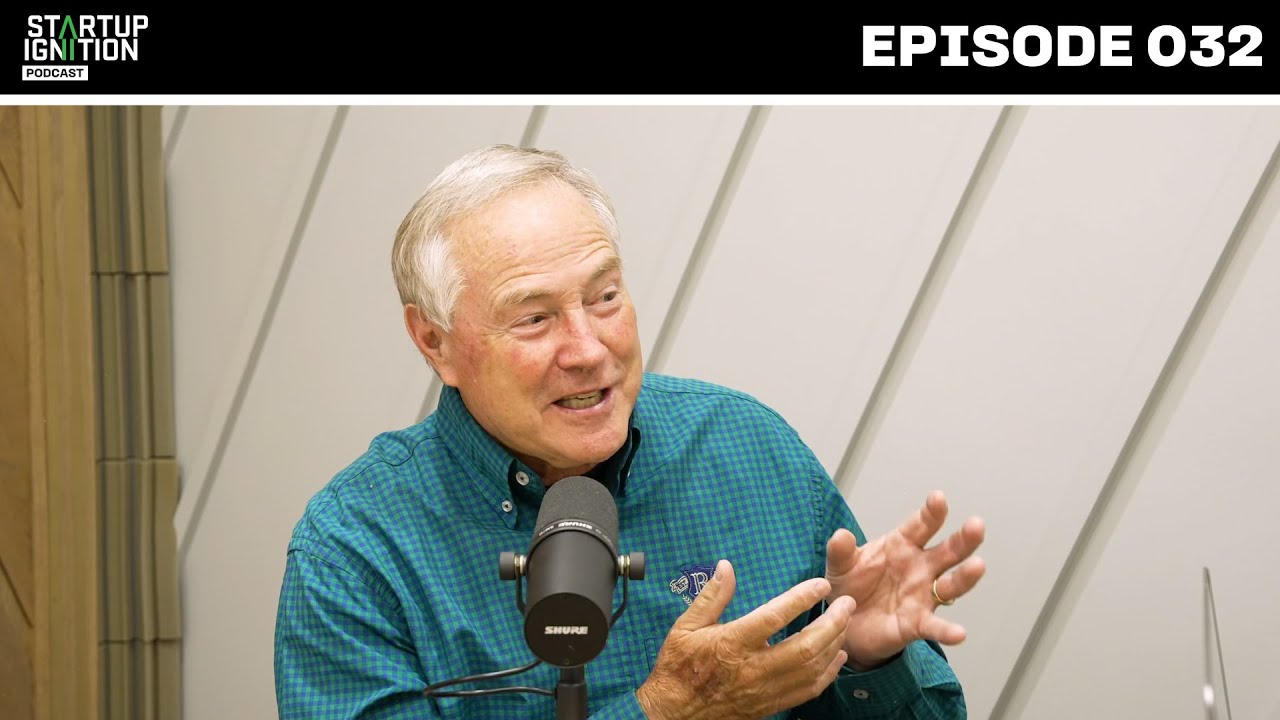
David Bradford shares stories from the front lines of the tech revolution — working alongside Wozniak, Jobs, Gates, Eric Schmidt, and Sergey Brin during his 15 years at Novell, and later leading HireVue and Fusion-io onto the Forbes fastest-growing tech companies list.
David Bradford served as SVP and General Counsel of Novell from 1985 to 2000, helping grow the networking pioneer from $40M to over $2B in sales. He later served as CEO of Fusion-io (Forbes fastest-growing tech company) and CEO/Chairman of HireVue, raising $47M+ and driving 200%+ sales growth. Inducted into the Utah Technology Hall of Fame in 2013. JD from BYU, MBA from Pepperdine.
Show full transcript
We transitioned out of I left in 2000. Eric Schmidt, little known fact, who became chairman and and CEO of Google, was my boss for four years at Noville. He was CEO of Noville. Wow. >> Did you not Eric Schmidt was here in Utah leading Noville for four years and then he landed pretty well at the next gate. >> He did okay. He did okay. There's some recruiting him away as a startup basically like >> No, not really. What happened was he was in Larry Sancini's office. Wilson Sini, good. It was that was our took us public. >> Right. Right. Good old Larry. And um so Larry was sitting in his office and Schmidt was thinking about leaving Noville and Sergey Brin walks by and Larry Sansini says, "Hey Eric, I'd like to introduce you to somebody." >> So it was Eric Schmidt who was on chairman of our board who introduced Eric to Sergey Brin. Oh wow. >> And they came in, they had a discussion and six months later Eric CEO at Google. >> He's a billionaire. >> Yeah. >> 40 billion times. Yeah. He has something like that. >> That's insane. Yeah. He did okay. >> Yeah, he did. Okay. >> I can't wait to hear so many more of your stories. Here we go. Rock. >> Welcome back to the Startup Ignition podcast. Thank you so much for watching the previous episode. We are so excited for this episode. Today we go over everything from idea to exit in your startup journey and we are hoping to bring amazing guests that will contribute and give you some awesome tips for your startup journey. You know us by now. We are your hosts, father and son duo working together for what 15 years now? >> Yeah. Yeah. >> Maybe maybe 12 years. 12 years now. But today we're excited to have a new guest, a new face on the podcast. Someone that I'm super excited to talk to because I've known you for forever and we just talked before we started rolling cameras. I've actually never really talked to you about startups and business and law and tech and what you've done in your career. So, I'm excited to dive in. But today, we have David Bradford, >> the true OG of OGs. >> Yes. Like the guy in Utah who I and we we just barely came back from a golf outing. And David was like, I can actually film tomorrow. So, we got So, we got him on the podcast last minute here. So, we're super excited to have him. >> Incredibly lucky. >> Yeah. Super lucky to have him. But I have a a quick bio for you, David, before we get into the conversation. >> Sure, go for it. >> Okay. So, I today we're honored to have David Bradford, one of the most iconic leaders in Utah, especially in Utah technology. You began your career in uh as general counsel at Noville. I don't know where you went before that, but I'm excited to talk to you before that you do. >> Yeah, I've read about him. I I you started in Hollywood, actually. >> Yep. >> Yeah. That's awesome. >> Years in Hollywood. And and for those cuz you know our average listener and viewers is probably much younger, even probably younger than me, but for those who don't know, novel was a rocket ship back in the '9s um that grew into billions in sales and was kind of the the the start of Utah technology, right? And um leading dozens of acquisitions and deals in the state, >> worldwide leader in uh personal computing networking. I mean, it invented networking. Then later, I'm not done with your bio yet. We're we're going to keep going rolling here. I'm going through all of it. He later served as the CEO of Fusion IO, which you took public at a $1.2 billion valuation. It was solid state drive technology hard drives, right? >> Solid state memory devices. Yep. >> And then you transferred over to CEO of Hireview, right? um which was a interview and video technology platform basically um where you were you know companies were utilizing it to do their interview candidate interviews online in a video atmosphere and then now today you're doing Fluent Worlds. Has Fluent Worlds changed its name? Is is it is it still known as Fluent Worlds? >> We have two product lines. Fluent Worlds and now Quickarn. >> Quick Learn >> which is an extension. Fluent Worlds is a language training app, but now using QuickLearn, you can go visit with one of 50 automated tutors, AIdriven tutors like Einstein, Cleopatra. >> Oh, cool. >> It's cool. I've been on it. It's really interesting. >> Yeah. And uh you can learn anything as opposed to just language training. So, we kind of do language and >> but but everything. >> So, and that's like kind of like an immersive VR technology. Is that still kind of the premise of the whole platform? Yeah, everything's contextual learning. So, experiential learning, people that are engaged in a process, they learn better. So, I say engaged learning is better learning, deeper learning. >> But we we've only gotten into your your your your roles and titles and careers, but we haven't even gotten into your networking. So, David is an amazing networker because of his extensive career. He has probably the ro best rolodex in Utah, maybe even in the western United States. Like this guy is Uber connected. You were also the author of Up Your Game. It's six timeless principles of networking your way to the top. Um you were were you inducted to the Utah Hall of Fame as well? I saw that too. >> Utah Technology Hall of Fame many years ago. >> And you are just the human connector of connectors, best networkers and mentors. And by the way, he was also an adviser to my startup and to the company that I sold. So, >> David has just been around the block. So, welcome, David. Uh, and we are so excited to have you. >> Well, your words are super kind and thank you. And I've watched both of your careers and I've been amazed at what you've done, Tyler. And of course, I've known your dad for many probably almost three decades. Two and a half. 25 years about >> Yeah. Yeah. when you moved to Utah and had that great success up in the Seattle area. So, they know what they're talking about. These guys know what they're talking about. Thank you, David. That's awesome. That's that's huge coming from you. But so every episode of our of our podcast, every episode, every guest we bring on, we do a little icebreaker. >> Uhoh. >> Which is just I'm going to spring something on you here. It's something you didn't know that was coming. And it's so fun to do. It's just to kick off the episode, get into the kind of the flow, get into the conversation. So 5 minutes. I'm going to do a quick icebreaker with you. Are you ready? >> Okay. And my dad's going to participate with you. >> Got it. Got it. >> What we are doing, we are doing Utah Tech era trivia. Are you ready? WA. >> Yeah. Here we go. >> Could be tough. >> Yeah, this is I I tried to make it tough cuz you guys are so knowledgeable. So, I was like at first AI gave me a little list of questions that was way too easy and so I I actually had to go in there and make it way harder cuz you guys would have gotten all of these questions within 2 seconds. Okay. Okay. So, here we go. This we're going to start off easy and we're going to go back to the 1990s. Okay. You ready? Okay. So, which company nearly held 50% of its global market share before Microsoft took over? >> Uh, Word Perfect. >> Word Perfect. Yes. Yes. Okay. Sorry. That one was easy. That one was easy. Okay. Here we go. Ready? >> Okay. >> What Utah company was one of the fastest growing tech firms during the early 90s? >> Certainly Noville. >> Novel. Ding ding ding. Here we go. In fact, if you would have bought stock in any company in America in 1985, >> by 1992, you would have had your greatest rate of return on Noville, even higher than Microsoft. >> Wow. Yeah, that's that's a cool fact. >> Yeah. >> Yeah. It's it's it's interesting. People don't know that Noville was like the market leader. >> And we had 65% share of the network operating system market. And even long after its heyday, Noville continued to be a profitable successful company because it was so entrenched. I mean, I I remember stories of like the Department of Defense stuck with Netware for decades cuz so many installations. How are they going to ship the legacy software is so powerful, right? And they kept paying no veil, right? Paying no, right? Stuff like that. All these big companies because they were so hooked on netware. >> Yeah. later was a company called Micro Focus in the early 2000s that kind of we transitioned out of. I left in 2000. Eric Schmidt, little known fact, we became chairman and and CEO of Google was my boss for four years at Noville. He was CEO of Noville. Wow. >> You did you know Eric Schmidt was here in Utah leading Noville for four years >> and then he landed pretty well at the next gate. >> He did okay. He did okay. There's some stories. >> We recruited him away as a startup basically like this. >> Well, not really. What happened was he was in Larry Sanscini's office. Wilson Sini good. >> It was that was our took us public. >> Right. Right. Good old Larry. And um so Larry was sitting in his office and Schmidt was thinking about leaving Noville and Sergey Brin walks by and Larry Sancini says, "Hey Eric, I'd like to introduce you to somebody." >> So it was Eric Schmidt who was on chairman of our board who introduced Eric to Sergey Brin. >> Oh wow. And they came in, they had a discussion, and 6 months later, Eric, CEO at Google. >> And he's a billionaire. >> Yeah. >> 40 billion times. Yeah. He has something like that. That's insane. Yeah. He did okay. >> Yeah. He did okay. >> Cuz Google is probably the greatest monopoly ever in a lot of ways. If you think about, right? And I I always thought, who's going to knock Google? Cuz every 20 years they get I know. Can you believe it? I said, >> do you ever go Google anything anymore? I go into AI for everything. You know, in 2 years in like 2011, 2012, Microsoft launches Bing and spends 10 billion marketing it. 10 billion and gets 2% market share. >> Yeah. >> You know what I've been doing lately is I honestly just go to Google and I'll type in my question and then they have the AI answer. They have their little Gemini answer. So they've worked in their own AI. They've recognized. >> Well, now do you know it's an option at top? You can start with that. >> Yeah. So I just go AI mode every time and instead of going even into chat GPT into the app or whatever, I just go straight to Google. So, I'm not breaking the habit of just going to Google. And they've got an innovator's dilemma, though. If they cut out those search results, they lose billions in revenue. >> And that's a that's a trillion dollar issue. >> They're literally having they're they're in a one of Clayton Christensen's biggest innovators dilemmas ever. I think, don't you think? >> Maybe the largest ever. >> Ever. Right. >> Yeah. For sure. But let me tell you about AI. Coming back from Colorado from our trip. >> From our trip. >> I have not been to Huntington, Utah. And you don't even know where that is. Since I was 5 years old, my grandmother and greatgrandparents are from Huntington, Utah years ago. So I'm driving back. I call my sister Paty. You know, what do you remember about it? Center. She says, "Well," I says, "I'm thinking about swinging by there." And she says, "Oh, you know, our grandparents d are born are buried in the Huntington Cemetery. You should go check them out." And so I got to thinking, I said, "But where where are they buried?" And so she says, "Let me look it up, Dave." She texts me back. I wasn't able to find where they're buried, etc., etc. I go into AI. >> Yeah. >> I says, "My great-g grandandmother was Elizabeth Brazier Brockbank, died in 1962 in North Hollywood, California. She's buried in the Huntington, Utah cemetery where plot or block B lot or um >> it knew the exact spot. >> It knew the exact spot. I walked in it AI. I I says, "So, how do I find it when I get there?" It comes back to me. He says, "Are you going into the south gate or the north gate?" I said, "I'm going in the north gate." Oh, you walk in, you take the middle road, and you walk up six rows, and you'll be on lot 22. >> How does it know that? How does it freaking know that? It was the most amazing thing. I can't wait to hear so many more of your stories. Here we go. Okay, next one. This one's kind of hard. Are you ready? What portable storage device, not Fusion IO's, okay, created by Utah's Lomega, became a 1990s tech icon before the US >> before the U USB flash drive killed it. Yes, I Omega, the zip drive. Yeah. Do you remember that drive? Oh, big time. We all had zip drives. That was a huge >> I had never heard of this >> in my industry. Yellow pages, which had to store mass amounts of data and graphics. >> Yeah. The zip drive became a very convenient way to take data from one device to another device. Yeah, that was that was Roy Utah. Yeah. Yeah. No. Yeah. I I the I'm trying to remember his name, the founder of that. He was he was he was pretty legendary when he did it, you know, I met him after that heyday, but yeah, he he he created a great thing. >> Yeah. I Omega. >> Okay, here we go. We're going into the 2000s. We're moving out of the 90s. Okay, here we go. Ready? before being acquired by Adobe. >> Omnature. >> Yeah. Omnature was founded in Utah under what original name? >> My computer.com. No, the really original name is Superstats. >> Oh, yeah. We had JP John Pastana on our podcast. Here's the history. >> But it is my computer. That's the answer. But he did tell us it was actually >> from JP Interactive and that's when Josh joined him. They were making websites. JP Interactive then became superstats when they came up with the analytics. And then superstats turned into my computer and then my computer became I was an early investor. >> I've got to educate the listeners and viewers. >> I Yes, I was on that advisory board as well with John and Josh my computer.com days. Yeah, I have to educate the viewers and listeners because again they're not going to know a lot of these, but Omnature, you know, was a huge $2 billion exit in Utah, kind of setting the scene for all of Silicon >> actually kind of almost one of the first truly SAS companies and and >> you just you just ruined one of my my questions. >> One of my questions was >> guys that know stuff. We're answering the questions before you even get to that. >> I didn't even make them hard enough, man. I thought that I Omega one was going to stump you. I know >> that's standard. But but the it's just so fascinating about that Omnature was a led the way on SAS business before Salesforce did. >> Yeah. Yeah. >> Yeah. >> Okay. Okay. So, you got the My Computer Company uh uh answer. Okay. What Utah company pioneered online retail and became famous for its phone number brand? >> 1800 Contacts. >> 1800 Contacts. >> Oh, yeah. That's right. >> Yeah. >> Yeah. Uh, do you remember 1800 contract? >> I do. And I met with the CEO a couple of times. I don't think I was ever on their advisory board, but we did. Uh, gosh, what's Do you know Steve Gibson? >> I know Steve. He was one of my mentors. He was the first one. He was a student at BYU. This is a great story. I'm going to tell real quick because it's a great Utah story. Yeah. >> Steve Gibson gives him $25,000 because he came to Stevenson as a as his teacher at BYU. Said said, "Hey, my wife's getting going crazy with all these contacts I have in my apartment. I got to maybe get an office where I can storm or something, but I don't have any money for it. I need some money. And he goes, "Okay, I'll give you 25,000 for this company." So, he got a percentage of the company. And then 6 months later comes back and he goes, "Man, we're growing so fast. Um, I need now to raise like 500,000. I got to buy the 1800 contacts phone number, the phone number. >> Oh, the phone number, >> which was expensive to go get from somebody, right?" And so he's doing all this and so and so he says, "I need like 250 to 500,000." Steve Gibs goes, "Well, no, I'm not going to give you that much." She goes, "Well," and then he went and found another investor. And the investor goes, "Well, if I invest, I want to buy out Steve Gibson. That's my contingency." So Steve Gibson generously said, "Okay, I'll sell out, but your company's worth a lot more." Steve made eight times his money. He got 200,000. >> Yeah. >> Okay. >> But that sale then you would have kept it >> 66 million. >> Yeah. Yeah. Yeah. >> That's painful. That's sounds like the original chief financial officer of Apple. >> Oh my gosh. What happened there? He he sold out in the early days of Apple for I don't know a hundred or 200k which would have been a billion dollars plus it's so crazy. Yeah. And David's friends with W Steve Waznjak. >> That's a whole other story we have. >> Well, I want to hear it. Okay. >> I expected that question. What small Utah company hired Steve Waznjak as their chief scientist? >> Who was it? >> The answer is Fusion >> came on. I like that one. >> Okay, here we go. Let's I'm going to try to stump you here. What one Utah library automation system was >> Dynx. Come on now. >> Okay. Here's another one. What Park Citybased company went public and became a lifestyle name across the whole world? >> Uh the Cookie Company. >> Nope. >> Okay. Oh. Oh, yeah. The Air >> Skull Candy. >> Skull Candy. Yeah. >> Dang. You got It took you a second though. The Cookie Company. You're thinking not Crumble, but Mrs. Fields. >> Yes. Mrs. Fields. Mrs. Fields was Park City. >> Yes. Carla, who you know was the right hand of Mrs. Fields. >> Oh, wow. Wow. >> Wow. I did not know that ei was really something. Mrs. I mean, she had her own jet plane. Flew around. She was something. Mrs. Fields did the real deal with cookies, man. >> Oh, she did. >> Okay, here we go. Last one in the 2000s eras. And actually, I'm going to cut this short because this is taking a long time cuz I want to get to you. Well, I've given you the short answer. >> I know you're you're you're whip you're whip on them. Okay, here we go. What Utah founded e-commerce company became known for its liquidation sales and was later one of the first major players to accept Bitcoin? >> You know that. I'm not going to answer. >> Yeah, you know this. >> You want? >> Okay. Utah founded e-commerce company known for its liquidation sales, but also was one of the first major players to accept Bitcoin. >> I'll wait till he lets me answer. >> Okay, go John. Your turn. >> Overstock. Patrick Burn. Patrick >> Patrick and Jonathan Johnson. Yeah. Okay. Sure. >> They they were huge and they I mean they still are huge. Um yeah. Yeah. >> And doing and doing great sales. Okay. I'm going to cut it. I have like seven more questions. >> Let's move on. >> Yeah. I'm going to move on because that that >> your your guests are getting bored by all of this. >> I think it's cool. I I think they're going to be entertained. I'm entertained. Hopefully you guys are all entertained watching this. I'm entertained. Yeah. Well, I I you know, I just worry we dwell too much back in the day, but those are the enduring principles. >> Everything we're doing today is built on a lot of those foundations. I mean, we you and I are at the age where we live from going from literally paper and pencil. >> Yeah. to I mean you remember the when fax machines came in in the late 908 ' 80s how that revolutionized remember we used to have to type up a letter print out on daisy wheel printer in the 80s put an envelope and send it to somebody wait for something to come back and all a sudden we could fax it in I I honestly don't understand how you guys did business like it like seriously >> no dead serious like the the the lag effect the lagging of just communication but before faxes >> we had to write letters Yes. >> And or the the telephone was really important. >> Well, that's how I got my job at Ursel and younger is I wrote I sent out 40 letters and I uh carbon copied them. Remember John? >> Carbon cop. You had to have a carbon in between paper. Type it on a typewriter. >> Type it on a typewriter. You had a piece of carbon paper in between. It made a duplicate while you were typing it. So I retained that. >> Yeah. And remember the carbon companies that made carbon paper were so wealthy and successful. And all a sudden Xerox comes in and makes a photocopier. >> Yeah, >> that change wiped out that business. Remember that? And then Xerox comes in and then Xerox gets wiped out by other I mean it's just that's business. But okay, let's move on. >> I I will say the takeaway is that this state is >> entrepreneurial at its roots. There's a successor orientation in this state that drives people in an extraordinary way. >> Little fact where we're sitting in Utah County, which is just south of Salt Lake County. Yeah. >> Has more startups per capita than any county in the United States. >> Yeah. >> Yeah. Undoubtedly. Yeah. >> Um, so, okay, last question that I I thought was kind of cool. What city was first known as Silicon Slopes before like the whole Utah area was known as Silicon Slopes? >> Are you talking about Lehi? >> They actually said, I researched this, it said that Provo. >> I was going to say Provo. >> Provo. >> Provo. When Lehi kind of >> because everybody thinks Lehi cuz that's kind of the tech corridor. Well, everybody thinks of Silicon Slopes. I think of that as a really recent phenomenon, right? >> Yeah. No, that was like 2010, >> but Provo is probably where it was done. But also, and then when Lehi kind of took over as the center of Utah's entrepreneurial landscape, Provo, like to say, born in Provo because almost everything that ends up in Lehi and becomes a unicorn was born in Provo. Right. True. True. >> And and I I should add, and John, you're aware of this. Uh before Silicon Slopes, there was something called the Utah Technology Council. Yeah. >> And I would chaired that and was a big part of that for years. Richard Nelson. They all merged into one. >> They kind of merged into one, right? >> But okay. So, thank you for playing my icebreaker, but I'm cutting it off. Okay. Because we're we're already 15 minutes in and we could have probably done that for another 30 minutes. Um but I want to go way back. So he made a comment about you being a Hollywood something lawyer or attorney or in the in that scene. >> Let's talk about where you grew up and then you went to law school and then your first job as a lawyer was in Hollywood. That's what I know. >> Yeah. Yeah. Yeah. So actually 1969 I graduated from Red Lodge High School in Red Lodge, Montana. >> Wow. >> Montana. >> Yeah. 40 kids in my graduating class. But I will tell you and I get emotional when I talk about it because uh back in the day this was just a little you know uh nowhere'sville and yet it gave me the opportunity to learn leadership skills. So I became Sunday school president when I was 16 years old. I became uh the you know class president, the actor and all the plays and >> because there was just so little people to >> nobody there. Right. Exactly. and I was the star of the basketball team etc. But that's you know sometimes we kind of think of these far away places but it gave me my roots my understanding my leadership qualities and so forth. So I'm forever grateful for Red Lodge. Uh that was 69. Skip over to 1977 I graduated from the new BYU law school and u I went off >> Were you in one of its first classes? >> I was in its second class actually. J Clark Law School, >> Jum Clark Law School. And the first class was 1976. I was class of 77. But my wife had grown up in Southern California. And I had actually been born in Burbank, California before we moved to Montana. So my wife and I decided, well, we're going to find our fame and fortune back there in Southern California. And I joined a law firm down there in 1977 called Ursfeld. Ursfeld and Younger. It was on Hollywood Boulevard. and I was there for 3 years. But then I wanted something more exciting in my life. >> Was it doing entertainment law? >> It did some Yes. Yes. It did some entertainment law. Um litigation, I was more involved on the litigation side, but um it just was slowm moving. We had like 12 lawyers and there was no growth, you know, etc. I was looking for something a little sexier and funnier and um I found a company in 1980 called Prime Computer. Yeah. >> So that's what gave my start computer. >> Prime computer. Okay. So this will take you way back, but in the 50s and 60s the big thing was mainframe computing, Honeywell, IBM, etc. >> In the uh '7s along came the super mini computers which instead of costing several million dollars they were more 250k to 500k. >> Digital equipment corporation deck. So Deck was our big competitor. >> IBBM and Deck were competing and Prime was competing in that super mini computer uh market. So I was their western regional legal council in the interim. I got an MBA while I was at Prime Computer. So that gave me the business background etc. Uh then I became general counsel of novel in 1985 and did that until 2000. But the nice thing about Eric Schmidt there is in the waning days of our work there, waning days, our last four years there, he gave me responsibilities for four different areas of the company, not just the traditional legal, but the corporate venture capital fund, business development, government relations, M&A, all that stuff. >> So, not only was I doing an M&A transactions, I was um kind of running that group. >> When you joined, was it Ray Nord, though? It was Ray Norda from Yeah. Yeah. That the history is 1985 to 1994. Ray Norda was my boss and CEO, right? He is an icon here in Utah. >> And then along came Bob Frankenberg for 18 months. That didn't work out quite so well, but Bob was a great guy, remains a dear friend. And then along came Eric Schmidt. >> And so those were the three CEOs that I worked for and learned so much from. Ray Ray Nordo was literally a he's legend in the history. >> Oh my gosh. >> And and the story there is amazing because they went through like six presidents in six months and Ray Nordo was like the sixth president that got there and he had $800,000 he brought to the company, fired everybody and then brought back who were the two um >> Drew Major and Kyle Powell. And because he said he fired everybody, said now I'll rehire anybody working on something cool. And they said, "Well, we're working on this little thing to connect computers and networks." >> A little software, right? >> A little software. That's what we're going to do with my 800,000. Cuz they were trying to be a competitor at first to building uh IBM compatible computers. >> Yeah. It was it was a hardware company. >> And then they pivoted like all companies do, pivoted to the winning business model, which was networking software, >> right? Software. >> And then Ray Norta then that was a rocket ship, right? And then you came in to be general counsel. >> Yeah. We had about 150 200 employees when I joined and when I left it was over 10,000. >> Wow. Wow. >> Wow. >> Crazy. >> Yeah. >> That's some growth. >> What an experience. >> So, okay. So, you go you go from Prime Computer over to Noville and then any any How long were you at Noville? >> 15 years. >> 15 years. That's a big chunk of your career. >> A big chunk of my career and I have lottol and Ray Nord and my CEO friends there. So, so give me the craziest thing that h what's the number one memory you have of Noville. That's 15 years. Summarize, I know, but what what is like the thing that sticks out? >> It was the Microsoft battles uh that began in uh late 911, early '92 when we bought a company out of uh Monterey, California called Digital Research Corporation. There was a guy named Gary Kildall who was really the father of the personal computer operating system. Bill Gates never wrote DOSs. >> No, he bought it from Labs. Yes, exactly. Seattle Computing Products. Big >> Seattle history there. >> Right. Exactly. And Patterson called it Seattle DOSs. Yes. That was the first name. >> And and Patterson had actually copied Gary Kildall's stuff really, which was called CPM. But back in the days, it was like no copyright, no patent. It was wild, wild west. And so Patterson took the first 40 50 lines of code from Gary Kildall and created his DOSs Seattle DOSs which was also known as Q DOS for quick and dirty operating system >> literally quick and dirty operating system and then Bill Gates came in >> licensed it >> for $50,000 >> uh which later became worth billions and billions and billions of dollars. And there's a whole story there. The interesting thing is when we bought Kildall's company, >> Bill Gates was I rate. He called Ray Nord and said, "You got to get out of that deal." >> No. Ray said, "Listen, I've signed the contract. If you want to do a deal with us, go ahead." So Gates tried to buy us and we actually had an offer from Gates and Microsoft to buy Noville for 10. >> By the way, just so the viewers and listeners know, this is one of the most legendary stories in the history of computing. >> Yes. So, back there's so many aspects to it, but Kildall became a personal friend. Kildall was killed in a bar fight in 1994 in Monterey, California. >> I will let conspiracy theorists listening to the podcast figure out how he was killed in that bar fight. But, >> wow. >> Oh my gosh, that's very suspicious. Well, and we were in litigation at that point with the Department of Justice and the DOJ regarding Microsoft's anti-competitive activities. >> Oh my goodness. So, so one of the things that >> listen I I want to make it clear I'm not accusing anyone at Microsoft for having done that. It was just an accident undoubtedly that happened. It was just weird. So, I want to bring up for our viewers and listeners because this is good history. What was really important at the time was DR Digital Research. >> Yeah. their disc operating system was true multitasking which Microsoft had not achieved. This is important. So I remember personally when it was um MS DOS 3.0 to 3.3 was very successful then four and 4.1 but then digital research announced their true multitasking which was a complete revolution for computing and Microsoft freaked out. They pre-announced is this is true right? They pre-announced their version 5.0 to kill DR. They because they said, "All you computer manufacturers, don't go with digital research. We're going to do multitasking in our 50." They hadn't even achieved it yet. Is that true? They pre-announced it. And that made all personal computer manufacturers scared to do business with digital research. >> And let me absolutely right. And let me add to it, John. You have a great memory on that. But they actually had signed a contract with those OEMs like Dell and others. Microsoft had signed a contract already with Dell and others that said, "You're going to owe us a royalty for every machine you ship whether or not you ship MS DOS." >> Oh, so they had to pay for MS DOS whether they use it or not. >> And that became a contract in restraint of trade which blocked Novellds, Dr. DOSs, now novel DOSs, from ever penetrating that market. Ray Norda flew down, had a meeting with Michael Dell, with John Edwards, our senior vice president of sales. And when they walked out of the meeting, Michael said, "Well, you're going to I yes, you have a far better product, multitasking, a disc compression, data, etc." And he said, "But I can't buy it from you because I've signed a contract with Microsoft." >> Just that one contract changed history. >> Changed history. It was uh uh Dell. >> Why did Dell sign that? >> HP. I'm sure it was HP. >> HP. >> Why did they Why did they sign that exclusivity contract? >> There was a company in Germany that signed that exclusivity. >> There's so many the IBM PC compatible industry was gargantuan. Dwarfed Apple. Apple had like 3% market share. >> Yeah. Yeah. Yeah. Apple was a joke. >> IBM had 97%. Apple Apple was only in the education world basically. And so, and then Microsoft had these contracts. And I'm from Seattle and this is big news in Seattle too. I mean we knew what was going on and and and as a user I just I and I I was in the LPG industry it needed a lot of computing power. So the like when you were saying and this is something I wanted to share with the audience because this is history they don't know. >> When you had the big vax main computers right when they came out with those what they called mini computers they were mini compared to the super big computers right and that's what you were talking about with digital equipment and what you worked in in prime super minis. Prime was Prime was big in the PI world too. By the way, we we ran the PC operating system. Yeah. >> John's got a lot of knowledge, folks. >> What happened was when micro computers, personal computers that we all know today, this right here is a micro computer. So, you have >> mainframes, mini computers, and microcomputers. And microcomputers took the world by storm. And that's the world you had a big part in, >> right? >> Yeah. Yeah. It's very interesting history. >> Yeah. So much more to say. So >> that that was all stemmed from my question of what's your number one memory of noveliz general counsel. So he was leading >> all the charge against Microsoft. Yeah. So those stories are the ones that you remember. >> What what is the person that also took up this a little bit I'm and he just he I think he just passed away. Um that was really leading against Microsoft and doing stuff too. Oh gosh, what was his name here in Utah? Um he open source software he was behind and different things. Oh, I can't remember saying. >> And were they affiliated with the canopy? >> They might have been came out. Yeah, maybe canopy or noail and all that. I can't remember. Anyway, but he had to get bodyguards at one point he felt. >> Yeah. >> Yeah. So interesting. >> That's so crazy. But those stick out just because of how intense and how, you know, head-to-head and how gamechanging of the whole computing industry >> was that line. It was at stake. And listen, people don't realize the four largest software companies in the world in the '9s, early 90s were Noville, Word Perfect, right here within 5 minutes of where we're physically located. Lotus in Boston, and Microsoft. >> Yes. Incredible P, but amazing. Word Perfect, an incredible software product. >> Oh my gosh, >> it was way better than Word. And I'll say that out loud. I mean, I loved Word Perfect. And then Microsoft's B. Microsoft Business Tactics, whether right or wrong, I'm not going to make a judgment on that, >> but they just crushed Word Perfect and then ultimately Noville. >> Yeah. >> Yeah. >> But let's get a little more current. >> So, so beyond Noville, >> yes. >> You go to where after that? After the whole Noville heyday ends up your 15 years, where do you go? I'm on the early advisory board for mycomput.com and I'm mostly doing advisory board gigs and I take an advisory board gig with a company called Fusion IO up in Salt Lake. I was very impressed with this. >> This is right as I was meeting David and we moved here early 2000 early 2000. >> Yeah. Kind of mid 2000s etc. And uh so I'm on their advisory board and the there's some um dissatisfaction we'll say with the CEO who had been brought in by the venture capital fund and I was chair of the advisory board. I brought Wazniaak onto my advisory board and so they just moved me in as CEO. >> Wow. >> And uh that was a great run. >> Wow. So what what's your memories from the fusion IO days because I mean that was pretty like innovative as well, right? the solid state drive that was whole new technology that you guys did huge partnerships getting into massive these micro computers you talk about didn't you own a lot of that land I remember Facebook was a massive client of you guys >> didn't Facebook do like a hundred million dollar purchase or something >> hundred million and Apple did a hundred million but when I came in as CEO the company had done a million in this previous year >> yeah so it helped bringing Wniaak on board just giving name recognition within 6 months of bringing W on board. Uh, Business Week named us the most innovative company in America. >> Yeah, I remember that. I thought of that. >> So, that was pretty cool. And then, uh, eventually we went public in June of uh, 2011 and I left um, etc. And, uh, overtime a lot of the other uh, senior managers that I'd brought in left and uh, it got sold eventually to >> Western Digital is where Western Digital model. Yeah, that makes sense. There was an interim step, but Western Digital wound up with the Fusion IO technology. Wow. Cool. And And I mean, did they make a good run with it? Did they Did they flip it or they kept it or >> Listen, I Yeah. >> You don't know anything that went internally there. You weren't on board in the Western Digital. Is it still Seagate and Western Digital are just the big hunas in the hard drive space? >> Amazing. >> Yeah, it's still those two. Yeah. And Western Digital is huge and Seagate's huge. Yeah. So, what what was any any cool memory or awesome experience within the Fusion IO experience? >> Well, I'm just saying when I recruited went to Idaho to speak at a conference, um, I sat in the front row. Here's a lesson for all you entrepreneurs. I sat in the front row. I gave up a golf game. And you guys know how much I love golf. I gave up a golf game to hear Waznjak speak because I'd heard of him and I'd met Jobs back in the day. >> Yeah. >> That's a whole other story. How did you meet Steve Jobs? >> Well, Noville was going to merge with his company, Next Computer. >> Oh, next computer. That's what he did when he got when they brought in Scully to replace him at a huge mistake at Apple. He went and created Next and then Apple turned around had to buy Next, >> right? And but before Apple bought Next, he was going to merge with Noville. >> Really? >> Right. And so that's why I was over in the Silicon Valley with Ray Nordom meeting with Jobs. Wow. Oh my. >> So that was really >> Why did that deal fall through? Cuz Apple was a higher bidder. >> Well, no. No. Apple came in maybe a year later. The problem there is Steve believed at the time Jobs in his hardware, his hardware computing platform. And we'd gotten out of hardware years earlier. All we cared about was his software. >> And so the deal just didn't make sense. Didn't match up at the time. >> Um. >> Okay. So, back to Waznjak. >> Back to Waznjak. Idaho. >> So I go out to Idaho. I'm speaking. I see on a the the billing of uh the speakers. Oh, W is going to give the keynote speech at lunch. So I gave g give up my golf match. And another uh thing that I'll tell your listeners is the smallest things in life can make the biggest difference. Yeah. >> Because had I not given up that golf match that day, I would have never met Waznjak. But I went in, I sat in the front row. I said, "Hey, if I'm going to listen to this guy, I'm going to sit in the front sat in the front row next to me and there's probably hundred people in that front row. Next to me happened to be Steve Waznak sat right by Oh, his assistant. >> His assistant. >> And we started to talk and I told her a little bit about my tech background and whatnot. She says, "Oh, would you mind meeting uh afterwards with Steve? He would love to hear your story and you two would get along great." Oh, >> that you got to show up in life. That's the other lesson. >> Tyler likes to say because a lot of people call Tyler lucky. He says, "Hey, preparation meets opportunity, right?" So, you're right. And you have to make your own. He goes, "Why do I get the balls throw?" I telling Tyler's story, but he says, "Why do I get the balls thrown to me at the Jazz game?" Cuz I'm jumping up like a crazy guy and they throw it to him and you have to be there. So, Sarah, do you do you believe this that half of success is just >> putting yourselves in situations where luck can happen to you, where opportunity? They say 90% of success in life is just showing up >> and I it's not 90% but it's certainly important to show up and I showed up in Idaho. There's a whole story behind that. >> So did you become good friends with Steve? >> Sure. So you guys hit it off in that meeting. >> We hit it off in that meeting after he gave his speech. I gave him my card going and going back I drive it's an 8 hour drive from wherever uh Sun Valley back to Provo. So now I'm on the drive back and I'm just thinking man I'd love to get that guy involved in Fusion IO and and by the time I'd gotten back I crafted an email to Steve and I said hey it was great meeting you. Would love to have you on our advisory board for Fusion IO. He writes me back within 24 hours and said, "I'd be honored to be on your advisory board." >> Wow. Awesome. >> Little did I know that was knew a guy named Shawn Nunley who was one of our early developers at Noville. He calls up Shawn. He says, "What about this Bradford guy? Is he legit?" And fortunately, Shawn and I were good friends and Shawn gave me a high recommendation. And so when I came back to was with that invitation to join our advisory board, he me >> and that was and that's a crucial element to the history and story and success of Fusion IO. >> Absolutely. >> So give give the viewers and listeners a quick snapshot of Fusion IO like what So you took it public right to the size and the capacity and the deal making and where it got to like the achievement of Fusion IO. I >> I think my biggest accomplishment there was bringing in a um uh S1 ready management team. Yes. I hired Jim Dawson to be my my chief sales officer. I hired Dennis Wolf out of Silicon Valley to be my chief financial officer. And so I brought together this great team of people. And so when we had the success with Apple and the success with Facebook and we were ready to go, probably like I had the team. >> This is how I view you, David, is that you know Utah's got all this percolating entrepreneurial activity and when one rises up and says, "Okay, this something going somewhere like your history. you looked at you helped novel get to where it was. You then did Fusion IO and now we're going to hear about the next one too, Higher View, right? And I >> very early before you got involved was with Mark Newman and and just we went to Bajio's for lunch one day when he was just starting the company and telling me what he was doing and then you got a hold of that one and took it to the next level. You're just super good at taking companies where the founders have gotten to a certain level and then you take it to the next stage. >> So what is that a good way of saying it? >> I I think so, John. That's a good way. You know, I often times I'm not the guy who started the company. I come in after because I have some management skills and I have ability to recruit really great people. >> What do you attribute that to? Like what like give everybody listening and watching right now? Like what is the one piece of advice you'd say, okay, here's how I've been able to be that guy? >> Be curious. Yeah, >> it's the C word to me. It's just being curious legitimately like you guys are doing now, you're curious about my background. And so when curiosity starts and you begin to have that conversation, what happens? Trust forms. >> And when trust exists, everything else accelerates. So find people, surround yourself, be curious, ask lots of questions. That's what I did to Wazniaak. >> Just tell me about it, you know? >> Yeah. Be interested in be. It's not done in a phony way. You're very sincere. You are curious. You're totally curious. I I think David is whips smart. I think David's super connected from the career he built up. >> And then he's also sees how to take it from a million revenue to 100 million. >> I I think that that advice it it it that is the underlying foundation of your network. The reason why you've been able to be so connected and network and be such a friend to everybody is because you're genuinely curious about them and make them feel important and needed and wanted. And that's a really really good piece of advice to say, "Okay, want to know how to build a network?" It's about being curious. It's really cool. >> Paul Tusano, when I got to BYU in 1969, >> who's Paul Tusano? >> Paul Tusano was our dorm head, >> right? You know, Steve Wazak. Now we're going to Paul Tusano. This is Paul Tusano. Um, and uh, wonderful guy, great memories of Paul. Uh, but there we became close our freshman year, etc. Probably 15 years later, I'd had some modicum of success. I'd moved back to Utah. I wanted to find Paul again. So, I'm up in Salt Lake City one day and I've uh, looked up his address and he was a bankruptcy lawyer. And so I just barged in on him one day. Just completely surprised him after maybe 15 or 20 years of not seeing Paul and he said to me, he says, "David, congratulations on all of your success, etc., etc." I knew you would be successful. And I looked at him, Paul, how why would you say that? How would you know this kid from Red Lodge, Montana was going to have any kind of success? and he looked at me and he said, "David, you were the most curious person in the dorms." >> Yeah. >> You were just asking questions. And so I've always >> getting to know everybody. Yeah. >> Yeah. Getting to know everybody and just curious about and I don't know, maybe it came from my mom Kay who was curious and was just a networker, a natural networker. So >> I'm going to tell a couple stories of David when I first met him. Can I do that, Tyler? >> Yeah, go for it. >> So like >> we do we need to get we do need to get to higher views. I'm not skipping over higher view. We're not skipping, but that's a good moment to tell it just because it's part of this networking and David's impact. Um, I moved to Utah. You know that you were 14 when we moved here. >> I am. >> And we moved into the neighborhood of David. And so I meet David at church >> and we um I meet him and literally David threw around a lot of names and I go, "This guy knows everybody. Either he's full of baloney or he really knows everybody." And then I go along and in the next few months after meeting you the first, you know, did he know you in a personal church neighborhood way then in business and I'm realizing no he actually knows all these people and and I said and I said he is like the most connected person I've ever met. And then and then I remember I don't know if you remember my first you know I came down to help at BYU entrepreneurship program. Okay. So I held a big conference for venture capital at BYU and you might not remember this my first few months and I held this big conference and I invited 10 VCs and you were the 11th to be on a big panel sitting at a big table and there were a ton of people. I put it together and all 11 of you were there and everybody introduced themselves down the thing and you were in the 11th spot over here next to me. Okay. And so they went down this way. Every one of the 10 attributed a huge reason why they're in the venture capital industry and do what they're doing is because of David Bradford. They literally all said that going down like this and then I go, "Okay, that can't be >> he's not really the real deal. This is like the most connected person ever." And then I just read some articles today just prepping for today a little bit just to make sure I'm up to speed on you. And that's what everybody that's ever interviewed goes, "This is the mostorked person I've ever met." Yeah. >> Oh my gosh. >> It's it's incredible. >> Thank you, John. >> And that's because of what you've kind of given us tips and tricks today of how you've achieved that, which is good for all of us. And this is really important, too. I just want to the viewers and listeners, >> the Gen Z and all millennials, they need to get away from their screens a little bit more. They need to not play so much video games and pretend to be entrepreneurs and to kind of do that stuff. They need to get out and talk and meet with humans and be real people. Right. >> Do you agree with that statement? >> I mean, >> absolutely. >> It's just cuz you couldn't achieve that if you weren't talking to humans all the time, right? I mean, just and if we stay insular, we don't network the same way. >> Yeah. Like Steve Blank says, get out of the building, not only for validation, but also to just push your your startup forward. Steve is like the the father of lean startup. And he he always says, to actually validate a business and actually get a good idea and make sure that it is a good idea, you need to be out of the building and be talking to the market, talking to the customers. So if you stay behind a desk and you know design a logo and pick your company colors like you're not doing anything. You need to get out of the building. It's the same thing in building and pushing scaling business growing business. Get out of the building. Build network talk. >> You can't build a S1 ready team as you said which S1 is the first filing for going public. That's what that means for our listeners. But an S1 ready team. You can't build that unless you've got the network. >> Yeah. Right. >> Yeah. >> Okay. So we're out of novel. We have transitioned to Fusion IO. You've taken the company public. You did deals with Facebook. You got Steve on the on the advisory board. Not to mention everything you did at Noville with the Microsoft days and Bill Gates and all that. Now we're to Hireview. What's the transition from Fusion to Hireview? Take me there. >> So it was I I left uh Fusion IO when we went public and I retired, right? Uh for the third time. >> Yeah, I was going to say for real this time. >> Yeah. Well, I was hoping it was for real and uh played a lot of golf that summer. And uh >> tell Tyler you made a run at one point to go on the senior PGA, didn't you? >> Yeah. Yeah. Yeah. This was early 2000. >> I know. You just shot did yesterday what? Two over. >> Yeah. Well, a little higher than that. But it was in the 70s, let's just say. And and you know, probably shot my age. I'm 70. I'll be 75 here shortly. >> Dave when he plays golf this he cream me I had a match against one time. He actually Dave from 150 yards out puts it within 10 ft of the cup on every shot. >> Yeah. >> Well, I developed some skills, but you know what was the Oh, was higher view. So, I was playing some golf that summer and you know, here we go. And now it's November, right? Or October. I get a call from this recruiter goes, "Hey, uh, Hireview needs a CEO." And Mark Newman, as John knows, is the founder along with Ryan Money. Yep. And uh so uh so long story short, I didn't have a lot to do that winter because it snows heavy here. And so I don't have anything to do. I think I'll be a CEO of a company. Okay. >> Well, that's what kind of happened. And so I can remember the first day. It was November, early November of uh 2011. And I went to their offices. It was up in South Jordan. And I'm sitting at my desk and they had a big rainstorm that day and the roof caves in on me >> into my office. >> Wow. >> I'm sitting at my desk and this roof suddenly got water soaked and came. So it was not expensive digs. Let's just put it that way. >> Startup for real. Yeah. >> Yeah. So uh and I think they'd done a million in their previous year and uh four years later I think we're doing 37 million I want to say and it had taken off. So >> and it was technology to help in HR for recruiting and interviewing >> digital interviewing at the time in the early days. >> Yeah. the time there was probably 10 or 15 people that had this similar idea doing videos and then submitting them online. If Tyler wanted a job and he wanted to go to work for IBM, IBM could send him a little link from Hireview. You'd do a quick little interview online. They'd ask you five or six questions. You'd respond in real time to those. We'd get that back, give it to IBM, and give them a list of, you know, the top 10 candidates or something like that. And so uh but there were 10 or 15 at the time that were in that space but we got venture capital out of Sequoia Capital among others out of Silicon Valley. >> We raised from Sequoia. >> Yeah, we raised from Sequoia. And >> how big was that round that you raised with you were there at the time? >> 20 Yeah. >> 20 millionish >> 15 20 I can't even remember. But uh yeah, it was sufficient. And that's another tip for your entrepreneurs. >> But you you took it. Oh, sorry. I don't want to interrupt you. Finish this thought and then I have a question. >> Okay. So, uh the key there is you got to have four things to start a really great company and one of them is people. I say that 60% of the success of any company is in its people. So, surround yourself with great people. But another aspect of that, one of the four pillars is capital. You need money. You can have the greatest product in the world, but if you don't have money, too, forget it. You're going to be left behind. And Higher View was one of 15 companies that had a digital interviewing platform. And I don't think ours was any better or any worse than anybody else's out there. But we got capital >> and once we had that capital, we could begin the sales and marketing and that thing took off like a rocket ship. Maybe not like Fusion. >> What's the other two pillars? >> Uh, oh, you got the timing has to be right. Oh yeah. >> Okay. You have to have a Okay. Timing has to be right and you have to have truly a great product, right? >> Okay. So, the four in summary are cuz I like this tip. I like where you're going with this. Are timing has to be right. You have to have capital. You have to have team. And what was the fourth one? >> Innovation. >> Innovation product. Yeah. No, that that checks. >> That completely checks. And it's super uh important for our viewers and listeners to understand this because what you say on timing is really important because you can catch a wave early or late and get crushed and and it's timing is very important and sometimes society has to adapt. Like >> in 2010 I knew a company here in Utah that had an incredible facial recognition technology and tested it at a novel conference. Yes. >> And it went well and guess what? But the people that were they were tracking whether they attended a class at the conference and they people got bugged and felt weirded out because they were being tracked with their face. >> That was in 2010. So that was unacceptable. But now we walk by Delta and let them facial recognize us walking onto a plane. So they were 15 years too early, >> right? And and the metaverse was much the same way. We got early into the metaverse with one of my companies and it didn't take off. Why? because people were a little freaked out by the metaverse, the characters, the avatars. So timing is really important. >> Yeah. >> So I and I I want to bring one thing out that it's kind of a trend I'm recognizing throughout all of these stories, which are you're taking these products that are good products, right? But like you just said with Higherview, it was nothing special, but you bring David Bradford in here and everything you've cultivated over your career and look at what you're able to accomplish. They were doing a million, now the next year they're doing 30. So it's like >> it took four years or so. I know, but still it's just like it's not like an the mo I I just I'm trying to highlight this for everybody listening that like look like it is about how much you the effort and the resources that you bring to the table. It's not so much about like hey there's just this strike of lightning and luck happens like you've been able to repeat this over and over and over in your career taking companies to these new heights and it's just like look there is a a recipe for success here. You know what I'm saying? >> There's even more to it Tyler than that. So Mark Newman and Ryan Money, yeah, were the ones to get it to a million revenue, right? And I'm not gonna say this, but that might have been hard for you to do for where you at your career, cuz that's a grind that you were past in your career. They did the grind to get to a million, and that's hard. So that's where the listeners and viewers of this podcast are at. Get it to a million. One of the mistakes those guys will make is saying, "Oh, I can take it to 10 million or 20 million." Most can't. And they don't recognize they need a David Bradford. Yeah. Yeah. >> And I and and that's why that worked out well for them if they would have stayed in that seat. >> Who knows what would Yeah. And and credit Mark Newman at the time. I remember meeting with him. He says, "You know what? I I met with my recruiter and he he doesn't think I'm the guy to take it to the next level, but you can." And so forth. And and so he was willing to admit, that's the beauty of Mark. He was willing to admit >> that's an incredible skill set that a founder needs to have. One of my best investments ever, the founding CTO one day came to his CEO partner and said, "This has outgrown me. We need a better CEO." And he had to hire they had to hire a CEO that was more competent than even that founding CTO. But because that founding CTO had the humility to do that, he became a gazillionaire. >> That's okay. But I >> because he had stock. He kept his stock. >> Yeah, of course. I I think that that this is what these viewers and listeners what everybody's listening to today through David Bradford's story is is like you can be the David Bradford right like it is possible to cultivate the kind of resources the network and the everything that attributes to success in in in a career like you can be that it is achievable that that's what I'm trying to say is like you don't necessarily need to be the zero to one guy or it's great that you are the zero to one guy but you can also be that guy start now caring caring about people, showing interest, building network because I think a lot of your stories like Higher View, you came into Higher View, you connected them to capital. You knew the people that bring the capital to the table. >> Who who's been on our podcast that literally told us he figured out he was not the guy 0 to a million dollars. He was way better at taking it from 1 to 20. Who is that? >> Adam Edmonds. >> Adam Edmonds. Adam Edmonds just took in from 1 to4 billion after David. >> By the way, I think he just raised and by the way, he's back in Utah. But I'm just saying it's crazy. Adam Edmonds and I was his first investor in his first company and he said he just discovered along the way that he's not the best startup guy but he's really good operational. >> Right. Right. >> Yeah. >> Yeah. So I'm just saying so yeah you can be the 0ero to1 guy but you can also be the one to 30 million guy. Like you can be that. So >> we pontificated David. >> Yeah. Back to David. Um we cut you off on your higher view journey. Um one thing I >> How did that end? I didn't hear the ending. Well, he was talking about how you brought Sequoia to the table because we we cut you off when you started giving the tip of like you do need capital to make a company go and to make to grow. Right. I would say I I anticipate your next question, but it all relates to people. Yeah. So, who was a great interviewer back in the day? >> Larry King. >> Larry, of course, >> CNN icon had interviewed multiple US presidents. The president of Russia was a personal friend. Carlos Slim, the richest man in the world at the time, was his best friend, etc. And so I brought Larry King onto the Higher View advisory board. >> Can I share? Can I share that? Did >> not know that. >> Next door neighbor, >> as it turns out. Yeah. Larry King up here a lot. >> He wasn't up here a lot, but he has a house next door to you. >> Yes. Yes. Yes. And uh >> we saw him walk in the neighborhood every once in a while. >> Yeah. Good old Larry. And and in God bless him, he passed away about three years ago. >> I didn't know he got on your advisory board. Yeah, he's on my So, the point I'm trying to make is again, surround yourself with great people. >> People, >> yeah, you're the average, you've heard this many times, of the five people with whom you surround yourself. >> John's always surrounded himself with great people. Now, you're one of those great people. >> And look at and Tyler got you on his advisory board and he had a great outcome. >> Yeah. Yeah. I I I So, a lot of people don't think that advisory boards mean much, especially in the early stages, but honestly, it does. even just bringing Larry or Steve. >> Social credibility is important so in the venture ecosystem. >> Do you think that's a huge reason why you've been able to bring VC to a lot of the companies that you've been involved with is because the advisory board and people that you brought to the table? Is that one of the main factors? >> I mean had I not brought Jim Dawson on board as our chief sales officer at uh Fusion IO uh I would have never gotten capital out of NEA. So NEA was an early investor uh in us in Fusion IO and who big Silicon Enterprise Partners was the name of the firm out of Silicon Valley. Uh Scott Sandell was one of the top uh you know uh VCs in the world and NEA clearly was >> converts with the tier one VC. Yeah, we're we're sitting at the feet of legend. >> So how how did Higher View how did Higher View end up then? Well, I just Yeah, Mark, >> were you truly only there for a winter? Like, >> no. No, no, no. Three or four years. And then I said, "Mark, this is now your baby." >> Yeah. >> Go get it. We built it. We got the capital. >> Take it to the next level. And he stayed for another couple of years. And then he brought in another CEO. Okay. >> And he did a great job with it, etc. And I think the last sale of that company was I want to say a half billion, but it may be higher than that today. >> Wow. Fantastic. >> By the way, Fusion.io eventually got to a $3.6 billion market cap. >> I remember it being over two billion for sure. Yeah. Yeah. That's awesome. >> Okay. So now take us to today. I know that Higher View what what that was in the 2010s, right? That kind of >> that was 2011 and 2015. >> Yeah. So what So now you've been working on Fluent Worlds and all this education technology. >> So take speed us up to today. What are you doing today? >> Well, there's a lot, but my wife uh Dr. Linda Bradford's a PhD in instructional technology >> and she had the vision way back in 2010 2012 to use video gaming technology for something good. And so that's our mission today is we want everybody in the world to have access to the greatest minds in history using metaverse technology, gaming technology, AIdriven technology. Now, I got all over AI about 3 years ago when it really became commercialized. So, we're using AI and those sorts of things, video gaming technology to elevate the lives of people around the world. >> Yeah. So, and that's what you're focusing on. That's your 9 to5? >> That's my nineto-5, but I still sit on a bunch of advisory boards. When I see stuff that looks really interesting to me, >> then I'll join the advisory board. And to your point, I mean, I got a wonderful check from Omnature. I got a wonderful check from your company just for being on the advisory board and taking a little early stock. >> Yeah, of course. No, that's a great play and that's but kudos to you for accomplishing that kind of status, right? Where people just want you are the what how you brought Steve in, you brought others to your advisor board now you are that for the next generation of entrepreneurs, right? Where you're bringing name recognition and hype and awesome. >> Be careful. You're going to start getting a lot of requests now. >> Yeah, I know. We we better temper that back a little bit. But, okay. So, I want to end this podcast because we are almost at the hour mark. It's already been an hour, which is crazy. But to summarize everything up, like what is your overall advice to the budding entrepreneur and the budding businessman and the like if you could go back to your, you know, university days when you went to the the BYU law school, what what are you telling yourself? Like, >> the reason for my success is I'm a doer. >> Yeah. >> I I don't just dream about something. And so there's a famous uh line that I use all the time is the world needs dreamers and the world needs doers, >> but most of all the world needs dreamers that do. >> Yeah. >> And often times they're two different people. Yes. Right. So I'm a doer. My wife's a dreamer. And that's why we've built wonderful fluent worlds and wonderful quick learn these amazing technologies. Now, uh, one of the guys that was on my advisory board in the early days of, uh, QuickLearn/fluent Worlds was Nolan Bushnell. He was the founder of video gaming technology. Grew up in Clearfield, Utah. Started Atari. >> Atari, right? >> Nolan Bushnell. Amazing dude. He once wrote a book called Finding the Next Steve Jobs because Nolan gave Steve Jobs his first job. >> Yes. And so Nolan Bushnell wrote this book called Finding the Next Steve Jobs. In it he writes this. He says that everybody who's ever taken a shower has had a great idea. >> Yeah. >> It's the person that towels off, gets out of the shower, and does something about it. >> That m changes the world. And so what I'm saying is form those articles of incorporation. Do do bring in other people. you know, surround yourself with great people, but unless you're doing it and not just dreaming it, it's never gonna go anywhere. So, be a doer. >> I love that advice. >> Yeah. Very good. >> So, g give me one memory of when you did that when you said, "Okay, I'm actually going to take this chance, take this leap, do this thing." And that just comes to mind, first thing that pops into your head. >> Well, John mentions, uh, I've had a personal friend from a number of years, NFL Hall of Famer Steve Young. >> Yes. And uh so when I was trying to hire a chief revenue officer at Fusion IO, I knew the guy I had to have. His name was Jim Dawson. I mentioned him a couple of times today. >> And so I was in Silicon Valley. I ran by Steve's house. I said, "Just sign this football for me and have it say to Jim Dawson, join Fusion IO." Steve signs this football. I sped exit to uh Jim Dawson's house. I get a call a day later from Jim Dawson. He says, "Dave, I don't know what you did or how you did it or how you got Steve to sign this, but when my wife saw that football show up on our doorstep signed by Steve Young," she says, "You go follow that guy, whoever sent that to you." And so Dawson accepted the job. Wow. and uh became a great chief revenue officer and drove the company to over 100. Little things like that that make the huge difference. Like like look how crucial Jim was to the whole story of Fusion IO. >> Essential. >> And look at how what captured him. A Steve ball signed football. That's insane. That is a great story. Okay, let's wrap it up. Well, okay, David, thank you so much for coming on our podcast. >> Thank you for such short notice and being so generous with your schedule because we know you're such a busy guy and doing so many big things. But I don't know. I think we can summarize David's story. It's people, it's network, it's caring, it's curiosity, it's I don't know, so many tips that you can learn from this podcast and from David's journey. So, thank you so much for coming on and thank you for watching. Thank you for listening. Until next time, we are signing out and thank you. Keep building and as David says, keep doing. Just get off your butt and go do something. Right, David? That is the tip for today. So, thank you for watching. This this is a startup ignition podcast but we are out. Thank you. This is Rock. Yeah.
New episodes drop weekly. Subscribe so you don't miss the next conversation.