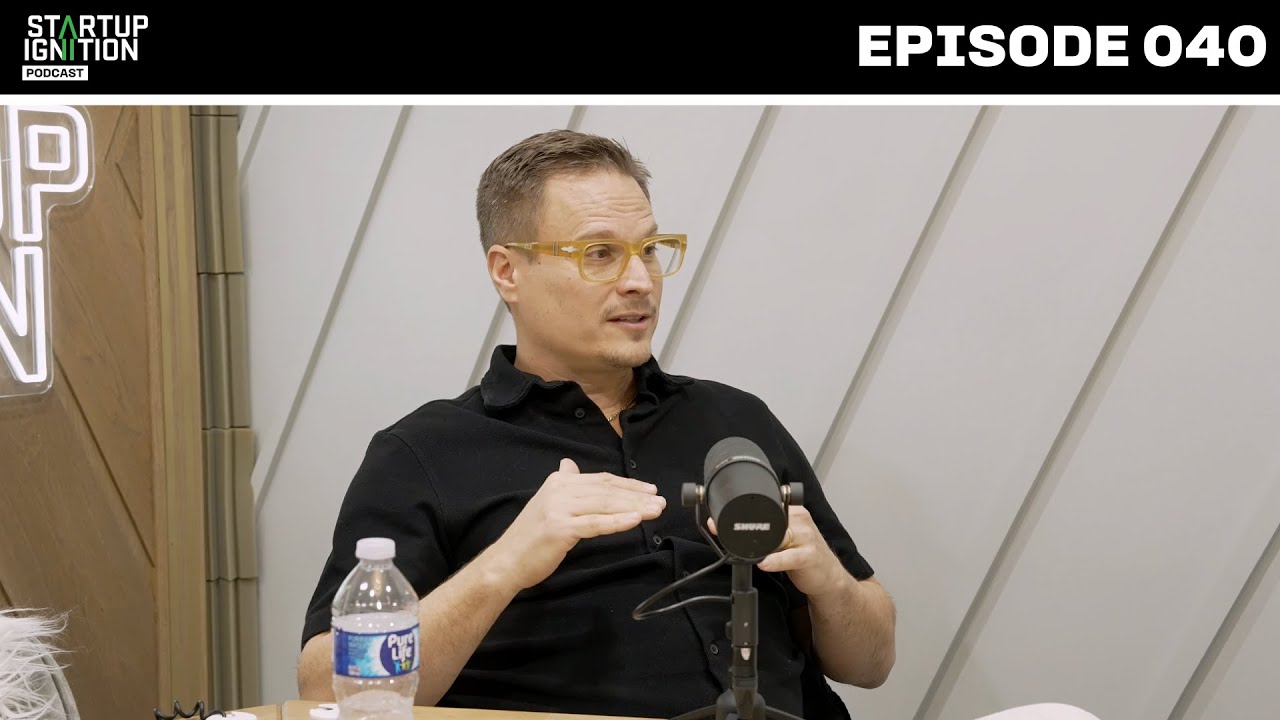
Dave Bateman shares how he bootstrapped Entrata for 18 years with zero venture capital, grew it to $200M+ ARR and 2,100+ employees, kept 60% ownership, and then raised $507M from Silver Lake at a $4B+ valuation. He also discusses teaching himself to code, litigation battles, magic mushrooms, and silver investing.
Dave Bateman co-founded Entrata in 2003 with roughly $50K and zero institutional capital. He taught himself to code when his developers couldn't solve the platform's database bottleneck. Over 18 years, Entrata grew to $200M+ ARR, 20,000+ apartment communities, and 2,100+ employees — all bootstrapped. In 2021, Entrata raised $507M from Silver Lake at a $4B+ valuation. Bateman retained approximately 60% ownership.
Show full transcript
Build fast or build it right. >> Definitely. My approach is always build it right. >> Yeah. >> Yeah. I took 19 years from start to finish. >> I went from like 300,000 in revenue no 150,000 to 300,000 in my second year to 700,000 to 1.7 million to 3.3 million then to 7 mill 7.2 million then to 11.1 million >> literally like doubling almost every year. Yeah. >> So that was the trajectory. That sounds good. Yeah, that sound like a great deal. >> Well, so my but I didn't really know what I was doing like raising money right out of the gate. So, I did like I mentioned I did a million dollar um valuation my first a little trick and then >> whoever that is is very happy. >> They made they made not,00% [music] but,00 times >> Oh my god. >> 1100x. Yeah. [laughter] >> Yeah. That's a nice that's a nice return. Next to bike rock next to rock next to rock. [music] Welcome back to the Startup Ignition podcast. I am Tyler Richards. This is my co-host, my dad, my mentor and adviser of life, John Richards, by my side. We are hopefully your favorite father-son duo in entrepreneurship and startup. But who knows, maybe there's a better father-son duo out there. But today, we are joined by a super amazing special guest who has taken the time to come on our podcast, Dave Baitman, all the way from Oram, Utah. here in your brand new awesome house who is the former founder CEO of Intrada or Property Solutions, a huge billiond dollar company. For those of you in Utah, you probably know about it. Even outside of Utah, you've probably even interacted with it with all the doors that you guys have serviced over the lifetime of that company. But Dave Baitman, thank you so much for coming on the podcast. Thank you so much for coming in. We are very excited to have you. >> Hey, my pleasure to be here. Thanks for having me. >> Um, so Dave and my dad go way back. I know Dave >> and welcome back to Utah. I'm saying to him because he was out for a while. We'll talk about that maybe a little bit. >> Yeah, we're you were you were out of state country. We want to teach our entrepreneurs about that because they'll be interested in that. >> Some great tax principles there. Yeah. [laughter] >> Um so, welcome Dave. I have a bio for you. I'm going to read it real quick here. Dave Baitman is the co-founder and former CEO of Intrada, one of Utah's most successful SAS companies to date. He bootstrapped the business from the early 2000s into a platform serving over 25,000 apartments and more than 3 million units worldwide. Dave is known for his founderled execution, capital efficiency, and building global teams at scale. You also taught yourself to code, I read online. Um, and that's kind of what bootstrapped your way into Intrada, which is really cool. I think I last read in worth a $4 billion mark or something with the late >> I've been hearing rumblings of that. >> Yeah. Yeah. Black Stone was the investor at that $4 billion mark. So just kudos to you. Everything you've done. I know you've done way more than that going all the way back to dear elder days probably with this guy right [laughter] here. And obviously we we look at the highlights in your bio, but there's a lot more to Dave than just Property Solutions and Entrada and we're super excited to have him on the podcast. So >> yeah, very >> I know you probably have a lot to add here. >> Yeah. No. Well, we'll go through it as we go through his history, I think. Yeah. But but I just want to say thanks Dave for coming making time for us. We really appreciate Seriously, I know you're a busy dude. I know you got a lot of important things to be doing and coming on our little podcast here. We really appreciate it. So, thank you. >> I know. My pleasure. >> But before we get to memory lane, I do want to do this icebreaker with you real quick cuz I think it'll be super fun. We're going to do a quick this or that. And I'm going to I'm going to shoot two things at both of you and you guys both tell me what you prefer out of those two things. Okay, got it. >> Or some of them are actually more than two things. >> We're ready to go. >> Okay, here we go. Are you ready? Uh, are you a soda person, an energy drink person, or a coffee person? >> Coffee. >> Coffee. What about you? >> I'm soda. >> Coke zero. Yeah, we had a >> built for this now on the podcast. >> I know. It's becoming a thing. >> Coca-Cola should sponsor us. >> Yeah, come on. Coke. Um, early bird or night owl, Dave? >> Definitely Night Owl. >> Night all the way for me, too. >> Okay, here's a good one. Stocks, real estate, or precious metals? What are you guys doing? Oh, very much. Precious metals. >> Precious metals. >> Really? That's interesting. >> Um I'm careful in all of them right now because I'm, you know, you know, I like venture and so I do venture. So I think stocks would probably be it more stocks, >> especially options. You know, Tyler and I, for those that don't know, are pretty into it on the options trading. >> Yeah. We we are heavily invested in the legal gambling pool of the stock market. Um >> Well, I'm I'm like 90% in precious metals. >> Oh, really? >> Yeah. >> Okay. You need to tell me more about that. >> Yeah, >> cuz they just I know that silver just boomed. Yeah, they like literally doubled. And >> yeah, I'm like 70% in silver. >> Silver? >> Why silver? >> Well, look at look at its track record this year. It's 160%. >> Yeah. No, it's like I think at one point it hit 200%. Didn't it? I think it's come down a little bit off. >> A little bit. But um and I'm also big into silver mining stocks >> and they're up like 300%. >> How about gold? You're not You don't like You don't like gold? Gold, too. Yeah, really 30% gold, 70% silver. So, >> wow, that's amazing. Okay, bootstrapped or venturebacked? >> Um, definitely bootstrapped. >> Yeah, I knew that was going to be your pick on that one. >> Yeah, bootstrapped as long as you can do it. Yeah. >> Yeah. I just I just came from a class where we talk about this at the local university and when do you know when you need to raise money? And I'm like you should never raise money. Even being a VC having a managing a fund I was like if you cannot raise money you should just do that. just bootstrap all the time >> and look for a business model that doesn't require a lot of capital. >> Yeah, that's not capital intensive. >> But our rule of thumb is if your growth could be like this, but it's a very low slope of growth and capital could unlock you to get here, then get capital. >> Yeah. But at the same time, venture capital's super expensive. And I don't I think a lot of budding entrepreneurs who are just getting into like the ecosystem, they have stars in their eyes when it comes to VC and raising big checks and it's almost like I think almost every experienced entrepreneur would say if you can avoid it, avoid it at all. >> Venture round is the beginning of problems, not the end of problems. Right. >> Well, [laughter] well, I noticed when I was starting my business, and maybe I'm jumping the gun here. >> No, you're good. Um, I noticed that it was like this huge accomplishment for entrepreneurs to raise capital. And so if you wanted to get your name out there and the magazine and all that, like you go raise a big round. So like if you're looking for like to stroke your ego a little bit, you go raise capital. >> And so that was driving a lot of it is ego. And so but if you're willing to just sit in the shadows and crank >> and build quiet cuz like if you're an entrepreneur, you're sitting at your little cubicle or laptop and you're reading all the blogs and the stuff coming out of Silicon Valley. It makes it seem like raising the round is like the end goal. >> Uhhuh. Exactly. Well, that's what you get the accolades for >> is raising the money and it's it >> it doesn't end well if you do. >> I'll ask you right now, Dave. You have raised money from venture capitalist. Let me ask you this question. The minute that money divided in your account, did it solve all your problems? >> No. >> No. Uh, absolutely not. Create some new ones even. >> Exactly. Yeah. >> Okay. Another one here. And I'm really curious on your answer on this one. Build fast or build it right. >> Definitely. My approach is always build it right. >> Yeah. Mhm. Yeah. I took 19 years from start to finish. >> Totally. Yeah. So, expound on that a little bit more because I think in today's age, right, because of the AI tools that are so accessible, making development and especially software and tech development like you've had in your past and we've had experience with, it's so easy to build quick. >> Like a lot of people are saying, is lean startup even the right way to methodically go through building a business? It's more like just build it on lovable or build it on replet or build it with claude code or build it with all these AI tools and just get it out there. Do you agree with that or no? >> Well, so when I built my business, I didn't have access to all these >> to those tools, right? Development was a different world back then. >> I can't compare honestly. Um, but I was like I was maniacal about the architecture of the system really >> and the extensibility of the system. So like I was the head architect of the business up until like 2018. >> Yeah. >> Um so for like for 15 years I was overseeing the architecture and I was so maniacal about um usually tech companies don't have the decision maker making decisions in the code >> but like you're making business decisions every day and you've got people who huge decisions being made by the engineers and they never even interfacing with the business leaders. And so like I I made those business decisions in the code and they're not just technical decisions, right? >> Yeah. And it's like decisions of of how much this needs to scale before you have to go and do a new version or a new iteration of the software. Um so I was just and the other thing is like I I wasn't um you know I wasn't really looking for this 3 to 5 year exit. I really when I pretty much the whole time I planned to hold this company till I died. >> It was a lifetime thing. >> Yeah. and I wanted the most sturdy foundation to it that I possibly could. And that really paid off. And you know, if if >> I I'm also a big fan of like getting to market quickly, but maybe then right after you need to take time and like make the architecture and the foundation of it more sound so that you can scale. >> You created what became a unicorn here in Utah. And so if you look back at the unicorns from your era, let's go to Omnature and Qualrix and Entrada. actually the products of those companies is excellent like you the first time I used their products I said this software is awesome yeah >> you know and that's what wins the market eventually right is a good product now and I want to say what you you Tyler that I because I want our viewers and listeners to really understand that in this day of AI and even you and I were shown something yesterday that makes software engineering even easier than ever right but the point is is that making software engineering easier than ever just means you can violate principles faster such as build it and they will come. You don't just build a software product really fast and pray and hope that people show up and buy it. You've got to find out what the customer wants, what they need, what solves their problems. That's lean startup principles. And so you have to be actually more careful than ever now not to just fall in love with the first product you whip out of an AI platform and that's the end all be all product, right? >> That could be a trap of today's age. And >> yeah, I think it is. And maybe distilling both of all of these opinions down. It's kind of like right now maybe AI the move is what Dave says build it right but AI is allowing entrepreneurs to build it fast and right and here's a principle too I love the statement from the lean startup world is like it's a whole lot easier to pivot a twoerson company than a 200 person company. So if you build a product get funded by entrepreneur or investors that somehow got duped into investing and you get up to a hundred people and you find out you built the wrong product, you don't have product market fit. It's really hard to stop and say I made a mistake. >> Yeah. Yeah. >> And fix things, right? It's a lot easier when you're two, four, six people to fix things, right? Yeah. >> Yeah. Very much so. >> Anyway, I I have a lot more, [laughter] >> but I don't want to spend another >> 30 minutes on just this intro icebreaker to talk about. Um, so I'm going to call it there, but hey, at least we got to see a little bit into Dave's mind about how you think and how you approach entrepreneurship, which was great, which was the point of the icebreaker. Um, but now let's rewind it a little bit. I want to we want to go back to where does Dave start this career before building this multi-billion dollar company? Like where did you grow up? Where are you from? What was your upbringing? And I know you went you went to BYU and you went to Brigham Young University. Go Cougars. Uh but what where'd you grow up? >> Yeah. Like what what what happened? How did you become entrepreneurially? >> Yeah. So um so I was born on this little farm up near the Canadian border in Montana. >> Oh, you're from Montana. >> Uhhuh. Uh that's where I was born. >> Okay. >> So and I lived there till I was like five or six. And then my dad, well, he was a farmer and he decided he wanted to become a stock market broker, which is a huge shift, right? And so he moved us to Spokane, Washington when I was like 5 and a half. >> And then so I pretty much went to school in this little farm town outside of Spokane called Genie, Washington. >> Yeah, we're fellow Washington. >> Yeah, we're from LA. Oh, cool. >> I grew up in Seattle. Tyler was born in Seattle. >> Oh, yeah. Nice. >> Yeah, I know there's a big difference between Western and Eastern Washington, but practically different states, but Yeah. Yeah. >> Have you seen all the memes online of people wanting to separate the state? Like western Oregon and western Washington become a state and eastern Washington eastern become a state. [laughter] >> They're like let's just split it down the middle both states. >> Okay. So you go so chain. >> Yeah. Yeah. And Cheni. Um and then I moved to I moved back to Montana for my senior year in high school. So I graduated high school in Billings, Montana. >> Oh wow. Okay. >> And then what is Bill? Is that Montana State? >> Um there's Rocky. Um there's uh Mont there's a Montana State University on campus >> there. Yeah, >> they I think they just won by the way the um national championship for division like 1A or one or whatever. I over the weekend. Yeah, I caught that. Montana State. >> Yeah, I think they're Cougs also, aren't they? >> Yeah, I um is that what? But anyway, Montana State definitely won and it was a super good game. But anyway, Yeah. >> Yeah. Nice. >> I go. >> So, back to Bill. You graduated high school in Montana. >> Yeah. And then you came to Brigham Young University. >> Yeah, did a year at BYU and then um served a mission in Honduras. >> Oh, nice. >> And then um I came back to Honduras and um I'd always growing up like um I grew up pretty poor and so if I wanted to do something, if I wanted to be in a sport or anything, I had to figure out a way to pay for it myself. >> Yeah. >> And so I always just found ways to make as much money as I could, as efficiently as I could because I I couldn't work and play a sport. So I had to figure out how to make money in a very limited amount of time in order to play the sport that I wanted. So I was doing all sorts of things from uh selling long or long distance that this will save me but long distance telephone service. I I like um in high school, right? I I went door to door and just like sold candy bars. >> Yeah. >> Um I I just did like a number of different things. I had a lawnmowing business and um and so anyway, when I got back from my mission, I'm like, "Okay, you know, I got to find something to do." And so um to basically like fund college. So my first semester back, I took a a class um at BYU uh just an entrepreneurship class from Rick Farre. >> Yes. >> And uh in that class, he's like, "Okay, this is this is how you come up with a business idea." He said, um, you find a place where consumers were either feeling pain or where you can help them provide pleasure and that's like the basis for it, right? >> And so I was just home from a mission and we, um, letters back at that time, missionaries couldn't use, you know, internet and all that >> email. And so, uh, I'm just like, that's the biggest pain I could think of is waiting 3 weeks to get a letter. >> So, in other words, your parents, family, girlfriend would send letters and it would take week, two weeks, 3 weeks. in a foreign country even longer sometimes and then you would write back and it take that long to come back. >> Right. Yeah. So I just went and figured out like why in the heck does it take three weeks for these letters to >> And emails existed though. >> It did but they wouldn't let him use it. >> Yeah. I know exactly what I'm saying your and that you were saying how come we have to write paper letters when there's this new thing called email. >> I think I think we need to preface this whole because the conversation is very uh LDS centered. I I feel like maybe we preface this with in the LDS culture, men and women go out and to different parts of the world. They serve what we call missions. And those missions, they are out there for two years at a time away from their family. So your problem that you identified was that these missionaries who are on these religious missions outside of their normal home, they would send letters back and forth and you're like, "Okay, that's a painful process." Okay. I just wanted to set that for everybody who are not Mormon or LDS that they know what we're talking about. A lot of assumed knowledge in this room right now. >> Yeah. [laughter] >> Um Yeah. So, so the the LDS church really wanted the letters to keep going physically. They didn't want to change any of that. So, I just created an electronic system to get people to submit their letters online and then I would print them sometimes in the foreign country where the missionaries were like in Brazil. >> Yeah. >> And print them and drop them off at the mission office. And so >> basically they'd write like they were writing an email into your system, right? >> And then you'd physically print on a piece of paper and then make sure it got to them. >> Exactly. Yeah. >> So this class is what gave me that idea the first day home. I was I was home from my mission for eight days when I came up with the idea. And then it took me like I didn't have any money. I didn't And um so I I went and just started asking web design companies in the city like, "Hey, will you I'll come work for free if you'll just let me learn to code." And so I found this place up in Alpine. Um they hired me and they actually paid me 10 bucks an hour and uh learned to build websites. And so I was cranking out uh websites for people learning PHP, learning HTML, JavaScript, all of that. And then um over the course of like 12 months, I was able to build this website, learn to code, and then um I got it like got it up and running and I started getting lots of traffic through it. And um the letters were free, but we would sell cookies um so parents could send cookies. And then that's where we started making money. >> Yeah. I don't know if you remember. So this is where I entered the picture cuz one time you I I still remember the room we sat in. It kind of like had orange walls or something and we sat in there and you were talking about then even expanding that to gift baskets. >> Oh yeah. People could that the parents and the friends and stuff could buy gift baskets for their missionaries, right? And that would be and I was work that's when I started mentoring you a little bit with Dear Elder Don Long, right? >> Yeah. Yeah. >> Yeah. >> Um yeah, we put we had like 20 different types of gift baskets and >> but it was making like two or three hundred grand a year. Um um within 12 months and this was back in 2021. So, >> and you're carrying still a full-time student. >> I mean 2001 you're caring or what did I say? Yeah. 2001 2000. So you're carrying a full load of credits at a university. You're running a business that's grossing hundreds of thousands of dollars. >> Yeah. [laughter] Yeah. And I >> by solving a pain. >> Yeah. And I but what I realized when I was doing it is what what I was obsessed with was the business process automation. And so like coding using uh web- based technology to automate business processes, >> right? >> And so I got everything so automated it was ridiculous where I worked myself out of a job. I had nothing to do anymore. >> Yeah. Um and so um anyway, I started basically hunting for the next thing and that's where we're in product. >> And that's it literally I what I remember clearly is you said hey I have about $400,000 from dear elder. >> Yeah. >> And then you and I talked and you had this idea and basically you parlayed the little bit little bit but significant for a student money you made at dearelder.com and then came up with the next idea which is >> Yeah. which is actually >> or property solutions. >> Well, it was property solutions at the time. Yeah, we rebranded it. Um, >> and then you started hanging out with me and others a lot in the business school because what was your major? >> Um, so I was computer science. Um, oh, you were? Yeah. >> But he came over you came over to the business building a lot and met with us a lot. I know you mentored with me a lot and you probably mentored with a lot of people and then he entered the business plan competition. But how did So Dave, how did you go from automation of letters and cookies and gift baskets to falling into this real estate, you know, property management >> to that idea? >> Yeah. So, well, I just I was looking for the actually what caused it is I was in a Gary Williams business plan writing class. >> Yes. >> And I I needed a new business. I needed a a business idea for the competition. And so I was living in an apartment in Provo and um I would go to pay my rent and I would see them fish these like paper ledgers out of these file cabinets to keep track of rent on paper ledgers. >> And I was just like this is insane. May maybe there's other places other apartment communities that are doing this like like dinosaur approach. Yeah. >> So we as part of the class I did a bunch of market research and found out that there were this was not unusual. this was very common and there were some software products but they were all like PC based software products like nothing had really like migrated into the web at this point. >> Yeah. >> And that everything was through the web and I'd spent the last two years automating a business in in um using like software as a service. >> Yeah. >> Um >> and so I saw this opportunity and that's that's really what where it came from. >> That's awesome. >> So literally you were just in need of an idea for a class. you saw this problem because you were literally paying rent that way with your landlord. Yeah. And you're like, there's no way with the internet and like software today that this is still going on. But this was still really early, wasn't it? What year was that that you >> um It was It was 2022. Fall of 2022. >> 20 of >> or sorry, 20 2002. >> 2002. I'm like 2020. Dude, no way. I'm getting my dates. >> 2002. Fall of 2002. That's still really early. >> It was early in SAS. >> Yeah. >> Yeah. And that's why Omnature here in Utah was one of the first great SAS companies actually. And so >> they were the early maybe the first SAS company >> one. It really was. Take it. >> I'm an old guy so I remember all this. Sorry everybody. But web trends dominated the analytics business and the internet. It was client server models. So you would run your own servers as if you had website. It wasn't on Amazon or Google cloud. It was on your own server you set up. Right. And it was very expensive. >> Is that what was that the first model of property solution to? No. No. you were on the cloud is cloud. Yeah. Right out of >> the gate. So, omnature is the first one that kind of said, you know, let's do but the bottom line is the analytics company web trends and this Omnature is let's make a cloud-based analytics company instead of a client server model. And that's the history of Omnature a great unicorn here. And then you came up with this incredible idea. And >> um I'm going to pay you a compliment because there there's something I think our listeners would like to know. What is it about Dave that allowed you to do this? I thought about this a lot in your history. You literally this this obs healthy obsession you had with business process and automation and making things more efficient with technology and digital world. That's what you're saying, right? >> Yeah. Yeah. >> But you also have in combination with that that very few people have in combination. You're also very good promoting and selling and telling your story because he entered in the business plan competition and he did the presentation. You were on stage >> and he was fantastic on the stage. He won first place that got you a lot of attention at a major this local competition here in New was the biggest one in the country actually at the time. You don't might not know that that was the biggest business competition and you won it that year with this idea, right? >> Yeah. and and and and you were good. And so it's not often you find somebody who really gets into the weeds and technology, but also can sell and represent the idea super strong. Does that make sense? >> Oh, well, thanks. Yeah, I appreciate that. >> I I I think I think you were just so early on in like the computer science arena, like understanding web technologies and SAS, and you were just like to you was like, this is such a no-brainer. Why is there not why is there not a rental management property management type software? But it's like I still think 2002 man that's so everything was converting from that dinosaur type you know you were the previous venture was sending letters in the mail you know what I mean it was like that was cuz I I think today's entrepreneurs are going to be like there's nothing that is like that anymore there's no opportunities like that anymore >> but Tyler you and I know every day every day we hear about it >> we discover still to this day vertical industry still doing paper >> I'm just saying Dave was on the forefront of that whole movement Right? I don't think you even knew at the time that that was going to be the next 20 years. SAS was basically going to be converting these vertical type, you know, physical solutions for these really niche markets into verticalized SAS, right? I just want to say again sitting here today 2025 2026 you and I sit there and listen to pitches and the entrepreneur tells us that an in an entire vertical still does things mostly paper and pencil with a little bit of Excel. We're going it hasn't been sassified. Are you kidding me? I wouldn't believe it. We do our research and we find out it's true. >> Yeah. [laughter] It's just because it's crazy. >> There's just these really old companies that have a grip on whatever market it is and they just don't. >> Yeah. So >> yeah, especially the vertical companies like and that's what I loved about our business is that it was a huge vertical huge market but not one that like the big boys are ever going to come compete in like Oracle, Microsoft like these companies are not going to go build >> they're general software folks verticalized specific software solutions. >> Yeah. Yeah. And then the industry is very laggered. So you'll you'll find like customers 50 years from now still using client server models in multif family or you know and it's very fragmented and so like you can go choose a park uh like there's student housing, there's um senior housing, there's HUD government subsidized housing, there are all these little niches that if you want to go eat up and like really compete in one little niche like there's maybe even still opportunity to go do that. >> Yeah. where property solution what is more generalized to the whole real estate industry in general or >> no we specialized in various condrad in trada. >> Yeah. So we were but the the one area that was like our um our beachfront that we like took originally to get our toe in the door was student housing. >> Yeah. >> And because we were in Provo, we could see that there were some types of housing that they don't rent the apartment, they rent the bed. >> And and you have to if you don't architecturally uh design your system Yeah, they you can't handle that. >> It causes problems everywhere. Like a a work order. What most softwares do is like you you know you say I need to go fix the toilet in this unit, but in if the software is not architected properly, you have to choose in this bed. >> Yeah. >> And then you can't run maintenance reports to see which units are like costing you the most money and maintenance and and so anyway, we made some architectural adaptations to really like nail that space. But there's still areas in in real estate today like um this uh flux of um like Black Rockck type single family home where these private equity funds are buying massive amounts of single family home. As far as I know, nobody's architected a solution um that really addresses. Yeah. And so the latest news, apparently Trump wants to sign a bill barring, you know, corporations from buying single family homes. Like literally >> that is out of the bottle. They they would if they want to make them into a desk cuz they have bought a lot. That's what's driving a lot of valuations up. >> Yeah. That's what that's literally what his administration is saying is is barring >> some like 5 million homes deficit or whatever >> or the or the market's about to crash. [laughter] >> Yeah. Exactly. >> And Blackstone or Black Yeah. these these big private equity funds needed a reason to stop buying [laughter] without tanking the real estate market. >> Hey, okay. So that we're up to the point in history where he started this idea in college, all these great things he did and he wins the business plan competition which in its day for a student at a top university was a big deal and then he goes out to raise some money, >> right? You had to raise some money. >> Before we get to that though, I do you did have co-founders here like we've What was the co-founding team? Was it three of you or two of you or you? >> Um, so it was Mike Tionfo. >> Yeah, Mike. Um, and Ben Zimmer were the guys that started it. >> Okay. I knew Ben Zimmer's dad from years ago. No way. Seattle. You're kidding me. No. Derek Zimmer. >> Yeah. Crazy. Yeah. I mean, I grew up hanging out with Derek Zimmer. >> You did? >> Yeah. So, they moved to Spokane and that's where I met Ben. >> Yeah. He He was a stock broker. >> Yeah. Yeah. >> Yeah. Crazy. So, good friend of mine. >> Were they acquaintances at at BYU or you So, you knew them from before? >> Um, I So, I knew Ben from high school. He's a friend from high school. And then Mike Tronfo, I met him in my ward at BYU. >> Wow. That is such a small world. Yeah. >> So, okay. So, there was three co-founders when you did this pitch competition he was talking about. >> Yeah. Exactly. >> Okay. So, you guys kind of came together very almost day zero and was like, "Okay, here's what we're going to do." Were they they weren't in the class though with you? >> Uh, no, they weren't in the class. >> Software was very expensive though to create back in those days compared to now. So, to build a system, especially heavily architected the way Dave likes to do things, you needed to get building. And so you went to raise money and that's when you came to our angel group. >> Gary Wers was in there. I met a bunch of others. Fortunately, I went on vacation. This is a sore spot. But um the deal closed while I was on vacation and I didn't get in which is really bad. And I'm not even going to complain anymore. Even though it is a sore point for me, but um you you know that doesn't mean I don't support you 100%. But gosh, I wanted in and we got cut out. Huh. Wait, so you went to that was the first that was the first check you tried to seek for intra or property solutions at the time was the Utah >> I I think I remember the number but I'll let him say it if he wants to but one thing that happened right there the first six months of the company kind of after winning this and it's a real company you're really going for it you know I remember you built the first version of the product for like six months and I think you had to throw away all the code and start over tell because a lot of people don't understand that and they >> I I just want the entrepreneurs today to understand How do you avoid that? What would you do to avoid that? Cuz that was a big deal back in those days to write for 6 months and then have to >> So like I had this cash stored up from this previous business, right? Um and so the the and I was also working at this web design company um that where I learned to code, right? >> Mhm. >> Um the web design company happened to go out of business right at the time when um when I was starting Intrada. >> Yeah. And so I just hired all the engineers, every single one from this business that I was working at with my first couple hundred grand that I had in in capital. Right. Right. >> And so I brought this team in and we spent like nine months building this first iteration of it. And the >> it it's not that it didn't work, it's just that it wasn't designed, it wasn't architected properly to continue to be extensible. And so we basically we did have to scrap it and start over. But I didn't feel at this point like I had the technical acumen to really get involved and like be involved in the hardcore architecture of it. Um, so I was doing mostly like procedural scripting um when I was working for this web design company, but I brought in like former novel like heavyhitter like deeper architecture sort of people that were building object-oriented um applications. And so they came in and designed this whole system and um it did. So we we we had to start over and then we started over um and we even went like uh probably another 18 months in where I wasn't coding. Um, and we got 18 months in and I just, it was by far our biggest problem. Um, I was out selling actually and trying to sell the software. So, I brought in all these um, like people that wanted to sign up as like beta customers who were willing to pay a little bit of cash but get a discount to use the product and we just couldn't get the product in place. And so, after like a year and a half of like literally sitting at the office and spinning my thumbs cuz like we don't have a product to sell, um, I finally was like screw it. like I'm going to learn to code in a more sophisticated architecture cuz I just I need to know why it's going so slow. >> Yeah. >> And so and I was bootstrapping it, right? >> Another thing to throw into your arrows and your quiver. I said you had the ability to be a tech guy and understood tech and then you do this but when you dive deeper now you're adding another element because this is the real super mega successes the leaders have to have a lot of these elements you're bringing together. That's what I see. What what was the what was the problem there? Cuz that is very weird that you have a you had a full tech team, right? I don't know how many developers you had on that project. A year and a half, 18 months goes by. >> Did you throw away a codebase twice then? >> Um we didn't. No, we well no the second time we got this specific architecture right and I it was all blackbox to me. I didn't know what was going on. I just kept getting like it's coming it's coming it's coming you And so >> you have no idea why it's late cuz you couldn't even ask him the right question, >> right? And I and I had raised my first round of of seed capital, which was $125,000 that I raised at a $1 million valuation. >> Wow. >> And so like I'd already bled 12 a.5% of the company to raise this little amount of capital to give it another go at this next iteration of of um the art. >> And you had no revenues coming in at all? >> No. No revenues. >> Yeah. I didn't sell anything. >> Yeah. I talked one company into prepaying and so they gave me like 40 grand. Oh my god. >> You know, and so, but I'm like, I'm going to own nothing of this company if things continue to happen like this. And so, I'm like, rather than going and, you know, just sitting around and waiting or whatever, I'm like, I'm just going to I'm going to get into the code and I'm going to learn to code in like this more sophisticated architecture and figure out what the hell is taking so long, >> right? [clears throat] >> Um, and so they actually would not give me the passwords. >> Your your own people? >> Yeah. They did not want me in the code. And I'm like, I actually can code. You know, I spent a solid 18 months day and night coding, right? >> Yeah. >> And so I ended up having to like actually fire someone. >> Um like give an ultimatum like that give me the passcodes to the database >> or you're fired. >> Yeah. Yeah. >> And then I spent every like I spent every day for months, day and night, like learning like and having people like help me figure out what was going on and I found out exactly why things were. I'm very curious. >> So, we were using this database, it's a Postgress database and the way that the um in like some databases like my SQL, you could go in and you could just add a field and reorder the table and it was pretty easy. >> Mh. >> But at that time like to to migrate uh to add a new field and rearrange the fields in a Postgress database, it was excruciatingly slow. >> Mh. And so we had all of our engineers waiting for data ch changes to the database architecture. And so they would code the full thing without actually being able to test it against a database because we had a bottleneck of one guy that was like doing all the database changes. >> And he he had such a he was so um uh he was really good but he was very particular about the way the database was managed and he didn't want to let everyone else edit the database. So I figured out like very within 3 weeks I figured out exactly what the bottleneck was, what was happening that was slowing everyone down across all the teams and so I made the change and so like being in the code like um allowed me to see the problem but no one else would challenge tell me the real problem. >> Yeah. >> With this one guy because he was like the head architect, right? >> Yeah. Yeah. Um, and so anyway, I just I'm like, "Okay, well, this is where I'm going to live until like we get the product out the door." And I never That was in 2005 when I started getting involved. >> Yeah. >> And it was I never felt like I should get like stop being involved. Yeah. From that point on, >> you you over the years of contacting me for this or that, sometimes business, non-b businessiness issues and different things. I remember back in those days a little bit, too. I remember being on the phone with you one time too and that you kind of segueed and also were trying to get a handle on offshore coding and how it could help you. Can you touch on that a little bit too? Was did that start coming into play? >> Yeah. So um so in in December of 2006 so I had six engineers and in in December of 2006 I had um two of my best engineers were commuting from Salt Lake every day and they both quit um in in December and I'm like I'm screwed. >> Merry Christmas. Yeah. [laughter] And so, um, but they were each getting paid like at the it was a lot at the time for me, but they're getting paid like 100, one was getting paid 100K, one was getting paid 110K. So, I had >> Oh, there's a fortune back then. >> Yeah. So, I had 210,000 bucks free at least. >> And so, I'm like, what am I going to do? And I'm like, so I start researching. I'm like, I've heard about offshore engineering. And so, I I start looking and I find out that like I can hire engineers in India for like $400 per uh a month. >> Yeah. A month. Yeah, at the time now it's probably four grand. But yeah, um >> but anyway, so I hopped on a flight. I didn't have a hotel booked. I didn't have anything. I'm just I' I've heard there's there's this one city in um India that nobody's ever heard of called Pune. And um it's 9 million people. It's as big as LA, but nobody's heard of it. But they call it the Oxford of the East. And they pump out like I forget what it was, but this one city was pumping out like as many engineers as all the universities in the United States. Oh yeah. >> Um and so and and so there was a lot of people that were um like young engineers uh in like learning PHP in this town called Pune. So I just flew out, landed, figured out a found a hotel and just started asking questions and like meeting people and within like um within 8 weeks I had a whole DevOp up and operating with that 210,000 with 20 engine. >> And did your brother get involved helping? Did your brother help you with that? >> Um I yeah I had a brother come and help me. Yeah, >> I I remember that a little bit. I'm just remembering our past a little bit. >> Yeah. Yeah. So, I thought, well, if I I'm like, this is amazing. Like, I should set up a shop to provide this service for other companies. >> So, that was what my brother was doing is selling engineering services to other tech companies. >> And then you were their biggest client probably. Yeah. >> Yeah. Yeah. Yeah. Exactly. I was half the engineers. >> Yeah. Exactly. >> Um and so did that go well? Did that did that team go well? And um it it so it didn't work out super well for like the services side and I it came to the point where like I lost some of those customers. They finished their projects and I really wanted the engineers for Intrada. Yeah. >> And so I just took I didn't want to like use up all the resources to grow someone else's software company >> back in the mid to late 2000s. You were this helped you get to where you needed to go. >> Yeah. Yeah. It brought in some revenue and um >> so but yeah. So then, but I I ended up scaling that dev shop. I I came up with a totally different model to like focus my engineering offshore. Um and so instead of hiring engineers in the US, I would hire like um people that couldn't code but were very technical to come in and and work all night long with the the Indian um engineers. And that was pretty unusual. Um, usually the, you know, I I figured out why it was failing the all the companies trying to offshore and I figured out all those issues and solved them and ended up like growing that to,200 engineers. >> Wow. >> In India. So I had like a massive like pool of like development talent and like really figured out a model that allowed us >> focusing on TRDA and that product >> 1,200 engineers. >> Well, it was 1,200 people. So it was probably 800 engineers and 400 QA people. >> Oh my goodness. >> So what was the month and year? So you're going along all this is happening and now the product's starting to take shape and you're really proud of it in your sales. What's the month and year you kind of count as your inflection point where you said okay we're become this is real and people are viewing us as the best product and the leader. Where was that about? What year? So we started signing like in multif family like if you're in the top 50 largest operators like that's a big deal and if you sell a top 50 customer like a software company kind of m uh makes a name for themselves and so in 2007 we bagged our first like big top 50 customer. Okay. >> And then by 2009 we had 33 of the top 50 >> really. So what was the first customer and how did you get 33 in two years? Um so the first big customers were um Greyar and um and Riverstone >> and so and then we we just kept bagging more and more large customers after that. >> It's kind of this natural lemming type of thing, right? Everybody goes, "Well, if those guys are using it, I'm going to use it." >> Yeah. And and it was funny cuz we would get one product. Our goal is just to get one product in the door and then um expand and expand and expand and we ended up with 40 products. And so we would not just get the ACV from that original deal like the the annual recurring revenue um but we would um continue to see like we had half our products were transactional like payment processing right >> where every month for like we'd sign a customer and for the next 10 years every month more and more a higher percentage of the residents would come online to pay their rent right >> and so we were seeing like adoption >> subscription revenue for the SAS tool and then you got transaction revenue from payment processing >> exactly And you were one of the first SAS companies to kind of really do that in that kind of way. >> Yeah. Well, and and like all in investors wanted to discount the transactional revenue. It wasn't as good as subscription. >> Um but our transactional revenue was actually way better cuz like our subscription didn't grow. >> No. >> But our transactional did. >> If I can take a teaching moment here because we say that all the time. There's investors look at this way. Subscription revenue, transactional revenue, onetime like setup fees, and onetime revenues. There's three orders of that. You agree with that statement? No, no, no, no, no. You agree that investors look at it that way. Oh, yeah. Yeah, that's why I'm asking. >> But, and it's even more so. I've been and it's coming up. A lot of SAS companies I would notice would take years before they realize, hey, >> we could get a piece of this transactional payment processing revenue, right? >> They're still doing it. >> Yeah. And and there's ones discovering that right now, but you discovered this early. >> Yeah. So, 40% I don't know if I can say this, but a lot of Well, now I can't say it. Um but yeah like >> the transactional that came with the subscription was guaranteed right and then but you get adoption increase so but we saw lots of >> competitor 30% of the renters in a complex use the system and then next year it's 35 then the next year it's 45. That's what you're saying. Yeah. And you and that just increases volume naturally. >> Yes. And because so we had competitors that like were not even thinking about the transactional revenue and it was 60 70% of our overall business right now. Do you know when we mentor SAS companies >> we have them at the preede stage think about okay how can you get a piece of the transaction? >> Yeah. So your product building phase seemed like it was a long time. The timelines you were throwing out 18 months, two years, you know, going over to India, figuring out offshore talent. >> So from when you started 2002, when did you collect your very first revenue? How long did that take? >> Well, we were So >> he said he got a $40,000 check from somebody talked first year. >> Okay. But then after that, like when it >> took me to to be getting like monthly subscription fees and to be getting some transactional revenue. It was probably like 18 months in. >> Yeah. 18 months. >> But I went from like 300,000 in revenue. No, 150,000 to 300,000 in my second year to 700,000 to 1.7 million to 3.3 million then to 7 mill 7.2 million then to 11.1 million. >> Literally like doubling almost every year. >> Yeah. Yeah. >> So that was the trajectory. That sounds good. Yeah, that sound like a great deal. [laughter] >> Well, so my but I didn't really know what I was doing like raising money right out of the gate. So, I did like I mentioned I did a million dollar um valuation my first a little tranch and then >> whoever that is is very happy. >> They made they made not,00% but 1100 times >> Oh my money. Yeah. [laughter] >> Yeah. That's a nice that's a nice return. And then we did the second round at a 2 million valuation free money. And then I'm like I'm never raising a dime again. This is ridiculous. And so I didn't I well I I raised money 20 like 18 years ago. >> Some dead instruments too probably and things like that. >> A little bit like I raised a little bit from Steve Grizzle. >> I brag about you a lot in one regard because my understanding and you don't have to say it if you don't. It's just I I'm pretty aware of this that you built a unicorn company. And I'm just going to say it called that because everybody talks about that. But you built a billion plus company and kept a huge percentage of the pie compared to most entrepreneurs that would have done the a billion dollar company. Your percentage company was higher than so many other I mean so some of our listeners don't aren't aware like a lot of times if you build a billion dollar company many will be in the singledigit ownership. Yeah. And I was 60 plus%. >> Which is which is >> should be written up in the hall of fame of entrepreneurship. >> Well, thanks. >> Well, yeah. Like you you give up all the the chest beating for raising them big checks >> and then but at the end of the day like >> Yeah, you get the big check. But [laughter] I want to make I also want to make sure everybody understands this is not easy work. I mean I I knew you during these years. You called me for advice here and there and stuff. You were often working all night long. >> Oh, for 15 years. Yeah. >> All night till 6 a.m. >> Yeah. Yeah. >> My schedule is insane. I worked six I worked six and a half days a week. >> Yeah. But there were other players and there was one big one. Okay. You want to tell anything about what happened there and anything you feel you can comment on? >> Well, yeah. So, anything that's public which is that in 200 um well, in 2009 is when we started getting Yeah. you know, >> trouble from like the the juggernaut in the space which is Yardi Systems. >> Yeah. So that's and I hadn't known about them for cuz I would imagine when you went from 2007 your first real deal with a big player and then you had 33 2 years later all of a sudden >> the big juggernaut says who are these guys in Utah and what happened? >> Well they finally filed suit against us in 2012 and we were in a we were in a lawsuit from 2012 until 2019. Well like I mean there's a game that's played in software so you go after like IP infringement, right? is that's what you do and then you try to prove out your case. But we went through all of it and it ended up I I don't think I can disclose the outcome of it but um and >> well in the end too look at the company they you survived it and did it bring I it seems like it might have even brought you more attention and getting you more customers because they you now people that hadn't heard of you now are hearing about you. Yeah. >> Well, what it did is so we we built all these products that were add-on products to their core accounting system. >> Yeah. And so they that's what their uh bread and butter was is core accounting >> and we were known for selling add-ons to their system and others. >> So Yardi is a property management software. >> It is >> that integrates with accounting software that like it's the accounting software for the property property industry. >> Their Yeah. Their system is the general ledger. >> It's the general ledger, the balance sheet, the >> profit and loss, the cash flow. And they they didn't like that you were building on top of making all the money on the cuz the transaction was where the money was, right? Selling all the services. >> Well, did they publish their APIs? Did you have API connections? >> They had public APIs. They didn't they didn't like anything about us [laughter] >> and so we um but we were very good at what we did and >> they were pro they were probably kind of a >> fat little bit lazy company and they had all this opportunity they could have done for years but they didn't do it and you did it. >> Yeah. But for 6 years, they thought we were a peripheral vendor um selling these add-ons and that's all we were. But I had been for 6 years building the accounting system. >> Did you start doing the accounting? >> Well, when they started suing us, I I went full speed. So, cuz I knew I they were going to cut us off. >> Yeah. >> And so, we had to survive on our own and we had to it was a battle to get their customers to come to our accounting otherwise they were racing to try to build our peripheral solutions to get the customers to go to them. Yeah. >> And so this forced us to into a separation like we we we were getting divorced is >> uh we ended with more revenue than like we got more revenue out of this divorce. >> Yeah. >> Um and so it went really well for us and but nobody thought we could >> pivot and and build core accounting cuz it's tricky. It's hard to even find anyone in the US that even knows how to build accounting software because all accounting softwares are like legacy old systems. >> Yeah. And not to mention they have to be perfect. >> You cannot make a mistake. >> Dependable. >> Well, and that's one of the things that separated us is we had like rock solid architecture that at the database level would not allow corrupted database into the data. >> Yeah. >> And our competitors didn't have. >> So was that like a huge point for Intrada launching that accounting software that core foundational accounting software and that you kind of went to the next level. Right. >> I don't know if there's other big players, but every I know about Yardi, but maybe that's cuz I know you. But Yardi was a behemoth. >> Behemoth, right? >> Yeah. Still are. >> So, you won. Yeah. So, you won clients away from them. They would actually cancel Yardi and come to you for the whole shebang. >> Yeah. It was And we started with student housing. >> So, this basically is a it's what America's built on. That's competition, right? And those customers are winning by getting better software, all of them. And you did what you're supposed to do in America, which is compete. >> Yeah. Yeah. And what saved us was that that architecture for rent by the bed, the student thing I was talking about. That's what um made it our system work way better across the board for every application for student housing. So we cleaned up. >> So basically fractional rentals they couldn't even handle and you could. >> Exactly. >> Yeah. Yeah. That's really cool. Dave, congrats on what you did there. That's a great entre story, too. >> Well, I'm picking up on a theme here. When something's not going right, Dave's like, "I need to figure out what's going right and how to fix it." And you're one of those guys that just rolls up your sleeves and says, "Look, I need to get into this database. Give me the passwords. Hey, look, I need to fix this problem. Why are we What do we need to do to hit the next level? Oh, we need accounting software, but hey, we got to tackle these peripheral things first, and then we can go after accounting software." Like, it just seems like you're just one of those guys that gets in the trenches and figures crap out. You're not like assigning a team of people to just go and do the dirty work. Like, I have to do the dirty work. >> Yeah, it feels like a curse. sometimes, but I don't I don't I like to be in the weeds. Like I I am happy when I am cranking when I'm doing stuff. >> Not when I'm like >> tasking out. >> And you like figuring out how to automate things and make them more efficient. >> I love the strategy. Yeah. >> And you know that's the character of Steve Jobs, the guy who invented the Palm Pilot, which is the forerunner to all of our phones today. The way that he figured things out was incredible. And it was just maniacal stuff and all this happening. What What's the next part of your life? what happened. You know, Entrada is Entrada and we all go read about it now and it's incredible what you built. We tip our hat to you for that. Yeah. But then I I also noticed you kind of you got into politics a little bit um and different things. So, anything you like to share about what's life like after you get because we try we have had a lot of people on here are successful >> and they all really come back say it was more fun climbing the mountain than getting to the top of the mountain. >> Yeah. Yeah. >> Did you go through that a little? >> Yeah, for sure. Yeah. Um, so I'll say like what really shifted for me >> Yeah. >> is in 2018 um [clears throat] I got invited to this like um psychedelic retreat. >> Yeah. >> And I went and did Magic Mushrooms. >> Yeah. >> And it totally shook my whole world up and like I was going through life like this and then it was like whoa, you know. And so like that's what I I had this goal that before I die I'm going to own every share of Entrada. I'm going to slowly buy everyone out, anybody that will sell. And I have a few people I'd be happy if they said no. But >> um but like I was going to do this the rest of my life and I was going to completely take over this industry on a global basis. >> Yeah. >> But I had a like a mushroom thing where I'm like no like you need to get out of this. And so it it totally like shook me to the core like trying to decide am I gonna really like walk away from all this? >> And so finally I'm just like gulp and I decided to yeah pull the rip cord. And in in 20 I guess it was 2020 I decided I was going to move away from it. So I I brought Adam Edmonds in um to run the business. And >> did did co have anything to do with it or it was your personal realization? Um, so no, CO didn't have anything to do with >> Did CO impact Entrada's business or was it good for it or a whole? >> Um, well, it impacted me. It accelerated my timeline to leave. >> Yeah. Yeah. Um, >> what year did you leave? >> So, so I stepped down in 2021. >> Um, >> so by the way, Adam, I mentored from day one, too. I don't know if you know that or not, but >> he's been on the podcast as well. >> Adam's been on the podcast. He's a great dude. It's just such an interesting story and this is what entrepreneurs have to learn that this is hard first of all. This is a lot of work to do what you did. >> Mhm. >> And it's also, you know, everybody dreams, oh, when I'm wealthy and I have all this at the end of the day, but you that's not the end of the road. There's a lot of life afterwards that you got to figure out, right? >> Yeah. Yeah. Yeah. >> Yeah. For sure. >> And so, and Adam after he sold his company, he shared on this podcast for like a year and a half. He went through a little weird phase, right? Yeah. >> And I think actually getting the job with you kind of helped him a lot. >> Yeah, I would say so. >> Yeah. >> Yeah. It was funny cuz for him it was like time to go back >> and for me it was time to get the hell out and so we're like dude this is perfect. [laughter] >> Yeah. >> And so you placed Adam in as CEO and you stepped down as CEO in 201 >> and I was on the chairman of the board. >> Oh, you were chairman. >> Yeah. >> And this is where CO was going crazy and I had a lot of free time on my hands and so I'm like I was a little suspect about like all this whole CO thing. >> Yeah. But something didn't feel right. And so I was doing a lot of research. I was like, I'm going to go with that. This is all legit. And but I'm I was looking very intensely. I was I was um watching every aspect of what they were doing and the roll out of the vaccines. And I I came to the conclusion that this was not good, that these vaccines were not good. And I saw like companies all over the state that were requiring vaccinations in order for people to stay in the business. >> Yeah. And so like I felt like like um these vaccines were not going to end well for people. Um was very conflicted about it, but I felt like I'd never forgive myself if I didn't say something. And so I sent an email out to all the CEOs in the state and to the um governor and to everybody. And I'm like, we need to end the vaccine drive right now. And I got a little carried away with who was behind all of it. That got me in a little bit of trouble. But I ended up getting cancelled >> for this perspective that I had at the time, which I feel like I've been somewhat exonerated from now >> by this point. And uh but anyway, I I had a majority share in the business. And so nobody could have kicked me out. >> And so I wasn't going to sell the business. I was trying to exit the business, but maintain my ownership because I felt like it was such a good business and that it would continue to grow, which it has. Uh much to Adam Edmond's credit. I I sold at the very highest. April 15th is what I remember it was when things >> tanked. Yes. And so I sold March 31st >> first. Perfect. Wow. Okay. >> Wow. So did you sell 100% out of it? >> I sold absolutely exited. >> We don't get political on here very much, but I will say one thing about this. Um I about the whole COVID and things. I people have a right to their opinions. You know, we also have to be careful with what we say and do. But I mean, I I I expressed an opinion on Facebook one time about the vaccines. I literally had somebody come on and say, "F you." >> I go, "Hm, the very interesting world we're in right now." >> Yeah. >> Isn't that was a weird time, wasn't it? >> It was a weird time. Well, and there were there were a lot of uh um >> uh there were a lot of I'll call them scops to get people to think a certain way. Oh, yeah. >> And to think that someone was threatening their health. >> Yeah. Um, and so like I can I guess I can understand that some people were taking the bait on this stuff. >> Yeah. Yeah. >> Um, but it Yeah, it was a it was a dark much better perspective on that whole thing now. And yes, I do believe >> a lot of your feelings >> on that were probably exonerated to some degree like you said. So I I and you have a right to your opinion. Anyway, >> back back to that Dave, you mentioned these the psychedelics and the mushrooms that kind of opened your mind. I've heard that a lot from a lot of people in my generation and younger. You know, it's kind of becoming more of a mainstream type thing where it's not looked at as so out there, but more like it's almost like an anxiety and a medical use type activity now. And I know that the administration of the United States has lowered a lot of these kind of plant-based drugs to a less of a scheduled drug, right? talk a little bit more about that of like what that experience was, how that related back to business and why you just were like >> and while you answer that I want to I went to one thing on this one time and it was hosted here in Provo and it was actually medical in some nature apparently some people who have anxiety or some other mental issues and different things like that that you know obviously you don't want to abuse anything right but they said even the doctors are saying a once a year >> treatment with it can overcome what other pharmaceuticals can't even come close to. >> Well, I see I is that kind of the realm you're talking about that kind of stuff. >> And also I have very close friends and family members who are who micro do on these things and that are taking them for the those you know mental and anxiety things that they have going on in their life. >> Teach us a little bit what teach us exactly. I'm curious on what this revelation was in 2018 and how it changed your life >> because I do find it a little shocking Dave that like you just had this aha moment like I just need to get out like that's cuz you went from I want every share of ventrada to I don't want to hold it anymore. So what did your >> experience >> what was your experience but also what was that switch in mentality as an entrepreneur where it's like business is now no longer my goal. Was it because you knew you had, you know, money and wealth set for the rest of your life or like what was the reason behind that a little bit more? >> Yeah. Well, I think like I was really driven by um there was some So, it's interesting like um I feel like there's there's always something motivating all of us to do all the things that we do, right? And for me, I had like a bit of a chip on my shoulder that I needed to prove that my worth. I was proving my worth by being ambitious and achieving a lot through like becoming more wealthy and not even that but like building a big business doing herculean things in the business world. >> And um I think the big shift for me um is I realized there was nothing there was no pot of gold at the end of that rainbow for me. >> It was just chasing my tail endlessly and I could have been like trying to get every share back of Intrada for the rest of my life and I like would have missed out on something much greater. >> Yeah. And so like that's so I I stepped out. I felt that fundamentally like I didn't need more money. Um and in fact like now I just like I I it's the last thing I'm thinking about is trying to make money. But I actually did better this year than I've done my whole life because of buying silver. >> Yeah. [laughter] >> Yeah. We talked about earlier. >> But I bought that cuz it doesn't harass me. It just sits there in a vault and like so like trying to not make money anymore has been the most the best thing I ever did. But um but anyway like >> is it this principle cuz I had a mentor one time say to me it's never left me says when you have a million dollars then you want 10 million >> but then and because you start hanging around people that have that [clears throat] >> and all a sudden you're at 10 million and all a sudden you're hanging around people that have 100 million and now you want you want to be like that. >> Yeah. >> Okay. >> And then a 100 million people 100 millionaires go I want to have a billionaire. Okay. Then a billionaire because there's thousands of them now right? >> They want to have 10 billion. Yeah. And then the 10 billion wants to have 100 billion. >> Yeah. I've observed this. I've experienced. >> You've seen that. >> Yeah. Yeah. >> And my this mentor to me one time, he told me, >> John, it will never stop. >> Mhm. >> And you have to choose on your terms what you want your life to be. That's one reason I kind of got off the merrygoround 25 years ago. Came down to Utah and became a professor and kind of slowed my life down and cuz I worked feverishly and before that truly my wife sometimes would be at the elementary school and they thought she was a single mother, right? >> And so after that though I time off the marry around to enjoy my kids, right? And that's the choice I made because it is really true. It doesn't matter how much you have, you will always want more if you stay in the race because you'll be around that. >> Yeah. >> Does it do you agree with that a little bit? >> Totally. Yeah. >> And do you and do you think that's what that whole experience kind of brought to light was like, okay, this merrygoround needs to stop at some point? >> I actually like after I sold the business um >> or your shares of the business. Yeah. >> Yeah. Yeah. Sold my shares of the business um I got an autoimmune disorder. >> Oh, you Oh, >> yeah. So I was really sick like deathly ill for for four years. Yeah. So I I did get an autoimmune disorder and um I learned a lot from doing intrada and doing all these things but like I learned a lot from getting sick and so it was years of like figuring out what was going with on with my body and trying to like nurse my body back to health. >> What was the what was the immune disorder? >> Um it's called SERS. >> Oh, I've heard of that. Um but it's chronic inflammatory response. So it's just like your body's just it my body's became hyper sensitive to everything and mostly it's molds. Um >> and so if I'd be around anything moldy like it would send me into you know um a bad place. But I became allergic to like everything. Um I ended up doing like a 40-day water only fast in order to like nurse myself back. And so I went through all these things. And you might think like, well, that sounds awful, but like the whole experience was actually very beautiful um to to learn to heal, you know, and to do this prolonged fast. >> Did you document that at all? >> Um, not a ton. >> I feel like you should have documented that. That's a very that's not usual, right? >> It was a crazy experience. >> It would have been an experience that I think people would have >> What year did you discover this diagnosis? >> I didn't get diagnosed until last year with CERS. I didn't know what I had. Um, I couldn't figure it out with all the doctors that I was going to. Um, but I mean, I couldn't eat. My my diet had to change radically. Like, no processed foods, no sugars. >> Are you still doing that now today? That that diet and taking >> Yeah, my body's just become like in insanely sensitive, but >> I'm sorry you're going through all that. >> Yeah. >> Oh, thank you. Um, but like I was saying, like this need to leave Entrada was to experience these other things and they sound awful, right? But it's actually been really beautiful. Like just going through life and I've had three more kids, young kids, >> and getting to be home, albeit sick, with these three young kids has been a beautiful experience. And not having to grind all day and like starting to sleep again at night. And um like I was taking when I was doing Entrada, I was taking Adderall and I've been I'm super ADHD and autistic. >> Yeah. Yeah. And so I was taking Adderder all through Entrada and that was messing up my body. And so like getting off my pharmaceuticals and like going through this whole process like my body's way cleaner now. >> Sitting here today healthwise. How are you? >> I'm very good. Like over the last 6 months my body's come back and I still have all the sensitivities. So I'm just eating clean, but I feel good every day. I feel like my quality of life has returned. But once I disconnected from Entrada enough, I we really wanted to just experience life outside of Utah for a little bit. And so we were down in Vegas and I heard one of my friends was down there. Um and so I'm like, "Let's go to dinner." And so we're sitting down and I we were talking to him and he's like, "Yeah, I just moved to Puerto Rico." And he started telling me all about Puerto Rico. And he's like, "You got to come check it out." And so it was just weird timing, right? And so we hopped on a flight the next month and went down and checked it out and it was absolute paradise, >> you know, and uh and so we're like, we should do this. And then we get talking to like our financial accountant about everything once we kind of like decide to go down there. And yeah, there's like a really incredible like too good to be true sort of like tax um >> savings >> tax opportunity down there. >> Yeah, >> really? >> I think so. I mean, talk to a CPA, but yeah. Um, but it's it's a it's a pretty crazy program. >> So, besides the tax benefit, which is very incentivizing. I get that. You also enjoyed your time there. >> Yeah. Loved it. Such a good experience. >> And I when I've been in Peru a few times, I jump in that water, I go, this is like 90° bathtub water. >> Yeah. And it's there's a there's a place there called Dorado Beach that it's >> the closest thing to heaven that um >> white sand, blue water. So, >> you wouldn't believe it. Like the community. I've never seen anything in the US like this. I haven't been everywhere. But >> did you move did you move back then? Cuz you're now back in Utah. Did you move back to Utah for for health reasons and for doctors and access to more medical staff up here or what was the reason to come back? >> Um we just got we wanted to be closer to family and get back Yeah. close to the close to family. And um the program we signed up for was a 4-year program and so we finished that program and you we could have continued to stay but >> um you know the tax haven wasn't worth just you know getting back and being >> what's a couple tips one or two big tips you'd leave the budding entrepreneur. >> Yeah. Summarizing everything. >> Well if you had if you had just few minutes to say here's my top two tips what would they be? >> Yeah. Well I would say try to bootstrap. Um be ready to work. Yeah. I mean, work and work and work and I, you know, people have different talents, but I don't see a lot of people succeed unless they're willing to just really roll up their sleeves and work hard. >> Yeah. >> Um, and then three, I would say just, yeah, try to evolve on a personal level. I highly recommend psychedelics. Um, I would say, um, I don't think it's just for people that are struggling mentally. I think it's for everyone. >> Yeah. But I just was so surprised when I said that. I just wanted to say that it's kind of cool that they found something that's actually more natural in some ways than just a bunch of pharmaceutical drugs to try to maintain it. And also, I'm just going to say it cuz I have had a friend whose daughter committed suicide. And it was after one of these >> drugs was given for mental condition, anxiety, whatever. And there's a warning >> that their family didn't know about saying, "Be careful the first two weeks." Then you have suicidal tendencies. and nobody watched her and she committed suicide. I mean, that's what pharmaceuticals can do, right? Sometimes. >> So, anyway, that's it's cool that there's something that might be able to resolve it without that >> totally type of thing. That's what I'm saying. >> Yeah. >> Yeah. Humans for thousands of years had methodologies to heal and we've completely in the last 125 years departed from the the >> the natural ways. >> And these are the natural ways. Like this isn't new. >> Seems new, but it's not. So those three tips in summary, bootstrap and get ready to work, roll up your sleeves and actually dive into the work at at hand for whatever you're doing. And then three, try psychedelic. [laughter] >> Yeah, I like it. >> Yeah. And and and I've heard so many successful people say, you know what, I wasn't smarter than all the other people in the industry trying to compete with and do all this, but I could do one thing. I knew I could work harder than them. Yeah. And that's kind that's a little bit of you, isn't it? You just you just you're you're very smart, too, but you also I just know you had a obsession to make that company go and boy did you make it go. >> Yeah. >> It's kind of cool how you handed off to Adam and it's even grown since then. >> Yeah, it's been fun to watch. So, >> so Dave, in in closing here real quick, like what what are you doing now? Like what are you focused on now? Are is it just like family life? Are you really not doing anything businessoriented at all or where are you at? So, I mean, I'm very active in the precious metals community. Yeah. Um, and so I'm doing that very actively and I'm trying to promote it. Not >> u I mean, I'm all in already, so it's not really trying to optimize my own outcome. Um, but it's trying to help others see like we're going into a like we're going into a new phase that um with everything going on in the world that I think the way that you I um I think preserving what you have is should be on people's minds. >> And I think also just preparing for like difficult times. And so I'm spending a lot of time like I have a ranch. I'm getting it off grid. I'm like figuring out how to grow my own food. like get like get your precious metals and guns and head to the hills type mentality or like >> I I honestly think it's it's a wise thing to be able to figure out how to grow your own food. >> Really? >> Yeah. >> That's interesting. Maybe that's for podcast number two because that's a whole another topic that I'd like to dive into, too, but we've already been on here for an hour and a half. >> Yeah. I think people are going to really enjoy this. So this fascinating. >> Yeah. No, thank you Dave so much for coming on and and honestly your story is one of that I think our methodologies really agree with like >> getting in the trenches rolling up your sleeve doing the work that you need to get done to get to that next level to get to that next milestone because I do think >> and preserve equity for the founder because it it's really sad when a founder works for 10 years and then only has >> we've heard horror stories but at the same time I just think you know this generation of entrepreneurs like things come so easy, right? There's a lot of easy, quick, fast thing. That first question I asked you, are you doing it quick? Are you doing it right? And they're like, no, you're doing it right. Right. And I think that kind of strategy and strategic business building is what I think isn't lost in today's entrepreneurs because there's a lot of successful, hardworking entrepreneurs. But I'm just saying overall in business with technology and AI and everything that's coming down the pipe right now. It's it's kind of refreshing to go through your story again of hey guys no like you don't need to go ask chat GPT what the next thing to do on your business is like dive into the database and figure it out right and I I really appreciate that. Okay so thank you so much for tuning in. This is episode 40. Thank you Dave. We're going to stamp it with the episode 40 because that's a big milestone for us by the way because we've been doing this for a year and you know for those who podcasting is no joke. It's a lot of podcast. It's a lot of podcast, but it's been fun cuz we get to hear stories like this from Dave and others and everybody else. So, follow, subscribe, you know, like, share, comment, whatever it is. Thank you for watching this episode of the Startup Ignition podcast. We are out. [music] Rock next to rock. Rock next to rock. [music]
New episodes drop weekly. Subscribe so you don't miss the next conversation.