About This Episode
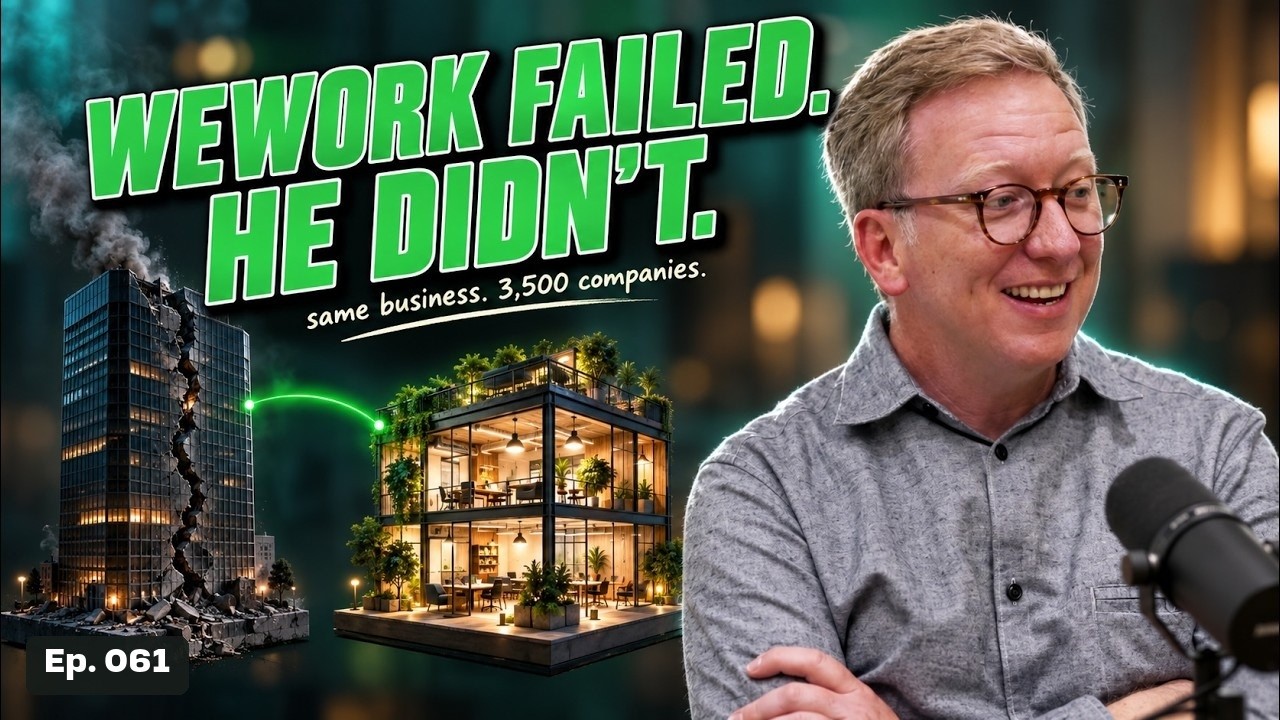
Bryan Christiansen shares how he bootstrapped Limble CMMS from a self-taught side project to millions in ARR, landing Goldman Sachs as the lead investor in a $58M Series B at a $450M valuation.
About Bryan Christiansen
Bryan Christiansen is the Founder and CEO of Limble CMMS, a maintenance management software platform he bootstrapped from scratch as a self-taught full-stack developer. Limble raised a $58M Series B led by Goldman Sachs at a $450M valuation. The platform serves thousands of customers across industries, helping maintenance teams reduce downtime and cut costs.
Connect with Bryan →
Key Takeaways
- Limble CMMS raised a $58M Series B led by Goldman Sachs at a $450M valuation after years of bootstrapped growth.
- Christiansen taught himself full-stack development and built the first version of Limble himself — proving technical founders can bootstrap to scale.
- Customer obsession drove Limble's growth — the product was built directly from maintenance professionals' feedback and pain points.
- Bootstrapping before raising allows founders to prove unit economics and retain more equity when they do take institutional capital.
- The CMMS market is massive and underserved by modern software, creating opportunity for mobile-first, user-friendly platforms.
Notable Quotes
"I've raised over 400 million in venture in my career. But if I could choose, I'd take 100% of a bootstrapped $10 million company."
— Bryan Christiansen
Frequently Asked Questions
What is Limble CMMS?
Limble CMMS is a cloud-based maintenance management software platform founded by Bryan Christiansen. It helps maintenance teams organize work orders, manage assets, track inventory, and reduce downtime. The company raised $58M from Goldman Sachs at a $450M valuation.
How did Bryan Christiansen start Limble?
Christiansen was a self-taught full-stack developer who built Limble's first version himself. He bootstrapped the company for several years before raising institutional capital, growing through customer obsession and product-led growth.
Who invested in Limble CMMS?
Goldman Sachs led Limble's $58M Series B round, which valued the company at $450M. The investment validated the opportunity in modern, mobile-first maintenance management software.
Full Transcript
Show full transcript
they said that AI is the Oasis in the Venture desert it's kind of propping up the VC Market 2022 was bad 20123 was awful and 2024 was even worse than 2023 all the way up to the election even going from second quarter 2024 to third quarter 2024 Venture was in a free fall except for AI I just find it interesting though that the actual dollars going into AI superseded the non aai startup dollars like that blows my mind that really this Venture Market is literally supported by AI right now the majority of deployment is in AI here we go another episode of the startup ignition podcast I'm Tyler Richards this is John Richards we're your host and we're excited to dive in today it's actually just going to be us two today we have no guests today and we thought we could go over a little bit more of strategic principles and market research things uh we love having guests and hearing their stories and understanding where they come from how they started their startup their whole path in entrepreneurship but also I think it's great to kind of dive into and talk talk about just normal entrepreneurial uh principles and strategies and and discussion between my dad and I and I think we bring a unique perspective in not only being entrepreneurs ourselves and having operated and built successful companies but also just being in the Venture Market being in the mentoring and Advising Market we're just all around startup guys so we just could probably talk about startups for hours and hours so we're just going to dive in we're I I actually did another ice breaker and actually people I had a ton of comments about my mic issues so hopefully I'm not swallowing my mic here but I I'm going to try to keep my face close to my mic this episode because we don't have a guest and I don't have to go left and right and all over the place here so hopefully my mic for those who were comment commenting and and telling me hey Tyler make sure you and John get your your mics close to your face so that the audio is good because I think those that listen just on AIO listening to mine I think mine's pretty good yeah mine's been pretty crappy um but I think U those who listen just to a like audio is super important so but here we go we are going to do an ice breaker like always we're going to keep it short though because we don't have a ton of time today and when we get into conversation time flies by uh um but we're going to do a startup hot take Icebreaker and here's how it's going to work you're either going to agree or disagree disagree with these hot takes okay and they're meant to be uh controversial so we we just want to establish do we agree or disagree so I'm going to present a bold startup related hot take and I'll and you just say agree or disagree and then briefly explain why okay okay here we go hot take number one the surge in Solo Founders signifies a healthier startup ecosystem disagree disagree why uh well I like to focus on scalable startups versus lifestyle or small businesses uh solo founder don't work in scalable Ventures long term during the search phase when you're trying to find your business model you can be a solo founder but when you step on the accelerator and try to scale a scalable Venture you cannot do it as a solo founder that's pretty much a cardinal rule in the Venture ecosystem has been for decades and it's just there's too much to do too much complimentary skill set needed and you need a team you need a two or three or four co-founders in in my opinion yeah I I mean I agree and we like we talked about with the guests on our podcast just recently Devin um specifically you know he said him and his co-founder Justin almost disagreed on every aspect of the business for the first few years and he said that brought so much perspective and different scenarios and different thinking to the table which actually Diversified like the outcomes that if he was just operating solo it would be it would have been completely different and scientifically all of the re research shows diverse founding teams outperform homogeneous teams all other things being equal there there's a report called the startup Genome Project and I'm pretty sure every year the startup Genome Project goes over this it's a yearly report that does studies and takes a massive PLL and Survey in the startup ecosystem and they've found that founding teams per outperform solo Founders almost every time but the in said founding teams you mean uh diverse teams yeah diverse and multiple Founders on founding teams not founding solur for if you take all the top accelerators in the country one of their number one rules on application is no solo no Lone Wolf Founders is what they say no solo Founders well just just just just for context behind that hot take though recent analysis shows that the number of solo Founders has more than doubled over the past decade so we're going back from 2015 to 20125 and now they account solo Founders account for 35% of the ENT chall I'll challenge that on this score um I think that during the search phase when you're searching for your business model that can happen so is that being counted then also there could be a front man who's so pervasive that you don't notice the people in the background like for instance it could be a quasi co-founder We Don't Call Him A co-founder but they're a quasi co-founder fulfilling that role yeah yeah okay that's one hot take I do have six of them that's an important hot take though yeah it is but they're all pretty good here too yeah um so here we go uh not every startup needs to integrate AI forcing it can lead to product misalignment oh yeah actually I I agree with that yes yeah and that's going to come up later in today's podcast when you go over what you're going to go over but um yeah 100% you don't force anything just to hit a trend or to use a buzzword to track capital or investors that's we but how much have we seen that seen this take can be taken both ways sure integrating AI into their product but what what about integrating AI into their everyday workflows I actually disagree with that if we're talking about every AI should be implementing AI in their strategies but I think this hot take is kind of product focused I think well I think it's just on no just I'm going to S AI to attract capital and make investors more interested because ai's been so hot and I think we're going to talk about that in a little bit but the point is is that it's very annoying to the investment Community to have uh a entrepreneur pitch that they're an AI company when they're really a faux AI company F just slapping AI on your url or your name doesn't make you AI but at the same time I do think I I I will take the posing side of this I do think every startup should be implementing AI in their in their product that's a given well I guess in their products as well too because like I I feel like there's a lot of ways that any SAS company or software company if you are or even just a services-based company there's got to be AI you know customer service reps or agents or AI workflows that work within your SAS or even any kind of thing I do think that they should be embracing AI okay I'm going to be the old guy here and go back in time and set a precedent and show you a pattern for instance at the dawn of the internet era there was a rush to start organizations and things at universities called e business centers or E business as we call meaning electronic business okay because for instance like you know I was in the El page industry before the internet how you looked up people and businesses was a book published once a year for each Community right okay the internet changed everything and so they started making EB business centers and EB business initiatives they called it and all sorts of things like that but it became really silly by about 2002 2003 remember the internet hit about 1996 in the mainstream so you're saying from like 95 to 2005 that was a big deal oh we're going to make this and that but then what happened is about 2002 is everybody started realizing wait a minute every business has to be every business is going to be have e business in it it's stupid and that's exactly what AI is going to be there is not going to be a single business a person in business or any initiative that doesn't use AI in their business to deliver products and servic saying x comp. a is not going to be a thing in the next 10 years because it's like duh we're using yeah Ford Motor Company caterpillar bulldozer company are all going to be AI companies if you describe it the way they're trying to do today because they are heavily using AI in their businesses yeah yep okay all right on to the next one work working for a pre-product market fit startup is often a misguided career move working for a pre-product market fit a prep pmf startup is often a misguided career move the word often is change in the meaning there um it can be a misguided career move but I think it's a great career move if I had a son like you or anybody that I was mentoring and they were coming out of college whatever that's a perfect time to join a preed pre-product company well I actually had this yesterday um I had someone come to me for career advice yesterday and I I told him yeah just come over to my house and he was like I and you need to figure out what I'm doing I mean he's younger but not too young he's like into a career but he's like not satisfied Andor there's no growth and he's like hey do you think I should be doing education or content or UPS Skilling or or learning new things to get into a career that I'm happy with I'm like yes and no because you can go and learn more skills and upskill and become better at what you're doing or honestly you could start a startup or you could take the risk of being an entrepreneur and your side hustle or that time that you'd be educating yourself or learning new things go and put that towards making Revenue producing a product move making moves to a a product marking fit validating a business model and start your own company and if it takes off make that your full-time gig right that's what I'm saying you're my son but I meet with a lot of entrepreneurs that are young and I say if you were my son here's what I would tell you and I say first of all when you go work for the man you are renting your time the most valuable commodity you have to another entrepreneur who's going to take your time and make five 10 times what he's paying you in terms of revenue for himself from leveraging your time the question is do you want to cut out the middleman and be an entrepreneur and a Founder yourself and now so how should you get into the entrepreneurial game one of the smartest ways to get in the entrepreneural game is decide how much risk tolerance you have some people have more some people have less wherever your risk tolerance is will determine at what stage of a company you can join if you have really high risk tolerance then go earlier yeah just go be a co-founder oh yeah do your own yeah or you know if you can't find an idea to jump on or other co-founders then get on one where the there's two or three really sharp co-founders but they're at the earliest stage for instance let me tell you the story this is just a fun Story one guy that I knew answered a question on quora and the person loved the answer so much they invited him out to Silicon Valley and he thought who is this it was three guys starting a new company and he flies out from Utah out there he had to pay for his own flight because these guys said your answer was so good we want to talk to you about our startup he goes out there goes to a dingi apartment building knocks on the door where he was told to go and there's three guys with two desks in a bean bag and for the next six hours they talk about a startup and he wasn't the co-founder he just joined as like employee number four or five well he ended up joining them and he joined that company and that was Pinterest yeah and so from Utah the guy goes out and he gets a over a 1% stock option package to join yeah and in Pinterest so pretty good move career move would you say yeah so like pre product Market fit companies can pan out a lot of times yeah it is the risk tolerance that you have as a career minded individual or as an entrepreneur like where do you fit on that spectrum of when you should be joining or not that is a loaded hot tape so let's take a average person let's say a per person with average tolerance or risk tolerance I tell them go find a company two or three sharp co-founders and you can see they've figured some business model things out they're ready to develop their product and go tell them you'll clean their toilet you join their company just give you some stock options and if you got that risk tolerance give us me a little bit of pay you just work out that the best combination and what you're aiming for is to join the company right before the hockey stick curve starts going up that's a perfect time to join and and a lot of people in this world won't join a company they want to wait till that company's funded can pay a market rate salary they're going to hardly get any stock options when you do that if you can go a little earlier and get a piece of the rock get equity and start getting an entrepreneural game you're going to be a lot happier and sure if you take it the whole way that's a great learning experience but it's also just about learning too I remember when I was early on in my career uh I joined a start up very early on as like the number one employee because I wanted to learn from that CEO he was one of the best fundraisers I had ever met M and he was bu building a very complex product that I thought had a ton of legs and that I think could go to the distance and I remember being around him and taking on a lot of his responsibilities as a CEO he shered that work over to me honestly but at the same time I learned a ton there and then my next thing I went and started my own company and I was able to take a lot of the learnings that I took from that experience into my own startup yeah I think that gave you the confidence to say hey I think I can be the founder yeah it did it gave me the confidence to say man like I'm basically doing a lot of the founding work here that this guy is giving to me and and and giving me that responsibility I feel like I can take this package do my own thing yeah one last story your brother-in-law who's a good friend of yours yeah okay he had a job at a very prominent company here in Utah he gets the opportunity because we hear of an opening at a company that we were close to that they had the need for one of their first hires and he had to take a 50% pay cut no benefits and he goes over there but gets a percentage of equity options and he was debating whether to do and I said um to my son-in-law I will tell you this is one of the hottest startup teams I think it's going to be an incredible outcome and that Equity that you're getting those options will be way more than you could ever earn during that same period plus you'll probably in a couple years be not only up to your old salary but more with benefits and you're going to be so much better off and you have seen that all turned out yeah it all panned out and I remember that his father was pretty against it so he came to you for advice again this is my brother-in-law so you are his father-in-law and you were saying yes yes yes do it do it his father said don't leave the secure job and I said do it take the risk like Senator Palpatine from Star Wars do it do it he's the devil uh okay so yeah working for a pre-product you know pre pmf startup is often a misguided move I disagree so I think it is disagree with that it's probably one of the best wealth generating things you can do as an individual is I don't I don't like taking the weak sauce argument well that failure was a good education that's not what we're saying here we're just saying that if you learn the entrepreneurial tactics and strategies and you keep at it great things can happen to just and you don't have to be some incredible charismatic entrepreneur great things will happen y yep so um that was a great Icebreaker is that all of them okay more there is more okay we want to get into our main topic yeah just because I do feel like this is going to be a pretty rich discussion because there's a lot of information we want to go over today so what we wanted to take to today's episode of the podcast was around some of these market reports that have been released over the last um month or so uh there's two kind of really great reports we look forward to on honestly a quarterly basis but also the the yearly review are are really awesome reports um and one comes from um Silicon Valley Bank svb for those who don't or are not aware Silicon Valley Bank is a very popular startup banking Bank um and they do a lot of market research and have access to a lot of Market uh information and data because of all the startups that bank with them but they just released a a report that's called the um 2024 uh what was it called oh my gosh the state of the markets 2025 so it's actually so it is actually going over 20124 D data but it's forward looking into 2025 from the data of 2024 let's pause for one second because I feel obligated to do this just because I'm a fan and I just want to say to the our viewers and listeners I shout out to Silicon Valley Bank uh we Bank our fund with Silicon Valley Bank and we've stuck with them uh some of you may be aware that a couple years ago uh there was a banking crisis Silicon Valley Bank was the cause of it for some of the risks they took as a bank and they got some bad press and deservedly so and the bank has new owners and was taken over by another bank and all that but we stuck with them through it um uh we were a little nervous but we stuck through them with it and Silicon Valley Bank um and I banked with them a decade ago with my accelerator boom startup as well and they've always been great they understand the Venture World their systems are set up to work with the Venture World both with startup companies and Venture funds and everything in between so uh this report is fantastic Silicon Valley Bank is somebody you should take seriously and look at and that's I just want to make a shout out to them because they've been great friends uh in my career and we think uh even I since that crisis that happened now they're probably one of the safest insti I think they're probably super safe from that but also they haven't missed a step with servicing us yeah yeah they've been great um so yeah so let's look into this report um again it's called the Silicon Valley Bank State of the markets um 2025 report and it's a deep dive into the Innovation economy and where things stand for startups investors exits Acquisitions VC and so I just wanted to pull up that report because I just find it really interesting and and maybe we can just go through and look at some of the trends and some of the information that we find interesting yeah I I've read it and I have a few things I've pulled out that I think are super okay so before maybe we pull it up and go through it maybe we I have a few things here too that I thought were notable and you have a few things too so maybe we just open up a discussion and if you want me to start or you can start either way you go for it um so one of the biggest things I saw within that report was the um the funding side of it which was reporting a lot on AI and how AI has actually taken over VC Investments yeah um that 48% of venture investment in 2024 went to AI powered companies yeah and I feel like and there's a graph here that maybe I'll I'll um have Jordan put up here um from Silicon Valley's report and the graph shows that the trajectory of um you know VC dollars in 2024 mapped to AI Investments versus the trajectory of dollars of VC spent in non- aai companies and it's drastically different and like it's very much so on the AI side the trend line is up and to the right I think Silicon Valley Bank they use this language they said that AI is the Oasis in the Venture desert yes and so that's how 24 well it's kind of proing up the VC market right now well let's let's kind of describe what's going on here um the macroeconomy the general cycles of the macroeconomy um from the peak in December 2021 went into a straight freef fall all the way through election day 2024 in our opinion so in other words it was 2022 was bad 2023 was awful and 2024 was even worse than 2023 all the way up to the election I mean even going from second quarter 2024 to third quarter 2024 The Venture was in a free fall except for AI yeah and and that's because people didn't know how to react to the geopolitical etc etc macro I just find it interesting though that the that the actual dollars going into AI um suped the non startup dollars you mean the non AI dollars yeah sorry not the non- startup the non AI startup dollars like that blows my mind that really this Venture Market is literally supported by AI right now there is only deployment the majority of deployment is in AI but this report is saying that there are signs of us having bottom out and going up and I we concur with that as startup ignition that literally election day 2024 was probably the bottom of the massive cycle yeah okay and since then it's gone up I don't know there's a lot of turbulence right now in the market and a lot of economy stuff if you even look this morning the people are going to know when we film this but this morning uh two great things happened um and uh that are very interesting with the Russia Ukraine thing we'll see how it turns out what the ceasefire yeah and just that they're having I don't think Russia has yeah Russia has but the point is is that whatever you want to say a lot of things are being fixed there's you cannot fix everything that's being fixed without the pain so we're going to go through some pain but generally the macro uh thing is is it it's GNA we get things going I I'm am a optimistic believer in that or headed up into a next cycle but we'll see but let's just talk about a question from the AI aspect that I'd like to cover which is from from the Silicon Valley Bank report yeah yeah like well the question would be how do Noni compan and again every compan is going to use AI to be more efficient okay but how do non aai companies get attention from the ventry ecosystem if they're not a pure true AI company yeah and I think that's important so well this this reporting is is is pretty bad it's kind of Bleak for the non- aai startup EX for so how but right now in just the last few weeks couple months I'm bullish on that I think a company so you it's basically turning to True Values like you demonstrate a clear tangible path to profitability you run Frugal and don't waste Capital you know you integrate AI wherever it makes sense in your company but the old factors like strong unit economics a loyal customer base defensible Market position all of these things if you have those kind of things going on and they're trending upward in your company you're going to get attention if you know your CAC your customer acquisition cost and your lifetime value and those ratios are good this is all going to be attractive and you're going to be able to get attention and you're going to be able to get Capital the thing is though you can't just live on hype that people lived on in the latter part of 2021 to raise Capital that's going to be a long time before that comes back and and mind you some of this data is also kind of skewed so don't get super scared if you're not an AI specific tool or software startup because some of the biggest deals also this report says that were done in 2024 were AI companies and that just really like affects and and pulls those bigger deals into that AI category and therefore it just makes it unbalances the ACT what the actual Market is doing right so if there's like a100 billion AI deal going on okay that's going to overway into the favor of AI on the total trend 2 How any company gets attention is they solve customer problems yeah so if you have identified a massive problem and you're solving it you're going to get attention as long as these other things I previously mentioned are coming to fruition where you're trending upwards in the progress of a venture so ju but don't think you need to put some kind of false AI label on your company to get attention go do real business and solve customer problems but obviously you use AI to make better products and services and be more efficient yeah back to that hot take that we were talking about right exactly yeah okay um okay another point that I found in the report that was pretty interesting was that um the the actual VC firms there's a huge concentration of the dollars in the VC market and I think it said right here it says the top firms raise one in 5 VC so top 10 firms MH that that are Venture Capital firms the the lp dollars or the dollars going into all funds they've raised one F of all dollars this is back to the bifurcation of the Venture industry yeah there's two like if you know two a fork in the road one way to do Venture is get massive capital and try to grow big and fast okay and do that and that takes a lot of capital and that's swinging for Grand Slams that's what the top VCS do and they raise a lot of capital from limited partners and they deploy it into uh pedigreed founders with massive capital and that's one way to go obviously the vast bulk and majority of entrepreneurs don't fall into qualifying categories to get at that Capital right okay but so what do we do you and I I focus on the other fork in the road the other fork in the road is in secondary tertiary Tech markets let's say Silicon Valley is the only primary Tech Market in secondary and tertiary Tech markets like Utah or Austin or Seattle or New York or wherever okay Raleigh Durham all these different places where there's still strong Tech activity or Venture activity you can have a set of Founders follow Lean Startup principles nail a business model solve customer problems in a vertical Niche create a great company not give away the company to massive Venture Capital yeah build a company get to 10 million Revenue sell for $100 million and everybody becomes wealthy and some big company buys them adds them to their stable of Acquisitions and that outcome is a that's what you and I work in and that's how we work it's just two different ways to approach entrepreneurship startups and venture capital and so yes we subscribe to the latter and so let me say one thing that's very dangerous and I'll say this to the viewers and listeners it's very dangerous for you being a secondary or tertiary market and you read why combinator blogs or you read about what's happening in Silicon Valley and you think that's how you no knock on YC but no knock on YC I love YC I mean but I'm just saying primary markets are a different Market yeah yeah let's say I'm sitting in a secondary tertiary or even lower Market because you can do a business from anywhere mhm but and you're reading what's happening in Silicon Valley and think that's your path that's not necessarily the path you're going to ever be able to take but in your local market there's going to be investors that'll fund you and help you build a company following Lean Startup methodologies and you're going to arrive at a winning business model and you're going to start having great things happen it's going to take years it's not going to happen in six months um and you're going to build a lifechanging experience that'll for the stakeholders change the lives financially bringing incredible products and services to the market changing the lives of their customers and we've that's what we do we've done that now for you've been doing it for a decade I've done it for three decades and it's fun to be a part of yeah yeah another part of that just I don't want to bring a ton of attention to this but another part of that report was around the impact that of accelerators the report also goes over accelerators and the impact that they have in those secondary and or even lower you know startup ecosystems like so not Silicon Valley not New York but like Oklahoma or you know it says accelerators have a big impact in those small hubs whereas the accelerators don't have as much impact on the bigger and primary markets right so it's like it's it's also because I think they might be subscribed to those different ways of building true real business right so I I thought that was unique I also thought a cool thing speaking of YC real quick before we move on to another Topic in the report was that the majority of um success and the VC dollars raised post accelerator comes from the top three accelerators which we've preached this for the last 15 years 10 years that if you are going to join an accelerator and for those who are listening or watching and don't maybe know that terminology an cator is a cohort of companies that a firm or that a group takes in every so often to accelerate the building bu us gives them a little bit of capital yeah and a place to work yep and mentorship yep and mentorship to accelerate the process of building business and that's why they're called accelerators right little history I was going to say you have a good perspective on this so why combinator and techstars first two major ones have remained major well the three that are listed here that resulted in the best outcomes are Y combinator plug-and playay and Tech Stars yes and so so uh I go back and so I started one here in Utah called boom startup um at the you know this is 15 plus years ago and uh and it was patterned after Tech Stars Tech Stars bradf and David Cen were super nice to me gave me their playbook and I started one here along uh with others called boom startup and uh and it was always ranked in the the top 15 in the country but even saying all that after the top two or three yeah the quality and the outcomes Dro dramatically I remember being involved in Boon startup and constantly losing applicants to YC or to Tech Stars it was like they were debating between boom startup and Tech Stars it's like we're going to Tech Stars it's like we can't fault you for that yeah exactly but the whole point being that uh it's just the way it is so as an entrepreneur our tip to you would be here's my tip contact the latest cohort of any accelerator and talk to the CEOs that were in those cohorts and ask them would they do it again that's a great thing to do no matter what you're looking at but um accelerators can be very helpful but you also got to be careful with them you got to be careful how much Equity they're taking you got to be careful on uh uh anti uh dilution Clauses and different things like that so again love accelerators but also you got to be very careful with them as an entrepreneur it's turning out a lot of times now that an entrepreneur turning down a lower tier accelerator would probably be the smarter move if they can't get into a top accelerator right and the only reason I brought that up is because you brought up those secondary markets or those kind of non-primary markets and I I the report actually went over that with the help of in regards to accelerator steer on before before we leave to the next one you want to steer on there's one so related to it and I wanted to quote silicon value bank's report saying that efficiency is the new growth in other words the trend is in this report saying and I completely agree with it it used to be growth at any cost like let's get massive Capital Growth growth growth and force true scaling by forcing growth okay but now it's no and this is very consistent with Lean Startup now it's much more popular and acceptable to say I'm going to be an effici startup who is going to organically have growth happen and scaling happen because I'm building great products and services that customers want right right and and the report goes over that that the bar is actually higher now a lot of this report from Silicon Valley Bank honestly goes with a little bit more mature funding rounds there's not a lot of preed data here there's not a lot of Angel Investing data here if any at all and so a lot of this is around like more mature Venture funds funding Series so let's ask a question regarding what we just said I like a question like this would be what are the signals or symptoms that a startup should look for to know when it's the time to press on the accelerator let's and and I want to answer that if I can because that's a very important question for our viewers and listeners so when do we go from being this Frugal efficient startup and saying now we're going to take some risk and we're going to press on the accelery and pour on some gas that's a huge question and it's actually when you start knowing certain key performance indicators such as your LTV to CAC ratio your lifetime value to your customer acquisition cost knowing that's very important to know when you press on the accelerator because you need to know for every dollar I invest in acquiring customers how much am I going to reap back out and that takes a little bit of experience for instance you're going to just know some signals of that where you've got a growing pipeline like you've got people that want your product and your pipeline is starting to grow your ability to uh attract and interact and and transact with customers is going up into the upper right on a chart these are the signals you're looking for you this is so key you do not force scaling and growth by spending money and thinking that that is true growth actually you want to have growth and scaling occur because you have a growing pipeline of people that are demanding and wanting your products and services yeah does that make sense yeah no this brings up also another relatable uh strategy which is the W prom score that we know the article that was written by David benetti yeah um and he goes over when should Capital be raised or when should you step on that gas it's when your word of mouth marketing the wom or um vers the word of mouth Marketing in Ratio or relation to your promotional marketing is at least 50% 40 is the number I think 40% but 50% is even probably even a better goal to have is where and what that means is your promotional marketing or the stuff you're paying for is you know your advertising money and then the the the channel coming in the word of mouth marketing that all customers or sales or all activity coming in is 5050 or 40 here's the academics and math behind that if you are for instance having your customers 95% coming from buying them through promotional marketing and only 5% are coming from Word of Mouth which is customers telling other customers or Target customers that this is great if you're 955 on that ratio you are only by spending more money and step on the accelerator you're going to make a crappy growth curve happen faster you have not got the hockey stick growth curve you are and you're going to need Bottomless Pits of money what you need to do is continue refining your business model and your product to where you get to around 40% coming from word of mouth and consistantly that and it's about 60% so that means that you're getting a lot of new customers for free from those that you had to pay to acquire right and the ratio of 6040 according to this math is really ideal so that you can then know when it's time to press on accelerator but wherever works for your Niche or your company the idea is this if you're buying all your customers through promotional marketing and your product is not getting Word of Mouth acquisition you got a problem you need to fix right yeah so yeah important to know do not step on the gas when you have that 90 or 95% promotional marketing you're just literally spending spending spending and it's going to be expensive so okay love all those tips yeah one more thing and because again this Silicon Valley Bank report is so rich dat and it's but to my point it's it's really focused around the series a round and and later rounds it's not really seed even or even preed um which is what we are in every day and that's what our Venture fund focused on is the preed Venture fund but it says that the bar in relation to what you're saying the bar is getting higher for for the series a funding rounds which means like the median series a company now has 2.5 million in annual revenue 75% higher than that of 2021 so and we can just see that because of the shift in the VC dollars right and the shift in the let's share with the audience what we see though so what's funny is there is a lot of series a type fundings that do happen and I sometimes wonder what these investors are doing for companies nowhere near those metrics yeah nowhere but they're saying that is the median though yeah for 2024 yeah but but what we see is when you raise too much money at too high of a valuation and you have to grow into that valuation that's very dangerous for an entrepreneur you can ruin your reputation as an underperforming entrepreneur if you have to grow into your valuation you are constantly battling and fighting against a lot of different things and we've seen that how many companies have we seen in the last 18 months Tyler that we passed on yeah they got a huge round at a high valuation and nine months after getting their money they completely pivot to a new business model yeah yeah I mean that's is that where you want to be as an entrepreneur if that's where you want to be all you're going to do is have squandered a lot of capital and burned a lot of people right I don't want to be a part of that speaking of valuations there's more data in this report about valuations Jordan throw this up on the screen too it's um valuation growth has slowed right duh right of course right it's now taking the typical series a company more than two years to increase its valuation as much as companies in 2021 did in a single year so valuation growth has also slowed down and all all this goes back to VCS had been tight and they are like we need to see more traditional growth metrics and real traction before we go and slap a high valuation or throw a ton of money into something and and it's healthy right I mean um and uh you know being the OG as some of you call me or the old guy which I know that means something else but I'll say old guy um that uh and not Original Gangster but uh these are uh principles that you know are music to my ears yeah so and just saying the data is it's all in the data too so it's not just our beliefs or what we build we or what we think is right true business building it's literally the trend is moving this way because the pendulum swung so far the other way in 2020 2021 but we've we've we don't need to beat a dead horse we've said this a hundred times so but yeah anything else that you found interesting from the Silicon Valley Bank analysis yeah there's a number of things one more thing let's do one more thing on it only one more thing okay hold on then I got to choose CU there's so so much good in there okay we can do two more yeah um I did want to get to the pitchbook report though we so let's do this then let let me do these two things then um exit opportunities are on the horizon that's what this report said Okay I want to comment on that I well what it did say was that in 202 uh 4 there was only seven IPOs they're predicting that there's going to be 10 or more this year so an upward Trend I I I didn't really catch what did it say specifically about exits though not just that that they're seeing them on the horizon and so what I want to explain and they focused on IPOs I want to explain to the startup entrepreneur out there the preed and seed companies why are IPOs so important to you and to the Venture ecosystem this is really important to understand so the question is why would IPOs even matter to me if I were you know preed seed or even series a by series a you start to understand why that is important but the bottom line is this a healthy IPO Market th out and becoming healthy creates liquidity and validates valuations across the entire Venture ecosystem right it's a trickle effect when IPOs are happening and the later stage private equity and VCS are getting liquidity it trickles back into the ecosystem to the earlier stage Ventures and it's saying okay now all of a sudden we can invest more in earlier stage because there's now a pathway to exit and liquidity this is super important what happened for the two and a half years um from early 2022 till late 2024 is that there were no IPOs relatively speaking so that created a dam yeah right here so this Dam that's created and all these later stage BC and d and e companies are piling up at the dam it's a dam and they're piling up here and then they're running out of capital and they're not yet profitable because fast growing SAS and other type companies consume cash um they're very profitable but they're constantly growing and all a sudden start things started slowing down and then that just created a log gem all the way down the least affected were the preed companies which you and I play in preed was not that affected because it's not as damaged by that IPO because it's so far away it still gets impacted but it's not as damaged and so I just want the listeners and viewers here to understand that a healthy IPO Market is very important to you two founder sitting in your garage starting a startup right okay because that is telling the Venture ecosystem how much they can invest in you and at what valuation right okay on page eight of the report Jordan up there so the viewers can see it we can see that that actually in 2024 that seven that were ipoed actually was a Miss by a lot it was 15 were predicted and only seven happened so this year they're predicting 10 which I think they've adjusted because they're like oh man people we still don't know if these companies are actually going to go through with these IPOs but again every IPO that happened just is such good news for your average day entrepreneur but I just want to put a footnote to this entire discussion though a startup or pre Venture now's a great time because everything works in cycles and right now you can follow Lean Startup principles find a great business model start doing all these things we've talked about building value and Poise yourself ready for the coming boom that's how we view things yeah yeah and one more thing uh do you have anything more from this report or do you want to move on um I just I'll just say the one last thing that's consistent because we're such big Believers in Lean Startup and they said adaptability is your superow power so how you know being adaptable as an entrepreneur is a superpower in this environment and Lean Startup is completely the embodiment of adaptability yeah so Lean Startup is very important to follow so you can have that superpower that's what I'm saying and also John pastana who was a guest on our earlier episodes of the podcast go check it out if you haven't watched it he's a great guy but I thought it was a great episode great great episode thank you JP for coming on um founder of omniture sold to Adobe for 1.8 billion one of the things he always says is when I'm hearing him lecture or speak or address entrepreneurs he always says part of the game of Entrepreneurship is just lasting staying in the game Staying Alive don't die I say that all the time I think 50% of success is staying in the game so adaptability right weathering these markets weathering this current environment weathering this ecosystem and wherever it's going up down left right you have to adapt and pivot and change and find the true business right so yeah the iterative process of Lean Startup you know building an MVP experimenting and refining is completely consistent with having this as Silicon Valley Bank calls it this superpower right right right okay um let's move on so another report that came through um at the turn of the Year this Silicon Valley report the state of the markets for 2025 came out about a month ago um and I just we just found it so interesting but another one that came through was actually um from pitchbook and pitchbook also had uh another um shout out to pitchbook pitchbooks also has great great dat cont great content yep yep they do and the um pitchbook report um is the 2024 annual us VC valuations report so is historical looking looking at all all the data from 2024 and again for those who don't know pitchbook they are um a resource in the VC industry and startup ecosystem where they're compiling a lot of funding happenings and data and information for example if you're a startup company they might contact you to get your updates and if you're a venture capital firm you'll contact you to get updates and so they try to keep tracking the Venture ecosystem in its entirety and they and they and they are an aggregator of all that data and it's I think it is pay but some of it's you know open and open to to the public but a lot of the actual data is is behind a subscription but well worth it especially if you just want to keep pulse on the VC market and what's going on and the fundings that are happening especially in your local area or your industry your vertical it's really cool data um but they came out with this report so was a 2024 report of the US VC um report and a few things that I want to talk about that it's also confirmed in this report that the AI boom still exists right they they so they are aligned with svb saying that AI accounted for 46.4% of total deal value in 20124 so that was almost the exact same numbers from s Silicon Valley Bank's report um and then they also said that um the early and late stage Trends are the valuations are slowing down it's harder to get those valuations They remain relatively stable but they just are they're seeing less companies progress stage to Stage to Stage can I comment on that I just want to say to again the viewers and listeners this is super important to understand the cycles of business and the cycles of the macroeconomy and also understanding the public stock market people are nervous about it right now you got to remember it's at all-time massive highs right I mean it is probably super overvalued that's an argument we can discuss but there's going to be corrective periods and it's massive uh High compared to anything historically same for the Venture like in 2021 the latter half of 2021 was the I'm very old in this industry was the ziest time I've almost ever seen the dotom area was also zany but this was also zany in terms of the valuation you saw in late 2021 so really important to understand that there's going to be Corrections and up and down movements and that's part of business and part of our skill set as entrepreneurs needs to be taking advantage of the cycles and knowing where things are at so don't get overly nervous when things go up and down in cyclical movements because that's part of the game you just need to know when to start something when to exit something when to get into something and when to get out of something and that's now so what affects most of us listening on this podcast would be okay the Venture ecosystem the public stock market and the crypto markets are probably the three that you're going to see go up and down affected by the Federate yeah and then and it comes back down to what the Federal Reserve of the United States is doing but again what we need to understand is over a 10 or 20 year period which is the Horizon you need to have as a person endeavoring to be an entrepreneurship or in investing the trend is going to be up Peter Lynch and quoting him some of you won't know who he is but he's one of the most famous Fidelity uh mutual fund managers of all time the most one of the most successful mutual fund managers he said I don't know where the markets are going to be a year from now but I know there has never been a 20-year period in the United States history where you did not make money from investing in businesses in the stock market right okay so and he says I could even short that to 10 years I'm pretty certain 10 years from now things are going to be higher and better on any investment I make yeah okay but next year I could be down a little okay that's the Horizon and the out look you need to have as an entrepreneur by the way a startup entrepreneur you're not in it for a quick flip in six months who cares what happens next 6 12 months if you're F if you start a company today you don't care what's happening in the macro economy the next year you're going to be frugal and you're going to go find an incredible problem and solve it and you're going to be frugal and lean and you're going to start getting customers because you're going to have identified a hair on fire use case and you're going to solve that problem and you're going to start building a company and the cycle is going to catch up to you and if you time it just right like all the companies we invested in in 2010 and 2012 that were in the depths of a recession those companies by the end of the decade were flourishing better than ever and we made a lot of money so what what you're saying is if I'm understanding you right is that the macroeconomy is important but it's not important on like a daily yearly monthly kind of view point let's just take the stock market Trump talking about tariffs the Ukraine Russia war with ceasefire no ceasefire tariffs on or tariffs offs fighting with Canada Mexico whatever is going on here is going to have daily fluctuation it's not going to impact the entrepreneurs Venture but to you the startup entrepreneur that doesn't matter what matters is that you go identify a problem and a customer who has that problem and it's big enough to start a company on and you go make a great product and you start getting customers and you know your metrics and you can go to investors and say I've now figured something out I need growth Capital you get the growth capital and you make a great company and then you get bought and your life has changed forever it does matter it doesn't matter on a daily weekly monthly maybe even yearly view but it does matter the entry point and the exit Point yes for instance that is completely the worst time in the last decade to start a business would have been the latter half of 2021 because you would have raised easy money which we saw many companies do mhm easy money at high valuations with no business model and then all of a sudden April of May of 2022 hits and the rugs pulled out from under you and you just burn all your capital and you shut down and have a total failure because you never got to a winning business model and that's bad timing okay great timing is in 2011 I start a company I go through the lean starter process pivot to winning business model take five years to get Revenue up into the millions and then all of a sudden I'm starting to cross the 10 million Revenue Mark by 2018 2019 and then all a sudden 2020 2021 happen and I sell my company for a boatload of money we saw that happen a lot too right right and so so enter low exit high you can look at any of these reports that we're talking about today and discussing on this podcast the Silicon Valley Bank the pitchbook report all of them are peaked in 2021 every single graph every single data point is peaked in 2021 so that's obviously sell High yeah you don't want to be entering into a peaked out market so just be aware of the Cycles um to all their viewers and listeners out there will just tell you we follow the cycles and know the time this is a great time to start a company right now a great time um and you just also just don't over raise don't give away too much of your company too early figure things out and get a great business model start getting customers it's not rocket science it's not that hard you can go do it we've seen all types all types of people do it and make incredible things happen I mean but here's the thing though I I understand your logic of hey for the early stage entrepreneur and um you know maybe those that are in the idea or model or traction phase of a startup we have this um business validation road map startup validation road map that you've created and maybe we'll have Jordan slap that up on the screen real quick here so those that are in the buckets of the earlier stages of a startup sure that I get I understand the logic of hey be heads down don't worry about what the macroeconomy is doing don't worry about all this tariff and news and federal rates and crypto markets or stock markets the fluctuations are the fluctuations because you can be adaptable to whatever happens but now the opposing side of that is if you are again on that valid fully Baked company a fully B big company or even just in the Builder scaling mode concrete starting to harden you do need to pay attention to those movements because you have to know okay is this a good exit time or am I in a trough well it's let's look at because you want to extract as much value as you can from what you're building let's tell them about the Utah ecosystem we're in Utah Utah has created more unicorns per capita than anywhere in the last decade that's my belief my understanding of the data so what happened that no that is true yeah so so per capita yeah cap though that's important because obviously New York and Silicon Valley have a lot of unicorns but let's let's look at what's what happened to companies companies that started in the 2010 to 2014 era let's say that which was coming out of the trough okay then there were companies that reached their Pinnacle in the 2018 to 2021 range and got an exit and fabulous wealth creation for all stakeholders and also just they got bought by a company that was bigger and could even take that to the next level but there's also companies that started in that time frame maybe a little later could be 2015 2016 and they did really well and things were looking good in 2020 2021 but they didn't get an exit in 2021 they've had some tough years yeah the last two and a half years are tough because people started reducing their spending um they there were no exits it was harder to raise money and if they were not yet profitable they had to really clean their house and fix things it's been a tough road and that's tough and that happened the question is if they survive till this next cycle up they're going to be fine but many didn't survive it and that's just the way it goes but that's why if you were to hear our startup ignition Ventures pitch and see it it's completely centralized in this concept of Cycles all asset classes are subject to the Cycles created by the Federal Reserve of the United States all asset classes including Venture so Venture needs to be aware of it and so you're saying a CEO of a more fully Baked company right needs to be aware of these things even more than the first year startup right yes let's say they're more mature company they do need to be aware um one more thing from the pitchbook the annual us valuations VC valuations report that they produce of the 24 data it was showing that it 2024 had the greatest percentages of down or flat rounds yes in over a decade yeah right which seems very duh but I think that's really important because even prior to the covid boom or the frothy times that all of the money being pumped into the system provided to entrepreneurs in the Venture Market even going as far back into 2014 yes this was the year that had the most down or flat rounds than any like I said 2022 was bad 2023 was awful 2024 was even worse yeah Jordan just slap up this graph as well this is on the pitch book reported I think it's on page seven um and you can see that yeah 2024 it was like we're not just guessing here we're not just saying this it was a it was one of the worst years that had we're investors in other funds and we've gone to their annual meetings we hold our own annual meeting for our fund but it we've seen these slides all over the place right and it's just that 2024 and flat rounds it was tough but you know what getting a flat round meaning the same valuation as the previous round was a win for these companies yeah because there were more down rounds Tyler since 2022 how sad has it been that you and I have had to sit and listen to and be around the companies that raised millions of dollars cannot raise anymore and their companies are just going straight down the tubes right and they've come to us a small precede fund wanting us to save them and that's not what we do and we have and and our advice to them is Stark and not all great you know that you know you're in a tough situation you need to correct the ship the right way yeah and and it's but the the the worst things we saw and so this is a lesson for life don't ever do this when you face these kind of situations do not keep your burn rate the same as it was in the end of 2021 and because we saw companies that had massive burn ratees rates in December of 2021 and they had enough Runway at that burn rate to last for about 18 months but what would have happened if they had cut their burn rate in half or even by 75% decrease and give themselves three or four years of Runway to survive this two and a half three years that we knew we were going into and they would have been just fine but we saw so many companies continue a massively uh High burn rate and run out of money in mid 2020 three and go under and that did not need to happen so entrepreneurs need to go get mentors go need to get help from old guys or others that have been around the block before and can tell you how to manage these situations I've lived through about four major Cycles in my career maybe five you this is your first M you you you haven't this is your first down cycle yeah you started in a trough yeah I started down ccle up to a peak and then you you and others like you were the first half 6 months in 2022 was a shock yeah and to all of you it was like literally dear and headlight My Generation yeah dear in headlights and for me I'm going no this is opportunity time okay opportunistic yeah so okay yeah both these reports I just thought we could go over pull out the things that we thought were interesting we highly recommend reading them as an entrepreneur you need to be understand where we're at what's going on I you can freely subscribe to Silicon Valley Bank and P books reports like this oh 100% I think they might your add dat for reports buty it's they great reports they Super Rich okay I want to close the episode by taking a few questions that we got asked from our last episode okay go um there were some really cool um comments on YouTube on on our community I haven't even read those yet and people that were asking hey what about this and so let's end with one of these questions then we'll wrap things up cuz I think we are getting close on time um but to wrap up the report section of of the podcast go read those go look at them go download them and go dissect them okay moving to our audience just one audience Q&A because I think we'll only have time for one um so here's one of them and I'm going to pick the best one or uh what what one I think would be the most relevant for our listeners what here's from this was from our community someone uh posted this within our startup Academy community what sectors outside of AI still have strong VC interest and I thought that was very relevant to the reports in the state of of of VC funding because again more dollars go into AI funding than they do anything else so what other sectors are still pulling your interests okay our interest okay so okay or all interest we don't have any data to go on I haven't seen any reports of that generally so we can just say what we're interested well we just went over the reports that it's heavily weighted on AI yeah yeah okay but excluding that heavily weighted AI skewing of data so let's set this up a little let's go back to what we said a few minutes ago the fork in the road we ascribe to not get massive Capital grow fast and big and shoot for the moon on completely Silicon Valley way we're a secondary tertiary Market type of investor saying let's get a great team together identify an incredible opportunity and go build a great company which also is less delution equity for those at the table we often say this you can create a billion plus company and end up with such a low percentage you make you know $25 million or you can do it the way we ascribe to build $100 million companies ended up with 25 million for yourself as a Founder right okay so anyway um based on all that and how we look at the world and where we're going we still and I'll answer first and you can answer what you think but we're still very bullish on companies that have really strong founder market fit so we love it when the founder really passionately to a healthy obsessive Point knows their vertical Market they want to be in and attack that's a really key one okay then they also on top of that have identified the biggest problem in that maybe hyper vertical so not just a small problem but the top one or two or three problems that their target client customer base in that vertical Market is wanting fixed so but you're I I know that we are SAS investors and the question was what whether that's solved by a SAS product or not it's still interesting you've got founder market fit there's some problem like let's we are looking right now let's not name the company yet but we're looking at one and just getting experience with one that's a completely tangible product very engineering related and he has identified a problem and an opportunity and can create a product to replace existing Solutions that's very high margin it's not software nope okay it's just a tangible physical product yep that's interesting to us and we look at founder market fit has he identified a big market and a problem and is there good margins in his CH because the tangal product we got to look at unit economics so I I understand does that make sense yes but I understand the general underlying principles like what makes a good investment or an attractive investment or attractive Venture sure big Market founder market fit but what sectors specifically would you list well there's a people publish this all time you can go to Entrepreneur magazine and go to others and look at the hottest new verticals to look at and what it's coming right so outside of AI you're still saying SAS is obviously there well I could say this SAS software or even a tangible product that has the elements we're looking for are we can't say because if somebody comes to us in a very un we don't even know anything about the vertical Market but they got founder market fit and they teach us that market and they show us incredible solution and they um they show us that incredible solution and it's got great margins and they're getting traction and it's validated all of that is going to be exciting to us so we can't say so it goes like this so your your answer is sector agnos sector industry company right so economy sector industry company is how you pedigree the economy okay so saying what industry or sectors interesting to us there are ones more interesting we don't really jump on bandwagons as much because what's really key is you can create incredible value in an old industry like for instance let's take SAS there are still massive numbers of vertical places where paper and pencil or old-fashioned software or Excel or Google Sheets is doing the workflows yeah so show me a SAS that replaces those workflows and I'm going to get excited right right right okay so I do think the answer to that question is don't focus on the sector focus on like building a really good solution to a really good problem with with a very big Market be a problem Hunter and find a problem devise a solution the more founder market fit and the high bigger the market is and the higher margins the Marci it's going to be CU we we've seen in I don't think we should go chase what's the latest hottest I'm not a trend Chaser I don't like I don't prescribe to the trend chasing but I do think that we can get excited about almost any sector if those attributes exist that's the answer we tend to not want to be involved in physical tangible products because of the ne necessity of a company spending 25 30% of its time and resources on Inventory management okay but if you showed me an yeah if you showed me an incredible tangible product yeah that had software like margin and was hair on fire use case for their customer I'm still interested yeah that's still an exciting yeah sector yeah yeah okay all right all right thank you so much yeah hopefully you like listening to us yeah hopefully that wasn't too much for you guys and a fire hose of inform we're trying to deliver meat not just fluff stuff we really want to bring and break down the industry really give good strategies and principles so I hope that's being communicated hopefully we're not just our own la la land thinking that we're doing something cool when we're not so let us know subscribe comment comment help us out guide tell us how to be better yeah be a part of the podcast and help us understand where we should take this thing what we should talk about and what we should do right I I think we're very open to that suggestions for guests yeah we got a lot of guests coming we're gonna have some great ones we've if you haven't seen a episode so far we got a quality guests and and we almost had to make ourselves not bring a guest on today because it was like you know we've done so many guest recently we do want to go over Market data and strategies and principles and not bring into other entrepreneurs stories into it it's great to hear from them but we also feel like we can provide some value to you guys so hopefully you're seeing that let's sign off yeah so we're going to close up this episode thank you for joining us again follow us listen to us share this thing and we love you guys thanks so much for listening and or watching and we are signing off startup ignition podcast thank you rock rock
Listen & Subscribe
New episodes drop weekly. Subscribe so you don't miss the next conversation.