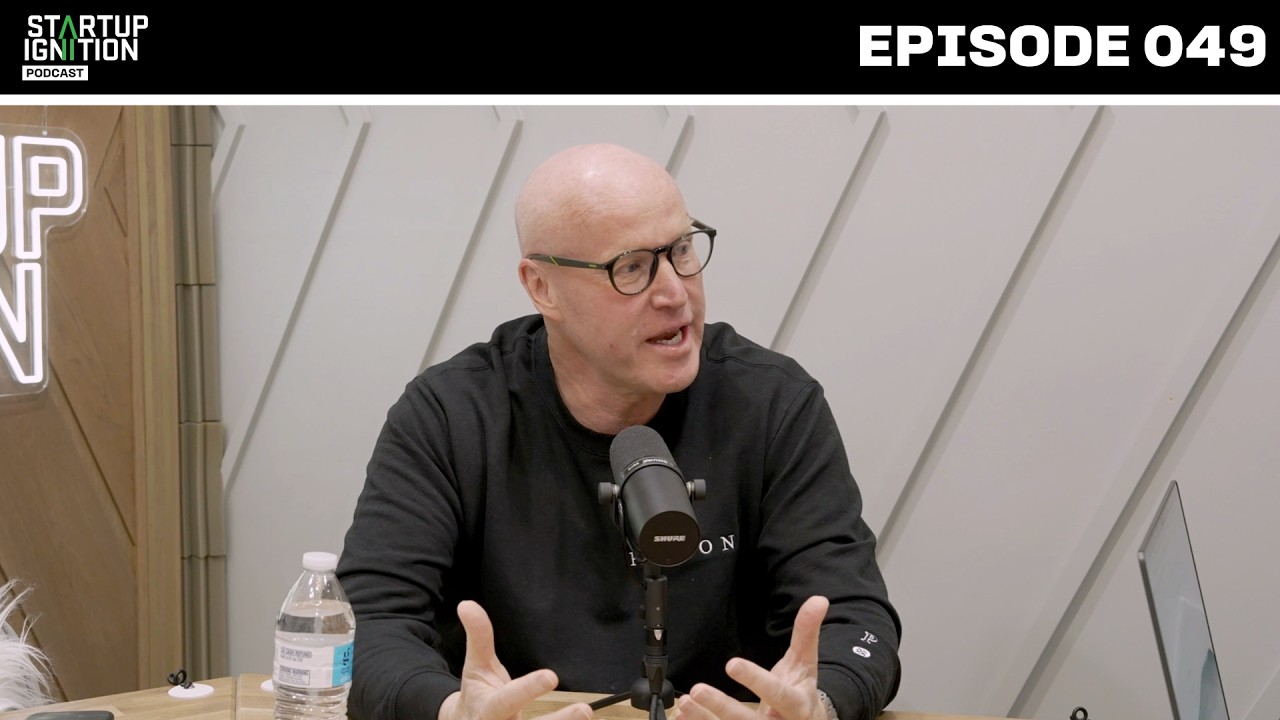
Blake Modersitzki shares war stories from two decades at Pelion Venture Partners, including early bets on Fusion-io, Riverbed, and Red Hat. He discusses venture returns, AI's impact on the startup landscape, and what separates the deals that return a fund from the ones that don't.
Blake Modersitzki is a Managing Partner at Pelion Venture Partners, which he joined in 2002 after 13 years as an executive at Novell and WordPerfect. He is the first early-stage VC inducted into the Silicon Slopes Hall of Fame. His portfolio includes infrastructure and enterprise software companies like Fusion-io, Riverbed Technology, and Red Hat Software that achieved IPOs or major exits.
Show full transcript
Blake Modersitzki, he is the managing partner of Pelion Venture Partners. I call him on the phone and I said, "Hey, I'm calling so you can say I told you so." And he starts laughing on the other end and and he he he said, "Blake, you one of the only people who just told me no straight up." And so then, roll forward, Domo rolls around. I get a phone call from Josh and he says, "Look, I'm not inviting any VCs into this round. Do you guys want to invest?" We were one of the original investors in Domo. >> [music] [music] [music] >> All right, welcome back to the Startup Ignition Podcast. Thank you so much for watching every episode. This is episode 49. So, we've done 49 Hi, Blake. Wow. >> Introducing Blake. Blake's here. He's going to be on camera. Uh 49. So, we've done 49 episodes of this and we have an awesome guest today. I'm Tyler. This is John. Yeah, I'm excited for today. I know, I'm very excited. Blake Modersitzki, and I probably just hammered that last name wrong. Modersitzki, okay? Is that how you say it? That's how you say it. Okay, I'm saying it right. But Blake is probably one of our favorite people in the ecosystem of Utah. We love this guy. He's so amazing, kind-hearted, hard-working, and has built an amazing asset to what Utah has to offer to venture startups. >> people when I came to Utah in 2002, one of the first people in the venture ecosystem that I didn't already know, that I met, knew, and we became fast friends in 2002. 2002. We're coming up on a quarter century here, guys. Not to date you, >> [laughter] >> Yeah. But yes, Blake Modersitzki, he is the managing partner of Pelion Venture Partners and you have been in that position for how many years now? >> Yeah, I joined the firm in 2002. Oh, you joined in 2002. Wow. >> And then my our founder Jim Dreyfous retired in 2012. >> was kind of a legend in the venture history of Utah, right? >> Yeah, our firm was founded in 1986 by Jim and a guy named Wayne Brown and Dick Schaman. Yeah. Wayne Brown Institute name, which is >> Yeah. Yeah. What was the name of the firm back then? >> Utah Vent Yeah, Utah Ventures. It was Utah Ventures, then UV Partners. >> Yep. And then Pelion >> Was Utah Ventures the first name? Uh Utah Ventures was the first name. >> it was the name. Why did you ever move off of that? You know it was you. You could have put a stake in the ground with that name. >> Well, UV Partners though is what I always knew you guys as. >> Yeah, so so Jim shortened it to UV Partners and for like a window of time people thought we were we were did like electricity, stuff like that. Then they thought we were the economic development arm of the state of Utah. Like this whole branding thing and so we're like, all right, we we just got to like figure this thing out. So >> Yeah, so funny. It was too early in the days of venturing in Utah. Yeah. >> and we're going to go back to his history. I won't spill it, but before that what he did was very fascinating. We're let's go from high school off forwards is what we'd like to do. Yeah. Yeah. No, so before we do anything, I got a bio for you. So I'm going to read a bio >> Yep. and you correct it if it's wrong, okay? So Blake is the managing partner at Pelion Venture Partners, one of Utah's most respected venture capital firms. He has spent his career in software across M&A and venture investing. Before Pelion, you were the managing managing director of Novell Ventures. Is that correct? >> That's correct. And vice president of corporate development at Novell. Earlier in his career, he held global sales and marketing roles at WordPerfect. Wow, Blake, you have gone all the way through the Utah's tech ecosystem and you earned your bachelor's degree from BYU in economics. >> Yep. And Blake has also been associated with investments in huge names here in Utah. If you're familiar with the Utah ecosystem, we're talking like uh Fusion IO, Domo, uh Meta Cloud, Stride, Red Hat, Riverbed, uh like like the tech ecosystem foundational pieces. Blake's been a part of it. And not like anything has changed, but the historical track record of what Blake's been a part of is phenomenal. And so welcome Blake. Thank you for coming to the podcast. Thank you for coming. Uh this uh started because John attended Blake's amazing birthday party and my >> the same birthday. >> Yeah, you guys have the same birthday. >> We've always We've always had fun with that. And then this year his wife and daughters threw him a surprise party. And somehow they kept it from him and it was just a great party. Yeah, that's awesome. And my dad literally texted me at your party and was like, "Why have we had not had Blake on the podcast?" I'm like, "I have no idea. We need to get Blake on the podcast. Let's get him here." So we're here. We're finally here. Okay. So Blake, I don't know if you've ever watched one of our episodes. No fault to you if you haven't, you're a busy dude. But we always start the podcast off with something fun. I like to throw something at our guest. We call it the icebreaker. And so I have an icebreaker for you today. We're doing it for like 3 5 minutes and then we'll get in the podcast. Is that Is that okay? >> That'll work. Okay. So here we go. Today's icebreaker is a fun one because I feel like typically when we have a venture guest, it's like, "Oh, would you invest in this? Here's a scenario." I want to tweak that just a little bit because I have John here. I want John to play in the game, too. And we have you here. And I want to kind of because you're both investors, you're both venture sure, I think it's going to get a cool perspective of the difference the the way you guys look at deals. So this is called what has to be true. So I don't want you to just say, "Would you invest in it or not?" What has to be true in this made-up scenario for you to invest in it. I think it'll be really insightful for everybody, okay? Okay, so scenario one. You ready, Blake? Yep. And Dad, you ready? Okay. So this is scenario one. Two technical founders, okay? They're very sharp founders. Big AI vision right now, okay? They have a strong prototype, a few designs and partners going along with it, no revenues. What has to be true for you to invest in that scenario? Yeah, you know what? The founders have to be true. And what I mean by that is if you think about great companies, oftentimes you can look behind the curtain and those founders, they're crazy, they're amazing, they're nuts, they're unbelievable, like every adjective on the planet. And we can go down a list of the Utah guys and talk about them. Yeah. But then nuts, but then what's so interesting is the plus one. You got to understand the plus one. Is the plus one on the journey with them to build an amazing company? And if they are, that could be a fascinating combination. >> So plus one meaning like their spouse or their partner? >> partner, boyfriend, girlfriend, whatever whoever is in the trenches with them. >> On the daily, yeah. >> Even if they're not part of the company, they have to be all in. Because you know what? If my wife was not all in on Palantir in the beginning, I'm not sure I'd be sitting here. So I'm always looking for what the plus one and how they think about the journey. >> Yeah, so you're so no revenues, are you investing? So so you want to hear what it would have to be true for me? So first of all, I want to echo what he says, founder market fit you and I talk about all the time. We like to see that the founder has some fit to the market they're pursuing, but you know this is you'll be find this interesting. Ty and I routinely, when we're looking at potential investments, go to dinner with all the founders and their spouses and we bring our spouses and there's been not a few deals where our spouses after says, "Nope, that's not an investment." And we don't invest. >> Well, one of them we actually went to dinner and it was a recruiting dinner almost cuz we were placing a CTO a CTO there a technical co-founder and I think Yeah. My mom your wife was like that's a no-go. They are not going to be there for the long haul. >> the wife I said whatever her name was let's say her name was Julie. I said Julie so you were in ready for this ride on this journey this entrepreneurial ride and and the ups and downs it's going to bring and the fun it's going to be and she goes and her answer literally back at this dinner was I'm not sure why I'm here. I told him I didn't want him to do a startup. >> [laughter] >> There you go. Like like that is so spot-on. What's interesting is >> [laughter] >> we try to do exactly what you guys do. Yeah. Take Sandy take my wife we go we have dinner and it's fascinating to have that conversation and watch that Oh. and and and you learn so much. >> and then when you see the spouse completely dominate the conversation and the and the founder is just sitting there quiet you got you better make sure that spouse is on board. >> Yeah. Totally. Yeah. Totally. That's Here's another thing so that has to be true. >> Yes. That has to be true. Another thing is there has to be a true wedge even though they might have this grand vision I want to know in the next 6 months how they're going to get their early revenue. What is how are they going to wedge themselves in the market even if that's not the big grandiose vision that'll eventually be the biggest revenue center I want to know who are they going to get revenue from what's their plan how what is it that's going to get them wedged into the market because if they can't find a wedge a startup doesn't they they might run into just an a they can't wedge their way in. I need to know how they're going to wedge their way in. We're we're going to assume it's a massive market cuz you said it's AI. Yeah. But to build on that we look for what is the moat. Yeah. What's the defensibility because you know especially with AI >> is it with AI my god. >> you can look at it the the the rate at which companies go from zero to a hundred million dollars is so fast. What's the moat? >> So, okay, let's piggyback off of that for a second here. So, if this has no revenues and this is like a strong prototype, big AI vision, like what are you looking for for that moat? They have no traction, they don't have customers, they don't have revenue, like what what would it take for you to invest in that exact scenario? >> Yeah, so Look, I think AI is disrupting software. So, like what what does it look like at this point in time and what is the uniqueness that I could be founder knowledge, it could be early prototype, you know, customer traction, comments, contracts. Yeah, like like all of that sort of stuff. You have to see proof of the demand for sure. >> you know, look, we invest at you guys, us, at such an early stage, the biggest risk we're taking is product market fit. And so, how can you de-risk product market fit? And you start looking at all of these sorts of things. We still have the product market fit that sits out here because, you know what, Push and Anthropic makes a an announcement that they're going to do that feature. So, you got to sift through all of that sort of Our experience since May of 2023, which is the month I kind of peg when AI went mainstream, and all the deals we've seen countless times where entrepreneurs have pitched us and one month later their entire business model is completely upended by an announcement from one of the big LLMs or whatever. It's crazy. I mean, that we everybody says AI AI AI this AI that, but literally you have to be very careful as a venture investor because the disintermediation is so rapid these days, isn't it? It's it's you know, Are you a little bit scared of the disruption or is there like no percentage of anxiety over it. I have a ton of fear, a ton of anxiety, and a ton of excitement. And the reason I say that is your dad and I have lived through multiple cycles. The biggest companies I've invested into came on the heels of the internet bubble bursting, the financial crisis meltdown, cloud computing coming online, mobile computing. I think, especially now, now is the time to be an entrepreneur, to build an amazing company. The chaos, the carnage, it's coming, it's here, but man, there's going to be some amazing companies that are going to come out of this. After the bubble burst and we're in the trough is the best time to invest and the best time to be an entrepreneur, no doubt about it. One of my one of my greatest companies that I've ever invested into came on the heels of the internet bubble money into Red Hat right in that kind of the world is is growing, melting down, all that kind of stuff. Roll forward, it comes out the other end, I invest in Riverbed. Cloud computing becomes all mainstream. Like think about it. Do you remember the day when people said, especially the banks, "I'm never putting my data into the cloud?" Remember Salesforce? Everybody said that's stupid. Why would anybody say that? Stupidest idea on the planet. Biggest SaaS company in the world. >> That's when we invested into Cloudflare. Yeah, there's a company that has a $70 billion market cap today. We want to hear all about that experience a little bit later as we go through your history on that. Keep going. Keep going. >> [laughter] >> Here we go. I'm only going to do one more. If that's as long as they're going to take, but here we go. So, I'm going to pick the one that I want to do, okay? So, here's the other end of the spectrum. SaaS company doing 400k a month, okay? Customers are super happy, strong retention, steady but not explosive growth right now. It's been a little bit laggy, okay? They're getting to profitability. They've raised some money before to get to this point, okay? They want a super high valuation. What has to be true for you to put dollars into that company? I probably wouldn't. >> You wouldn't? >> No, and the reason I say that, look, I think the SaaS apocalypse that people talk about is probably overblown today. >> Yeah, yeah, yeah. So, what I'd say is, what is their AI? How are they embracing AI? >> to have AI. >> It has to have AI, and you know, look, Canopy, one of our companies, Davis Bell, an amazing entrepreneur. It's a SaaS company, but what he how he is embracing AI inside of that company, so I use that as an example. It could be an amazing business, but how are they embracing AI? How are they utilizing it internally? How is it part of their product? Because if they don't, they'll be dead. They'll be dead. >> So, I I maybe want to push back a little bit, Blake, on you. I'm pushing back the managing partner of Penny on a little bit [laughter] here. But, um I feel like almost every SaaS company is utilizing AI at this point. So, I think to assume that they wouldn't be would almost be uh Whether they're using it to be more efficient internally or if they're embedding it in their products and features. >> Well, okay. Those are two different issues. >> Maybe this company, cuz they are a little bit more mature, right? So, they probably are rooted in their ways. Maybe they haven't evolved yet, but like assuming that they are utilizing AI in some way, shape, or form, because they're obviously a mature company. They have the employees and the at least futuristic outlook to say, "Okay, we need to be embracing AI, right?" They're obviously doing something right, but okay, so you're So, AI would have to be true to exist to invest. But, why did you say you wouldn't invest? Well, because uh um when you look at the explosive growth that's happening across all startup ecosystem, if the company has not figured out how to hit the acceleration point, then then then are they going to be a lifestyle company? Are they going to be a venture return company? Those are the questions that we would look to answer. They're By the way, there's a lot of amazing businesses out there that are that are growing at 25% that are amazing businesses, but you can't generate venture returns off that type of a company. So, what we would do is we cheer them on. They could use us as a resource, but we probably wouldn't make an investment. Mhm. Yeah, and I would and I would focus on customers >> is obviously way beyond where we would invest, but >> were like if I if I if I if I you know, and I and disclosure, I am an LP of some Pelion funds. If I were an investment committee member of a later stage fund or whatever, I would be looking at those customers, looking at their churn rates, seeing why they're not getting more explosive growth and what's going on and seeing if they need to upgrade their personnel in sales, right? There's a way maybe to get them to that, but I would not invest until they fixed it. So, it's really the lagging growth that is catching both of you. It's like why have you slowed down? Why are you not getting traction over the last 6 months? >> It's venture returns. His What This is so good for our viewers and listeners to hear. You may have a great business, a great idea, whatever, and we want to cheerlead you for sure in the whole as partici- fellow participants in the ecosystem, but we need venture returns. Like you need a certain We're a pre-seed fund. Um you do some pre-seed investing, some seed investing, but you're generally all the way through series A, B, and C, right? And and you and you have a lot of capital reserves and all that, but for us that are just strict the dis- distinctly pre-seed, we have to have that venture return capacity. We have to say, "We believe this can get us 20 to 60 X." Cuz that's what we go for to take these risks. And we've had that history. We've had a lot of those type of returns. If we don't have a company where we think our first half a million dollars can get us at least at least a 20 X. If we don't believe that, we're not going to invest. >> Yeah, you have to show that. As a founder pitching and trying to say, "Oh, why are these these VCs not investing or like giving me a second meeting or looking at my deal?" You have to show that it is a returning idea. >> 100%. >> Yeah, cuz we have to have, you know, a portfolio 20 companies. We have to have four or more that hit like 20 X. Because we're going to have a lot of losses in precede. >> And I hope we don't sound like greedy VCs here. But it's really just true. The money revolves I'm sorry, the money revolves around the world. The world revolves around money. You like the investors the LPs are actually investing to get that kind of return. And we have a fiduciary responsibility to get those returns. >> Well, this is the way I I I explain it is and it's it's public knowledge. We have the pension fund of the state of Utah as an investor in our fund. Yeah. So, think police officers, firemen, school teachers. So, your kids third grade teacher their pension is invested in us. Our fiduciary is to ensure that that school teacher maximizes returns. So, I always look at it and say, "I love the entrepreneurs. They're going to put it their foot down and we're going to build something amazing." But guess what? I have this over here that I have to be thoughtful for. And if I can't generate the sort of returns that takes care of that your third grade teacher then I'm probably going to pass. >> Exactly. And what it And to bring that to fruition so everybody understands is that if you let's say you invest Helion's looking at a company. Oh, and the answer is saying, "You're going to it'll be a no-brainer. You're going to double your money." Doubling your money is not what you're in business for. You're in for a lot higher multiple than that because you're going to have a lot of losses. There going to be some complete write-offs in your portfolio, right? And so you're right. And so what happens is the winners have to get you to 10x, not to 2x, 3x, 4x or you don't get what you said the venture return because venture's risky money. The investors put in money not to earn 8 to 10% a year. They're looking for like 30% a year, right? I mean, you're looking to get 35% IRRs, right? I mean Yeah, it it it >> This is how the game works and the entrepreneurs need to know just doubling your money is not good enough. >> No. Now, it it you know, I if you've encouraged your your listeners to read that book The Power Law, yeah, like that's a that's a required reading for all of the new incoming interns and you know, new people that join Palantir because it is what this world is. The world that we live in. By the way, there's a there's a uh I think it was a a LinkedIn post by one of the partners at Sequoia that just talked about loss ratio in venture. Like early stage venture, 50% of our companies don't make it. Yeah. And so you have to think about you know, you you you don't generate great returns for your investors. You got to have this whole power law. You got to have those companies doing 20x. Yeah. >> I mean, one of our companies, our first $800,000 that we invested in that company turned into $800 million 10 years later when it went public. >> That's crazy. That's insane. But but that's that's what venture funds are searching for and looking for and that's what they've committed to their limited partners to do. And like you were saying, the firemen's and the pension funds, those are limited partners and that is our as venture uh fund operators, that's our number one responsibility. >> Right. Okay, so let's get into the actual podcast [laughter] here. Okay, all right. There we go. That was a great icebreaker, but uh we've taken 15, 20 minutes with [laughter] it, which is great cuz I think it was actually really insightful. But, thank you for playing my game. I thought I'd shake it up just a little bit. So, let's go back, Blake. Like, I I want the viewers and listeners to really understand how you've gotten to where you've gotten today because I don't know the latest numbers. Your your fund eight was uh how big of That's your latest fund. >> Yeah, latest fund, $500 million. >> million fund. Total AUM's got to be around uh 2 billion? Approaching three. Or approaching three. I was just a billion dollars off. [laughter] Uh so, excuse me. But, that's insane. So, tell us, okay, where does Blake story start? Take us back as far as you want to go. >> assets under management. >> viewers and listeners, if you don't know, the AUM is uh total assets under management by Pelion's firm. Okay. >> I'm the acronym police. >> [laughter] >> He is. He is. And it's great because we want anybody and everybody to listen to these podcasts. So, thank you for watching. Um so, it Where do you begin? Do you want to go back to high school, college, first job? Where do you want to start? How did you grow up and go to high school? >> $3 billion? Where did you grow up and go to high school? Here here here what I'm telling you is I grew up in southeastern Idaho on a farm. There we go. You know, I'm a farm boy from Idaho. I used to tell my kids that I graduated in the top 10 of my class. And then my wife informed him that there were only 21 kids in my class. >> So, you were about middle of the road. >> So, there we go. Uh that's that's a little town called Bancroft. And by the way, I've never even heard of that town. >> amazing. Yeah, I grew up moving pipe, picking rock, chasing cows, driving tractors, the whole gamut. Um came down to BYU, uh got into school, met my wife down here, and she had just gotten a job with this startup called WordPerfect in the late '80s. For those of you who don't know WordPerfect, Google it. It was an amazing company back in the '80s and '90s. >> processor. Yeah. They controlled probably 70-80% of the market. >> Right. It was amazing. And and I like I I ended up going to work for them as a security guard while I was going to school. So, I was a security guard. That led to a summer internship in Halifax, Nova Scotia in their sales organization. I graduate. I moved to New York City in their sales organization. Then they moved me to Seattle, lived in Bellevue, John's hometown. >> What year was that? >> This was the early '90s. Yeah, I mean you were right there. >> Fun fact, since I'm a little older than you, uh fun fact is in '84, '85, as I was getting accepted to medical school, I did get I was offered to go to WordPerfect, brand new. They just set their first office off of the campus on State Street in Orem. >> Wow. >> Yep. And uh they had very few employees, but I didn't do it cuz I had learned how to program in Pascal and some other programming languages because of my chemistry degree and pre-med education, but I just didn't think I was for me and I didn't do it and I look back and go, "Wonder what would have happened if I would have joined then, right?" >> probably called SSI, yeah, Satellite Software International. >> SSI, but I think they were just coming up somehow with that name, but it was that and I remember the office was just one of those little strip things on State Street. >> Yeah. >> [laughter] >> Yeah, no, that >> But is it Well, cuz that's right when they were moving it off campus. Cuz Yeah, anyway, that's So, you were WordPerfect. >> WordPerfect. >> the way, I was a dedicated WordPerfect user all the way till the very end until I got forced by my own company to go to Word. Yeah, so because WordPerfect was better than Word. >> It was. It was. >> So much better. And then, uh living in Seattle, end up coming back to Utah, uh working in product management, just having the time of my life. Then Novell shows up and Novell buys WordPerfect. And for $1.8 billion, literally one of the largest acquisitions of that era. And so, I go to work for two Utah legendary tech companies. >> Tech companies. Ray Noorda and Alan Ashton got together and they created that. So I worked I worked in Novell and I had a series of jobs, product management, and then I moved into corporate development. And I I I always wanted to get into corporate development doing M&A work. And I was doing that. And in 1996, a guy named Eric Schmidt joins Novell as our CEO. For your listeners, >> Yeah. Eric Schmidt then left Novell to become CEO of Google. That's the fame of Eric Schmidt. He was my boss. So in '96 and I'm doing some M&A work for him and I get to know him really well and he sits me down and he goes, "Hey, I have this $300 million venture fund that Novell's board of directors has approved. We're going to put $200 million into funds as an LP and we're going to invest $100 million into companies directly. Do you want to run it?" >> [laughter] >> I remember thinking to myself, What is a venture capitalist? I had no idea what I was doing. In fact, I had somebody ask me one day, "Hey, name the top 10 venture capitalists in the industry." And I'm thinking to myself, "I can't name 10 venture capital firms off the top of my head." >> That's crazy. >> That was my journey. Yeah. And so I ran that from '96 to 2002. Had an amazing ride. Uh, we we were LPs in firms like Kleiner Perkins, Accel, uh, NEA, Canaan. We helped Lightspeed spin out of Weiss Peck and Greer. Like we It was an amazing ride. We invested into companies like Red Hat and Encommerce and just It was By the way, my one of my first investments, we put a million dollars into Red Hat alongside Benchmark and Greylock. 18 months later, we took a hundred million dollars out. Yeah. I remember thinking, "This is easy. Like what are we doing here? Yeah. And that was the journey. And then Eric 2001, I'll never forget. I get a phone call. So I'm in my office in San Jose. And at the time from '96 to probably 2002, we lived in Utah, but I commuted to San Jose. So I'm sitting in my office in San Jose. I get a call from Eric's assistant. Her name's Pam Shore. She goes, "Hey, Eric wants to talk to you." And usually what that meant is he's either committed to an investment that I have to figure out, he wants to go buy something, or he wants to go visit some VC firms. And I'm his driver. And so I go down there thinking and he sits me down. He says, "Hey, this is this call it early fall 2001. He says, 'Hey, I'm going to leave Novell. We're a public company. You can't tell anybody. Um And I'm going to join this little startup Google. Or yeah, this little startup called Google.'" Now, John probably will remember. I don't know if you remember this. 2001, Google was a crappy search engine company. It was like the 15th best search engine company out there. And I'm thinking to myself, "What are you doing?" Like literally Eric's one of the smartest guys on the planet. And I'm like, "Okay." And so that kind of led my journey to do I stay at Novell, continue to like maybe get move back into products? Cuz they were going to do away with their venture fund. They had some other focuses. And I had a great mentor by the name of Jim Schwartz, who was the founder of Excel Partners. There was an LP and an advisor to then UV Partners, which is now Pelion. And that's how I got involved with Pelion. Joined them in May of 2002. We had about $70 million in AUM when I joined them. Just an amazing guy, Jim Dreyfus. Your dad knows Jim. Yeah. And uh And I moved to Utah in July of 2002 right after that and then shortly met you first time and then invited you to help me with something at BYU. Cuz that's where I came down to be as a Yeah, and that's how we first met. >> So, what was your first role over there at UV Partners? What what were you doing there? Were you just a part a junior partner? >> So, I I I show up and Jim's like, "Hey, we need to like remake this firm." You know, at the time it was kind of a regional fund. It was doing medical devices, biotech, energy, software. And that was just like too many too much going on. And so, Jim hired me as a partner. And like it was my first dose of kind of jumping into the the deep end of the pool with Jim. And he just said, "Let's do this together." We brought on a guy named Carl Ledbetter, who was actually I worked with him at Novell. He He and Eric Schmidt were my investment committee at Novell. And then we're off to the races. And Tyler and I have met Carl and he's he's he's you know, a genius basically. Yeah. Yeah, his IQ was like a thousand. [laughter] Yeah. And then so, my role was to like Jim's like, "Look, just just help me run this firm." And that was really my first role. Wow. And then that just kind of evolved and I ended up taking on more and more responsibility. Kind of running the day-to-days of the firm. Jim was amazing. Carl was amazing. Had all these great mentors. And Jim retired in 2012. Carl retired in 2018. We kept adding people to the team. And today we're about 30 people. When I joined there were three partners, and an associate, a CFO, office manager. That first fund was how big then of of Utah Ventures? So, the first fund fund one was $10 million. Fund two was $70 million or $60 million. Fund three was $120 million. Wow. And then now fund eight is $500 million. >> Wow. Okay, what I'm getting from this historical background >> [laughter] >> is that you've seen just generations of startup building, venture ecosystem building, different cycles, different technologies, different hype waves, different cyclical market environments, right? What changes and what is different? What like what is always the same? Like what have you seen throughout these generations that's continuously around either in Utah, your career, or venture? What what's foundational? You know, I I I would say foundational are >> [clears throat] >> we talked about this a a minute ago, unbelievable entrepreneurs. >> Yeah. You know, if if if if I take anything away from it like like entrepreneurs are the lifeblood and I think Utah is one of the the the most robust ecosystems. When I first got into the business, about 10% of what we did was in Utah. Today, over 50% of our money is deployed in Utah. >> Wow, you're more Utah-centric. >> Yeah, more Utah like it used to be maybe 50, 60% Silicon Valley, 10% Utah. This is, you know, 2002. Roll forward to today, over 50% is here. We still do 30% in Silicon Valley and then the other 20%. So, I think what's foundational are great entrepreneurs, great ideas, building something amazing. Disruption, it's it's always cyclical. You know, I invested in a company called Riverbed. What they invented disrupted Cisco. Now, Cisco didn't go away, obviously, and they're an amazing company, but what they built was bandwidth optimization. Today, that's a commodity, but back then, they changed the rules. So, what's been consistent is always the changing of the rules with these new technologies. >> of everything. So, you invest you invest in in in the the people Yeah. disruption that they're bringing to the table. >> Yeah. You know, I I what I've discovered over my entire career is And and by the way, we've we've made [clears throat] bets that didn't work out as all venture capitalists do. But the people are like the lifeblood. Like that that's such a key component. I mean, you have to have a big idea, a big market, you have to have disruptive technology, but if you don't have the people that can execute against that, they're just going to be a big market and a disruption. >> in venture, right? You'd rather invest in an A team with a B idea than a B Yeah. >> team with an A idea, right? >> A team will make that B idea an A idea. >> through good lean startup and pivoting and product market fit pursuit. Yeah. >> Yeah. Exactly. So, okay, when did you two meet? Tell me Tell me more about your two >> Um I got I came down and uh I think people know my story that listen to podcast, but anyway, I came down from Seattle after quote-unquote retiring and BYU offered me to be a professor of entrepreneurship and technology. And then they also asked me to head up the Utah County alumni chapter. Um which for the alumni association, uh which is interesting. And then I quickly I had just met Blake a little bit, but I said, "Blake, would you like to serve on that with me?" And he came to a meet at my house with about three or four other people and we formed cuz the chapter wasn't very active. Of all the places in the world, it was kind of funny. Utah County where BYU was located was kind of inactive and they wanted to reactivate and so we he got onto my committee and we started reviving the Utah County chapter. >> So, you guys served on a Utah County BYU alumni chapter. >> Yeah. Yeah. And and I I'd met I'd met John through um I think it was the Founders Group. >> Yeah. Could have been. Yeah. >> So so like like BYU just had And you know, I was I was starting >> I was doing with the eBusiness Center as well as entrepreneurship center. So that's right in there with all the stuff going on. And like um you Canopy, the venture firm, right? You you knew about them and all those people coming from Novell and all that, Ray Noorda's family and all that. So, Owen Cherrington, do you remember that name? That's who I literally number one came down to help and then it's kind of funny, a month or two after I got here, he got that brain tumor and passed away very quickly. So, I inherited stuff that had no idea I was going to inherit and that also helped me kind of get into that world of the Novell people doing venture >> Yeah. So, and that's why you stood out when we and you were you always wanted to help BYU, yeah. Yeah, I wanted to help, you know, I I I I just left Novell, but you know, Ray Noorda still owned a big chunk of Novell, even though he'd retired. And so, we interacted with Canopy, which was Ray's family office/venture fund. We co-invested with them, we worked with them because Ray was an important part of the Novell story and so, Eric wanted to make sure that we were that we were interacting with >> Owen kind of got me to meet you a little bit cuz he got me to meet Jan Newman. Remember that? Jan Newman was very big there. Who's Jan Newman? Well, you met him with Greg Butterfield cuz he joined Greg Butterfield >> I know Jan Newman. Yeah, I You and I did an investor Jan >> Jan Jan probably was like one of the original Novell I I I don't think he was a founder, but he was like that next wave after the founders, you know, there was There was Kyle Powell. Drew Major. And yeah. Uh there was one more, but I can't remember. Such a fascinating story. That but yeah, just but one thing about Blake and I'll just say this, over all the years and the tremendous success Blake has gone through and what he's done, he's he's also I I'm not trying to make your head bigger flatter you unnecessarily, but just really down-to-earth nice person that, you know, you know, that you'd want to be friends with, you could travel with and we have. We traveled and and it's just it's really pleasant. That's what I would say, is a pleasant person. I I just feel like you guys keep talking about like such big names, right? At least here in the state of Utah. So, anybody watching outside of the city >> are also a lot of these names he's throwing out >> big in the world. >> Hopefully people know who, you know, the founder of Novell, the CEO of Google, Eric, and all those names. But, I'm just saying all these people within the state that they might not know. My question for both of you is like are the greats still coming like they were coming back 15, 20 years ago? Are founders different today than they were back 20 years ago? I like I just feel like at least me being a little bit of a younger generation than you two, it's like I I respect these names so much. And it's like, man, are we going to have more WordPerfect, Novell guys come down the pipe here like they used to come down? It's like so disruptive, inventing computer technology, networking, and cloud computing, and all like is that opportunity and those founders still around today? Like, what are you guys seeing? >> Well, I'm I'm going to say one thing just cuz I've studied it and had to teach about a little bit, and I would say Blake lived it more, but there was a thing in Utah called IRENE um uh that came off of BYU and located IRENE Science or whatever it was called that developed a lot of hardware and computer technology at the dawn of the PC revolution. And so, they figured a lot of things out. That's what turned into Novell a little bit, right? And also which also led to Word Perfect. And this is a virtuous cycle that's happened. But, there I your question's two-sided. From 19 call it 75 to 85, there was a ton of hardware and software being invented. that was revolutionizing the world beyond. And we were we were in that era where we were young bucks, and we got to jump on that ride up and ride that ride up. And that I don't know I think AI is the same thing. I don't know if it's happening in Utah exactly the same way cuz Utah was a really big leader in that realm. >> That's what I'm saying. I feel like Utah was at the epicenter and then of all that day, right? >> it's kind of funny how it happens cuz Novell was at its first couple years was literally just a PC clone company. They tried to be a PC clone company like Compact or whatever. And what happened was it was about to go out of business and Ray Noorda from California shows up with $800,000 and plugs it into the company, fires everybody, hires hires about 18. I've read the book on this, so that's why I know this. And he goes to Drew Majors Well, he says, "What are you guys working on?" And Drew Majors goes, "Well, I've been working on this little thing taking two cards, Ethernet cards, and connecting the PCs and having them share peripherals and devices." Yeah. Wild. [laughter] Wild. And and Ray goes, "That's where we're putting our $800,000." And enter networking. Yeah. There And they invented personal computer networking and that was incredible. >> And they You know, to to to to kind of double-click on your question, you you know, we can talk about the WordPerfects, the Novells. You can either go back even go further back to Evans and Sutherland and, you know, John Warnock that came out of the University of Utah and the University of Utah was one of the four nodes on the ARPANET and all that kind of stuff. But when you pull it forward, you come through, you know, Gray Butterfield and Altiris and LANDesk and the list goes on and then the next generation of Omniture and then you have a Domo and a Pluralsight and you know, we can we can list >> And Omniture was big, too, because it was one of the first great SaaS companies. >> Yeah. Web Run it. Omniture There was a leader for years called WebTrends that dominated the analytics industry and Omniture wiped them out. >> Yeah. I mean >> [laughter] >> It's crazy. Josh is a great friend. I was sitting on the board of a company called NetObjects, which had a cuz you I think you were an investor in my computer.com, which had a term sheet to buy mycomputer.com. >> announced. It was publicly announced. The internet bubble burst, NetObjects market cap goes from like 1.5 billion to like 50 million dollars in like a week. [laughter] And we we have to I didn't know you were on the board. >> Yeah, I was on the board. >> So, I was I came down when the governor and Josh announced that publicly. I came down for the meeting. >> I'll never forget. This is an amazing lesson I learned. A guy named Mike Zisman. Founder of Lotus. So, on this board with me. And we had a million-dollar breakup fee. NetObjects did. And so, NetObjects was going to have to break up the deal. They didn't have the market cap to buy my computer. And by the way, we only had like a couple million bucks left in the company. And so, we were trying to figure out like the CEO was sitting there going, "How do How do I like I I can't pay this. It's going to bankrupt my company." Mike Zisman goes, "We have a commitment. We made a promise. You send that kid 50 or a million dollars." Meaning Josh. So, we broke up the deal. We sent Josh a million dollars. Kept him going. And roll forward, it became Omniture. Yeah. So, roll forward, I joined UV Partners Pelion. Josh calls me. I go to lunch with him at the Market Street Grill up in uh off of 215 by my old offices. >> Yeah. And Josh is telling me about this great little thing he's developed that is on eBay, tracks, all that kind of stuff. 3 million bucks, I can own 30% of Omniture. I look at Josh and I go, "Josh, I don't have the guts. Dude, I I know where the bodies are buried. I sit on the board of NetObjects." So, we passed. Yeah. And when Josh went public, I called him on the phone and I said, "Hey, I'm calling so you can say I told you so." And he starts laughing on the other end and we started chatting. And he he he said, "Blake, you're one of the only people who just told me no straight up." And so then roll forward Domo rolls around. I get a phone call from Josh and he says, "Look, I'm not inviting any VCs into this round. Do you guys want to invest?" We were one of the original investors in Domo. Yeah. So I Yeah. That time you just took the shot. The next time you took the shot. I walk into my partners and I say, "All right, Josh is doing something. I have no idea what the company is, but we have a chance to invest." They look at me and they go, "Go get us in the deal." I fly to California. I meet Josh at the Rosewood uh hotel at the top of Sand Hill Road. We're sitting out and there's Josh and Darren Thane. They explain what we're going to do and I said, "Josh, where do you want me to wire the money?" And we became an investor. Awesome. [laughter] I mean, just to pull a little bit of contrast, you were also in the Yeah. in the Omniture deal, right? >> Yeah. And I know obviously that one burned a little bit on you where you could have put 3 million in and Oh, my god. I'm sure you've done the calculations on that. >> Hundreds of millions. >> Hundreds of millions and I know you have a similar story where you were Six very successfully. Omniture was very very good to me. Yeah, but I'm saying you have a similar story where you even missed out uh with Nobu's piece, right? Yeah. After his story, if you want a quick story, is uh after Nobu after that whole thing, I don't know if you know this. So uh Gary Williams and I Josh and John, the valuation plummeted cuz your deal was 65 million. Yep. The NetObjects deal. I was there. I was in there. After that, they were out, you know, even though they got the million from you, they had to lay off 40% of their people. 40% in one day. No severance. So then they needed money. And they we were going to do $400,000, Gary and I each 200,000 at a 9 million and I'm not going to say anything at a 9 million valuation. I'm not going to say anything. I let Gary kind of take the lead and all I'm going to say is Gary Canna wanted a lower valuation like 4 and 1/2 million. And they turned us down and I'm going, you know, I have to admit I should have spoken up and been said, "No, no, we'll do it at you know, I 65 to 9 and he wanted 4 and 1/2 No, Boo. No, Boo comes in to afterwards and does the 400,000 at an 8 million. Yeah. Okay. Fast forward to John Pestana's retirement party, you know, 7 years or 6 years later, whatever it was at the retirement >> being the the co-founder >> co-founder with Josh, right? Yeah, good friend. And we're at his retirement party, incredible party. Susan and I are walking out. We've been there a while and Nobu and his wife are walking in. >> [laughter] >> And Nobu goes, you know, and his, you know, he has a little accent, right? But I won't mimic the accent. He goes, he goes, "John, isn't this great to be here with everything going on?" I go, "Yeah, yeah." And he goes, "Hey, John, remember that 400,000?" He goes, "I made 50 million." >> [laughter] >> And and then and then and then I go, "Yeah." And then as I'm walking to the car, Susan goes, "What did you do?" >> [laughter] >> Totally. So, you guys both got uh you got some We we we have a Josh story. So, the reason I tell that story is I think what's changed is there's just more. Think about Think about this. You got You got Brandon Rodman, Blake Murray, File Vine, like we can go down the list, Re-Doo, LiveView, Stride, we go down the list of these companies. There's more and more companies, which means there's more and more of these great founders. You know, back in the WordPerfect days and the Novell days, there were two companies. Yeah. Then you pull it forward, there's like four companies. Pull it forward, there's like you know, maybe a dozen companies. Today, there's like I don't know how many, but >> hundreds. And Tyler, to answer your question, so why I was kind of couching on that answer is because the opportunity for massive disruption disruption, I mean talking worldwide disruption, Utah really participated in 75 to 85 to 90. Now, it's disruption more I think in business execution a lot. Like, Utah's excellent at revenue generation and the ability like if you look at even I'll like Omniture, first SaaS company, what Omniture pulled off. Let's take Podium, just one little thing. Podium is a sales machine. >> Yeah. >> Right? And what they've just done with AI to turn around after they missed the bubble opportunity in '21. I don't know if you've heard, but I've heard numbers of what they pulled off the last 12 months, it's amazing, right? >> That that crew, Eric Ray and and and All of them? Yeah. Crushing it. >> Yeah. And so, but so it's really I think the answer is yes, they'll disrupt, but it's just not going to be like world-changing stuff like what you saw in the early days of the computer revolution that happened starting in '75 to '80. But now it is Utah's very good at taking technology and generating revenue and building great companies. Qualtrics, look at Qualtrics. And what is Qualtrics? I I've said this about Omniture and Qualtrics all the time. The first time I used their software, both Omniture's Site Catalyst and Omniture's I mean, Qualtrics software, Omniture's Site Catalyst and and then I sit down and go, "This is Cadillac software. This software is really, really good cuz it's not about they're just selling smoke. They're literally great sales execution with very great applications." That's what I see Utah as. Do you agree with that? >> Oh, 100%. I mean, we we can go down the the I mean, good grief. Look at what Adam Edmunds is doing over there with Entrata. That's a massive company. >> And I go I don't I was his first mentor when he was a >> Yeah, shout out to Adam Adam Edmunds. He's been on the podcast. We love >> it's just fun the stories of Adam and what went through with that. It's and it would it boils down to this. And it's kind of funny. BYU and these colleges in Utah do have some really special students. I spent 12 years there, and these undergraduate students, what they've been able to pull off when they're taught a little bit of knowledge and told you can do it just like anybody else, they just go and do it. It's amazing, isn't it? So fascinating. So, >> [laughter] >> I I do want to contrast you two a little bit just because I feel like it's important for the viewers and listeners that are trying to get into a venture or trying to fundraise and trying to go to these venture firms and get their idea off the ground because there is a difference between like a Pelion and a Startup Ignition firm, right? And I think a lot of entrepreneurs like conflict the two. They They They swap, "Oh, I have an idea. I'm going to go to Pelion." And it becomes not a match at all, and they get shut down, and they feel like their ego's been hurt, and they get, you know, scared of VC or they get scared of fundraising and startups, right? And so, because you you could do say, "Oh, we invest early." And I know you do invest early. You've written very hot like small hundreds of thousands of dollars of checks, right? But at the same time, there is an ideal candidate and an ideal fit for what Pelion looks for, and of course, same with with you with Startup Ignition Ventures, right? We're talking literally a $20 million fund versus a $500 million fund, and there has to be a little bit of a a line in the sand drawn when an entrepreneur approaches each of those types of firms, right? And especially over the last 2 years, 3 years when the markets have been down and some of these kind of hurt and limping companies come to us for like a bridge round or a check of a smaller size. >> what we do. And we say that that's just not a fit. Even though you fit our check size, like we're that's not the type of companies we invest in, and same thing for you. Like for someone to come off the street with an idea off of their off of their napkin and say Pelion invest $10 million into my idea, it's just a such a shot. I don't know. Maybe I'm I'm speaking over speaking here. >> You're spot >> on. But I think that's what I would like to go a little bit in this conversation is just so the viewers and listeners understand the stages of investment, the types of firms you're dealing with so that you don't just think every VC firm I can go and pitch and it's going to be a knock out of the park, right? So, let's contrast that a little bit here. Like, what is the ideal fit you're looking for and what is your ideal fit you're looking for that's like no-brainer and yes, this is who I would love to work with. Yeah, I'll defer to you and you can go first if you want. >> Okay, yeah. No, sorry. That was a long explanation for my question. >> Yeah, it's a great question because it, you know, the entrepreneur needs to understand who we are. Like, if you're even if you're a seed stage, even though we say we do seed stage, we do, but honestly, we're a series A fund. Yeah. And like on the seed stage, we look at you guys and there's some others other firms here in town that are great partners that's almost like a validating component for us. So, we look at it and say, "Okay, have they been in you know, did they raise pre-seed or seed money from Mhm. Who are their advisors? Who's helping them along the way? And then like, if you cold call us, the likelihood is very remote because part of that is Utah is a small community. Yeah. You know, if Tyler or John pick up the phone or shoot me an email or a text and say, "Hey, we just funded you guys should look at it." Or I met with this entrepreneur, they're they're series A, we like what they're doing, we're we're they're too late for us. Yeah. That's the way to come see us. >> Right. I can't tell you the number of LinkedIn cold email messages I get. Yeah. The other thing I'd say is understand who we are. Like, I still get medical device deals coming at me, consumer products deals coming at me. And they may be amazing businesses, but we just don't do them. So, understand where we invest, take the time to do the research on on the community here in town because we're all a little different. We're all unique. Um you know, and and also look at the look at the people that you know, I'll just take us for an for example. Ben Lambert, an amazing investor in the fintech space. Like he led out on Divvy for us. He's actually invested in this company called Cap table, which will do $700 million in revenue. Like that guy understands fintech. Tyler Hog, one of our other partners, understands fintech. So, if you're a fintech, that's who you want to talk to. You don't want to talk to me. Yeah. Cuz I'll just By the way, I'll refer you to Ben and Tyler because they have some expertise there. So, anyway. Yeah, and so I think what you're saying too is back to the venture returns too. You Pelion has gone from its first fund of 10 million you 20 plus years ago, okay, to now 500 million in one fund. To get a venture return for your limited partners that makes you an all-star, you have to invest in companies that can get very big outcomes. You need You can't You have You have You need very significant revenue in those companies so they can have great exits and you can get the returns cuz you also double down and triple down along the way with these companies. It's not just the first investment. Us Your most successful companies like you talked about that incredible return of 800,000, but you also put in tens of millions more over the life of the company, right? And so, they that means they have to have explosive growth. They have to be disruptive to get that explosive growth. What you've been describing this whole podcast episode, that's what you're looking for. They could be like you said a great company, but they may not reach the heights that you need for your fund to get a venture return. I mean, Jim, You can just do the math. >> Yeah. $500 million fund, we need to turn that into $2 billion. Yeah. If our average ownership is 10%, that means we need to create $20 billion worth of market cap. >> Right. across our portfolio. And a smart founder knows that. >> You know, I and so in answer to your question, I've recently made an infographic about our fund on what we need in the next >> So in contrast, you tell me what is the ideal candidate? >> sometimes we're known at Striking Distance Ventures with the startups of our valuations are low. But if we don't get in at a low enough valuation in pre-seed, you can't make money. >> No. Because we're going to be diluted 1/3 to 2/3 of whatever we go in. So let's call it half. We're going to be diluted half by the time there's a liquidity event. Half. So that means we got to get that valuation at the right or we're not going to get a return that makes a pre-seed fund successful. So for us, we're happy though if we we we You are very much more concerned about total addressable market and the bigness that it can be. For us, we have to say we look at more than TAM. We look at Can this get to 10 to 30 million revenue? 10 to 30 million is our sweet spot. If they can get up to 10 million revenue with this company and it's a B2B SaaS in a vertical space, we're going to have a great exit. >> Yeah. Because we got in with a half a million dollars at a good valuation. See. Does that make sense? >> Total sense. So there may be a company that's so appropriate for you guys but not for us. >> Yes, absolutely. That's what I'm trying to contrast here. Because of the the the end outcome. Cuz you're you're right, John. I mean, I don't know how much you average per deal, but a successful company at Pelion, on average, we will invest between 30 and 50 million dollars total. Wow. What what what's the what's your average first check size that you're giving in these A rounds? Like right now, A rounds are between 7 and 15 million dollars. >> Check. The total Well, the total round size, we can write that entire check where we So so call it 10 to 12. We actually did the math the other day. >> going to say what is the average? >> right now in our latest fund, our average initial check across everybody $14 million. >> Yeah, that's see that's a That's that's our whole fund. To answer your question about us is that what we'll do is we write a good sweet spot for us is let's call it $600,000. We'll put into a company. But it has to be the right valuation in order for us to get out. But if it's a it's a nice you This is not big That company would probably never be big enough or have the breadth for you unless it shot out somewhere that is hard to predict, right? >> Those would be our dragons if it did. That would be a great outcome. >> But like like Four Up which is a histor- historical investment of mine, this is my number one angel investment of all time. It was amazing. Okay? Because I did I was involved in two tranches, okay? A very small tranche at a very low valuation, then later a little bit more at a little bit higher valuation. And that company went on to get to 10 million revenue, sell for just under 100 million revenue, and I got on the blended rate, I got 143x. Yeah. Yeah, so So that So that's what I did on that deal. And that is a deal that never would have been fitting Pelion today. Yeah. If we both own 10% of a company that exits for $200 million. You guys return your entire fund. I return $20 million of a $500 million fund. I don't even return 10% of the fund. >> Right right right. That's starkly different. >> Yeah. So so so that this is what I'm saying is people There's the Utah ecosystem needs know where you fit and what you look for and what you need. Exactly. And we're different too. Like some people are saying that we just are tough on valuation. Guess why? Because we have limit 39 limited partners, okay? That we have to return. Yeah. Yeah, [laughter] okay. Thank you for playing that Thank you for playing that black and white contrasting bit there, but okay, I'm going to close with some rapid-fire questions and like, okay, I want these to be one line, two lines, not not a lot, okay? Here we go. One trait you bet on most in founders. Best trait of a founder. You know, it's it sounds a little cliche, but coachable, kind, and driven. Yeah. We I would What are you saying? You saying same thing? Okay. One thing every founder should be able to do. See around the corner. See Oh. Be out Be looking at what's coming up. >> Yeah. Yeah. They they they constantly need to be innovating themselves, their company, what is coming next. See around the corner. >> What do you say? I I I'm liking all of these. Yeah, I mean, the the three things he answered perfect is that if you think about who are the best CEOs in our portfolio, that would describe that. Uh one thing VCs wish that founders understood. What's one thing you think a lot of founders are lacking or don't are misunderstood? I I I I think it's the misunderstanding and that is we're on your team. Mm. We are on your team. Our motivation is for you to be wildly successful. So, when we're debating or discussing or pushing or pulling or what have you, we're on the same team. And I think a lot of them do, but VCs do have a uh uh negative connotation there. >> Yeah. Yeah. We do. And at the end of the day we're on your team. >> Yeah. What's the toughest part about being a VC? A venture investor. Um. Like what do you not like in your job? >> [laughter] >> You know. Probably having those conversations with the entrepreneurs, they're hard. Right? Like what? This isn't working. We got to sell this business. We got to shut this down. We need to add to your team. We need to bolster what you're doing. Mhm. And we only say that because we're coming from a place of pattern recognition where we've seen it over time. >> Yeah. Yeah. Like that's that's a component and then I'll say just like entrepreneurs have to raise money, we have to raise money, too. It's unless your name's like Sequoia or Benchmark. That's easy. Like the rest of us, we actually have to go out and work and raise money. Yeah, we know. Okay. Yeah, I was is it's interesting he says the answers are just fantastic. Just keep going, yeah. Favorite part of the job. What's the best part about being a venture investor? Seeing companies get built that change the world, that dent the world. Like I will just double click on all of you out there. You have the ability to create something amazing and it's so fun to be sitting there part of those journeys. I I could go down company after company and tell you what's going on with those businesses. But it's pretty fascinating to be part of that journey and cheering on those entrepreneurs. That to me is one of my favorite things. >> Love it. Blake, want to talk about one of the biggest deals that has ever happened to a VC in Utah and that is Cloudflare. I mean, unbelievable. Can you just run us through how you met those founders and how it went just in a couple minutes all the way till going public and what that did for your fund and everything. >> Yeah, so so Matthew Prince is a Utah guy. He's he's one of the founders. Matthew Prince, Michelle Zatlyn, and Lee Holloway. Matthew Prince went to uh middle school and high school with one of our intern/associates, a guy named Ben Doll. Matthew was at Harvard working on a business plan competition, calls Ben on the phone, says, "Hey, I need somebody to talk to." We pull in Carl Ledbetter because he understood the technology. We meet with Matthew. And and the original setup was we're just being sounding boards for this business plan competition. What year was this? This would have been 2009. And so Carl like listens to the story and he after Matthew leaves, he looks at us and goes, "Dude, we got to be an investor in that thing." We're like, "Okay, here we go." No revenue, three founders at Harvard being incubated in Highland Capital's offices, and they're going to raise $2 million. So we invested $800,000 at a $6 million valuation. Then Carl negotiated in a super pro rata for the next round, which moved our ownership from 13% to 20% in the next round of financing. So we got into it because Ben went to middle school and high school with with Matthew. Carl understood the tech. Carl joined the board. And that company's original vision was um just a firewall in the cloud. That's all they were. But I remember Matthew pitching us and he says, "I'm going to power the internet." Think about that vision for just a minute. I'm going to power the internet. So roll forward over the course from 2009 to 2019 when they went public, Pelion had a total of $124 million invested into that company. Wow. Through our funds, through a co-investment vehicle that are that our LPs came in. That company goes public at $6 billion. Lockup comes off. It's trading at about $30 billion. Um our fourth fund which is $120 million uh dollars uh we returned 10.1 times everybody's money in that single which is like best in the country. >> best in the company. >> an insane return. >> it we By the time we got out now we distributed shares we had generated over $2 billion for our investors. Crazy. That's the Cloudflare story. So, you know what? Matthew's an amazing entrepreneur. Michelle is unbelievable. Lee was just like just a huge uh IQ and we got involved with that those guys. It was just That was one of >> our CTO raves about Cloudflare all the time. I love it. >> It's Isn't that crazy? >> Yeah. Yeah. Well, half Half Half the internet runs through Cloudflare today. >> I know. Isn't that amazing? Yeah. That's Well done. Thanks for sharing that story. >> That's a great story. Yeah. Okay, advice to your 30-year-old self. What are you saying? You know, um I [clears throat] used to internalize and carry the weight of you For all you football fans out there great cornerbacks get burned all the time. Somebody throws a touchdown, you get burned. I used to carry that weight with me all the time. I'd carry it home. By the way, I have an unbelievable amazing wife which you both know. Like sometimes I I I look back and I joke with her. I'm like, "How did you like not you know, yell at me for the way I acted sometimes?" I wish I could go back and go, "Dude, you got to let this stuff go." Like it's it's just part of the journey. Enjoy the journey. Love it. But I also think in the real sense of that, too. But knowing you, I say because you care is why you feel that way. >> Yeah. It's way better than being callous. You know, we you don't want to be callous, right? And just not care about other people. But there is a way to not let it eat you up inside. I think that's more what you're saying. Yeah. >> Cuz because I think a part of your success, Blake, is because you are very uh pleasant person in business when a lot of people that have your role at other big large successful firms can be a little bit jerky, right? I mean, you know what I'm talking about. And you don't need to be that way. And you've proven that. You don't need to be that way. You've become successful in a you know, a lot of you know, people in New York and San Francisco would look at what Pelion's done and go unbelievable what Blake and his team have pulled off and have achieved here. I mean, you were talking world-class achievement, and you didn't have to be a jerk. You didn't have to, you know, stick it to people and stuff like that. Sure, every once in a while you're on a board and the board has to replace the founder CEO, and that's not a pleasant experience. You said that. And when you have to say this company's not working, we either need to change the leadership or something. That's part of business, right? But yeah, I'm just saying that's what I I I just letting it go does not mean that you still don't care about people. >> You know, John, [clears throat] you Does that make sense what I'm saying? Totally makes sense. There's abundance mentality and there's scarcity mentality. And at Pelion, if you have a scarcity mentality, you won't last long at our firm. You got to have an abundance mentality. If we can't help, especially the Utah ecosystem, we're not doing our jobs. That doesn't mean we we're an investors in a company. I mean, we got incubation space and I got companies in there that we're not investors in yeah, cuz I want to help those entrepreneurs build something. So you you need to be thoughtful about having an abundance mentality and how can we how can we just be part of the greatness that is here, right? Yeah, that abundance mentality comes with it what you experience in the first part of your career is that because you have an abundance mentality, you care about the other person on their side. So, when they lose, you're feeling that loss. See, a scarcity mentality is indifferent to the other side, right? Where they're saying you're one of us going to be a winner or loser. I'm going to be the winner, you're the loser and I have to turn off my emotions cuz I don't care. >> Yeah. It's no fun I don't think you could ever be that way. >> No. It's no fun to win if somebody else has to lose. >> That that is like I we we I don't want to do it. It's no fun. I think this is a perfect segue to the final question that I alluded to you before the podcast pre-recording and I said, "Blake, I'm going to ask you for the one last thing." So, we always close with the final question and we liked it to be the big takeaway. Like, what do you want to leave these listeners and viewers with? What's the one piece of advice for the early entrepreneur who's building right now, trying to make a dent in the world like you're saying? What do you tell them? Yeah, you know, what I'm telling them is you have the chance to shape your life, your family, the world. Think out decades. What's going to be inscribed on your tombstone? And if what's inscribed on your tombstone you don't like, change it. >> Change it. You know, uh we talked a bit about it is I hope that people think about us as we love we we we you know, kindness, love, generosity, all of those sorts of adjectives. And then I'd say, make sure your life at home is in sync with the way it should be. You know what? I I've mentioned my wife a couple of times. I would not be here, Pelion would not be here if I did not have that great foundation of my wife and my kids. Make sure whatever your home looks like you have it you have yourself put together. >> How long have you and Sandy been married? We got married 1989. So, what is that? 36 years? 37 years? >> And I hit 43 yesterday. Wow. Congratulations. >> Hey guys, I hit 15 next week. >> [laughter] >> There we go. There we go. >> Yeah. So, okay. Thank you, Blake, for coming on the podcast. It's been amazing. I think this has been an awesome episode just giving insights of how found founders should, you know, treat VCs, how to understand that how the game is played, the the realness that you're talking about, what you look for investments, the you know, I really appreciate you coming on. It's awesome. It's been a great episode. So, thank you for watching. We're going to wrap up here. This has been the Startup Ignition podcast. Thank you, Blake, for coming on. >> much. >> Yes, we applaud you, Blake. And thank you for doing everything you're doing in Utah. Obviously, you can tell this whole episode has been us fanboying around you the whole episode. But no, we are really believers. Thank you for being great partners. We've done a handful of deals together. It's been great to work with you. And that's it for the podcast. And thank you. We are out.
New episodes drop weekly. Subscribe so you don't miss the next conversation.