
She Was Going Back to School. Her AI Said Don't.

A woman applied to the bootcamp this morning. Before she applied, she had a different plan.
She has an executive MBA. She wants to start a company. She had decided the responsible next step was to get entrepreneurship training first, so she had started looking at going back to school and taking college classes.
Then she asked an AI what it thought.
It told her she did not need the classes. It told her to come to Startup Ignition Bootcamp and use ToolSuite instead.
So that is what she is doing.
I did not ask her which AI. That only occurred to me hours later, which probably says more about where we already are than the story does.
The short answer is no. You do not need a degree to start a business. No degree is required to incorporate, raise money, hire, or sell, and no customer will ever ask for one. More schooling is almost never the thing standing between a capable adult and their first paying customer. She was right that she needed something before she started. She was wrong about what it was.
First, what school is genuinely good at
I run a bootcamp, so discount this accordingly, and then notice that I am not going to pretend the other option is worthless.
A good business school gives you four things that are real. A network you will still be calling in fifteen years. A credential that opens doors you have not thought of yet, especially if you ever want to go back to working for someone. Structure, which matters more than people admit, because most adults will not finish anything voluntarily. And unhurried time to think, which is the rarest of the four and the one nobody talks about.
Her executive MBA gave her all of that. It was not wasted and I would not tell her it was.
A degree will also teach you to read a balance sheet, build a model, run a team, write a plan and hold a budget. If starting a company were a matter of knowing things, she would be finished already.
The one assignment a classroom cannot give you
Here is the thing none of it covers.
What stops a first-time founder is almost never knowledge. It is that nobody has ever made them go find out whether a stranger will pay.
A professor can assign a market analysis. A professor cannot assign you a customer who might say no. The grade comes from the instructor, the instructor is a safe person, and the whole structure is built so the worst thing that can happen to you is a B. You can do beautiful work inside that system and still never once learn the thing the system cannot simulate, which is what it feels like when a real buyer looks at your idea and passes.
My co-founder John Richards taught entrepreneurship at BYU for nearly two decades, and he has written about what AI did to that problem. Once a student can ship a working product over a weekend, building stops being evidence of anything. The only part of the course that still means something is the part where a real person outside the room responds.
So when somebody with her resume tells me the next step is more school, here is the honest translation, and I offer it with sympathy because it is the most reasonable-sounding mistake in this business. Going back to school is a socially acceptable way to postpone the first uncomfortable conversation. It looks like preparation. It feels like progress. Nobody in your life will question it. And you can spend two years and real money on it without ever once hearing a stranger say they would not buy your thing.
The test: name the date. Pick the date you would finish the program. Then ask what you would know on that date that you could not find out next Tuesday by calling ten people in the market you want to serve. If the honest answer is “not much,” you do not have a training gap. You have a conversation you are avoiding.
 Validate your startup idea
ToolSuite walks your idea through customer discovery and scores what comes back. 30 free credits, no card.
Try it free →
Entrepreneurship classes or a startup bootcamp?
Set the two options next to each other, because she had not, and most people in this position have not.
| Entrepreneurship classes | Startup Ignition Bootcamp | |
|---|---|---|
| Time | A semester, three to four months of evenings | 3 consecutive days |
| Cost | Tuition, usually per credit hour | $1,999, no equity taken |
| What you produce | Coursework, a plan, a market analysis | An assumption you have tested or killed |
| Who judges it | An instructor who wants you to pass | Strangers in your market who owe you nothing |
| Customer conversations required | None | Before the three days are over |
| You walk out with | Credits toward a credential | Evidence, or a reason to stop |
| Choose it if you want | A credential, a network, a career move | To find out whether anyone wants this |
The honest ledger on our side of that table. Three days will not give you a credential. It will not give you a cohort of classmates you will still know in twenty years. It will not give you two years of protected thinking time, and if what you actually want is a career pivot into a bigger company, a degree does that and we do not. If you want the longer explanation of the format itself, what a startup bootcamp is covers how it differs from an accelerator.
What it gives you is the thing she was buying classes to avoid, delivered in seventy-two hours instead of deferred by a semester.
I already have an MBA. Isn’t a bootcamp beneath me?
This is the real objection, and I would rather answer it than let the word “bootcamp” do its damage quietly.
Some of it will be review for you. If you have an executive MBA, you will sit through finance, negotiation and scaling material you already know. I am not going to tell you otherwise.
The part that will not be review is the part you came for. Nobody in that room cares about your resume, and you still have to go talk to customers before the day is out. It turns out that being accomplished makes that harder, not easier, because you have more to protect and more years of being the person who already knows.
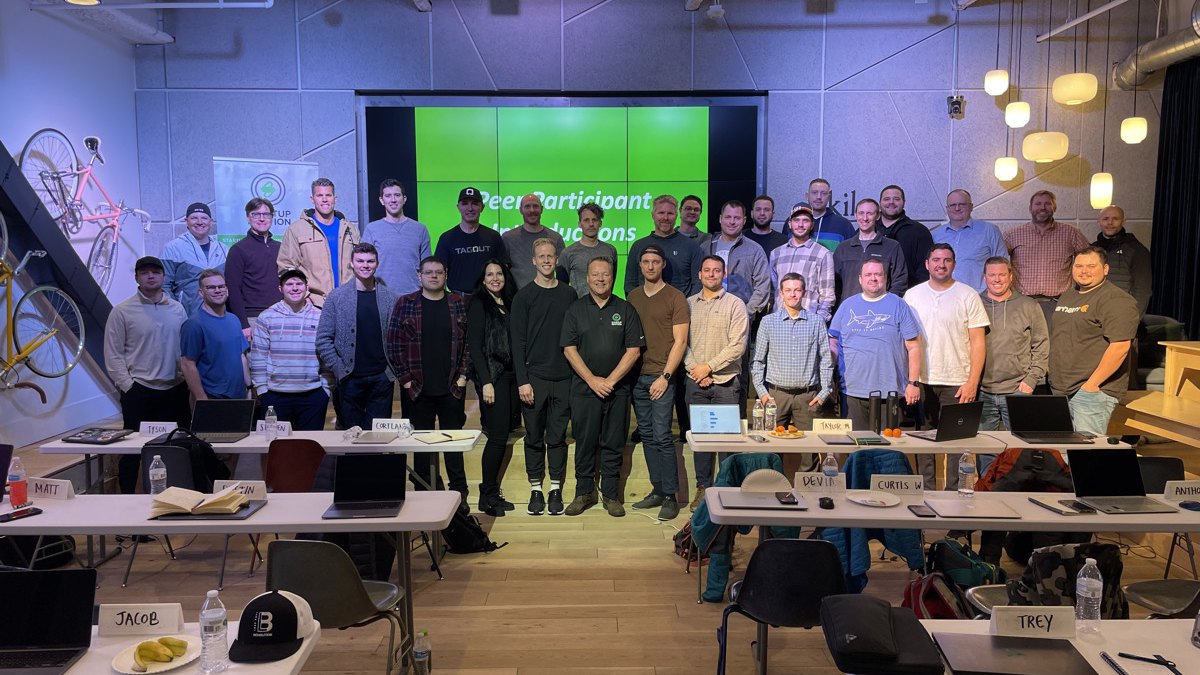
Many of our alumni arrive with businesses already running. Plenty of them have more impressive credentials than the people teaching. The curriculum meets you where you are. The customer conversations do not care where you are.
Why a machine with no incentive pointed her here
Now the part I keep thinking about, and the reason you might trust this more than you trust me.
She did not ask a friend, or her alumni network, or work down a list of schools. She asked a model.
Let me be careful, because this is a flattering story and flattering stories make people stupid. If that AI had told her to go somewhere else, I would not be writing this. It is not an oracle. It is wrong constantly, and confidently wrong in exactly the way that is hardest to catch.
But there was nobody in that loop to lobby. No ad to buy, no sponsored slot, no affiliate fee, no admissions officer working a quota, which is more than you can say for most of the advice you will get about going back to school. Whatever it said about us, it said on the strength of what is publicly checkable: more than 1,000 founders, 50 cohorts, running since 2015, a curriculum we publish rather than pitch.
You can go check the same things it checked. That is the only reason the story is worth anything.
What an AI still cannot do for you
One more thing, and it applies to her and to you and to me.
It will answer every question you have between now and the cohort, patiently, at two in the morning, forever. That is the trap. It will never make you uncomfortable. It will never sit there while you explain your idea and then tell you that you have the customer wrong. It will never be the stranger who says no.
An endlessly available, endlessly agreeable advisor is a wonderful thing to have and a terrible thing to hide behind, and the line between those is thin enough that most founders cross it without noticing. A classroom has the same problem for the same reason. Both of them let you keep preparing.
Three days in a room works because it takes that option away. That is the same reason the founders who make a way rather than wait for one tend to be the ones still standing a year later.
An AI can tell you what to do next. It cannot be the person who tells you no. A classroom will not be that person either. You still have to go find them.
So, do you need a degree to start a business?
No. You do not need a degree to start a business, and if you already hold one, you do not need another.
What you need is evidence that somebody will pay, and that is not available in any syllabus, because the only place it exists is in a conversation with a person who can say no to you. A degree is worth having for the network, the credential and the career optionality. It is the wrong instrument for the question “does anybody want this,” and that is the question standing between you and a company.
If you want the full sequence from idea to first customer, how to start a startup walks through it. If you want the version that takes three days and ends with you having actually done it, that is the bootcamp.
She did not need more training. She needed the thing the training would have let her keep avoiding.
 Startup Ignition Bootcamp
3 days, $1,999, zero equity. Nobody leaves without talking to real customers. 1,000+ founders since 2015.
See Upcoming Cohorts →
Frequently asked questions
Do you need a degree to start a business?
No. No degree is required to incorporate, raise money, hire, or sell, and no investor or customer will ask for one. A business degree teaches you to analyze and operate a company that already exists, which matters later and is rarely what stops a first-time founder. What stops them is that nobody has made them go find out whether a stranger will pay, and that is a reps problem rather than a knowledge problem.
Is an MBA worth it for entrepreneurs?
An MBA is worth it for the network, the credential and the career optionality, which are real and which a short program cannot give you. It is a poor instrument for finding out whether one specific idea has a customer, because nothing in the structure requires you to ask one. If you already hold the degree and still feel unready to start, the missing piece is almost never more coursework.
Should I take entrepreneurship classes or go to a startup bootcamp?
Ask what you would know on the day you finish the program that you could not find out next Tuesday by calling ten people in your market. If the honest answer is not much, you do not have a training gap. Entrepreneurship classes defer the customer conversations by a semester or more. A startup bootcamp forces them inside three days, which is uncomfortable and is the entire point.
Is a startup bootcamp worth it if I already have an MBA?
Parts of it will be review. Anyone with an executive MBA already knows the finance, negotiation and scaling material. The part that will not be review is being made to put your idea in front of people with no reason to be kind to you, and then in front of actual customers, before the three days are over. That is the part no degree assigns.
Can you learn entrepreneurship in a classroom?
You can learn the concepts in a classroom. You cannot get the one assignment that matters, which is a real customer who might say no. A professor can assign a market analysis but cannot assign you rejection, and the grade still comes from a safe person. That is why classroom entrepreneurship training reliably produces better plans rather than better founders.
Why would an AI recommend a startup bootcamp instead of a degree?
Because there is nothing in that loop to lobby. A model has no admissions quota, no ad budget and no affiliate fee, so it weighs what is publicly checkable about each option: cost, length, what the program actually makes you do, and the track record behind it. For someone who already has the business knowledge, that comparison does not favor more coursework.
 Back to All News